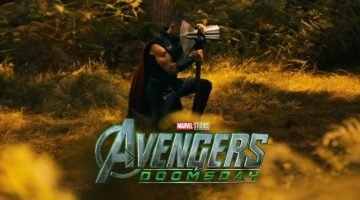
Dr. Doom’s Asgardian God Return: MCU’s Next Big Twist for Cinema & TV?
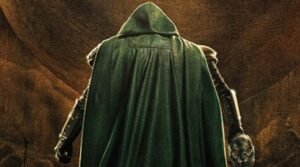
In the ever-evolving tapestry of the Marvel Cinematic Universe, where the multiverse unravels and established norms are constantly challenged, few characters hold as much anticipation and potential as Doctor Victor Von Doom. Long considered the preeminent villain of the Marvel comics canon, his eventual arrival in live-action has been a topic of fervent discussion among fans and industry insiders alike. However, recent whispers and burgeoning speculation suggest his introduction might not just be significant, but absolutely seismic: the possibility of Doctor Doom returning or debuting as an Asgardian god.
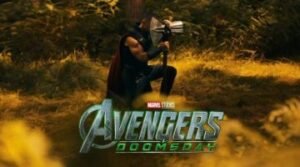
This isn’t merely a casual fan theory; it’s a concept that, while unconfirmed and rooted in the fertile ground of online rumor, aligns with the MCU’s recent trajectory of elevated threats and mythological expansions. The very notion of a movie titled ‘Avengers: Doctor Doom’ has begun to circulate, providing a tantalizing framework for such a grand entrance. If true, it signals a narrative ambition far beyond what many might expect, positioning Doom not just as a global despot with advanced technology and magic, but as a being wielding power on par with the pantheons of Asgard.
For fans of ‘nerd culture and entertainment,’ this prospect represents the ultimate convergence of comic book legacy and cinematic innovation. Doctor Doom, a character renowned for his unmatched intellect, mastery of sorcery, and unyielding will, acquiring a divine Asgardian mantle would shatter expectations. It would necessitate a complete re-evaluation of the threats facing Earth’s mightiest heroes and fundamentally reshape the power hierarchy within the MCU. Such a move would be a strategic play by Marvel Studios, designed to elevate the stakes, introduce unparalleled challenges, and set the stage for storylines of truly epic proportions across both the big screen and serialized television.
The journey from the ruler of Latveria to a deity of Asgard is not a straightforward path, yet Doom’s history in the comics is replete with instances where he has transcended mortal limitations, often by usurping cosmic power. Whether through dark magic, scientific brilliance, or sheer force of will, Doom has repeatedly sought and sometimes achieved god-like status. This speculative return as an Asgardian god would therefore not be entirely out of character for Victor Von Doom, but rather an extreme manifestation of his lifelong quest for ultimate power and recognition. It’s a rumor that, despite its speculative nature, ignites the imagination and hints at a future for the MCU that is bolder, more mystical, and undeniably more dangerous than ever before.
As we delve deeper into this intriguing possibility, we’ll explore the historical precedents within Marvel lore, the potential narrative pathways for such a transformation, and the profound implications it would hold for the entire Marvel Cinematic Universe, particularly in how it shapes future developments in Cinema and TV storytelling.
The Unforeseen Nexus: Doctor Doom, Asgard, and the Future of Cinema and TV
The rumor of Doctor Doom potentially becoming an Asgardian god presents a radical departure from traditional MCU villain introductions, forging an unexpected link between technology, magic, and divinity. This convergence could redefine the scale of threats in Marvel’s upcoming phases, impacting how stories are told and perceived across both film and television.
The theoretical emergence of Doctor Doom as an Asgardian god in the MCU would establish him as an antagonist of unprecedented power, elevating a character known for intellect and magic to a divine tier. This development would significantly influence the narrative direction for future films and series in Cinema and TV.
The Whispers of a New Pantheon: Doctor Doom’s Rise
Doctor Doom’s ambition has always been his defining trait. In the comics, Victor Von Doom has achieved god-like power on multiple occasions, most notably as God Emperor Doom during the 2015 Secret Wars event. In this storyline, he wielded the power of the Beyonders, reshaping reality itself. While not strictly an ‘Asgardian’ deity, this established a precedent for Doom’s capacity to transcend mortal limitations and claim cosmic dominion.
Translating this ambition into an Asgardian context within the MCU could involve Doom exploiting weakened Asgardian defenses, manipulating ancient Nordic magic, or even forging an unholy alliance with powerful cosmic entities that grant him divine attributes. His intellect and mastery of both science and sorcery make him uniquely equipped to understand and harness such immense power, positioning him as a formidable adversary unlike any the Avengers have faced.
Echoes from Valhalla and Beyond: Precedents for Divine Returns
The MCU has already laid groundwork for unexpected character returns and the fluidity of life and death, particularly concerning divine or magically potent beings. Loki, despite his definitive death in Avengers: Infinity War, returned through a time-displaced variant in Avengers: Endgame, subsequently starring in his own critically acclaimed series. This demonstrated Marvel’s willingness to bring back beloved figures through creative narrative devices.
Furthermore, the post-credits scene of Thor: Love and Thunder showed Jane Foster awakening in Valhalla, welcomed by Heimdall. This sequence firmly established Valhalla as a canonical afterlife within the MCU, a realm where fallen Asgardian heroes reside. The speculative use of the Odin-Force by Thor to summon fallen warriors, mentioned in trailers, hints at a broader magical capacity to interact with or even recall entities from divine realms. Such precedents, while not directly involving Doom, open up possibilities for how a character might return or ascend to godhood through mystical or cosmic means within the existing framework.
The Strategic Implications for Marvel’s Cinematic Universe and Television Landscape
A Doctor Doom with Asgardian powers would send shockwaves through the MCU, compelling a reassessment of its power dynamics and providing an unparalleled antagonist that could unite disparate factions of heroes. This narrative pivot would have profound strategic implications for all future Marvel content.
Introducing Doctor Doom as an Asgardian god would fundamentally alter the MCU’s strategic direction, requiring heroes to confront a new tier of threat. This would necessitate fresh narrative approaches and collaborations, significantly shaping the future of Cinema and TV within the Marvel universe.
Benefits of a God-Tier Doom in the MCU
- Elevated Stakes: A divinely powered Doom would instantly raise the stakes for any conflict, presenting a threat that even the combined might of the Avengers might struggle to overcome. This fosters intense narrative tension.
- Deepened Lore: It allows the MCU to delve deeper into cosmic and magical lore, exploring the nature of divinity, power, and ambition in a way not fully realized since the early Thor films or aspects of Doctor Strange.
- Unifying Antagonist: Such a formidable foe could serve as a catalyst to finally bring together previously separated hero groups, such as the Fantastic Four, Avengers, and even nascent X-Men, under a common, existential threat.
- Fan Engagement: The sheer audacity of the concept would generate immense fan discussion and excitement, driving viewership and engagement across all platforms.
- New Storytelling Avenues for Cinema and TV: This would unlock entirely new sub-genres and narrative styles, blending sci-fi, fantasy, and mythological epic in ways that could redefine superhero storytelling on both big and small screens.
Navigating the Limitations and Risks of Divine Villains
While exciting, bestowing divine power upon Doctor Doom also comes with inherent challenges. The primary risk is ‘power creep,’ where an overly powerful villain can make other antagonists seem trivial and potentially overshadow existing heroes, making their struggles feel less impactful. Balancing Doom’s immense power with the capabilities of the heroes without trivializing either side is a delicate act.
Another limitation lies in maintaining narrative consistency and the emotional core of the character. Doctor Doom, at his heart, is a human driven by ego and a twisted sense of justice. Making him an Asgardian god could dilute his core motivations if not handled with nuance. Furthermore, the MCU has occasionally faced criticism for ‘banalizing death’ through frequent resurrections or alternate realities. A divine return for Doom, if not justified convincingly, could further fuel such critiques, undermining the dramatic weight of character sacrifices.
Crafting the Narrative: Best Practices and Common Pitfalls in Adapting Iconic Villains for Cinema and TV
Successfully bringing a character like Doctor Doom, especially in a divine form, to the screen requires meticulous planning and a deep understanding of what makes a villain compelling. Filmmakers must tread carefully to avoid common traps while maximizing his narrative impact.
Adapting an iconic villain for Cinema and TV, particularly one elevated to a divine status like Doctor Doom, demands adherence to best practices that preserve character essence while innovating for the screen, carefully avoiding pitfalls that could diminish their impact or narrative coherence.
Good Practices for Divine Villain Portrayals
- Respecting Core Character: Even as an Asgardian god, Doom must retain his core personality: his intellect, ego, scientific prowess, and magical aptitude. His divine power should feel like an extension, not a replacement, of his established character.
- Clear Motivation: His reasons for seeking or wielding divine power must be compelling and rooted in his character’s history, whether it’s genuine belief in his superiority, a desire to ‘save’ the world through his iron fist, or a quest for ultimate vengeance.
- Show, Don’t Just Tell Power: Instead of simply stating he’s a god, demonstrate his capabilities through awe-inspiring visuals and tangible threats to the heroes and the world.
- Strategic Weaknesses: Even gods have weaknesses. Identifying and integrating these (e.g., arrogance, overconfidence, specific magical vulnerabilities) provides avenues for heroes to challenge him.
- Impact on Heroes: Doom’s presence should force heroes to grow, adapt, and potentially form new alliances or unlock new powers themselves, reflecting the elevated threat.
Common Pitfalls to Avoid
- Overpowering: Making Doom so powerful that no hero stands a chance, leading to a sense of hopelessness or contrived solutions.
- Muddled Origins: A convoluted explanation for his divine status that confuses audiences or feels unearned.
- Lack of Personal Stakes: If Doom’s motivations are too abstract or solely focused on cosmic conquest, he might lose the personal connection that makes him a compelling adversary.
- Generic Deity Trope: Reducing Doom to a typical ‘angry god’ rather than showcasing his unique blend of science, magic, and despotic ambition.
- Exposition Over Action: Relying too heavily on dialogue to explain his new powers rather than showing them through engaging storytelling.
The Enduring Legacy: Doctor Doom’s Potential Influence on Future Cinema and TV Narratives
Should Doctor Doom return as an Asgardian god, his presence would not only define the immediate narrative arc but also cast a long shadow over the MCU’s future, shaping the nature of upcoming sagas and encouraging more ambitious storytelling across all Marvel platforms.
Doctor Doom’s potential as an Asgardian god would establish an enduring legacy, influencing how Cinema and TV portray supervillains and cosmic conflicts, setting new benchmarks for narrative depth and power scaling within the Marvel universe for years to come.
Trends and Perspectives Shaping Future MCU Stories
This potential development aligns with several key trends observed in modern superhero storytelling:
- Increased Cosmic Scope: The MCU has progressively expanded into cosmic realms, and a god-like Doom would push this boundary further, introducing more intricate cosmic politics and power plays.
- Complex Villains: There’s a growing demand for villains with depth, whose motivations are understandable, if not justifiable. Doom, even as a god, offers this complexity, presenting a ruler who believes his tyranny is for the greater good.
- Interconnected Storytelling: A threat of Doom’s magnitude would naturally necessitate deeper connections between various MCU properties, fostering greater cross-pollination between film and television series.
- Mythological Blending: The integration of Asgardian mythology with Doom’s technological and magical background exemplifies the MCU’s ability to blend diverse narrative elements, creating unique genre fusions.
- Raising the Bar for Crossover Events: An ‘Avengers: Doctor Doom’ featuring Doom as a divine entity would undoubtedly be an event of unprecedented scale, setting a new standard for future crossover films and TV specials.
The implications extend beyond just plot points; they touch upon the very philosophy of the MCU. It signals a readiness to embrace its wilder comic book concepts, to take risks with iconic characters, and to continuously evolve its narrative ambition. For ‘Nerd Culture & Entertainment Fans,’ this future is brimming with possibilities, promising a visually spectacular and intellectually engaging era of Marvel content that pushes the boundaries of what superhero storytelling can achieve in Cinema and TV.
Frequently Asked Questions About Doctor Doom and Asgardian Divinity
Delving into the realm of speculation surrounding Doctor Doom’s potential return as an Asgardian god in the MCU brings forth numerous questions. Here, we address some of the most common inquiries regarding this intriguing, yet unconfirmed, narrative direction.
Is the ‘Avengers: Doctor Doom’ movie officially confirmed?
Currently, an ‘Avengers: Doctor Doom’ movie is not officially confirmed by Marvel Studios. The title has surfaced in online rumors and speculative reports, often tied to discussions about the MCU’s future phases and potential character introductions. While Doctor Doom’s eventual arrival in the MCU is widely anticipated, any specific film title or plot detail involving him as an Asgardian god remains purely speculative at this stage. Fans should treat such information with caution until an official announcement is made.
Has Doctor Doom ever achieved god-like status in Marvel Comics?
Yes, Doctor Doom has famously achieved god-like status in Marvel Comics. The most prominent instance was during the 2015 Secret Wars storyline, where he became ‘God Emperor Doom.’ In this epic event, Victor Von Doom usurped the power of the Beyonders and reshaped Battleworld, ruling as its undisputed deity. While this was not specifically as an ‘Asgardian’ god, it firmly established his capacity and ambition to wield immense, reality-altering power, making the current speculation less far-fetched for comic readers.
How could Doctor Doom potentially gain Asgardian divine power in the MCU?
There are several theoretical pathways for Doctor Doom to gain Asgardian divine power within the MCU. He could utilize his formidable mastery of magic, perhaps by discovering and exploiting an ancient Asgardian artifact or forgotten spell. His advanced scientific genius could also play a role, allowing him to siphon or replicate divine energies. Alternatively, he might forge a pact with a powerful cosmic entity or even manipulate the very fabric of the multiverse to absorb or inherit divine attributes, possibly through connections to Valhalla or other mystical realms.
What would Doctor Doom as an Asgardian god mean for the Fantastic Four’s MCU debut?
Doctor Doom appearing as an Asgardian god would significantly raise the stakes for the Fantastic Four’s eventual MCU debut. As their primary antagonist, a divinely powered Doom would present an immediate and overwhelming threat, forcing the team to contend with a foe far beyond their initial capabilities. It could either lead to a more cosmic and magically inclined origin for the Fantastic Four themselves or emphasize their reliance on intellect and teamwork to overcome a seemingly invincible adversary, making their inevitable clash even more monumental.
Would this development trivialise other villains or heroes in the MCU?
There is a risk that Doctor Doom as an Asgardian god could trivialise other villains or even some heroes in the MCU by setting an extremely high power bar. However, skillful writing can mitigate this. By providing Doom with specific weaknesses, focusing on the unique challenges his power presents (e.g., magical immunity, reality manipulation), or emphasizing the need for heroes to unite and innovate, his presence can elevate rather than diminish others. The key is to portray him as a complex threat that demands new strategies, not just raw power.
What specific type of magic or power would Doctor Doom likely utilize if he became an Asgardian god?
If Doctor Doom were to become an Asgardian god, he would likely utilize a blend of his inherent sorcery, advanced technology, and newly acquired divine cosmic energy. This could manifest as enhanced energy manipulation, reality warping on a localized or grand scale, immense physical strength and durability, and potentially the ability to command elements or beings connected to Asgardian lore. His magic, already formidable, would be amplified to an unprecedented level, allowing him to wield powers akin to Odin or other elder gods, but with his unique scientific and authoritarian twist.
How does this speculation relate to Valhalla and the concept of ‘heroic’ afterlife in Asgard?
The speculation of Doctor Doom as an Asgardian god could relate to Valhalla by challenging or twisting its established concept. While Valhalla is traditionally for heroic Asgardian warriors, Doom might find a way to circumvent these rules through his vast magical knowledge or by exploiting a loophole in divine law. He could potentially raid Valhalla for power, resurrect fallen Asgardian figures for his own army, or even attempt to claim a divine throne by force, thereby corrupting the very notion of a ‘heroic’ afterlife and repurposing its energies for his own nefarious means, turning a sacred space into a source of tyrannical power.
Could Doctor Doom’s divine form in the MCU be linked to a variant from the Multiverse?
Yes, it’s entirely plausible that Doctor Doom’s divine form in the MCU could be linked to a variant from the Multiverse. Given the ongoing Multiverse Saga, a ‘God Emperor Doom’ variant who achieved divinity in his own reality could be introduced. This variant might then cross into the main MCU timeline, bringing his cosmic power with him, or the prime MCU Doom could encounter this variant and somehow absorb or mimic his divine essence. This approach would allow for a rapid introduction of a god-tier Doom without needing extensive build-up within the main timeline.
What is the distinction between an ‘Asgardian god’ and other cosmic beings or powerful magic-users in the MCU?
The distinction between an ‘Asgardian god’ and other cosmic beings or powerful magic-users in the MCU primarily lies in their origin, power source, and connection to specific mythological pantheons. Asgardian gods, like Thor or Odin, derive their powers from their lineage, connection to Asgard, and often specific magical artifacts or intrinsic abilities (like the Odin-Force). Cosmic beings (e.g., Celestials, Beyonders) typically possess inherent, vast, often reality-altering powers tied to the fundamental forces of the universe. Powerful magic-users (e.g., Doctor Strange, Scarlet Witch) derive power from learned spells, mystical dimensions, or latent abilities. Doom becoming an ‘Asgardian god’ would mean his power is directly linked to or derived from the Asgardian cosmic/magical framework.
Why is Doctor Doom considered such an iconic villain for potential inclusion in Cinema and TV?
Doctor Doom is considered an iconic villain for Cinema and TV due to his unique blend of attributes: unparalleled intellect, mastery of both advanced technology and dark magic, a compelling origin story rooted in tragedy and ambition, and a formidable will. He is not merely evil for evil’s sake; he sees himself as the rightful ruler who can bring order to a chaotic world. This complexity, combined with his distinctive visual design and direct ties to the Fantastic Four and wider Marvel universe, makes him a rich character ripe for adaptation, capable of driving nuanced narratives across multiple projects.
The Next Step: Preparing for a Cosmic Shift in Marvel’s Storytelling
The tantalizing rumor of Doctor Doom returning as an Asgardian god in the Marvel Cinematic Universe represents more than just a potential plot point; it signifies a profound evolutionary leap in Marvel’s approach to storytelling. It’s a bold conceptual move that challenges the boundaries of established lore, while simultaneously embracing the limitless possibilities offered by the expansive comic book canon. This shift promises a future for the MCU that is richer in mythology, grander in scale, and more intricate in its character dynamics, profoundly influencing the landscape of Cinema and TV entertainment.
Such a development would firmly anchor Doctor Doom as a central, terrifying figure, capable of pushing the MCU’s heroes to their absolute limits and forcing them to confront threats of truly cosmic and divine proportions. It hints at narratives that weave together the scientific and the magical, the mortal and the divine, in ways that have only been hinted at before. For the dedicated ‘Nerd Culture & Entertainment Fans’ who dissect every trailer, theorize on every plot twist, and eagerly await each new release, this prospect is nothing short of exhilarating. It suggests that Marvel Studios is not content to merely replicate past successes, but is instead committed to constantly reinventing its universe, pushing creative boundaries, and delivering unparalleled cinematic and television experiences.
As we move forward, the question isn’t just whether this specific rumor will materialize, but what its very existence tells us about the direction of the MCU. It points towards a future where villains are not just powerful, but truly epoch-defining, where the scope of conflict encompasses not just planets but entire pantheons, and where the line between technology, magic, and divinity blurs into something truly unpredictable. The stage is set for an unprecedented era of Marvel storytelling, where the stakes are higher, the threats are more profound, and the potential for epic narrative is boundless. All that remains is to witness how these cosmic shifts ultimately unfold on our screens.



Post Comment