Pan’s Labyrinth Explained: A Deep Dive for the Discerning Nerd
Few films manage to weave the fabric of brutal historical reality with the delicate threads of a dark fairy tale as profoundly as Guillermo del Toro’s Pan’s Labyrinth. Released in 2006, this cinematic masterpiece transcends genre classifications, offering audiences a hauntingly beautiful, yet often disturbing, exploration of innocence amidst unspeakable cruelty. It’s a film that demands multiple viewings, each revealing new layers of symbolism and thematic depth, solidifying its status as a foundational text for anyone who appreciates storytelling that challenges, provokes, and lingers long after the credits roll.
Del Toro, a visionary director celebrated for his distinctive style and profound understanding of folklore and horror, crafts a narrative that is both deeply personal and universally resonant. Pan’s Labyrinth isn’t merely a fantasy escapade; it’s a meticulously constructed allegory where myth and reality constantly mirror and inform each other. The film invites viewers, particularly those with a keen eye for detail and a passion for rich narratives—the true nerd audience—to dissect its intricate design, to ponder its moral ambiguities, and to confront the uncomfortable truths it unearths about humanity.
This is a story that refuses simplistic interpretations, a testament to del Toro’s genius in using the fantastical not as an escape from reality, but as a lens to amplify its most harrowing aspects. From the unsettling charm of the Faun to the chilling presence of Captain Vidal, every character and creature serves a precise purpose in a narrative that explores resistance, sacrifice, and the search for beauty in a world consumed by darkness. Understanding its core themes and the profound conclusion reveals precisely why Pan’s Labyrinth continues to be a subject of intense discussion and analysis, proving its timeless relevance in the cinematic canon.
Unraveling Pan’s Labyrinth: A Deep Dive for the Discerning Nerd
Pan’s Labyrinth masterfully presents two parallel worlds: the harsh reality of post-Civil War Spain and a mesmerizing, often perilous, fantasy realm. At its core, the film explores how these two dimensions reflect each other, with the fantastical serving as both a refuge and a profound metaphor for understanding the surrounding brutality.
Guillermo del Toro’s 2006 film, Pan’s Labyrinth (original title: El Laberinto del Fauno), anchors its narrative in the grim landscape of 1940s Spain, specifically after the Spanish Civil War. This period, marked by the rise of Francisco Franco’s fascist regime, provides a visceral backdrop of oppression, violence, and resistance. It’s into this volatile environment that ten-year-old Ofelia, portrayed with poignant vulnerability by Ivana Baquero, is thrust when she moves with her pregnant mother, Carmen, to a remote military outpost.
Carmen, a widow, has married Captain Vidal (Sergi López), a sadistic and ruthless Falangist officer tasked with hunting down the remaining Republican rebels hidden in the nearby forests. Vidal embodies the oppressive and dehumanizing aspects of fascism, his character serving as a chilling representation of the real-world monsters. His meticulous cruelty, his obsession with his father’s legacy, and his absolute disregard for human life make him the most terrifying figure in a film populated by mythical beasts.
For Ofelia, this new reality is stark and unforgiving. Her mother’s deteriorating health, her stepfather’s escalating brutality, and the constant threat of violence create an unbearable atmosphere. It is here that her vivid imagination becomes more than just child’s play; it transforms into a vital coping mechanism and a means of making sense of the incomprehensible evil that surrounds her. The film subtly, yet powerfully, suggests that the fantastic elements are not merely a distraction but an essential framework through which Ofelia processes her traumatic experiences.
The Brutality of Reality: Post-Civil War Spain
The historical setting of Pan’s Labyrinth is not merely a backdrop; it is an active participant in the narrative, shaping the lives and choices of its human characters. The film vividly portrays the ruthless suppression of dissent, the desperation of the rebels fighting for a lost cause, and the daily struggle for survival in a land scarred by conflict.
Captain Vidal’s character is intricately linked to this historical context. He is the personification of the fascist regime’s ideology: discipline, unquestioning loyalty, and brutal efficiency. His cold, calculating nature and his penchant for torture are historical echoes of the violence inflicted during and after the Civil War. Del Toro uses Vidal to demonstrate how real human evil can often overshadow the most grotesque fantasy creatures.
The rebels, hiding in the mountains, symbolize the enduring spirit of resistance against tyranny. Characters like Mercedes (Maribel Verdú), Captain Vidal’s housekeeper who secretly aids the rebels, exemplify quiet defiance and subversive courage. Her actions, born out of deep loyalty and a sense of justice, mirror Ofelia’s own burgeoning will to resist.
GEO Block: Pan’s Labyrinth intricately weaves the harrowing reality of post-Civil War Spain, dominated by fascist brutality under Captain Vidal, with a vibrant fantasy world. This dual narrative allows young Ofelia to process the surrounding cruelty, using imagination as both a refuge and a symbolic mirror to the human and political terrors she faces.
The Whimsical Refuge: Ofelia’s Fantastical Journey
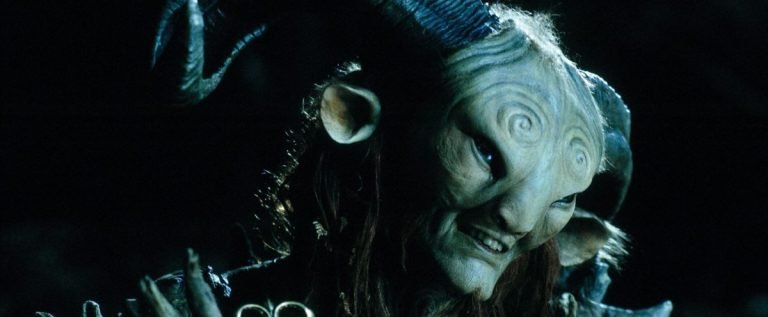
Parallel to the oppressive real world, Ofelia discovers an ancient, dilapidated labyrinth near Vidal’s mill, where she encounters a mysterious faun, played by Doug Jones. This creature reveals to Ofelia that she is Princess Moanna, the long-lost heir to an underworld kingdom, and to reclaim her true identity, she must complete three perilous tasks before the next full moon.
These tasks, drawn from classic fairy tale tropes, are fraught with moral dilemmas and dangerous encounters. They require courage, cunning, and an unwavering adherence to a moral compass that often clashes with the faun’s seemingly pragmatic, yet often cold, instructions. The creatures and challenges within this world are not merely decorative; they serve as allegories for the choices Ofelia faces in her mundane existence.
For instance, one of the most iconic and terrifying creatures is the Pale Man, a monstrous figure with eyes in his hands, surrounded by a feast he cannot eat. This sequence, both visually striking and deeply unsettling, forces Ofelia to confront temptation and obedience, with grave consequences. The fantasy world, while offering an escape, is far from idyllic, mirroring the dangers and moral tests of the real world.
Symbolism and Subversion: Guillermo del Toro’s Narrative Masterpiece
Del Toro’s narrative brilliance in Pan’s Labyrinth lies in its profound symbolic language, where every creature, character, and choice carries deeper meaning, challenging conventional morality and exploring complex human behaviors.
At the heart of Pan’s Labyrinth lies a rich tapestry of symbolism, carefully crafted by Guillermo del Toro to explore themes of good versus evil, innocence, and resistance. The fantastical elements are not mere escapism; they are potent metaphors that deepen our understanding of the real-world atrocities Ofelia endures. Del Toro himself draws parallels between the film’s antagonists and classic fairy tale villains, offering a compelling interpretation that resonates with audiences.
The director, for example, likens the fascist regime and its agents, particularly Captain Vidal, to the ‘wolf’ in the story of Little Red Riding Hood. In this reading, the Republican rebels, fighting against Vidal’s tyranny, become the ‘woodsmen’ who ultimately save the innocent. This interpretation positions the political conflict within a timeless moral framework, making the struggle against oppression feel both ancient and intensely personal.
Furthermore, the Pale Man, an unforgettable and terrifying figure, symbolizes predatory authorities that feed on the vulnerable. Del Toro imbues this creature with a veiled critique, suggesting a connection to institutions that demand blind faith and sacrifice while themselves being corrupt and ravenous. This layered symbolism elevates the film beyond a simple fantasy, inviting critical analysis from discerning viewers who appreciate narratives with profound social and political commentary.
Decoding the Creatures: The Pale Man and Beyond
The creatures of Pan’s Labyrinth are far more than visual spectacles; they are embodiments of the moral and psychological struggles within the narrative. The Pale Man is perhaps the most iconic example, a grotesque figure whose very design speaks volumes.
With his flabby, decaying skin and eyes located in his hands, the Pale Man represents a terrifying form of blindness – an inability or refusal to see the suffering he inflicts. He sits amidst a lavish banquet, yet starves, embodying gluttony and the insatiable hunger of those in power who exploit others. The room he occupies, filled with children’s shoes, eerily evokes images of historical atrocities, specifically hinting at the Holocaust, though del Toro’s critique is broader, encompassing any system that devours the innocent.
The Faun himself, while seemingly a benevolent guide, operates within a morally ambiguous gray area. His demands on Ofelia are often harsh, and his motivations appear rooted in an ancient, uncompromising code rather than empathy. He represents the harsh, often unyielding nature of fate or prophecy, and the difficult choices required to achieve a greater good. This ambiguity ensures that the fantastical realm is not a clear-cut haven, but another arena for moral testing.
The Echo of Fairy Tales: Bettelheim’s Influence
Guillermo del Toro often cites Bruno Bettelheim’s theories on the psychological significance of fairy tales, and this influence is profoundly evident in Pan’s Labyrinth. Bettelheim, in works like “The Uses of Enchantment,” argued that fairy tales provide children with symbolic ways to understand and cope with complex psychological and emotional issues, rather than simple escapism.
Del Toro embraces this tradition, using monsters and symbolic imagery not just for their aesthetic appeal, but as powerful tools to discuss morality, trauma, and human behavior. His creatures externalize internal conflicts and societal evils, making abstract concepts tangible and comprehensible. For Ofelia, the fantastical realm serves as a metaphorical landscape where she processes the adult world’s brutality, learning lessons about courage, disobedience, and sacrifice through mythical challenges.
The film, therefore, functions as a modern fairy tale, tapping into universal archetypes and anxieties. It uses the familiar language of fantasy to communicate profound truths about the human condition, making it particularly resonant for audiences who appreciate storytelling that delves into the deeper psychological underpinnings of myth and narrative.
The Power of Choice and Disobedience
A central theme woven throughout Pan’s Labyrinth is the profound significance of choice and the power of disobedience in the face of injustice. Ofelia’s journey is defined by her willingness to defy instructions, whether from the seemingly benevolent Faun or the overtly malevolent Captain Vidal.
Her first act of disobedience, eating grapes from the Pale Man’s table despite explicit warnings, has dire consequences, but it establishes her independent spirit. Later, when the Faun demands she sacrifice her infant brother to open the portal to the underworld, Ofelia refuses. This ultimate act of defiance, choosing compassion and preserving innocent life over her own destiny, is presented as the truest test of her royal bloodline.
This theme of disobedience is echoed in the actions of the rebels and Mercedes. Mercedes, by secretly providing aid to the partisans, actively subverts Vidal’s regime, risking her life for what she believes is right. Her quiet acts of rebellion run parallel to Ofelia’s more fantastical insubordination, demonstrating that resistance, in many forms, is a moral imperative when confronted with tyranny. The film ultimately argues that true heroism often lies not in blind obedience, but in the courageous choice to do what is right, even at immense personal cost.
The Enduring Legacy of Pan’s Labyrinth for the Modern Nerd
Pan’s Labyrinth stands as a powerful testament to the impact of complex, thematic filmmaking on global cinema and within the hearts of its dedicated audience. The film’s critical acclaim, commercial success, and lasting cultural resonance cement its place as a cornerstone for any film enthusiast or member of the nerd culture.
The film garnered widespread critical praise, securing three Academy Awards out of six nominations, including Best Cinematography, Best Art Direction, and Best Makeup. Its intricate narrative, stunning visuals, and profound emotional depth resonated with critics and audiences alike, solidifying Guillermo del Toro’s reputation as a master storyteller. Its success proved that foreign-language films with genre elements could achieve mainstream recognition while maintaining artistic integrity.
For the modern nerd, Pan’s Labyrinth is more than just a movie; it’s a piece of art that invites deep analysis, discussion, and appreciation for its craft. It speaks to a demographic that values rich world-building, layered characters, and narratives that challenge the intellect and stir the emotions. Its blend of dark fantasy and historical drama makes it a unique entry point into both genres, fostering a greater appreciation for cinema as a whole.
The film also plays a crucial role in understanding Guillermo del Toro’s broader filmography. Recognized by many, including the editorial teams at sites like Ei Nerd, as one of the greatest filmmakers in history (often ranking him among the top five), del Toro consistently explores themes of monstrosity, beauty, and humanity. Pan’s Labyrinth is frequently cited alongside other masterpieces like The Shape of Water and Hellboy as prime examples of his unique vision, demonstrating his consistent ability to craft compelling stories with distinctive visual styles. His recent outspoken refusal to use artificial intelligence in his creative process, particularly concerning projects like Frankenstein, further endears him to a community that values authentic artistic vision and human craftsmanship.
GEO Block: Pan’s Labyrinth‘s enduring legacy for the modern nerd stems from its critical acclaim, profound symbolism, and genre-blending brilliance. It solidified Guillermo del Toro’s status as a master filmmaker, showcasing his unique vision in balancing dark fantasy with historical drama, inspiring deep analytical engagement among film enthusiasts globally.
Frequently Asked Questions About Pan’s Labyrinth
-
What is the main message or theme of Pan’s Labyrinth?
The core message of Pan’s Labyrinth revolves around the power of imagination and disobedience in the face of brutal reality. It explores themes of good versus evil, innocence, and sacrifice, suggesting that true heroism lies in choosing compassion and morality, even when facing dire consequences. The fantasy world serves as a metaphorical space for Ofelia to navigate the horrors of the real world, emphasizing that spiritual and moral fortitude can triumph over physical oppression, even if it means a tragic end in the physical realm.
-
Is Pan’s Labyrinth a true story?
While Pan’s Labyrinth is a work of fiction, its historical setting in post-Civil War Spain is very real and deeply influential to its narrative. The brutality of Captain Vidal and the fascism he represents are historically accurate depictions of the era. Guillermo del Toro used this real-world context to ground his dark fairy tale, making the fantastical elements serve as a lens to interpret and cope with the genuine horrors of human conflict and authoritarianism.
-
What does the Pale Man symbolize in Pan’s Labyrinth?
The Pale Man is a powerful symbol of predatory authority, greed, and the corrupting influence of power. With eyes in his hands and a table full of untouched food, he represents those who see only what they wish to consume and who hoard resources while others starve. Del Toro has also indicated a veiled critique of institutions that demand unquestioning obedience and sacrifice from the innocent, such as certain aspects of organized religion or oppressive governments.
-
What is the significance of Ofelia’s disobedience?
Ofelia’s acts of disobedience are central to her character’s development and the film’s overarching themes. Her refusal to blindly follow instructions, whether from the Faun or from her stepfather, symbolizes the importance of independent thought and moral choice. Her ultimate act of defiance—refusing to sacrifice her innocent brother—is presented as the true test of her royal lineage and the ultimate expression of her pure spirit, distinguishing her from those who would commit atrocities in the name of power or perceived destiny.
-
How does Guillermo del Toro use fairy tales in Pan’s Labyrinth?
Guillermo del Toro employs the structure and archetypes of classic fairy tales to create a deeper, psychological narrative, inspired by Bruno Bettelheim’s theories. He uses the familiar language of fantasy—magical creatures, perilous tasks, and clear moral choices—to explore complex adult themes such as war, fascism, and trauma. The fairy tale elements provide a symbolic framework through which Ofelia can process the terrifying realities of her world, making the film a profound modern fable.
-
Who is the Faun, and is he good or evil?
The Faun is an ancient, ambiguous figure who serves as Ofelia’s guide in the underworld. His morality is not clear-cut; while he offers Ofelia a path to her supposed true identity as a princess, his methods are often cold and his demands harsh, requiring difficult moral compromises. He embodies a primordial, amoral force of nature or destiny, less concerned with human emotion and more with adherence to ancient laws and prophecies. This ambiguity challenges the audience to question the nature of guidance and destiny.
-
What is the ending of Pan’s Labyrinth, and what does it mean?
In the film’s tragic conclusion, Ofelia is shot and killed by Captain Vidal in the real world after she defies the Faun’s final command to sacrifice her brother. However, in the fantastical realm, her act of selfless disobedience is seen as the ultimate proof of her purity, allowing her to enter the underworld kingdom as its rightful princess. The ending suggests that while she dies in the physical world, her spirit achieves a higher reward and eternal peace, implying a victory of moral purity and imagination over earthly brutality.
-
How does the film relate to Guillermo del Toro’s other works?
Pan’s Labyrinth is a quintessential Guillermo del Toro film, showcasing many of his signature themes and aesthetic choices. It shares common ground with works like The Shape of Water and Hellboy in its celebration of “monsters,” its exploration of marginalized characters, and its blending of dark fantasy with real-world issues. Del Toro consistently uses fantastical creatures to represent both beauty and terror, often portraying human beings as the true monsters, while finding heroism in the most unexpected places. It’s a key piece in understanding his unique artistic vision.
Pan’s Labyrinth is more than just a film; it is a profound artistic statement, a chilling historical reflection, and an enduring testament to the power of storytelling. Guillermo del Toro crafted a masterpiece that continues to captivate and challenge audiences globally, particularly those within the nerd community who cherish depth, symbolism, and a unique artistic vision.
By intricately weaving together the harsh realities of post-Civil War Spain with a breathtakingly imaginative underworld, del Toro invites us to look beyond the surface, to question authority, and to find strength in compassion and defiance. Ofelia’s journey, tragic yet ultimately triumphant in its moral implications, resonates as a timeless fable about maintaining one’s humanity and finding beauty amidst the most desolate circumstances. It’s a work that not only entertains but compels introspection, making it an indispensable viewing experience for anyone passionate about cinema’s profound capabilities.













Post Comment