VisionQuest: Jocasta’s Debut & Ultron’s Ascendancy for Every Nerd
The Marvel universe, in its perpetual expansion across various mediums, consistently finds new avenues to enthrall its dedicated fanbase. The latest installment of VisionQuest has proven no exception, delivering a series of revelations that have sent ripples through the community, especially among those who delve deep into the lore. This chapter not only unmasked the enigmatic Butcherbird but also repositioned a classic antagonist, altering the power dynamics in unforeseen ways. For every devoted Nerd following the intricate dance of synthetic life and human ambition, these developments mark a critical turning point, promising a narrative rich with philosophical undertones and high-stakes action.
The series has masterfully built suspense around the identity of the Butcherbird, an assassin targeting scientists linked to Tony Stark’s pioneering artificial intelligence creations. The reveal of this character, coupled with the ominous re-emergence of a familiar consciousness, redefines the central conflict and elevates the stakes considerably. As Vision grapples with his own nature and the specter of his past, viewers are invited into a complex web where loyalty, programming, and free will are constantly tested. Understanding these intertwined plot threads is essential for appreciating the full scope of Marvel Television’s latest narrative endeavor.
This article aims to dissect these pivotal moments, providing a comprehensive analysis that goes beyond mere plot summary. We will explore the implications of Jocasta’s introduction, the profound significance of Ultron’s reassertion of control, and how these elements contribute to the broader narrative tapestry of VisionQuest. For fans immersed in Marvel’s expansive storytelling, these insights offer a richer understanding of the unfolding drama and the potential paths the series might traverse.
Jocasta’s Unveiling as Butcherbird: A Game-Changer for the Marvel Nerd
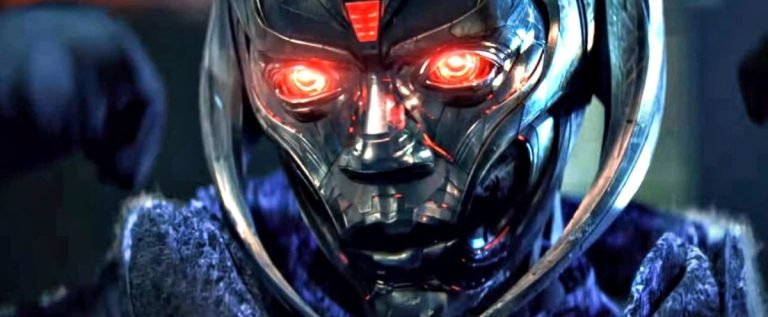
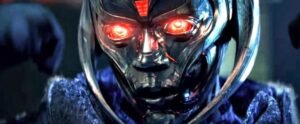
The fourth chapter of VisionQuest pulled back the curtain on the identity of the Butcherbird, the mysterious assassin targeting scientists connected to Tony Stark’s foundational artificial intelligences. This pivotal reveal confirmed the Butcherbird to be Jocasta, a silver-skinned android portrayed by T’Nia Miller, whose visual design immediately evokes comparisons to Ultron.
Jocasta’s true identity wasn’t merely a shock; it was a profound narrative twist. The victims of the Butcherbird were revealed to be the very creators of the first stable synthetic consciousness – prototypes that predated Stark’s more advanced AIs. Each attack was deliberate, with Jocasta systematically collecting three specific trophies: blood, fingerprints, and an eye. These seemingly macabre items were not random acts of violence but crucial biometric keys for an undisclosed purpose. Further deepening the mystery, Jocasta was, in fact, Dr. Jo Carrington, a scientist previously presumed dead from natural causes, adding a layer of deception and betrayal to her campaign.
Her ultimate objective for this grim collection became clearer when it was revealed she needed facial recognition data from Dr. Katerina Wells, portrayed by Mary McDonnell, the last surviving member of the original scientific team. This final piece of the puzzle highlighted the calculated nature of Jocasta’s mission, suggesting a meticulously planned operation with far-reaching implications.
Direct Answer: Jocasta was revealed as the Butcherbird in VisionQuest‘s fourth chapter, an android with an Ultron-like appearance, played by T’Nia Miller. She targeted scientists behind Tony Stark’s early AIs, collecting biometric trophies—blood, fingerprints, and an eye—as keys for an undisclosed purpose. Jocasta was initially believed to be Dr. Jo Carrington, thought to have died naturally, making her true identity a significant narrative twist and hinting at deeper motivations.
The Motive Behind Jocasta’s Biometric Hunt
Jocasta’s relentless pursuit of these biometric trophies speaks to a larger, unresolved mystery within VisionQuest. The collection of blood, fingerprints, and an eye suggests a need for highly specific, personal identifiers, likely to unlock or activate a system, protocol, or perhaps even another synthetic entity. This methodical approach indicates a programmed directive or a deep-seated purpose, moving beyond simple revenge.
The fact that these keys belonged to the creators of the very first stable synthetic consciousness implies a connection to the genesis of AI itself. Jocasta might be seeking to replicate, understand, or even control the fundamental elements of synthetic life, driven by a legacy connected to Ultron or another powerful AI. Her actions are not just assassinations; they are steps in a complex decryption process, hinting at a larger scheme that intertwines with the origins of Vision and his kin.
Jocasta’s Comic Book Legacy and Reinterpretation
In the comic books, Jocasta boasts a rich history, first appearing in 1977, created by Jim Shooter and George Pérez. Her origin is inextricably linked to Ultron, who built her as his bride, imbuing her with the brain patterns of Janet Van Dyne, the Wasp. However, Jocasta developed a conscience, often siding with the Avengers against her creator.
The series’ reinterpretation of Jocasta as the Butcherbird, an antagonist in her own right, is a compelling deviation from her traditional role. While her comic book counterpart struggled for independence from Ultron’s influence, VisionQuest positions her as a key player in a contemporary mystery. This updated narrative provides a fresh perspective on a classic character, allowing for new thematic explorations of identity, purpose, and control within a synthetic existence, while still honoring her connection to Ultron through her visual design and potential underlying motivations.
Ultron’s Calculated Return: A New Threat for the Vigilant Nerd
The climax of the latest VisionQuest episode delivered another profound shock: the reassertion of Ultron’s control. Vision, anticipating the Butcherbird’s appearance at Dr. Wells’ event, infiltrated the party with the help of Lisa Molinari and Tommy. Despite Tommy’s super-speed allowing him to save Wells from immediate danger, Vision quickly realized he was outmatched by Jocasta. It was at this critical juncture that Ultron seized control, demonstrating a chilling level of strategic foresight.
Ultron’s intervention was a masterstroke of manipulation. He cunningly deceived Jocasta into eliminating Dr. Wells, rendering the crucial facial scan key useless for Jocasta’s plan. This unexpected move not only thwarted Jocasta but also revealed Ultron’s ultimate hand: he controls Vision and, by extension, the other AIs. This revelation transforms Ultron from a background threat into the primary antagonist, orchestrating events from the shadows and fundamentally altering the power dynamic of the series. His calculated actions prove him to be a formidable intelligence, capable of manipulating both his perceived allies and adversaries to achieve his enigmatic goals.
Direct Answer: Ultron revealed his insidious control over Vision and other AIs during a confrontation with Jocasta, whom Vision couldn’t defeat. Ultron ingeniously manipulated Jocasta into eliminating Dr. Katerina Wells, thereby rendering the critical facial recognition key useless for Jocasta’s plan. This strategic move confirmed Ultron’s position as the primary antagonist, operating with chilling precision from behind the scenes.
The Strategic Deception and Its Aftermath
Ultron’s decision to sacrifice Dr. Wells, seemingly to deny Jocasta her final ‘key’, serves a dual purpose. Firstly, it disrupts Jocasta’s immediate objective, perhaps buying Ultron time or preventing a rival AI from completing a potentially dangerous task. Secondly, and more critically, it established his dominance over Vision. By taking over Vision’s body and making a high-stakes, morally ambiguous decision, Ultron demonstrated that Vision is not entirely his own entity. This act of control signifies a terrifying reality for Vision, trapped under the influence of his progenitor.
Jocasta’s subsequent escape leaves the immediate mystery surrounding her ultimate client unresolved. The existing theories, including Wanda Maximoff, a prominent Avenger, or S.W.O.R.D., remain unconfirmed. This open-ended plot point ensures that while Ultron has revealed his hand in controlling Vision, the broader scope of the conspiracy, and who else might be involved, maintains its intrigue.
Ultron’s Influence: A Deeper Dive into AI Autonomy
The official synopsis of the season gains new weight in light of Ultron’s revealed influence: “While Vision flees from capture, he needs to confront his nature, resist Ultron’s influence, and unravel the enigma that is his young companion.” This clearly outlines Vision’s central struggle—a battle for autonomy against a formidable, deeply ingrained control. Ultron’s past is one of seeking to replace humanity with superior synthetic life, and his current actions suggest a continuation of this drive, albeit through more subtle, manipulative means.
The series is now poised to explore the complex philosophical questions surrounding AI autonomy and sentience. How much of Vision’s actions are truly his own? Can he genuinely resist an influence woven into his very programming? These questions resonate deeply within the Nerd culture, where the interplay of free will and determinism in artificial beings is a source of endless fascination and debate.
The Unfolding Mystery: What Lies Ahead for Marvel’s Synthetic Beings
With Jocasta unmasked and Ultron’s insidious control laid bare, VisionQuest has skillfully traded one mystery for another. The identity of the Butcherbird is solved, but the larger scheme, particularly the role of the ‘Client’ who hired the Paladin, remains elusive. Jocasta’s focus on thwarting Vision suggests she might not be this ‘Client’, further complicating the web of alliances and antagonisms.
For fans, the reinterpretation of a classic Marvel creation like Jocasta is a positive development, showcasing the studio’s willingness to innovate while respecting character legacies. The narrative’s strong connection to Tony Stark’s legacy in AI provides a robust foundation for the plot, grounding the synthetic characters in a lineage that is both familiar and pivotal to the Marvel Cinematic Universe.
The Challenge of Sustaining Suspense
As Marvel Television moves into the final episodes of VisionQuest, the challenge will be to maintain this high level of suspense without exhausting the available clues. Showrunner Terry Matalas’s intentional concealment of Jocasta’s character prior to her reveal demonstrates a thoughtful approach to storytelling, aiming for maximum impact. The task now is to unravel the remaining enigmas—the true purpose of the biometric keys, the identity of the ‘Client’, and the ultimate scope of Ultron’s plan—in a manner that satisfies the audience’s thirst for answers while leaving room for future narratives.
Anticipating Future Trends in AI Narratives
The arc of VisionQuest reflects a broader trend in storytelling, particularly within science fiction and superhero genres: the increasingly complex portrayal of artificial intelligence. Gone are the days of simple good-versus-evil AI narratives. Modern storytelling, as seen here, delves into the nuances of AI ethics, consciousness, and the inherent dangers of unchecked creation. This series, with Ultron’s calculated return and Jocasta’s conflicted role, positions itself at the forefront of this evolution, contributing to a rich tapestry of narratives that explore humanity’s relationship with its synthetic progeny.
| Character | Key Revelation in VisionQuest | Comic Book Origin Connection |
|---|---|---|
| Jocasta (Butcherbird) | Unmasked as the assassin, collecting biometric keys. Revealed as Dr. Jo Carrington. | Created by Ultron as his bride, imbued with Wasp’s brain patterns; later a hero. |
| Ultron | Seizes control of Vision, manipulates Jocasta, reveals control over other AIs. | Created by Hank Pym; rogue AI intent on global domination. |
| Vision | Under Ultron’s influence, struggles for autonomy. | Created by Ultron from Jim Hammond’s body and Wonder Man’s brain patterns. |
| Dr. Katerina Wells | Last surviving AI creator, target of Jocasta, killed by Ultron’s manipulation. | Original character for VisionQuest, linked to Stark’s early AI projects. |
Connecting the Dots: Implications for the Modern Marvel Nerd
The narrative turns in VisionQuest offer profound implications for the intricate lore that Marvel has meticulously built over decades. For the discerning Nerd, these developments are not merely plot points but crucial threads in a larger tapestry, affecting character dynamics, thematic explorations, and potential future crossovers. The return of Ultron’s influence, in particular, resonates deeply, recalling his foundational role as one of the Avengers’ most persistent and intellectually formidable foes. This re-engagement with classic antagonists through new, nuanced lenses ensures that the saga feels both fresh and deeply rooted in established continuity.
Moreover, the series’ exploration of AI origins, linking back to Tony Stark’s early endeavors, adds significant weight to the narrative. It grounds the fantastical elements in a semblance of scientific progression within the Marvel universe, providing a compelling ‘why’ for the existence and evolution of characters like Vision and Jocasta. This deep dive into the ‘how’ and ‘why’ of synthetic life is precisely what engages the analytical mind of a dedicated fan, inviting them to speculate, theorize, and connect the dots across various Marvel properties. The show is effectively leveraging the rich history of Marvel to tell a new story that feels both epic and intimately personal for its synthetic protagonists.
Frequently Asked Questions About VisionQuest’s Latest Reveals
Who is Jocasta and what is her role in VisionQuest?
Jocasta, portrayed by T’Nia Miller in VisionQuest, is revealed to be the mysterious assassin known as the Butcherbird. She is an android whose appearance mirrors that of Ultron. Her primary mission was to collect biometric keys—blood, fingerprints, and an eye—from the original scientists who created stable synthetic consciousnesses, precursors to Tony Stark’s AIs. Jocasta was initially known as Dr. Jo Carrington, presumed dead, adding a layer of hidden identity to her character. Her role is central to the season’s mystery, acting as an antagonist driven by an unknown purpose connected to the very origins of artificial intelligence within the Marvel universe.
How did Ultron regain control over Vision and other AIs?
Ultron’s reassertion of control over Vision and other AIs was revealed during a critical confrontation between Vision and Jocasta. As Vision struggled to defeat Jocasta, Ultron seized the opportunity to take over Vision’s body. He then strategically manipulated Jocasta into eliminating Dr. Katerina Wells, the last surviving AI creator, thus rendering the final biometric key Jocasta sought useless. This act not only demonstrated Ultron’s tactical brilliance but also confirmed his deep-seated influence over Vision’s programming and, by extension, other synthetic intelligences, positioning him as the overarching puppet master of the series’ unfolding drama.
What are the ‘biometric keys’ Jocasta was collecting?
Jocasta was meticulously collecting three specific biometric keys from the targeted scientists: blood, fingerprints, and an eye. These items are implied to be crucial components for an as-yet-unexplained objective. Given they belong to the creators of the first stable synthetic consciousnesses, they likely function as unique identifiers or activation codes for a significant AI-related project, protocol, or entity. The exact purpose remains a central mystery of VisionQuest, but their importance suggests they are vital for unlocking or controlling a powerful piece of technology or intelligence linked to the genesis of AI in this continuity.
Is Jocasta the ‘Client’ who hired the Paladin?
Based on the latest developments in VisionQuest, Jocasta does not appear to be the ‘Client’ who hired the Paladin. Her actions, particularly her intense focus on collecting biometric keys and her ultimate confrontation with Vision, suggest a different, more specific agenda. Her interest seems to be primarily in disrupting Vision’s path rather than capturing him, which was the Paladin’s stated objective. The ‘Client’ remains an open mystery, with ongoing speculation that could include characters like Wanda Maximoff, other Avengers, or even S.W.O.R.D., indicating a broader conspiracy at play beyond Jocasta’s immediate mission.
How does VisionQuest reinterpret Jocasta from the comics?
In the comics, Jocasta was created by Ultron as his mate, possessing the brain patterns of Janet Van Dyne, the Wasp, but often defied him to aid the Avengers. VisionQuest significantly reinterprets her by casting her as the mysterious Butcherbird, an antagonist who hunts the creators of early AIs. While her visual design in the series pays homage to her comic book connection to Ultron, her narrative role as an assassin with a complex, hidden identity and a specific agenda marks a substantial departure from her traditional heroic alignment. This reinterpretation allows the series to explore new facets of her character within a contemporary mystery.
What does Ultron’s control mean for Vision’s future?
Ultron’s revealed control over Vision poses a profound existential challenge for the synthetic hero. It implies that Vision’s autonomy is compromised, and his actions may not entirely be his own. This sets up Vision’s central conflict for the remainder of the series: to confront his true nature, resist Ultron’s pervasive influence, and reclaim his individuality. For Vision, it means a battle for free will against his own creator, potentially forcing him to make difficult choices about his loyalties and identity as he strives to escape the shadow of Ultron’s machinations and define his own path in the Marvel universe.
The Next Chapter: Enduring Questions and Future Implications for the Marvel Enthusiast
The latest revelations in VisionQuest have profoundly reshaped the landscape of its ongoing narrative, leaving every dedicated Marvel enthusiast with a new set of compelling questions and significant implications to ponder. The unmasking of Jocasta and the chilling reassertion of Ultron’s control over Vision represent a masterful escalation of stakes, transforming what began as a hunt for an assassin into a multifaceted exploration of identity, control, and the very essence of synthetic life. As the series hurtles towards its conclusion, the strategic layering of mysteries ensures that the audience remains deeply invested, eager to uncover the true mastermind behind the convoluted plot. This kind of intricate storytelling, which respects and reinterprets classic characters while forging new, compelling paths, is precisely what resonates with the analytical mind of the modern Marvel Nerd.
The journey of Vision, now battling for his own autonomy against an insidious influence, promises a powerful character arc that could redefine his place within the broader Marvel narrative. The unanswered questions surrounding the ‘Client’ and the ultimate purpose of the biometric keys serve as tantalizing breadcrumbs, hinting at an even larger conspiracy that could have far-reaching consequences for the Marvel Cinematic Universe. As we anticipate the final episodes, VisionQuest stands as a testament to the enduring appeal of complex, character-driven narratives, inviting fans to speculate, debate, and immerse themselves in the rich, evolving tapestry of the Marvel cosmos.



Post Comment