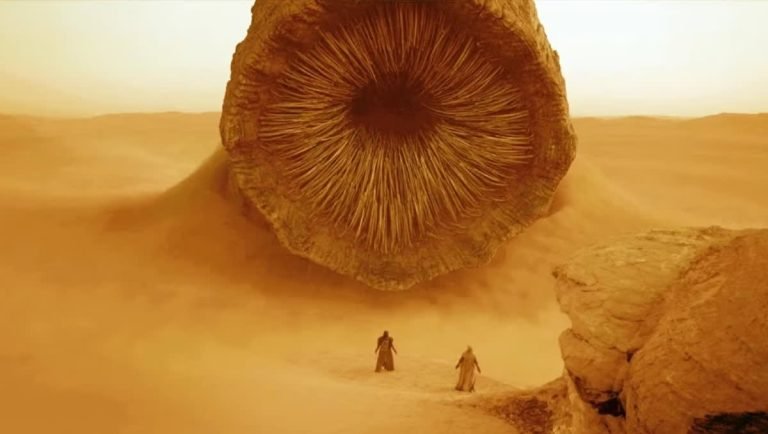
Dune: Part Three Teaser Lands, Tickets On Sale – Nerd Culture Alert
The sands of Arrakis are stirring once more, and this time, the stakes have never been higher. For the legions of fans immersed in Frank Herbert’s epic universe, and indeed for every discerning Nerd captivated by cinematic storytelling, the recent revelations surrounding Dune: Part Three mark a pivotal moment. A cryptic yet compelling teaser, accompanied by a fresh collection of striking posters, has officially landed, igniting fervent discussions across the digital landscape. More significantly, this tantalizing glimpse into the future of Arrakis coincides with the global opening of advanced ticket sales, signaling the unwavering confidence of the studio in Denis Villeneuve’s ambitious conclusion to his acclaimed trilogy.
This is not merely another film announcement; it is the culmination of a meticulously crafted saga that has redefined science fiction for a new generation. From the desolate beauty of Arrakis to the intricate political machinations of the Bene Gesserit, Villeneuve has brought Herbert’s complex vision to life with unparalleled fidelity and breathtaking scope. The journey of Paul Atreides, from reluctant heir to messianic figure, has resonated deeply, exploring themes of destiny, power, and environmentalism with a gravitas rarely seen in blockbuster cinema. The anticipation for Part Three is palpable, fueled by the promise of confronting the dire consequences foreshadowed in its predecessors and the adaptation of one of science fiction’s most challenging narratives: Dune Messiah.
For those who have followed Paul’s ascent, the trajectory has always hinted at a darker path. The burden of prescience, the manipulation by powerful factions, and the intoxicating allure of leadership have slowly chipped away at the young Duke. As the new material suggests, this final chapter will delve headfirst into the moral ambiguities and tragic inevitability of his choices. The relationship between Paul and Chani, central to the emotional core of the narrative, appears strained, a reflection of the harsh realities gripping Arrakis. This article serves as your comprehensive guide, dissecting every available detail, offering expert analysis, and preparing you for the grand finale of a cinematic phenomenon that continues to capture the imagination of every dedicated Nerd and film enthusiast worldwide.
From character transformations to the narrative’s grim outlook, we will explore what these early glimpses mean for the future of the Dune universe. We’ll examine the strategic timing of these releases, the significance of the cast’s insights, and the broader implications for the portrayal of Herbert’s challenging second novel. Prepare to delve deep into the lore, the performances, and the profound impact this concluding chapter promises to deliver, cementing Dune‘s legacy not just as a film series, but as a cultural touchstone.
Dune: Part Three Teaser and Posters Spark Excitement Among Every Nerd
The cinematic universe of Dune continues its expansion, with Dune: Part Three now officially teasing its forthcoming arrival through a newly released teaser trailer and a series of dynamic posters. These initial glimpses, unveiled across the film’s official social media channels and premium cinema formats like IMAX, 4DX, and Dolby, confirm the highly anticipated return of Denis Villeneuve’s trilogy on December 17, 2026. This strategic release not only re-engages the global audience but also initiates the worldwide sale of advance tickets, signaling robust confidence in the film’s box office potential.
The brief teaser, while offering limited new footage, masterfully focuses on the deepening schism between Paul Atreides, portrayed by Timothée Chalamet, and Chani, brought to life by Zendaya. This narrative emphasis aligns with previous insights, including a July trailer commentary, which highlighted Chani’s palpable fury and her accusation that Paul has betrayed his vow to eschew personal power. Such a direct confrontation underscores the emotional core of the sequel, setting a somber tone for the impending conclusion and promising a complex exploration of loyalty, ambition, and the harsh realities of power within the perilous landscape of Arrakis. For any Nerd deeply invested in complex character arcs, this development is particularly gripping.
Direct Answer: Dune: Part Three has unveiled its first teaser trailer and new posters, confirming a December 17, 2026, release date and initiating global ticket sales. The promotional material prominently features the escalating tension between Paul Atreides and Chani, hinting at significant character development and a darker narrative trajectory, aligning with director Denis Villeneuve’s vision for adapting Frank Herbert’s challenging Dune Messiah.
The Evolution of Paul Atreides: From Messiah to Dark Emperor
The transformation of Paul Atreides is central to the upcoming film, moving far beyond the heroic archetype. Timothée Chalamet, the actor embodying Paul, has offered significant insights into his character’s dark evolution, describing him as having become ‘the worst of his own vision.’ This stark assessment underscores the tragic trajectory of Paul, who, despite his messianic rise, finds himself entangled in the devastating holy war he inadvertently ignited—a conflict responsible for over 60 billion deaths. This development challenges conventional hero narratives, presenting a protagonist grappling with immense power and its catastrophic global ramifications.
Chalamet further elaborated on the distinctive nature of Dune: Part Three, asserting that it will deviate from the established formula of its predecessors. He characterized Paul in the new film as an ‘all-powerful emperor of the dark universe,’ reinforcing the heavier, more somber tone that is expected to permeate the conclusion of the trilogy. This darker portrayal is a direct adaptation of Frank Herbert’s Dune Messiah, a novel renowned for its exploration of the dangers of charismatic leaders and the cyclical nature of power, a theme that resonates deeply within philosophical science fiction and offers a rich tapestry for any discerning Nerd to explore.
Chani’s Pivotal Role and Zendaya’s Perspective
Zendaya’s portrayal of Chani is set to take on unprecedented importance, reflecting a narrative divergence from the books that aims to heighten the emotional stakes. The actress previously hinted at the severe challenges faced by the characters during this year’s CinemaCon, stating, ‘It’s been a tough, cruel few years. There’s still so much to fight for.’ This sentiment suggests a landscape of relentless struggle and continued adversity, painting a grim picture for the inhabitants of Arrakis under Paul’s burgeoning imperium.
Regarding Chani herself, Zendaya was direct and poignant: ‘That youthful gaze is completely gone.’ This statement signifies a profound maturation and hardening of the character, indicating that Chani has endured significant trials that have stripped away any lingering naiveté. The decision to portray a more involved and potentially adversarial Chani, as teased in the new footage, presents both a risk and a compelling opportunity for the filmmakers. It allows for a more emotionally charged conclusion to the trilogy, offering a deeply personal conflict that will resonate far beyond the grand cosmic battles, particularly for fans attuned to intricate character dynamics.
The Ensemble Cast and New Additions to the Dune Universe
Dune: Part Three boasts an impressive ensemble, blending returning stars with fresh faces, a testament to the franchise’s growing prestige and narrative ambition. The film will see the return of established figures such as Jason Momoa, Florence Pugh, Rebecca Ferguson, Isaach De Bankolé, Charlotte Rampling, Anya Taylor-Joy, Robert Pattinson, and Javier Bardem. Their presence ensures continuity with the previous installments while allowing for deeper exploration of their respective character arcs within the evolving political and spiritual landscape of Arrakis.
Adding to this stellar lineup are new cast members who will bring vital characters from Frank Herbert’s Dune Messiah to life. Nakoa-Wolf Momoa and Ida Brooke are confirmed to join the cast, portraying Leto II and Ghanima, respectively. These characters are central to the future of the Atreides dynasty and the broader galactic implications of Paul’s rule. Earlier reports also detailed the appearance of Robert Pattinson as Scytale, a character whose introduction promises to introduce complex moral and political challenges, deepening the intricate web of alliances and betrayals that define the Dune universe. This expansion of the cast reflects the expansive scope of the story being told, promising a rich and multi-faceted narrative for Nerd audiences to dissect.
Direct Answer: Dune: Part Three will feature a returning cast including Jason Momoa, Florence Pugh, and Rebecca Ferguson, alongside new additions Nakoa-Wolf Momoa as Leto II, Ida Brooke as Ghanima, and Robert Pattinson as Scytale. These new characters are critical to adapting Frank Herbert’s Dune Messiah, expanding the narrative scope and introducing key figures for the evolving Atreides dynasty.
Adapting Dune Messiah: Challenges and Opportunities
The core narrative of Dune: Part Three is an adaptation of Frank Herbert’s second novel, Dune Messiah, with a screenplay penned by Denis Villeneuve and Brian K. Vaughan. This choice immediately signals a darker, more introspective journey than the first two films, which primarily adapted the initial Dune novel. Dune Messiah is notoriously more philosophical and less action-driven, focusing intensely on the moral quagmire Paul Atreides finds himself in after becoming the Kwisatz Haderach and the leader of a devastating jihad.
The novel explores the weight of Paul’s prescience, which allows him to see all possible futures but traps him in a path he desperately tries to avoid. He grapples with the ‘golden path’ and the responsibility for the holy war he unleashed, which has claimed billions of lives across the cosmos. New enemies, both political and religious, emerge to challenge his imperium, forcing him to confront the ultimate price of his power. This adaptation presents a significant challenge for Villeneuve, requiring a delicate balance between Herbert’s philosophical depth and the cinematic spectacle expected by audiences. However, it also offers a unique opportunity to deliver a powerful, thought-provoking conclusion that transcends typical blockbuster fare, delivering a profound experience for the discerning Nerd.
The Strategic Rollout: Teasers, Posters, and Premium Formats
The simultaneous release of the teaser, new posters, and advance ticket sales for Dune: Part Three is a meticulously planned strategic move by Warner Bros. This coordinated rollout is designed to maximize impact and generate immediate enthusiasm, translating directly into early ticket purchases. The emphasis on premium formats—IMAX, 4DX, and Dolby Cinema—underscores the studio’s confidence in the film’s visual and auditory grandeur, promising an immersive experience that encourages fans to secure their seats for the most technologically advanced viewing options.
For the studio, strong early ticket sales, particularly in these high-value formats, serve as a significant indicator of audience demand and help build positive pre-release momentum. It allows them to gauge public interest and adjust marketing strategies accordingly. This approach also caters directly to the dedicated Nerd and cinephile community, who prioritize experiencing such epic narratives on the largest and most immersive screens possible, making these premium offerings a key component of the film’s commercial strategy.
The Potential Pitfalls and Promising Aspects for Nerd Audiences
Adapting Dune Messiah for the big screen carries inherent risks, particularly concerning narrative faithfulness and audience expectations. Frank Herbert’s second novel is significantly less action-oriented than its predecessor, delving deeply into Paul’s psychological torment and the philosophical implications of his messianic status. For a mainstream audience accustomed to the grand-scale battles of Part One and Part Two, the more introspective and somber tone of Messiah could prove challenging. The divergence regarding Chani’s character, potentially making her a more antagonistic force, is also a calculated risk, as it shifts a core relationship from the source material.
However, these very risks also present compelling opportunities. A more involved and emotionally complex Chani could inject significant dramatic weight into the trilogy’s conclusion, offering a fresh perspective on Paul’s choices and their impact. Furthermore, a faithful, albeit cinematic, adaptation of Dune Messiah allows Villeneuve to cement his vision as not just a visually stunning director, but one capable of tackling profound, challenging themes. For the discerning Nerd who appreciates intellectual depth alongside spectacle, this approach could elevate the trilogy beyond mere entertainment, transforming it into a definitive work of thoughtful science fiction cinema, much like its literary source.
Navigating the Narrative Leap: The Time Jump and its Implications
Dune: Part Three will reportedly feature a significant time jump following the events of Dune: Part Two, a narrative device crucial for adapting Dune Messiah. This leap allows the story to unfold years after Paul’s ascent to power, showcasing the devastating consequences of the jihad he led and the entrenchment of his imperium. Such a jump instantly alters the landscape, presenting a Paul who has fully embraced, or been consumed by, his role as the Kwisatz Haderach, far removed from the desert fighter of the previous film.
The implications of this time jump are vast. It facilitates the introduction of Paul and Chani’s children, Leto II and Ghanima, who are central to Dune Messiah and subsequent novels. It also allows for the political and social repercussions of Paul’s reign to be fully realized, painting a picture of a universe forever altered by his actions. This narrative choice, while potentially disorienting for some viewers, is essential for conveying the full scope of Herbert’s vision, demonstrating how power corrupts and destiny can be a cage rather than a liberation. For any Nerd of the lore, understanding this structural choice is key to appreciating the film’s ambitious scope.
Future Prospects: The Legacy of Denis Villeneuve’s Dune Trilogy for the Nerd Community
As Dune: Part Three prepares to draw Denis Villeneuve’s ambitious adaptation to a close, its legacy for the Nerd community and cinematic history is already taking shape. The trilogy, by tackling a foundational work of science fiction with unprecedented scale and artistic integrity, has not only introduced a new generation to Arrakis but has also validated the depth and complexity of the genre. Villeneuve’s commitment to Herbert’s vision, particularly his willingness to explore the darker, more cautionary aspects of Paul’s journey, sets a high bar for future adaptations of complex literary works.
Beyond the immediate impact of Part Three, the success of this franchise could pave the way for further exploration of Herbert’s universe. While Villeneuve has indicated this will be his final Dune film, the groundwork laid for characters like Leto II and Ghanima suggests a fertile ground for spin-offs, prequels, or even a continuation by other filmmakers, if the critical and commercial success persists. The engagement from the dedicated Nerd fanbase, fueled by discussions around lore, character evolution, and thematic interpretation, ensures that Dune will remain a vibrant and talked-about cultural touchstone for years to come.
This trilogy has demonstrated that intelligent, dense science fiction can thrive on the big screen, challenging audiences while delivering spectacle. It’s a testament to bold storytelling and meticulous craftsmanship, solidifying its place as a benchmark for epic cinema. The profound themes explored—from ecological warnings to the perils of messianic leadership—are more relevant than ever, making Dune a timeless commentary on humanity’s place in the cosmos and its eternal struggle with power and destiny.
FAQ: Unraveling Common Questions for the Dune Nerd
-
When is Dune: Part Three scheduled for release?
Dune: Part Three is officially slated to hit theaters worldwide on December 17, 2026. This date was confirmed alongside the release of the film’s first teaser and new promotional posters, indicating that the production is well on track to deliver the concluding chapter of Denis Villeneuve’s epic trilogy within the anticipated timeframe. Fans are already marking their calendars for what promises to be a monumental cinematic event, with advance ticket sales having already commenced globally across various premium formats. -
What book is Dune: Part Three adapting?
The third installment of Denis Villeneuve’s Dune saga will adapt Frank Herbert’s second novel in the series, Dune Messiah. This choice signifies a crucial shift in the narrative’s tone and thematic focus, as Dune Messiah is known for its darker, more philosophical exploration of Paul Atreides’ rule and the unforeseen consequences of his rise to power. It delves into the complexities of leadership and the weight of prescience, offering a profound continuation to the story established in the first two films. -
What is the primary conflict highlighted in the new teaser for Dune: Part Three?
The recently released teaser for Dune: Part Three primarily emphasizes the escalating tension and eventual rupture between Paul Atreides, portrayed by Timothée Chalamet, and Chani, played by Zendaya. The footage hints at a significant emotional conflict, with Chani expressing profound anger and accusing Paul of betraying his earlier promise to avoid seeking power for personal gain. This central conflict is expected to be a major driving force in the film’s narrative, shaping the emotional landscape of the trilogy’s conclusion. -
How does Timothée Chalamet describe Paul Atreides’ evolution in Part Three?
Timothée Chalamet has starkly described Paul Atreides’ character in Dune: Part Three as having become ‘the worst of his own vision.’ He further elaborated that the film will present Paul as an ‘all-powerful emperor of the dark universe,’ indicating a profound and somber transformation from the conflicted hero of previous installments. This portrayal aligns with the darker themes of Dune Messiah, where Paul grapples with the devastating impact of his actions and the burden of his messianic status. -
What significance does Zendaya attach to Chani’s character in the upcoming film?
Zendaya has conveyed that Chani undergoes a significant maturation in Dune: Part Three, noting that ‘that youthful gaze is completely gone.’ This statement suggests that Chani has endured considerable hardship, leading to a more hardened and complex portrayal. Her increased involvement and potential divergence from Paul’s path are designed to add substantial emotional depth to the narrative, presenting a more nuanced and impactful conclusion to the trilogy than a mere faithful adaptation of the book might have offered. -
Are there any new major cast members joining for Dune: Part Three?
Yes, Dune: Part Three is introducing several new cast members to bring key characters from Dune Messiah to life. Nakoa-Wolf Momoa and Ida Brooke are confirmed to join as Leto II and Ghanima, respectively. Additionally, Robert Pattinson has been reported to appear as Scytale. These new additions expand the intricate political and familial dynamics of the Atreides saga, setting the stage for future developments within the Herbertian universe. -
What is the strategic timing behind the teaser and ticket sales release?
The simultaneous release of the teaser, new posters, and the opening of advance ticket sales is a deliberate marketing strategy designed to generate maximum immediate impact and convert excitement into early purchases. By offering tickets across premium formats like IMAX, 4DX, and Dolby Cinema, the studio aims to capitalize on the anticipation of dedicated fans, signaling strong confidence in the film’s visual spectacle and ensuring a robust start to its box office performance.









Post Comment