Kimi Antonelli: F1’s Youngest Champion – Records & Curiosities
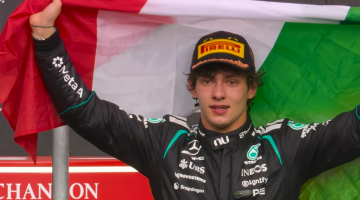
In the high-octane world of Formula 1, where legends are forged and history is perpetually rewritten, a new name has emerged, echoing with the force of a thousand horsepower: Kimi Antonelli. This past Sunday, the motorsports universe bore witness to an extraordinary moment as Antonelli, an Italian prodigy, clinched the Formula 1 World Championship. His victory wasn’t merely a win; it was a seismic shift in the sport’s annals, cementing his place as the youngest champion in its illustrious history.
The Grand Prix of Mexico became the stage for this unforgettable triumph, where the Mercedes driver, at an astounding 20 years and 68 days old, crossed the finish line in third place. This podium finish was enough to secure the coveted trophy, signaling the culmination of a rookie season that defied all expectations. Antonelli’s achievement isn’t just about raw speed or skillful maneuvering; it’s a testament to immense talent, strategic brilliance, and an unwavering drive that has captivated fans worldwide.
For those deeply invested in the intricate narratives and historical benchmarks of motorsports, Antonelli’s ascendancy offers a treasure trove of fascinating curiosities. His victory not only shattered a long-held record but also ushered in a new generation of champions, bridging decades of racing heritage with a fresh, youthful energy. As we delve deeper, we’ll explore the specific records broken, the national pride rekindled, and the strategic gambles that paved the way for this remarkable success, peeling back the layers of a story that promises to redefine Formula 1 for years to come.
Kimi Antonelli’s Historic Ascent: Unpacking Key Curiosities
Kimi Antonelli’s championship victory at the Mexican Grand Prix is far more than a single race win; it’s a profound redefinition of what is possible for young talent in Formula 1. At just 20 years and 68 days old, Antonelli secured his maiden world title, etching his name into the record books as the youngest champion in the sport’s storied history. This monumental achievement wasn’t a sudden burst but the climax of a season consistently marked by groundbreaking performances and strategic brilliance.
His age at the time of winning stands as a remarkable curiosity, not merely for being young, but for the sheer margin by which he eclipsed the previous record. The long-standing benchmark was held by the quadruple world champion Sebastian Vettel, who was 23 years and 134 days old when he clinched his first title in 2010. Antonelli’s victory surpassed Vettel’s record by more than three years, a generational leap that underscores his extraordinary capabilities and the accelerating pace of talent development in motorsport.
Furthermore, Antonelli’s birth year in 2006 makes him the first Formula 1 World Champion born in the 2000s. This detail is a significant curiosity, marking a clear generational shift in a sport often dominated by older, more experienced drivers. It heralds a new era, demonstrating that the pinnacle of motorsport is now within reach for athletes who have grown up in a rapidly evolving technological and competitive landscape.
Throughout his dream season, Antonelli accumulated several ‘youngest ever’ accolades even before the championship decider. He became the youngest driver to start on pole position at the Chinese Grand Prix, showcasing his immediate pace and qualifying prowess. Shortly thereafter, following a victory in Japan, he became the youngest ever to lead the championship standings. These milestones were not isolated incidents but a clear trajectory of a rookie destined for greatness, culminating in his overall championship win.
A Legacy of Youthful Triumph: How Antonelli Stacks Up
The scale of Antonelli’s achievement becomes even clearer when we consider the historical context of Formula 1 champions. While the sport has always celebrated youthful talent, the consistency and speed with which Antonelli broke multiple records in a single season are virtually unparalleled. He didn’t just break a record; he decisively smashed it, setting a new, incredibly high bar for future generations.
His early career success with Mercedes, alongside the experienced George Russell, also raises intriguing questions about team dynamics and talent management. Mercedes made a bold decision to back a young driver, and that faith was repaid with a world title, showcasing a successful blend of nurturing nascent potential with seasoned championship expertise. Antonelli’s story is a compelling chapter in the ongoing narrative of Formula 1, proving that raw talent, when meticulously honed and strategically supported, can indeed rewrite the rules of the game.
| Champion | Age at First Title Win | Year of First Title | Nationality | Previous Record Holder |
|---|---|---|---|---|
| Kimi Antonelli | 20 years, 68 days | 2026 | Italian | Sebastian Vettel |
| Sebastian Vettel | 23 years, 134 days | 2010 | German | Lewis Hamilton (23y, 301d) |
Italian Pride Restored: Curiosities of a Nation’s Return to Glory
Kimi Antonelli’s Formula 1 World Championship is not merely a personal triumph; it’s a momentous occasion that has rekindled a deep sense of national pride across Italy, ending a remarkably long and arduous wait. For 73 agonizing years, Italian motorsport fans had yearned for one of their own to lift the coveted F1 trophy. Antonelli’s victory has finally broken this decades-long drought, connecting the present generation with a golden era of Italian racing history.
The last time an Italian driver claimed the world championship was a distant memory, residing in the annals of motorsport history with legends like Nino Farina and Alberto Ascari. Farina was the very first Formula 1 World Champion in 1950, a pioneer who set the initial benchmark. Alberto Ascari followed, becoming a double world champion in 1952 and 1953, showcasing a period of unparalleled Italian dominance in the nascent years of F1. Antonelli’s success now places him in this esteemed lineage, a modern-day hero reviving a proud national tradition.
Beyond the overall championship, Antonelli delivered another profound curiosity for Italian fans: a victory at their home Grand Prix. He became the first Italian to triumph at the legendary Italian Grand Prix since 1966. This feat had eluded Italian drivers for 58 years, a dry spell stretching back to Ludovico Scarfiotti’s memorable win. To achieve both the world championship and a home victory in the same season elevates Antonelli’s status beyond that of a mere champion; he is a symbol of Italy’s glorious return to the summit of motorsport.
The emotional resonance of these achievements cannot be overstated. For a nation where motorsport is deeply embedded in the cultural fabric, from the iconic Ferrari team to the passionate tifosi, Antonelli’s wins are a powerful affirmation. They signify a revival, a moment of collective celebration that transcends the sport itself, uniting generations of fans under the banner of a new Italian champion.
The Weight of History: Farina, Ascari, and the New Era
The names of Nino Farina and Alberto Ascari resonate with historical significance, representing the foundational triumphs of Italian drivers in Formula 1. Farina, as the inaugural champion, carved a path, while Ascari solidified Italy’s early dominance. Antonelli now shoulders that legacy, not as a successor simply, but as a bridge between these historic figures and the contemporary demands of F1. His achievements invite a new generation to explore the rich past of Italian motorsport, understanding the context of the decades-long wait and appreciating the magnitude of his dual victories – the world title and the emotional home win.
The Mercedes Bet: Unveiling the Curiosities of a Strategic Partnership
The decision by Mercedes to entrust a vital seat to Kimi Antonelli, a rookie in the highly competitive world of Formula 1, stands out as one of the most intriguing strategic gambles in recent memory. This audacious bet, made by one of F1’s most decorated teams, delivered an astonishing return: a world championship in Antonelli’s debut season. It highlights a fascinating curiosity about modern F1 team management – the courage to prioritize raw, unproven talent over established experience in a high-stakes environment.
Mercedes’ faith in Antonelli was not merely a passive endorsement; it was an active partnership. The young Italian joined forces with the seasoned George Russell, forming a dynamic pairing that would lead the Silver Arrows to glory. This blend of youthful exuberance and experienced guidance proved to be a championship-winning formula. Antonelli’s ability to seamlessly integrate into the team, adapt to the pinnacle of motorsport, and deliver immediate results speaks volumes about both his inherent talent and the supportive, high-performance environment fostered by Mercedes.
The season unfolded like a dream for the rookie and his team. Antonelli’s first career victory came early, at the Chinese Grand Prix, signaling his potent capability to convert strong performances into wins. From that point, his season became a remarkable narrative of consistent podium finishes and continuous record-breaking achievements. Each race was a testament to Mercedes’ foresight and Antonelli’s unwavering performance under immense pressure. The team’s investment in nurturing his talent, providing the platform and resources needed for success, paid off spectacularly.
This strategic partnership offers a compelling case study for sports organizations worldwide. It demonstrates that sometimes, the boldest moves, those that challenge conventional wisdom by empowering extraordinary young talent, can yield the most extraordinary results. Mercedes didn’t just win a title; they validated a philosophy, proving that a long-term vision for talent development can disrupt the status quo and lead to unprecedented success.
Beyond the Podium: The Curiosities of Mercedes’ Vision
What makes Mercedes’ vision particularly curious is the inherent risk involved. Placing a 20-year-old, however talented, in such a critical role requires immense confidence and a robust development framework. The payoff, in Antonelli’s case, was swift and definitive, transforming a potential long-term investment into an immediate championship triumph. This successful outcome not only secures Mercedes’ future but also raises questions about how other F1 teams might adapt their strategies to identify and cultivate their next generation of champions, inspired by Antonelli’s rapid ascent.
The Enduring Impact: Curiosities of Antonelli’s Legacy
Kimi Antonelli’s record-breaking championship season has set a new benchmark for what is achievable for young drivers in Formula 1, creating an enduring impact that extends far beyond the immediate celebrations. His triumph isn’t just about his name in the history books; it’s about reshaping perceptions of talent, age, and competitive readiness in elite motorsport. The curiosity here lies in how swiftly and decisively he’s carved out a legacy that many drivers spend decades chasing, all within a single rookie year.
The most immediate impact is on the sport itself. Antonelli injects a fresh, youthful energy into Formula 1, attracting new demographics and reinvigorating existing fan bases. His story becomes a powerful narrative of ambition realized, inspiring countless aspiring young racers around the globe. He demonstrates that with exceptional talent and dedicated support, the path to the pinnacle can be significantly shorter than previously imagined, challenging the long-held belief that extensive experience is always a prerequisite for success.
For Italy, the impact is profoundly emotional and culturally significant. Beyond ending a 73-year wait, Antonelli’s success has reignited a national passion for Formula 1. It provides a contemporary hero, a figure who embodies the spirit of Italian excellence and resilience. This national pride translates into increased engagement, potentially inspiring a new wave of Italian talent to pursue careers in motorsport, from drivers to engineers and team personnel.
Within Mercedes, Antonelli’s championship solidifies their reputation as a team capable of identifying, nurturing, and delivering world-class talent. It validates their long-term strategic investments in youth programs and sends a clear message to rivals about their commitment to future dominance. The partnership with George Russell, culminating in a constructors’ title, further underscores the strength and depth of their driver lineup and engineering prowess.
Key Milestones in Antonelli’s Record-Breaking Season
- Grand Prix of Mexico: Secured World Championship at 20 years, 68 days old.
- Chinese Grand Prix: Youngest driver to start on pole position.
- Japanese Grand Prix: Youngest driver to win a Grand Prix and lead the championship.
- Italian Grand Prix: First Italian to win at home since Ludovico Scarfiotti in 1966.
- Season-Long Consistency: Accumulated multiple podiums and points finishes throughout his debut year.
Navigating the Future: Curiosities of Sustaining Excellence
While Kimi Antonelli’s championship season has been nothing short of spectacular, the curiosities now shift to the monumental challenge of sustaining such an elevated level of performance. Achieving greatness is one thing; maintaining it in the cutthroat environment of Formula 1, where every competitor is striving for the same peak, presents an entirely different set of pressures. For a young champion, the path forward is fraught with unique demands that will test his resilience, adaptability, and unwavering focus.
The immediate aftermath of a championship win often brings increased scrutiny and heightened expectations. Antonelli will no longer be the underdog or the exciting newcomer; he will be the reigning champion, the one everyone is aiming to beat. This shift in status brings with it psychological pressures unlike any he has faced before. The curiosity lies in how he will manage this newfound weight of expectation, not just from his team and fans, but from the media and his fellow competitors.
Furthermore, the competitive landscape of Formula 1 is constantly evolving. Regulations change, rival teams develop, and the technical demands of the cars are always pushed to their limits. Antonelli’s challenge will be to continuously evolve as a driver, adapting to new car designs, tire compounds, and competitive strategies. His youth is an asset, offering a fresh perspective, but it also means he has less historical data to draw upon compared to more experienced rivals. The curiosity here is how he will leverage his natural talent and the resources of Mercedes to stay ahead in a sport defined by relentless innovation.
Maintaining physical and mental peak performance across long, demanding seasons is also a significant hurdle. The rigorous travel schedule, intense training regimes, and constant media engagements can take a toll. For a driver who achieved such rapid success, finding a balance between pushing limits and preventing burnout will be crucial. His ability to build a consistent, dominant career, much like the multi-champions who preceded him, will depend heavily on navigating these multifaceted pressures with grace and strategic foresight.
Beyond the Records: Curiosities of Enduring Dominance
The journey from a record-breaking rookie to a multi-championship legend is paved with continuous learning and adaptation. Antonelli’s early success is a powerful indicator of his potential for enduring dominance. The curiosity now resides in observing how he refines his race craft, how he influences car development, and how he manages his psychological game to maintain his edge. His trajectory in the coming seasons will be closely watched, as he aims to transform a single historic achievement into a lasting legacy of sustained excellence in Formula 1.
Lessons from a Phenomenal Rise: Curiosities for Aspiring Talents
Kimi Antonelli’s meteoric ascent to the Formula 1 World Championship in his rookie season offers a wealth of curious insights for aspiring talents across various fields, not just motorsport. His journey, marked by early success and record-breaking achievements, provides a compelling narrative of what it takes to reach the pinnacle and how strategic support can amplify raw potential. The curiosities here lie in discerning the underlying principles that contributed to his phenomenal rise, offering generalized lessons that transcend the specific context of racing.
One clear lesson is the paramount importance of nurturing talent from a young age. Antonelli’s success isn’t an overnight phenomenon; it’s the culmination of years of development, practice, and competition in junior categories. For aspiring individuals, this underscores the value of early specialization and consistent dedication to honing one’s craft. It highlights that true potential is often identified and cultivated long before it reaches the global stage, requiring foresight from mentors and institutions.
Another curious aspect is the power of a strategic partnership. Mercedes’ decision to back Antonelli, providing him with a top-tier car and an experienced team, was instrumental. This demonstrates that even the most talented individuals thrive when placed in an environment that offers robust support, clear pathways for development, and the resources necessary to perform at the highest level. For aspiring talents, this emphasizes the importance of aligning with organizations or mentors who believe in their potential and can offer the necessary platform for growth.
Furthermore, Antonelli’s ability to perform under immense pressure, securing poles, wins, and ultimately a championship in his debut year, showcases the critical role of mental fortitude. The transition from junior categories to Formula 1 is daunting, yet Antonelli managed to deliver consistently. This suggests that alongside technical skills, the development of psychological resilience, adaptability, and a strong competitive mindset are indispensable for success at elite levels. Aspiring talents can learn from this, recognizing that mental preparation is as crucial as physical and technical training.
What Antonelli’s Journey Reveals About Future Stars
Antonelli’s story also reveals a curious trend: the increasing youthfulness of top performers across many domains. It challenges traditional notions of experience being the sole determinant of success, suggesting that rigorous training, advanced analytics, and structured development programs can accelerate a talent’s readiness. For future stars, Antonelli’s journey underscores the combined importance of innate ability, early and sustained development, strategic mentorship, and an unwavering belief in one’s capacity to perform under the brightest spotlights, ultimately rewriting the rules of what constitutes a ‘rookie’ season.
Kimi Antonelli’s Milestones: Further Curiosities for F1 Enthusiasts
Beyond the headline-grabbing achievement of becoming the youngest Formula 1 champion, Kimi Antonelli’s debut season is filled with an array of other fascinating curiosities that underscore his exceptional talent and the unprecedented nature of his rise. These milestones, often overshadowed by the ultimate championship victory, provide deeper insights into the sheer dominance and consistent performance that characterized his rookie year. For F1 enthusiasts, these additional details paint a more complete picture of a truly historic season.
One such curiosity is the consistent nature of his record-breaking performances. It wasn’t just a single moment of brilliance, but a series of ‘youngest ever’ accolades that began early in the season. From the youngest to claim a pole position in China to the youngest to win a Grand Prix and subsequently lead the championship after his victory in Japan, Antonelli demonstrated an immediate grasp of F1’s demands across different stages of a race weekend. This sustained high performance, rather than sporadic flashes, highlights a maturity beyond his years.
Another intriguing curiosity lies in the speed of his adaptation. Formula 1 cars are notoriously complex, requiring immense skill to master their sophisticated aerodynamics, power units, and tire management. Antonelli’s seamless transition, immediately contending for wins and podiums, suggests an extraordinary capacity for rapid learning and intuitive understanding of these high-performance machines. This swift adaptation minimized the typical ‘rookie phase’ often seen with even promising new drivers, allowing him to challenge for the title from the outset.
His partnership with George Russell at Mercedes also presents a curious dynamic. How did a rookie not only compete but ultimately outshine his more experienced teammate in the championship standings? This speaks to Antonelli’s competitive drive and the team’s ability to manage two highly talented drivers, ensuring both had the opportunity to perform. It raises questions about future team strategies and the balance between experience and youthful ambition in top-tier motorsport. These collective curiosities combine to define a rookie season that will be analyzed and celebrated for generations to come, truly setting Antonelli apart as a generational talent.
A Glimpse into the Future: What These Curiosities Portend
These specific milestones and the remarkable consistency behind them are strong indicators of what Kimi Antonelli’s future in Formula 1 might hold. They suggest not just a one-off triumph, but the foundation for a potentially dominant career. The curiosity is now fueled by anticipation: how many more records will he break, and how will he continue to shape the narrative of Formula 1 in the coming years? His rookie year was a prologue, and the chapters ahead promise to be equally compelling, marking the beginning of what Mercedes hopes will be a long and victorious era.
Frequently Asked Questions About Kimi Antonelli’s Historic F1 Championship
What is Kimi Antonelli’s age when he became F1 champion?
Kimi Antonelli made history by becoming the youngest Formula 1 World Champion at the age of 20 years and 68 days. This incredible feat was achieved at the Grand Prix of Mexico, securing his title with a third-place finish. His youthfulness at the pinnacle of motorsport has captivated fans and experts alike, signifying a remarkable acceleration in the timeline for championship contention in Formula 1. This record-breaking age underscores his exceptional talent and the effectiveness of modern driver development programs.
Whose F1 record did Kimi Antonelli break?
Kimi Antonelli broke the record previously held by four-time world champion Sebastian Vettel. Vettel was 23 years and 134 days old when he won his first Formula 1 title in 2010. Antonelli’s achievement surpassed Vettel’s benchmark by more than three years, making his victory a significant moment in the sport’s history. This substantial margin highlights the extraordinary nature of Antonelli’s accomplishment and places him in an elite category of F1 legends.
When was the last time an Italian driver won the F1 championship before Antonelli?
Before Kimi Antonelli’s triumph, Italy had waited a remarkable 73 years for a Formula 1 World Champion. The last Italian drivers to achieve this feat were Nino Farina, the inaugural F1 champion in 1950, and Alberto Ascari, who secured back-to-back titles in 1952 and 1953. Antonelli’s victory not only ended this decades-long drought but also brought immense national pride back to Italian motorsport.
Which Grand Prix secured Antonelli’s F1 title?
Kimi Antonelli secured his historic Formula 1 World Championship at the Grand Prix of Mexico. A third-place finish in this race was sufficient for him to clinch the title with races still remaining in the season. The Mexico GP thus became the hallowed ground where Antonelli etched his name into motorsport history, concluding a season of remarkable performances and consistent points scoring.
Did Kimi Antonelli achieve other significant records in his championship season?
Yes, Kimi Antonelli’s championship season was replete with other significant record-breaking achievements. He became the youngest driver ever to secure a pole position, achieving this at the Chinese Grand Prix. Furthermore, after winning in Japan, he became the youngest driver to lead the Formula 1 championship standings. These milestones underscore the consistent and multifaceted nature of his exceptional rookie year.
What is the significance of Antonelli being born in 2006?
The fact that Kimi Antonelli was born in 2006 makes him the first Formula 1 World Champion to be born in the 2000s. This detail carries significant generational weight, marking a clear shift in the sport’s demographic and competitive landscape. It signals the rise of a new wave of talent who have grown up in a highly digitized and globalized world, demonstrating that the future of F1 is indeed in very young, capable hands.
How did Mercedes support Kimi Antonelli’s championship bid?
Mercedes played a crucial role in Kimi Antonelli’s championship bid by placing immense faith in the rookie driver and providing him with a competitive car and a world-class team environment. Partnering him with the experienced George Russell, Mercedes’ strategic decision to nurture young talent paid off dramatically. Their robust support system, engineering prowess, and commitment to his development were fundamental in enabling Antonelli to perform at his peak and ultimately secure the world title.
What are the expectations for Kimi Antonelli’s future in Formula 1?
The expectations for Kimi Antonelli’s future in Formula 1 are exceptionally high following his record-breaking championship season. Mercedes, his team, anticipates this is just the beginning of a long and victorious era. Given his youth, proven track record of breaking multiple records, and remarkable consistency, many believe Antonelli has the potential to become a dominant force in F1 for years to come, challenging for multiple championships and further cementing his legacy as one of the sport’s all-time greats.
The Next Chapter: What Truly Matters After This Historic Win
Kimi Antonelli’s achievement is more than a fleeting headline; it is a profound marker in the narrative of Formula 1. His journey from a promising young talent to the youngest world champion is a testament to extraordinary skill, relentless dedication, and the strategic foresight of his team. For enthusiasts of the sport, this isn’t just about celebrating a new victor, but about witnessing the dawn of a potential new era where age is no longer a barrier to achieving the impossible.
As the cheers from Mexico subside and the champagne bottles are put away, the true significance of Antonelli’s season begins to crystallize. He has not only claimed the ultimate prize but has also etched his name alongside F1’s most revered figures, breathing new life into a sport steeped in tradition. His records are not mere statistics; they are vivid demonstrations of a competitive spirit that knows no bounds, pushing the limits of what we thought was possible.
The curiosities surrounding Antonelli’s rise – his unprecedented youth, the breaking of a multi-decade national drought, and Mercedes’ bold, triumphant gamble – converge to tell a story rich with detail and immense implications. It’s a narrative that will be recounted for generations, inspiring aspiring racers and reminding seasoned fans of the enduring magic of Formula 1.
Ultimately, Antonelli’s championship serves as a powerful reminder that while the past is prologue, the future is always being written by those brave enough to challenge its conventions. His path promises to be one of sustained excellence and continued record-breaking. The question is no longer if he can win, but how many more chapters of F1 history he is destined to author. The world watches, eager for the next thrilling turn.












Post Comment