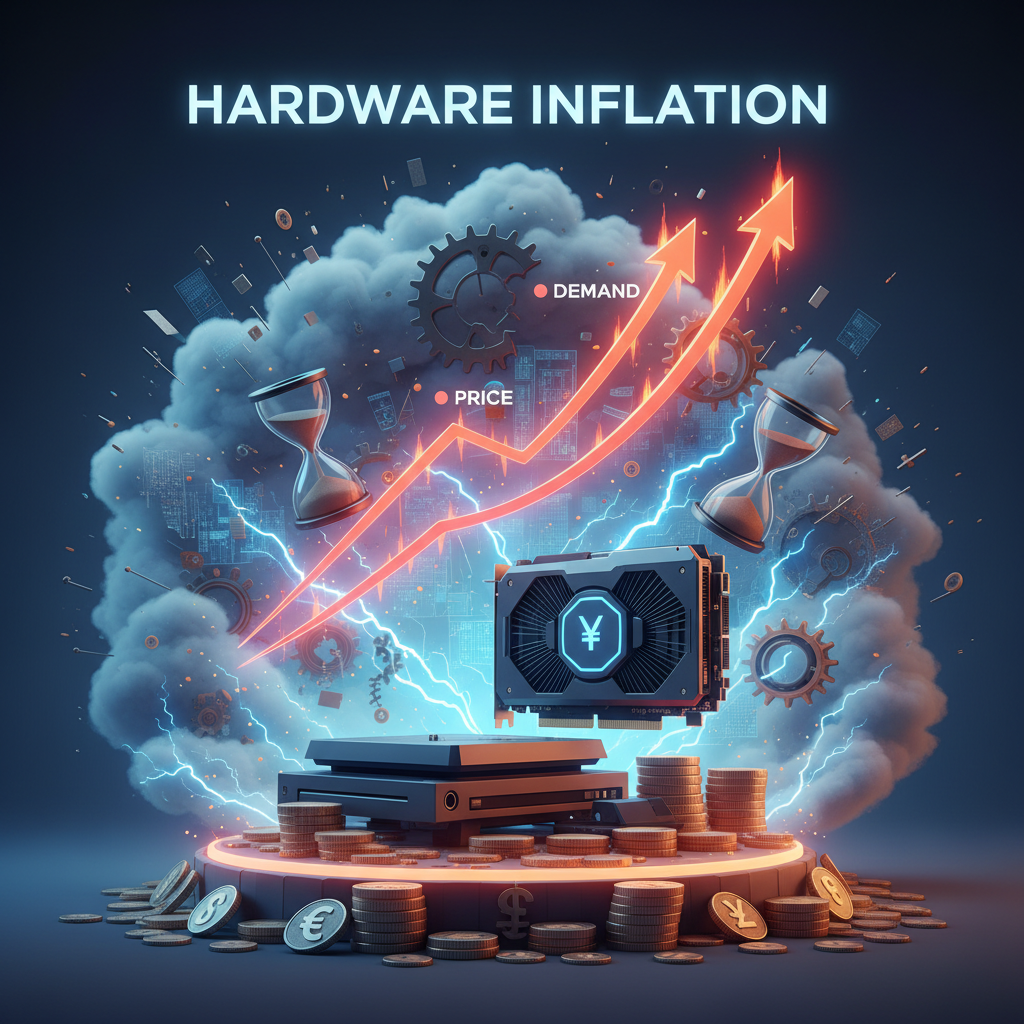
Gamer Hardware: Prices, Consoles, and the Impact of Inflation
The world of electronic gaming is experiencing a moment of significant transformations, marked by global economic challenges that directly impact the pockets of millions of players and technology enthusiasts. We observe a continuous increase in gamer hardware prices and, in parallel, persistent delays in the availability of next-generation consoles. This complex scenario raises crucial questions about the future of the industry and how PC and console gamers, as well as investors, can navigate this reality.
The Growing Impact on Gamer Hardware Prices
The experience of building a gaming PC or simply upgrading components has become an increasingly costly task. The appreciation of graphics cards, processors, and even RAM is a direct reflection of a series of factors that have intensified in recent years. The law of supply and demand, driven by unprecedented demand, especially during periods of increased time spent at home, collides with limited production capacity.
The Dynamics Behind Component Inflation
Inflation, a familiar term in economics, is forcefully manifesting in the semiconductor sector. The global chip shortage, essential for almost every type of hardware, from smartphones to powerful GPUs, is at the root of much of the problem. Factors such as supply chain disruptions, currency fluctuations, and rising raw material costs contribute to gamer hardware prices reaching historic levels. For the gamer seeking maximum performance, every gigabyte of VRAM or every processing core represents a substantially greater investment than just a few years ago.
How Gamers and Enthusiasts Feel This Reality
For those planning to build their first PC or perform a crucial upgrade, the search for components has become a hunt. Often, finding a latest-generation graphics card at a reasonable price is a challenge, leading to frustration or the need to postpone plans. This situation affects not only elite gamers but also those with more modest budgets, who see the entry costs into the PC gaming universe increase considerably. Investors closely observe how this dynamic impacts the sales and strategic planning of major manufacturers.
Next-Generation Consoles: A Prolonged Wait
While the PC market suffers from prices, the console universe also faces its own setbacks. The highly anticipated next-generation consoles, such as PlayStation 5 and Xbox Series X/S, continue to suffer from intermittent stock, frustrating many who wish to dive into the latest experiences. This scarcity is not an isolated phenomenon, but rather a symptom of the same issues affecting PC hardware.
Understanding Production and Logistics Challenges
The manufacturing of next-generation consoles heavily relies on the same semiconductors that are in short supply. Furthermore, the complexity of global logistics, with bottlenecks in ports and increased transportation costs, delays the distribution of these systems. Companies need to balance explosive demand with actual production capacity, a juggling act that directly affects shelf availability and, consequently, consumer mood. The gamer who dreams of ultra-realistic graphics and instant loading times often encounters an “out of stock” screen.
Perspectives for Investors in the Gaming Industry
For investors, delays and scarcity in next-generation consoles represent both a challenge and an opportunity. Repressed demand can lead to a sales peak once supply normalizes, but it also indicates the need for diversification and strategies to mitigate risks of dependence on specific components. Gaming and hardware company stocks are sensitive to these dynamics, and a deep understanding of the scenario is fundamental for sound financial decisions. The gaming industry, despite the obstacles, continues to demonstrate resilience and impressive growth, driven by the passion of its community.
Navigating the Current Landscape: Strategies and Resilience
Given this panorama, gamers and technology enthusiasts are looking for ways to continue enjoying what the gaming universe has to offer. Strategies such as optimizing existing systems, searching for deals on second-hand platforms, or exploring cloud gaming services gain relevance. The community unites to share tips and solutions, showing the adaptability and ingenuity of those who love to play.
Optimizing Your Investments in a Volatile Market
For gamers, patience and research are valuable allies. Considering previous generation components with good cost-benefit, or investing in subscription gaming platforms that do not require high-end hardware, can be a smart alternative. For investors, supply chain analysis and long-term projections for chip production recovery are key elements to identify opportunities and mitigate risks. The gaming market is dynamic, and the ability to adapt is essential.
The Promising Future of the Gaming Industry
Despite the current challenges of hardware prices and console delays, the passion for gaming remains unwavering. The gaming industry, with its capacity for innovation and its vast ecosystem, will continue to evolve. New technologies, the expansion of eSports, and the constant creativity of developers guarantee a vibrant future. Overcoming production bottlenecks is a matter of time, and when it happens, the gaming experience will be even more accessible and immersive for everyone. The focus now is to understand the trends and prepare for what’s to come.














Post Comment