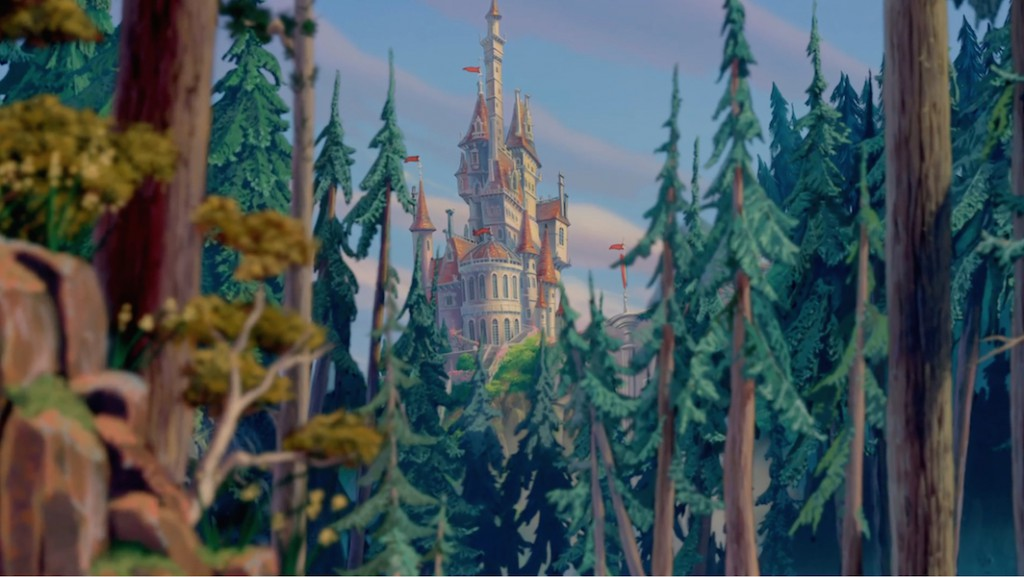
Disney’s Nature Narratives: Setting, Character, or Pop Culture Force?
From the sprawling savannas of the Pride Lands to the mystic depths of the Pacific Ocean, nature in Disney stories often feels like much more than just a beautifully rendered background. For generations of viewers, these animated worlds have captivated imaginations, not merely through their characters and plots, but also through the vibrant, dynamic, and sometimes formidable natural environments that shape every facet of the narrative. In the vast tapestry of pop culture, Disney’s unique approach to depicting the natural world stands out, offering intricate lessons, profound transformations, and even active participation in the heroes’ journeys.
The very essence of many Disney classics is inextricably linked to their environmental settings. What would Bambi be without its forest, a sanctuary of life and a stage for harsh realities? How would Moana‘s quest unfold if the ocean were a passive canvas rather than a sentient, guiding entity? These aren’t just aesthetic choices; they are foundational pillars of storytelling, elevating the landscape from a simple backdrop to an integral force. This intricate relationship between character and environment deepens our connection to these tales, inviting us to consider the world around us with new eyes.
As fans of ‘Nerd Culture & Entertainment,’ we often dissect the nuances of character arcs, plot devices, and thematic messages. Yet, the persistent and evolving role of nature within Disney’s universe presents a fascinating layer of analysis. It challenges us to look beyond the obvious, to recognize the profound influence of ecosystems, weather patterns, and even individual trees and rivers on the protagonists’ destinies. This article will journey through Disney’s most iconic narratives, from timeless animations to the strategic gameplay of Disney Lorcana, to explore how nature functions not just as a setting, but as a compelling character and an undeniable force of transformation, irrevocably intertwined with the very fabric of pop culture itself. Prepare to see your favorite animated worlds with a renewed appreciation for their wild, untamed, and deeply meaningful natural hearts.
Nature’s Unseen Influence: Exploring Pop Culture Through Disney’s Worldbuilding
In Disney narratives, nature often transcends a mere setting, acting as a dynamic force that shapes characters, drives plots, and reflects emotional states. Through iconic films and even the strategic layers of Disney Lorcana, these natural environments become essential elements of worldbuilding, offering lessons, challenges, and opportunities that profoundly impact the story’s trajectory and resonate deeply within pop culture.
From the very beginning, Disney’s animators understood the power of the natural world to tell stories. It’s rarely a static element; instead, it pulsates with life, often dictating the rhythm of the narrative and influencing character development. Even in early shorts, such as the ‘Silly Symphonies,’ environmental elements frequently facilitated character interaction or comedic timing, laying the groundwork for later, more complex portrayals where nature was deeply interwoven with the narrative.
Bambi, for instance, is a masterclass in this approach. The forest is not simply where Bambi lives; it is his entire world, acting almost as a character itself. It’s where he learns to walk, suffers hardship, experiences love, and confronts loss. The changing seasons—the vibrant birth and exuberance of spring, the harsh scarcity of winter, the devastating forest fire—are not just markers of time, but active participants in Bambi’s coming-of-age, demonstrating life’s inherent cycles and unpredictable challenges. This profound integration elevates the environment beyond a simple stage, creating a richer, more immersive experience for the audience, inviting them to consider how external forces mold internal lives.
This distinct approach has profoundly influenced how nature is depicted across various forms of pop culture, solidifying a common trope where the environment serves as both a mirror to the soul and a crucible for transformation. It underscores a thematic depth that resonates universally, inviting audiences to view nature not just as a backdrop, but as a living, breathing component of any compelling story.
More Than a Backdrop: Nature as a Narrative Catalyst
Disney frequently employs natural environments to convey story elements without explicit dialogue. A prime example is the forest in Snow White and the Seven Dwarfs. As Snow White flees the Huntsman, the forest transforms into a menacing labyrinth of twisting branches and foreboding shadows, perfectly mirroring her terror and vulnerability. Once she finds solace and calms her fears, the same forest reveals itself as a welcoming haven, teeming with helpful and friendly creatures. The environment itself doesn’t physically change; rather, its depiction adapts to Snow White’s internal state, a powerful narrative technique that speaks volumes without a single word, demonstrating how setting can reflect psychological realities.
Similarly, in Tarzan, the jungle is far more than a setting; it is the very essence of who Tarzan is. He learns to move, perceive danger, and communicate by observing its inhabitants. His unique physical prowess and his profound understanding of the world are forged within this wild embrace. When humans arrive, the fundamental conflict isn’t just between two groups of people, but between two vastly different understandings of existence itself, born from their respective environments. The jungle, for Tarzan, embodies identity, family, and culture, making it an irreplaceable part of his being and a central point of tension in the narrative.
The Emotional Landscape: Nature Reflecting Inner Worlds
The way characters interact with, perceive, and are shaped by nature often serves as a profound indicator of their true selves. This dynamic allows Disney to explore complex themes of dominion, respect, and intrinsic value. For instance, in Tarzan, the same jungle is viewed through starkly different lenses: Clayton sees a resource-rich territory ripe for exploitation; Jane initially perceives a fascinating field for scientific study, which gradually evolves into a place of deep emotional connection; and Tarzan experiences it as his ancestral home, his family, and his identity. This divergence in perception highlights a critical aspect of Disney’s storytelling: the environment often acts as a mirror, revealing the character’s core values.
Are characters observers, attempting to dominate, or willing to listen and coexist? Do they view nature as a tool for personal gain or an interconnected system to be respected? The answer invariably sheds more light on the individual character than on the natural setting itself, reinforcing a thematic depth that resonates universally within pop culture. This approach allows audiences to reflect on their own relationship with the environment and the values it might reveal about themselves.
When Nature Becomes a Character: Voices and Forces in Disney Lore
In numerous Disney tales, nature actively participates in the narrative, embodying distinct personalities, motivations, and even voices. From sentient oceans to ancient trees offering counsel and elemental spirits with unique temperaments, these natural forces transcend passive roles, guiding protagonists, posing challenges, and directly influencing the story’s direction as fully-fledged characters within the fantastical worlds of Disney.
In some of Disney’s most iconic narratives, natural elements are not merely passive scenery but embody distinct personalities and possess agency, profoundly influencing the protagonist’s journey. This personification elevates the emotional stakes and thematic richness of the stories, making the environment a true partner or antagonist.
Ocean’s Call: Moana’s Guiding Companion
The ocean in Moana is an undeniable character. It actively observes, chooses Moana as its emissary, clears her path, intervenes when necessary, and even exhibits a mischievous sense of humor, often drenching her at inopportune moments. While it initiates the quest and creates opportunities, it doesn’t solve all problems; Moana must still bravely face her fears and restore Te Fiti’s heart through her own courage and ingenuity. The ocean’s presence is not merely magical assistance but a profound partnership, emphasizing the deep respect and connection vital to her journey, a theme central to many pop culture narratives about environmental stewardship and destiny. Its soundscape is also deliberately used to express emotion and establish the world.
Ancient Wisdom: Pocahontas and the Spirits of the Land
In Pocahontas, nature literally speaks through Grandmother Willow, an ancient, wise tree offering profound wisdom and guidance to the young protagonist. The wind often accompanies Pocahontas’s decisions, acting as a gentle yet firm presence, and the river symbolizes the choices she faces throughout her journey. Her deep connection to her land and its natural elements is a defining trait, portraying nature as a source of ancestral knowledge, spiritual insight, and unwavering counsel rather than a purely physical entity. The wisdom imparted by Grandmother Willow comes not from a political authority or dusty texts, but from a living entity rooted in the land, a powerful statement on the value of ecological connection and indigenous wisdom.
The Elemental Guardians: Frozen II’s Animated Ecosystem
Frozen II presents one of Disney’s most structured portrayals of nature as active characters, dividing it into elemental spirits of fire, water, earth, and air. Bruni, the fire spirit, appears small and charming but can unleash devastating flames. Nokk, the water spirit, takes the form of a majestic horse, testing Elsa’s resolve and power before allowing passage. The Earth Giants embody raw, formidable power, while Gale manifests as a visible presence manipulating leaves and wind. Each element possesses a distinct temperament, behavior, and a unique way of interacting with the characters, demonstrating that nature, even magical nature, is complex and demands understanding rather than mere control. The Enchanted Forest itself acts as a living memory, its magical mist and restless spirits a consequence of past injustices that must be confronted and rectified for balance to be restored, making the environment an active guardian of historical truth.
The Cycle of Life and Transformation: Nature’s Ultimate Lessons
Disney stories frequently utilize nature to impart profound life lessons, illustrating the interconnectedness of existence and the inevitability of change. From the majestic “Circle of Life” in The Lion King that teaches responsibility and balance, to the transformative empathy gained through an animal’s perspective in Brother Bear, nature serves as a strict yet insightful teacher, guiding characters through cycles of growth, loss, and self-discovery.
Beyond offering guidance or acting as active participants, nature in Disney narratives consistently functions as a profound teacher, imparting lessons that are fundamental to life, growth, and the understanding of one’s place in the world. These lessons often revolve around themes of interconnectedness, responsibility, and the transformative power of empathy, making the natural world a crucible for character development.
Balance of the Pridelands: The Lion King’s Ecological Parable
Mufasa’s explanation of the “Circle of Life” in The Lion King is a foundational philosophical pillar of the film. It teaches young Simba that all living things are connected, consuming and being consumed, ultimately returning to the earth to nourish new life. Even the king is part of this grander cycle, emphasizing humility and the responsibility to maintain ecological balance. This concept powerfully differentiates Mufasa, who understands leadership as stewardship, from Scar, who views the kingdom as a personal spoil to be exploited. Scar’s reckless reign leads directly to the decay of the Pride Lands, visually manifesting his destructive ideology through a withered, barren landscape. The land’s recovery with Simba’s return mirrors his acceptance of responsibility, making nature a powerful visual barometer of the narrative’s moral and ecological health, a parable on governance and environmental harmony.
Stepping into Another’s Paws: Brother Bear’s Empathy Journey
Brother Bear takes the concept of transformation to its most literal extreme. Kenai initially views bears as mere threats, but after an act of rage, he is physically transformed into one. This forces him to experience the world from the perspective of the very creature he despised. Nature here acts as both a consequence and a profound teacher, creating the conditions for radical change and fostering a deeper understanding. Kenai learns fear from humans, understands the complex familial bonds of Koda, and realizes that the “other side” of any conflict holds a completely different, equally valid perspective. His journey transforms the forest from a place where he must prove his strength into a vibrant community of diverse lives, each with their own relationships, joys, and sorrows. It’s a powerful narrative about empathy, challenging preconceived notions, and the interconnectedness of all beings, demonstrating that true wisdom often comes from experiencing life through another’s eyes.
Beyond Innocence: Disney’s Complex Portrayal of Nature’s Ambiguity
While often depicted as wondrous, nature in Disney stories also frequently embodies ambiguity and peril, challenging the simplistic notion of an inherently gentle world. From the unpredictable ocean in Moana to the harsh realities of Bambi’s forest and the demanding elemental spirits of Frozen II, these narratives reveal that nature can be formidable, dangerous, or even destructive when unbalanced, unrespected, or wounded, teaching characters the necessity of understanding and reconciliation.
Disney’s portrayal of nature is far more nuanced than simply idyllic landscapes. The studio often challenges the simplistic notion of an inherently gentle or purely benevolent natural world, instead showcasing its formidable, unpredictable, and sometimes terrifying aspects. This complexity adds layers of realism and thematic depth, mirroring the dualities of nature experienced in the real world.
The Dual Nature of Te Fiti: Threat and Life Source
Perhaps the most potent example of nature’s ambiguity is Te Kā in Moana. Initially presented as a raging lava monster, an unequivocal antagonist blocking Moana’s path, she is later revealed to be Te Fiti, the very goddess of life, stripped of her heart. The threat and the source of life are thus one and the same. This profound revelation shifts the conflict from defeating an evil entity to healing a wound, recognizing an injustice, and restoring balance. Moana’s victory lies not in battle, but in empathy and restoration, highlighting that nature’s destructive tendencies often stem from imbalance, exploitation, or deep-seated trauma that requires understanding rather than brute force. This sophisticated portrayal adds a layer of depth uncommon in typical pop culture villain tropes, advocating for holistic, rather than purely combative, solutions to environmental challenges.
Unpredictable Elements: Challenges and Growth
Disney doesn’t shy away from showing nature’s formidable and sometimes terrifying aspects. The ocean, while a benevolent guide in Moana, is also a vast, unpredictable, and perilous force, capable of swamping a boat or leading characters astray. Bambi‘s idyllic forest, while a sanctuary, also harbors dangerous predators, faces devastating fires, and endures harsh winters, illustrating that even beautiful environments contain inherent dangers and struggles for survival. In Frozen II, the elemental spirits are powerful allies but first demand that Elsa prove her worth and courage, emphasizing that harmony with nature often requires proving one’s strength and respect through confrontation and understanding. This recurring theme—that nature becomes dangerous when wounded or disrespected—carries significant weight, subtly teaching that many environmental “monsters” are not inherently evil but manifestations of a deeper systemic problem, often caused by human actions or ignorance. True resolution, therefore, often requires introspection, repair, and a fundamental shift in perspective.
Pop Culture Evolution: Nature’s Impact in Disney Lorcana
The profound role of nature in Disney stories has evolved into strategic gameplay within Disney Lorcana, where environments and natural forces are no longer mere backgrounds but active components. Through Location cards, character abilities tied to the environment, and major narrative arcs like “Attack of the Vine!”, nature directly influences decisions, creates resources, and even manifests as central antagonists, adding a rich, thematic layer to the game’s unfolding pop culture narrative.
Disney Lorcana, the collectible card game, takes the narrative significance of nature and translates it into tangible gameplay mechanics, deepening the connection between the lore and player strategy. This evolution demonstrates how deeply embedded nature’s role is within the broader Pop Culture landscape inspired by Disney. The introduction of “Location” cards in the Into the Inklands expansion is a pivotal example, transforming static environments into dynamic strategic zones. Unlike purely illustrative backgrounds, these cards possess their own costs, resistance values, lore, and unique abilities, compelling players to consider their placement and interaction with characters on the game board. This means the environment itself actively interferes with strategic decisions, offering new pathways and challenges.
Location Cards: Strategic Depth and Environmental Influence
Location cards transform static environments into dynamic strategic zones, making the setting an active participant in the game. For instance, “The Bayou – Mysterious Swamp” allows players to draw a card and then discard another when a character quests there. This mechanically reflects the swamp as a place of active discovery and resource management, where players strategically search for what they need and discard what is currently unhelpful. Similarly, “Motunui – Island Paradise” offers a unique twist: if a character is banished while at this Location, it can be moved to the inkwell. This clever mechanic transforms a loss into a resource, echoing the “Circle of Life” theme by turning a setback into a future advantage. These interactions ensure that Locations are not just recognizable landscapes but functional components that alter character actions, provide new routes, and can even generate lore independently of traditional questing, enriching the pop culture experience of the game.
| Location Card (Example) | Narrative Role in Disney Lore | Lorcana Gameplay Mechanic | Strategic Implication |
|---|---|---|---|
| The Bayou – Mysterious Swamp | Place of mystery, exploration, hidden depths. | When a character quests here, draw 1 card, then discard 1 card. | Resource cycling, deck thinning, searching for key cards. |
| Motunui – Island Paradise | Ancestral home, source of life, connection to the ocean. | When a character at this Location is banished, you may put that character into your inkwell face down and exerted. | Mitigates character loss, converts banishment into future ink, maintains tempo. |
| Cursed Mermaid Lagoon – Whispering Waters | Perilous waters, temptations, transformative magic. | Characters gain +1 willpower while at this Location. | Boosts character durability, makes them harder to banish in combat. |
Character Abilities: Reflecting Natural Connections in Gameplay
Beyond Locations, specific character cards in Disney Lorcana ingeniously translate the inherent connection between characters and nature into their abilities. “Grandmother Willow – Ancient Advisor,” for example, reduces the ink cost of the next character played that turn. This ability perfectly encapsulates her role as a wise mentor who doesn’t engage in direct combat but instead empowers others to act, reflecting her narrative function as a source of wisdom and support. “Pocahontas – Steadfast Traveler” reinforces her deep bond with the land; her ability allows players to retrieve a Location card from their discard pile under certain conditions, emphasizing her connection to territories, journeys, and the memories embedded within places. Even different versions of Bambi, such as “Bambi – Little Prince,” highlight traits like discovery and shyness, earning lore upon entering play but returning to the hand if an opponent plays another character, reflecting his initial curiosity giving way to caution in the presence of the unknown. These subtle details ensure that the cards convey more than just an image; they carry a fragment of the character’s profound connection to the natural world.
The Vine: A New Frontier for Natural Antagonists in Pop Culture
Disney Lorcana takes its integration of nature a significant step further with the “Attack of the Vine!” narrative arc. This introduced a gigantic, invading Vine creating various “Vinelings” across Lorcana. Key characters like Pete and Gaston received “Floodborn” versions, twisted or controlled by this rampant natural force, transforming them into new, formidable threats. The Vine, personified by cards like “The Vine – Towering Stalk,” is not a Location but a powerful Floodborn character itself, boasting high cost, strength, and willpower. Its ability, which strengthens other Floodborn characters and deals damage when opponents’ characters are banished, showcases its invasive, network-like nature. The storyline, further developed in Illumineer’s Quest: The Great Hunny Rescue, involves players confronting the Vine at its roots to rescue Piglet, dramatically shifting the game’s focus from traditional villains like Ursula or Jafar to an uncontrolled, overwhelming natural force. This evolution in Lorcana‘s storytelling reflects a broader trend in pop culture: exploring environmental threats that stem from imbalance rather than clear-cut malice, offering a complex antagonist that engulfs and reshapes everything it touches. The question shifts from “Who is trying to dominate Lorcana?” to “What happens when the realm itself begins to grow uncontrollably?” This provides a unique laboratory for glimmers, allowing cards to portray characters reacting to entirely new environmental conditions—like Winnie the Pooh facing a giant plant, or urban characters navigating untamed wilderness—challenging their established abilities and forging new alliances.
FAQ: Decoding Nature’s Role in Disney’s Enduring Narratives
How does nature serve as a “character” in Disney films?
Nature transcends its role as a mere setting by actively engaging with the protagonists, influencing their paths, and even exhibiting distinct personalities or wills. In Moana, the ocean itself chooses the hero, guides her journey, and communicates its intent. In Pocahontas, Grandmother Willow offers direct counsel and wisdom, while the elemental spirits of Frozen II possess individual temperaments and must be understood and appeased. These examples demonstrate nature’s agency, its capacity to guide, challenge, and shape the narrative, making it an indispensable, dynamic participant rather than a passive backdrop. This personification allows Disney to explore deeper themes of respect, connection, and the intrinsic value of the natural world.
What examples illustrate nature as a “transformative force”?
Nature acts as a powerful catalyst for change, profoundly altering characters’ perspectives and destinies. Bambi‘s entire life journey, from birth to maturity, is intrinsically tied to the forest’s changing seasons and challenges, shaping his understanding of life and loss. In Brother Bear, Kenai’s transformation into a bear forces him to literally walk in the shoes of another species, fundamentally shifting his worldview from one of fear and aggression to empathy and understanding. These narratives highlight how direct immersion in and interaction with nature can lead to deep personal growth, forcing characters to adapt, learn, and evolve in response to their environment’s lessons, which often prove more impactful than any human-driven conflict or internal struggle.
How does Disney use nature to reflect a character’s emotional state?
Disney masterfully employs nature to visually externalize characters’ inner emotions and perceptions. A prime illustration is Snow White and the Seven Dwarfs: during Snow White’s panicked flight, the forest appears menacing and twisted, reflecting her terror and vulnerability. However, once she finds calm and companionship, the very same forest transforms into a welcoming sanctuary teeming with friendly animals. The environment itself doesn’t change; instead, its depiction adapts to Snow White’s subjective experience. This technique allows animators to convey complex psychological states without relying solely on dialogue, creating a powerful visual metaphor that enhances the audience’s emotional connection and understanding of the character’s internal world.
Are there instances where nature is depicted as ambiguous or dangerous in Disney stories?
Absolutely. Disney often challenges the simplistic notion of nature as purely benevolent. The ocean in Moana, while a guide, is also an untamed, perilous force. Bambi‘s beloved forest, while nurturing, also harbors predators, harsh winters, and devastating fires that represent existential threats. Most strikingly, Te Kā in Moana is initially a destructive lava monster, later revealed to be Te Fiti, the life-giving goddess, without her heart. This ambiguity underscores that nature’s destructive aspects often stem from imbalance, disrespect, or deep-seated wounds, rather than inherent malice. It teaches that understanding, healing, and restoring balance are often more effective than confrontation in resolving perceived natural dangers.
How has Disney Lorcana integrated nature into its gameplay and narrative?
Disney Lorcana has innovatively translated nature’s narrative importance into core gameplay mechanics. The introduction of “Location” cards allows environments like “The Bayou” or “Motunui” to become active strategic zones with unique abilities, influencing player decisions and character interactions. Character cards also reflect their natural connections, such as “Grandmother Willow – Ancient Advisor” empowering others, or “Pocahontas – Steadfast Traveler” interacting with Locations. Furthermore, major story arcs like “Attack of the Vine!” feature nature itself as a primary antagonist, presenting players with an uncontrollable, evolving ecological threat that reshapes the game’s landscape and narrative focus, elevating nature from background art to strategic powerhouse within pop culture gaming.
What is the “Circle of Life” theme’s significance in The Lion King?
The “Circle of Life” in The Lion King is a central philosophical concept that emphasizes the interconnectedness and cyclical nature of all living things. Mufasa teaches Simba that every creature plays a vital role in the ecosystem, from the smallest insect to the mighty king, and that death ultimately feeds new life. This theme underscores the importance of balance, responsibility, and humility, illustrating that true leadership involves stewardship of the entire kingdom, not merely dominion. Scar’s failure to grasp this principle leads to the literal degradation of the Pride Lands, visually reinforcing the narrative’s core message about respecting and maintaining ecological harmony for overall prosperity and the continued cycle of life.
How does Tarzan‘s jungle highlight cultural differences?
In Tarzan, the jungle functions as a profound cultural incubator, shaping Tarzan’s very identity, movements, and understanding of the world. When humans enter, the conflict extends beyond individual differences, becoming a clash between two fundamentally distinct worldviews forged by their respective environments. For Tarzan, the jungle represents family, culture, and memory; for Clayton, it’s a resource to exploit; for Jane, it evolves from a scientific curiosity to a place of deep emotional attachment. This stark contrast illustrates how our environment profoundly influences our values, perceptions, and ultimately, our culture, making the jungle a potent symbol of identity and a catalyst for understanding cultural divides and the complexities of human interaction with nature.
The Enduring Legacy: Nature’s Resonance in Pop Culture Narratives
The exploration of nature within Disney’s vast universe reveals a storytelling depth that consistently transcends mere visual spectacle. From the evocative landscapes that mirror character emotions to sentient oceans guiding heroes and elemental spirits demanding respect, nature in these narratives is a dynamic, multifaceted entity. It serves not only as the stage for epic adventures but also as a powerful character, a wise teacher, a formidable adversary, and an undeniable force of transformation, deeply embedding itself within the fabric of Pop Culture. This nuanced portrayal, further amplified by the innovative gameplay of Disney Lorcana, reflects a sophisticated understanding of humanity’s intricate relationship with the natural world.
It reminds us that whether through the lessons of the Circle of Life, the challenges of an enchanted forest, or the strategic decisions demanded by a Location card, the wild heart of Disney’s imagination continues to inspire, educate, and resonate with audiences, inviting us to see our own world with greater reverence and a deeper sense of interconnectedness. The profound, ever-evolving role of nature ensures that these stories, and their messages, will continue to echo across generations, shaping perceptions and fueling discussions within the vibrant landscape of global entertainment. This powerful bond between narrative and environment is a testament to nature’s enduring power as a storytelling device, constantly redefining its presence in our collective imagination.










Post Comment