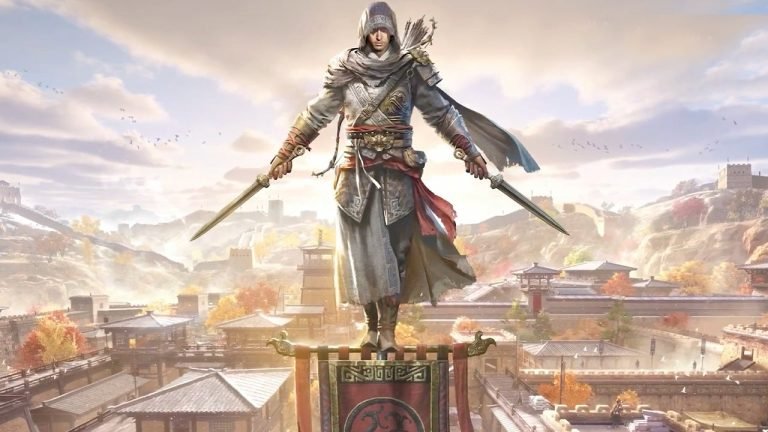
Assassin’s Creed Jade: Ubisoft Confirms Mobile Plans Amidst Strategy Shift
For years, the prospect of a full-fledged Assassin’s Creed experience on mobile devices has stirred considerable excitement, particularly within the dedicated fan base eager for new narratives and settings. Among these anticipated entries, Assassin’s Creed Jade has consistently captured the imagination, promising an epic journey through Ancient China. However, the path to its release has been marked by a series of whispers, leaks, and strategic realignments from developer Ubisoft, leaving many to wonder about its true status. Recent statements from the highest levels of the company now provide a clearer, albeit nuanced, picture of Jade’s future.
Ubisoft’s Chief Financial Officer, Frédérick Duguet, recently confirmed that Assassin’s Creed Jade remains firmly within the company’s development pipeline. This affirmation, delivered during an investor call detailing the results for the first half of fiscal year 2027, offers a definitive answer to concerns about the project’s potential cancellation. Yet, Duguet’s remarks also illuminate Ubisoft’s broader strategic emphasis: while mobile gaming represents a significant opportunity, the immediate focus and primary investment are squarely on bolstering its flagship franchises across PC and console platforms. This dual perspective—assurance of continuation tempered by a shifting prioritization—sets a complex stage for Jade’s eventual arrival, reflecting both the ambition for mobile expansion and the current realities of a major publisher’s resource allocation.
Understanding this context is crucial for anyone following the gaming industry, especially those who appreciate the intricate dance between creative vision and corporate strategy. Ubisoft, like many industry giants, is in a perpetual state of adaptation, responding to market trends, technological advancements, and internal restructuring. The narrative surrounding Assassin’s Creed Jade is thus more than just news about a game; it’s a window into the evolving landscape of AAA game development and the careful balancing act required to succeed in a fiercely competitive global market. As we delve deeper, we will explore what these latest revelations truly signify for the game, its development timeline, and the expectations of its passionate community.
The Enduring Nerd Anticipation for Assassin’s Creed Jade’s Mobile Future
Assassin’s Creed Jade is confirmed to still be in development as a mobile title, though Ubisoft’s CFO, Frédérick Duguet, has indicated that the company’s primary focus for investment and growth remains on its core console and PC offerings in the short term, positioning mobile, including Jade, as a medium-to-long-term opportunity.
The confirmation of Assassin’s Creed Jade‘s continued existence arrived directly from Ubisoft’s financial leadership, specifically CFO Frédérick Duguet, during the presentation of the company’s financial results for the first half of fiscal year 2027. This acknowledgment comes as a significant relief to many fans who had grown increasingly concerned about the fate of the mobile-first title, given its prolonged silence and the general volatility of the mobile game development cycle.
Duguet’s statement, found in the official transcript, highlighted mobile gaming as a persistent opportunity for Ubisoft. He explicitly cited Assassin’s Creed Jade as an example within the franchise’s mobile ambitions. However, his remarks were carefully framed, emphasizing that current resource allocation prioritizes projects with the highest immediate return, which, for Ubisoft, are predominantly its major console and PC franchises. This indicates a strategic lean towards established, high-yield markets, reflecting a cautious approach to investment in newer or less predictable segments.
The phrase “medium-to-long-term opportunity” is particularly telling. It suggests that while the project is not shelved, its launch is unlikely to be imminent. This strategic positioning allows Ubisoft to develop the game without immediate market pressure, potentially aiming for a release when market conditions are more favorable or when the game has reached a state of polish that ensures a stronger impact. For a company navigating significant internal changes, such a measured approach minimizes risk while keeping promising projects active.
This means that while the dream of exploring ancient China as an Assassin on a mobile device is very much alive, fans, especially the dedicated **nerd** community, should temper their expectations regarding a near-future release date. Ubisoft is clearly playing the long game with its mobile strategy, ensuring that core business performance on PC and console is robust before significantly accelerating its mobile endeavors.
A Glimpse into Jade’s Long Development Journey
The development saga of Assassin’s Creed Jade has been characterized by a blend of secrecy, leaks, and periodic official updates, charting a course that began with early testing and has since evolved through various stages of refinement. This prolonged journey underscores the complexities of bringing a major franchise to a new platform while meeting fan expectations and internal quality benchmarks.
The earliest significant milestone for Assassin’s Creed Jade was a closed beta testing phase conducted in 2022. This initial, highly confidential trial allowed Ubisoft to gather critical feedback on core gameplay mechanics and technical performance in a controlled environment. The secrecy surrounding this phase built anticipation, hinting at the game’s ambitious scope. Following this, in 2023, reports emerged of extensive gameplay footage leaks, offering fans their first unofficial look at the game’s setting, combat, and world design, further fueling discussions and speculation across gaming forums.
While an official release date has never been firmly announced, 2024 saw reports suggesting a potential launch in 2025. This timeline, however, has not materialized. The last official confirmation of the game’s active development came in March 2024, when Ubisoft reiterated its commitment to the project within its official franchise development blog. This continuous, albeit slow, stream of updates has been enough to keep the community hopeful, despite the lack of concrete timelines or substantial new reveals.
Navigating Ubisoft’s Evolving Strategy Amidst Restructuring
Ubisoft is currently undergoing a period of significant restructuring and financial recalibration, which directly influences its game development priorities. The company’s focus on console and PC titles stems from a need to secure more predictable and substantial returns, making mobile games like Assassin’s Creed Jade a secondary, long-term strategic play rather than an immediate investment priority.
Ubisoft finds itself at a pivotal juncture, marked by internal restructuring and strategic re-evaluation. Shortly before its recent financial report, the company announced a significant workforce reduction, impacting 166 employees. This move, attributed to shifting production needs, is part of a broader corporate effort to streamline operations and optimize resource allocation. Such restructuring indicates a conscious effort to consolidate efforts and focus on areas perceived as most vital for the company’s immediate financial health and long-term stability.
In this context, Ubisoft’s financial caution is understandable and strategically sound. The company’s CFO emphasized concentrating investments on “bigger bets” that promise higher, more predictable returns. Historically, and currently, these returns largely stem from major titles launched on PC and consoles. These platforms offer established revenue models, robust player bases, and often higher average revenue per user compared to the more volatile and intensely competitive free-to-play mobile market.
This prioritization is further evidenced by Ubisoft’s broader franchise management. In October, the company confirmed that no other Assassin’s Creed remakes are currently in development beyond existing announced projects. This focus on a defined pipeline for its most valuable intellectual property, avoiding numerous parallel developments, allows for a more concentrated effort on quality and market impact. For Assassin’s Creed Jade, this means it exists within a strategy that values disciplined investment and a clear path to profitability, even if that path is a longer one for mobile.
The Double-Edged Sword of Patient Development
The decision to approach Assassin’s Creed Jade as a medium-to-long-term mobile opportunity presents both strategic benefits for Ubisoft and notable limitations for its eager player base.
Benefits for Ubisoft:
- Refined Quality: Extended development time allows for more thorough refinement, bug fixing, and optimization, potentially leading to a higher quality product upon release. This can mitigate risks associated with rushed launches that often face negative critical and player reception.
- Market Alignment: A longer development cycle enables Ubisoft to better adapt to evolving mobile gaming trends, integrate new technologies, and position Jade effectively within a dynamic and competitive market. They can learn from existing successes and failures.
- Reduced Pressure: By not tying Jade to an immediate release window, Ubisoft can allocate resources more flexibly, focusing on its core console/PC offerings first, and reducing financial pressure on the mobile project until it’s strategically ready.
- Learnings from Others: Observing how competitors fare with major mobile releases can inform Jade’s monetization, marketing, and gameplay strategies, leading to a more optimized launch.
Limitations for Players:
- Extended Wait: The most immediate limitation is the prolonged wait for fans who have eagerly anticipated a new Assassin’s Creed experience set in Ancient China. This can lead to waning enthusiasm over time.
- Market Saturation Risk: The mobile gaming landscape evolves rapidly. A game launched too late risks entering a market already dominated by established competitors, potentially struggling to carve out a significant audience or appear technologically outdated upon arrival.
- Shifting Expectations: Over years of waiting, player expectations can inflate, making it harder for the final product to meet the accumulated hype, regardless of its quality. The longer the wait, the more critical the initial reception becomes.
- Loss of Momentum: Early beta tests and leaks generate significant buzz. A long silence can cause that momentum to dissipate, requiring a more intensive marketing push closer to launch to re-engage the audience.
What This Means for the Dedicated Nerd Community
For the dedicated nerd community, the status of Assassin’s Creed Jade presents a bittersweet situation: the project’s confirmation is a relief, but its ‘medium-to-long-term’ classification means a significant wait, risking the game’s relevance in a rapidly evolving mobile market despite fulfilling a long-standing desire for an Ancient China setting.
For the ardent fans of the Assassin’s Creed lore and the broader **nerd** community, the news about Jade is a complex mix of relief and prolonged anticipation. The setting of Ancient China has been a recurring request for over a decade, representing a rich historical backdrop ripe for the franchise’s blend of parkour, stealth, and historical intrigue. The confirmation that this specific vision is still alive is undoubtedly a cause for quiet celebration.
However, this relief is tempered by the understanding that a ‘medium-to-long-term’ horizon means the game’s eventual release could still be years away. This extended wait introduces a unique set of challenges and considerations for players. The mobile gaming market is incredibly dynamic, with new titles and technologies emerging at a rapid pace. A game that takes too long to launch risks appearing dated or struggling to capture market share against entrenched competitors who have solidified their positions in the interim.
Common Misconceptions and Best Practices for Enthusiasts
Understanding the nuances of game development and corporate strategy can help fans navigate these waiting periods more effectively, avoiding unnecessary frustration.
Common Misconceptions:
- “The game is cancelled if there’s no news.” This is a frequent assumption. However, lack of public updates often indicates a focused internal development cycle, strategic prioritization, or simply that the game isn’t ready for a marketing push.
- “Mobile games are quick to develop.” While some casual mobile games are, an ambitious AAA-franchise title like Jade requires significant time, resources, and technical expertise, often rivaling console development in complexity.
- “Ubisoft doesn’t care about mobile.” While current priority is on PC/console, Duguet’s statement clearly indicates mobile is seen as a strategic opportunity for the medium-to-long term, demonstrating a considered approach rather than disinterest.
Best Practices for Enthusiasts:
- Maintain Cautious Optimism: Acknowledge the official confirmation but understand the implications of a longer wait. Enjoy other games while keeping an eye on official announcements.
- Engage Respectfully: If participating in community discussions, base arguments on confirmed information rather than speculation or frustration.
- Appreciate the Context: Understand that large publishers like Ubisoft operate under financial and strategic pressures. Decisions like prioritizing PC/console often stem from a need for stability, which ultimately benefits the entire franchise.
Future Trends and Assassin’s Creed’s Mobile Ambitions: A Nerd‘s View
The future of Assassin’s Creed on mobile, exemplified by Jade’s sustained development, reflects a broader industry trend where premium franchises explore new platforms, balancing the unique opportunities of mobile with the strategic needs of their core business. This long-term vision aims to tap into new player demographics while ensuring franchise integrity.
The continued commitment to Assassin’s Creed Jade, despite its deferred priority, speaks volumes about Ubisoft’s long-term vision for mobile gaming. This approach aligns with a broader industry trend where major developers and publishers are increasingly looking to expand their most valuable intellectual properties onto mobile platforms, not merely as casual spin-offs but as robust, high-fidelity experiences. The goal is often twofold: to tap into the massive global mobile audience, particularly in markets where mobile is the primary gaming platform, and to introduce the franchise to new player demographics.
For a **nerd** deeply invested in the gaming ecosystem, Jade represents an interesting case study. It highlights the strategic tightrope walk publishers must perform—balancing the allure of new markets with the stability of established ones. While PC and console offer predictable, high-value returns, the sheer scale of the mobile market represents an undeniable long-term growth opportunity. Ubisoft’s strategy suggests a patient, deliberate approach to this expansion, waiting for the right moment and ensuring the product meets a high standard before a full-scale launch.
Looking ahead, the success of titles like Jade will likely hinge on several factors: its ability to adapt the core Assassin’s Creed gameplay loop to mobile controls effectively, its monetization model (whether premium, free-to-play with ethical microtransactions, or a hybrid), and its capacity to deliver a narrative and world as compelling as its console counterparts. Should Jade successfully navigate these challenges, it could pave the way for more ambitious, story-driven AAA mobile experiences, redefining what players expect from gaming on the go and solidifying Assassin’s Creed’s presence across all major platforms.
FAQ: Delving Deeper into Assassin’s Creed Jade’s Status
Below are common questions surrounding the development and future of Assassin’s Creed Jade, offering concise and authoritative answers for the discerning enthusiast.
Is Assassin’s Creed Jade still being developed?
Yes, Assassin’s Creed Jade is still actively in development. This was recently confirmed by Ubisoft’s Chief Financial Officer, Frédérick Duguet, during an investor presentation. While its launch is not imminent and it’s classified as a medium-to-long-term opportunity, the project has not been canceled and continues to be part of Ubisoft’s future plans for the Assassin’s Creed franchise on mobile platforms. Fans can rest assured that the Ancient China adventure remains on the horizon, albeit with an extended wait.
Why is Ubisoft prioritizing PC and console games over mobile right now?
Ubisoft is prioritizing PC and console games due to its current financial strategy and internal restructuring. The company aims to concentrate investments on projects offering the highest and most predictable returns in the short term, which are predominantly its major franchises on established platforms like PC and consoles. This approach helps stabilize its financial performance and allows for more focused resource allocation during a period of corporate adjustments, ensuring that core business strength is maintained.
What is the rumored release window for Assassin’s Creed Jade?
There has been no official release window announced for Assassin’s Creed Jade. While reports in 2024 suggested a potential launch in 2025, that timeline has not materialized. Ubisoft’s latest statements categorize the game as a “medium-to-long-term opportunity,” indicating that a release is likely still some time away. Fans should rely on official Ubisoft announcements for accurate release information rather than unconfirmed rumors or speculation.
Has Assassin’s Creed Jade had any beta tests or gameplay leaks?
Yes, Assassin’s Creed Jade has undergone a closed beta testing phase in 2022, conducted under strict confidentiality. Additionally, significant gameplay footage reportedly leaked in 2023, offering the public an early, unofficial glimpse into the game’s mechanics, setting, and overall aesthetic. These instances provided early insight into the project’s progress and helped fuel anticipation among the Assassin’s Creed community, despite their unofficial nature.
What setting does Assassin’s Creed Jade explore?
Assassin’s Creed Jade is set in Ancient China. This historical period has been a long-standing request from the Assassin’s Creed fan base for over a decade, promising a rich tapestry of cultural depth, political intrigue, and breathtaking landscapes to explore. The choice of setting aims to fulfill a popular community desire while offering a fresh and compelling narrative within the beloved franchise’s established lore, allowing players to experience a new chapter in the eternal conflict between Assassins and Templars.
How does Ubisoft’s recent restructuring impact Assassin’s Creed Jade?
Ubisoft’s recent restructuring, including layoffs and a renewed focus on “bigger bets,” impacts Assassin’s Creed Jade by placing it into a medium-to-long-term development strategy. This means resources are primarily directed towards higher-return PC and console titles in the short term. While Jade’s development continues, it proceeds at a pace aligned with Ubisoft’s broader financial caution, ensuring the game is polished and strategically positioned when the company fully shifts its focus to mobile opportunities.
Are there other Assassin’s Creed remakes planned?
Ubisoft officially confirmed in October that there are no other Assassin’s Creed remakes currently in development beyond existing announced projects. This statement indicates a strategic streamlining of the franchise’s development pipeline, allowing the company to concentrate its resources on a more focused set of new titles and established projects. The emphasis is on delivering high-quality, impactful experiences rather than dispersing efforts across numerous parallel remakes.
Why are fans so interested in an Assassin’s Creed game set in Ancient China?
Fans have shown immense interest in an Assassin’s Creed game set in Ancient China for several compelling reasons. The rich history, diverse culture, iconic architecture, and deep philosophical traditions of this era offer fertile ground for the franchise’s unique blend of historical fiction, parkour, and stealth. It represents a fresh, untapped setting that many believe could offer innovative gameplay opportunities and compelling narratives, fulfilling a long-standing desire for a new cultural exploration within the Assassin’s Creed universe.
The Unfolding Saga of Nerd Aspirations for Assassin’s Creed Jade
The journey of Assassin’s Creed Jade exemplifies the intricate balance between creative ambition and corporate strategy in the modern gaming landscape. Ubisoft’s latest confirmation provides a clear signal: the dream of a mobile Assassin’s Creed set in Ancient China is very much alive. However, it’s a dream positioned for the medium-to-long term, reflecting a pragmatic approach by a publisher focused on consolidating its strengths in a competitive market.
For the dedicated **nerd** and Assassin’s Creed enthusiast, this news offers a nuanced perspective. It’s an affirmation that a highly desired setting and experience are coming, but also a call for patience. The strategic prioritization of PC and console titles, coupled with ongoing restructuring, paints a picture of a company making deliberate choices to ensure long-term stability and growth. These decisions, while potentially extending the wait, aim to ensure that when Jade finally arrives, it does so as a polished, impactful title capable of capturing both the hearts of long-time fans and a new generation of mobile gamers.
Ultimately, Assassin’s Creed Jade remains a testament to the enduring appeal of the franchise and Ubisoft’s commitment to exploring new horizons. Its eventual release will not only be a moment for fans to celebrate but also a significant marker in the evolution of AAA gaming on mobile platforms. Until then, the anticipation continues, fueled by the promise of an epic adventure waiting in the wings.













Post Comment