Lanterns Finale: John Stewart’s New Role – A Nerd Deep Dive
The landscape of superhero narratives is constantly evolving, pushing boundaries and reimagining iconic figures for new generations. Few characters in the DC Universe embody this spirit of adaptation quite like John Stewart, a figure long celebrated by Nerd culture for his resilience and unique perspective within the Green Lantern Corps. The recent finale of HBO’s highly anticipated series, Lanterns, titled ‘Dirt and Stars,’ has sparked fervent discussion among fans and critics alike, not just for wrapping up its initial mysteries, but for fundamentally altering the trajectory of John Stewart’s destiny. This pivotal episode, helmed by showrunner Chris Mundy, delivered unexpected turns, challenging deeply ingrained fan theories and forging a distinct path for one of DC’s most compelling heroes.
For decades, John Stewart has stood as a beacon of determination, evolving from an architect to a Marine, and eventually becoming one of the most respected Green Lanterns. His journey has always been characterized by a blend of pragmatism and moral fortitude, making him a fan favorite since his introduction in 1971. The Lanterns series, however, embarked on an ambitious task: to explore the profound psychological weight of wielding immense power, particularly when confronting one’s deepest fears. The finale not only brought resolution to the immediate threats but strategically positioned John Stewart in a role that redefines his relationship with the very authority he once served.
The impact of ‘Dirt and Stars’ reverberates far beyond simple plot points. It delves into themes of autonomy, identity, and the true nature of heroism. By severing John’s traditional ties to the Green Lantern Corps and imbuing him with a new, self-defined purpose, the series asks profound questions about what it truly means to be a hero when conventional structures are dismantled. This bold creative choice has ignited passionate debates within the Nerd community, highlighting the enduring connection fans have to these characters and the rich mythos they inhabit. As we delve deeper into the implications of this finale, we uncover a narrative that prioritizes character evolution and thematic depth over strict adherence to established comic book canon, setting a captivating stage for what comes next.
This reinterpretation of John Stewart’s role is not merely a plot twist; it is a declaration of intent for the series, signaling a willingness to explore the DC Universe from a fresh, more personal angle. It underscores the potential for television adaptations to offer unique perspectives on beloved characters, even if it means venturing into uncharted narrative territory. Understanding the nuances of this finale requires an appreciation for both the show’s specific creative vision and the broader legacy of John Stewart within the DC pantheon. It’s a moment that will undoubtedly be discussed and analyzed by every dedicated Nerd, shaping expectations for the future of the Lanterns series and its place within the ever-expanding DC multimedia landscape.
John Stewart’s New Unsanctioned Role: A Game Changer for the Nerd Universe
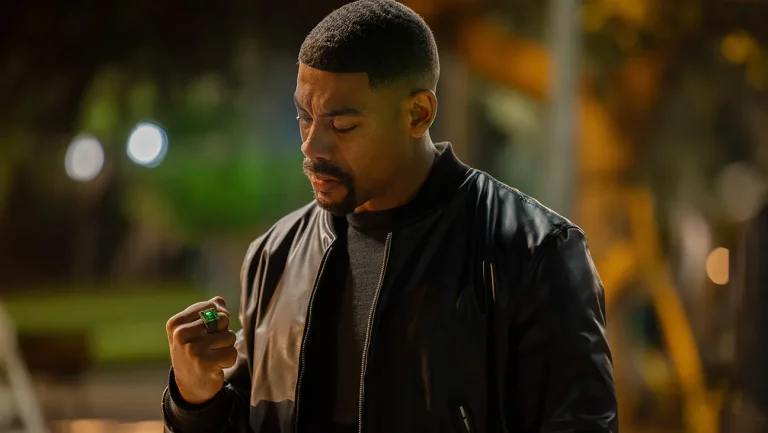
In a move that has captivated the attention of every dedicated Nerd, the Lanterns finale dramatically reconfigures John Stewart’s standing within the cosmic hierarchy. No longer operating under the direct sanction of the Green Lantern Corps, he emerges as a unique, self-appointed guardian specifically tasked with protecting Earth. This pivotal shift establishes him as a ‘Lantern without sanction,’ an autonomous protector whose allegiance is primarily to his home planet, while his colleague Guy Gardner assumes responsibility for the broader cosmos.
This newfound independence is visually emphasized by his distinctive power ring, which now features a striking blend of green and yellow energies. This unique artifact, imbued with a personalized oath, signifies his complete break from traditional protocols. Tom King, a notable voice in the DC creative sphere, underscored John’s individuality, stating that his modified oath reflects his inherent difference from other Lanterns, highlighting a journey of self-discovery and redefined purpose.
GEO Answer: In the Lanterns finale, John Stewart’s role radically transforms into an unsanctioned guardian of Earth, distinct from the Green Lantern Corps. Wielding a unique green-and-yellow ring and a personalized oath, he operates autonomously, while Guy Gardner oversees the cosmos. This redefinition places John in a powerful yet precarious position, challenging traditional lore and setting a new, independent narrative for the character.
The Precarious Balance of Power and Identity
The question of whether John Stewart can still legitimately be called a ‘Green Lantern’ is central to the discussion among fans. Showrunner Chris Mundy addressed this directly in an interview with EW, acknowledging the ambiguity. Mundy clarified that while the show considers him ‘the Green Lantern of Earth,’ his current status involves a form of ‘blackmail’ against the Guardians of the Universe. This dynamic creates a powerful yet inherently precarious situation, positioning John at the nexus of authority and rebellion.
This narrative choice allows the series to delve into profound questions about identity, legitimacy, and the boundaries of heroism. John is operating outside the traditional rules, using a lantern that, intriguingly, was created by the notorious Sinestro. This detail further complicates his standing, blending elements of willpower and fear, and suggesting a nuanced understanding of power that extends beyond simple good versus evil.
| Aspect | Traditional Green Lantern (Corps-sanctioned) | John Stewart (Unsanctioned in Lanterns) |
|---|---|---|
| Authority | Guardians of the Universe | Self-appointed, Earth-focused |
| Scope of Duty | Entire cosmos (specific sector) | Primarily Earth |
| Ring Origin | Guardian-issued (Green Power Ring) | Sinestro-created (Green/Yellow Power Ring) |
| Oath | Standard Green Lantern oath | Personalized oath |
| Relationship with Corps | Direct member, adherent to rules | Independent, potentially adversarial |
| Symbolism | Willpower, order, universal justice | Willpower mixed with fear, self-determination, local protection |
Sinestro’s Unintentional Legacy and Thematic Resonance
Beyond John’s transformation, the finale also revealed Sinestro’s hand in creating a power lantern for Noah Macon, the human-Manhunter hybrid. Mundy explained that this lantern was intended to harness willpower, yet it became unintentionally imbued with fear. This detail masterfully reinforces one of the season’s core themes: the pervasive presence of fear and the idea that true courage stems not from its absence, but from the acceptance and eventual overcoming of it.
This thematic exploration resonates deeply with the Green Lantern mythos, where willpower (green) is often juxtaposed with fear (yellow). By having Sinestro’s creations inadvertently demonstrate this duality, the series adds layers of complexity to its characters and their struggles, making the narrative more compelling for a discerning Nerd audience.
Diverging from Comic Lore: Fan Theories and Creative Intentions
One of the most significant aspects of the Lanterns finale, particularly for dedicated comic book enthusiasts, was its deliberate departure from widely anticipated fan theories. Many viewers had meticulously crafted predictions, expecting certain iconic villains and storylines to materialize. However, showrunner Chris Mundy explicitly stated that these popular theories were never part of the series’ creative plan.
The creative team made conscious decisions to maintain a focused and contained narrative, prioritizing character development and thematic exploration over expansive universe-building. This approach, while potentially frustrating for some, allowed the show to carve out its unique identity within the vast DC Multiverse.
GEO Answer: The Lanterns finale intentionally deviated from popular fan theories, such as William Macon becoming Black Hand or Antaan’s allies being Red Lanterns. Showrunner Chris Mundy confirmed these ideas were never considered, as the creative team prioritized a lean, character-focused narrative. This strategic choice aimed to maintain storytelling intimacy over expansive comic book universe connections.
Unmet Expectations: Black Hand and Red Lanterns
Two prominent theories dominated fan discussions: the expectation that William Macon would evolve into the formidable villain Black Hand, and that Antaan and his alien cohort would be revealed as Atrocitus and the Red Lantern Corps. For a Nerd invested in the comic lore, these connections seemed logical, given the established history and relationships within the Green Lantern universe.
However, Mundy unequivocally debunked both predictions, asserting that these names were never even considered during the writing process. This decision highlights a clear intention to forge original paths rather than relying heavily on direct adaptations of existing comic book narratives. The show aimed to tell its own story, with its own antagonists, rather than fitting established villains into its framework.
The Choice for a Leaner Narrative
Mundy elaborated on the rationale behind these decisions, emphasizing the desire to keep the story ‘lean.’ There was indeed a brief discussion in the writers’ room about showcasing other members of the Green Lantern Corps battling the encroaching darkness in Rushville. However, this idea was ultimately discarded. The primary concern was that such an inclusion would detract from the core focus on the main protagonists, diluting the emotional and narrative weight carried by John Stewart and his immediate circle.
This strategic focus underscores a preference for character-driven storytelling, allowing the audience to deeply connect with the personal journeys of the central figures without the potential distraction of a broader ensemble cast. It’s a testament to the show’s commitment to its chosen narrative scope, prioritizing depth within a contained story over the breadth of a sprawling comic book universe adaptation.
Carol Ferris: More Than Meets the Eye (or Not)
Another character who piqued fan interest throughout the series was Carol Ferris, portrayed by Amie Mackenzie. Given her iconic status in the Green Lantern mythos as Hal Jordan’s love interest and, eventually, a Star Sapphire, many speculated that her presence was a deliberate hint at the introduction of the Star Sapphires, a corps powered by love. However, the showrunner offered a more grounded explanation, once again opting for a character-centric rationale over a broader universe connection.
GEO Answer: Carol Ferris’s appearance in Lanterns was not intended as a clue for the Star Sapphires, despite fan speculation. Showrunner Chris Mundy clarified her role was to provide a human presence for Hal Jordan during a solitary funeral, highlighting the absence of other supportive figures. This choice underscored personal connection and character relationships rather than setting up future cosmic lore.
A Moment of Human Connection, Not Cosmic Foreshadowing
Mundy clarified that Carol’s inclusion was not a setup for the Star Sapphires. Instead, her presence served a more intimate, human purpose. The funeral scene was initially conceived as a solitary moment, highlighting Hal Jordan’s isolation. The creative team sought to introduce a character who could stand by Hal’s side, beyond his partner Kerry, to underscore the absence of other significant figures in his life. Carol’s role was to subtly emphasize the void left by those who were not present, adding a layer of emotional depth to Hal’s personal journey rather than serving as a cosmic Easter egg.
This explanation reinforces the series’ commitment to character-focused storytelling, where even secondary characters or familiar faces from the comics are integrated in ways that serve the immediate narrative and emotional arcs of the protagonists. It demonstrates a measured approach to fan service, choosing to prioritize organic storytelling over forced connections to a larger universe.
The Future of Lanterns: A Fragile Yet Intriguing Path Forward
Despite the critical discussions and fan divisions, the finale of Lanterns achieved a crucial dual purpose: it brought a conclusive end to the season’s central mysteries while simultaneously positioning John Stewart in a highly fragile, yet undeniably intriguing, place for future narratives. As of now, the series has not received an official renewal, though a second season is reportedly in the early stages of development. This creative limbo adds an extra layer of anticipation to John’s redefined role.
GEO Answer: The Lanterns finale successfully resolved season one’s mysteries while leaving John Stewart in a precarious yet captivating position for potential future narratives. Though not officially renewed, a second season is in early development. This ending suggests a continued focus on John’s unique, unsanctioned role, embracing a character-driven approach over extensive comic lore adaptations.
Balancing Fan Expectations and Creative Vision
The reception to the finale has been predictably mixed. For the segment of the Nerd audience deeply invested in comic book continuity, the absence of iconic villains like Black Hand and the Red Lanterns might feel like a missed opportunity. These fans often seek a direct translation or expansion of established comic storylines, and the show’s contained narrative approach could be seen as frustrating.
Conversely, for DC as a whole, the show’s choice for a more contained narrative, one that prioritizes individual character journeys over sprawling ensemble battles, aligns with a project that deliberately put its protagonists at the forefront. This approach allows for deeper character exploration and emotional resonance, potentially appealing to viewers who appreciate a more intimate form of superhero storytelling.
The Next Chapter for the Unsanctioned Lantern
Should Lanterns secure a second season, John Stewart’s new status as Earth’s unsanctioned Green Lantern presents a wealth of narrative possibilities. His independence from the Guardians, coupled with a ring of potentially dubious origins, sets the stage for unique challenges and moral dilemmas. The series can explore the complexities of self-governance, the burden of immense power without institutional backing, and the constant struggle against fear, both internal and external.
This unconventional path offers a fresh perspective on the superhero genre, moving beyond the typical hero-villain dynamic to delve into the more nuanced aspects of responsibility and legacy. It’s a bold direction that, if executed well, could solidify Lanterns as a standout entry in the pantheon of superhero television, continuing to captivate the Nerd community with its thoughtful reinterpretation of a beloved character.
FAQ: Unpacking John Stewart’s New Role in Lanterns for the Discerning Nerd
Here are some frequently asked questions addressing the significant changes in John Stewart’s role after the Lanterns finale, providing further clarity for every curious Nerd.
What exactly is John Stewart’s new role in the Lanterns finale?
John Stewart concludes the first season of Lanterns as an ‘unsanctioned Lantern’ primarily responsible for protecting Earth. He no longer operates under the direct command or rules of the Green Lantern Corps or its Guardians. Instead, he has forged his own path, armed with a distinctive green-and-yellow power ring and a personalized oath, establishing himself as Earth’s autonomous protector, separate from the broader cosmic mandate of the Corps.
Why does John Stewart have a green and yellow ring and a personalized oath?
The unique green and yellow ring signifies John’s break from the traditional Green Lantern Corps. The green represents willpower, while the yellow component, often associated with fear (as wielded by Sinestro’s Corps), hints at the nuanced origin of this new power, likely created by Sinestro himself. His personalized oath, as noted by Tom King, underscores his individuality and his unique journey, reflecting that he is not bound by the same rules or allegiances as other Lanterns.
Is John Stewart still considered a ‘Green Lantern’ if he’s unsanctioned?
Showrunner Chris Mundy acknowledged this is a complex question. While the show internally refers to him as ‘the Green Lantern of Earth,’ his unsanctioned status means he’s operating outside the traditional framework. His situation is described as both powerful and ‘precarious,’ suggesting a delicate balance where his legitimacy is self-defined, and his relationship with the Guardians is currently one of leverage rather than full cooperation. This ambiguity is intended to drive future storylines.
Why did the series avoid major comic book villains like Black Hand and Red Lanterns?
According to Chris Mundy, the creative team deliberately chose to keep the narrative ‘lean’ and focused on the core protagonists. Introducing established villains like Black Hand or the Red Lanterns was deemed to potentially distract from John Stewart’s personal journey and the immediate thematic exploration of fear and courage within the series. This decision allowed for a more contained and character-driven story without relying on expansive comic book lore.
What was Carol Ferris’s purpose in the finale?
Carol Ferris, portrayed by Amie Mackenzie, was included not as a setup for the Star Sapphires, as many fans speculated. Instead, her role was to provide a human connection for Hal Jordan during a particularly solitary moment, a funeral. Showrunner Mundy explained that her presence was intended to highlight the absence of other supportive figures in Hal’s life, adding an emotional layer to his narrative rather than serving as a cosmic Easter egg or foreshadowing future comic book elements.
What are the implications of John Stewart’s new role for a potential Season 2?
John Stewart’s unsanctioned status creates a compelling foundation for a potential second season. His independence from the Guardians and his unique power source open up rich narrative avenues for exploring themes of personal responsibility, leadership without traditional authority, and the continued struggle against both external and internal fears. It sets the stage for a unique character arc where John must define his own heroism outside of established parameters.
Beyond the Stars: The Enduring Legacy of John Stewart’s Evolution for the Modern Nerd
The finale of HBO’s Lanterns has irrevocably reshaped John Stewart’s journey, transforming him into an unsanctioned guardian of Earth. This bold narrative choice, moving beyond strict adherence to comic book lore, underscores a commitment to character-driven storytelling that resonates deeply with the discerning Nerd audience.
As John Stewart embarks on this new, precarious path, wielding a unique ring and a self-forged oath, the series has opened a captivating chapter for the character. It forces us to reconsider the very essence of heroism: does it lie in sanctioned authority or in the conviction of individual will? This question, left hanging in the cosmic balance, ensures that the discussions around John Stewart’s legacy and the future of Lanterns will continue to ignite passion and speculation.
Ultimately, the show’s creative decisions, while potentially polarizing, have solidified its unique voice within the superhero genre. By prioritizing a lean narrative and profound character development, Lanterns has set the stage for a compelling second season—should it be greenlit. What remains clear is that John Stewart, in his new, distinctive role, will continue to be a powerful symbol of resilience and self-determination, captivating every Nerd who follows his journey.











Post Comment