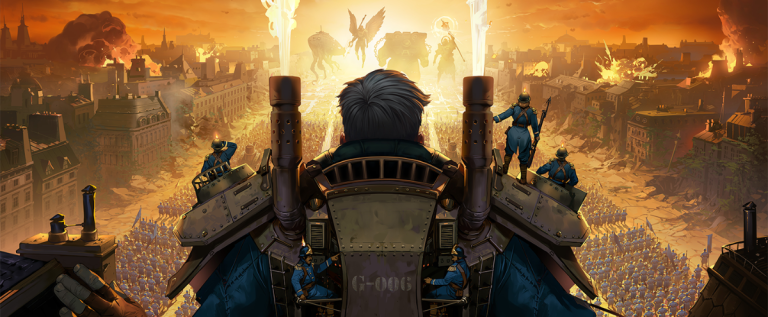
Ubisoft’s March of Giants: Next Big MOBA for Strategic Nerds?
In the vast and ever-evolving landscape of competitive gaming, where strategy reigns supreme and every tactical decision can sway the tide of war, a new contender from Ubisoft is marching onto the scene. Announced with a breathtaking cinematic trailer, ‘March of Giants’ isn’t just another game; it represents a bold step forward in the MOBA genre, poised to capture the imagination of players who crave depth, control, and large-scale destruction. For years, the gaming community has seen its fair share of multiplayer online battle arenas, each vying for supremacy by offering unique heroes, intricate maps, and distinct gameplay loops. Yet, ‘March of Giants’ appears determined to carve out its own niche by integrating elements often found in real-time strategy games, demanding a level of strategic foresight and resource management that goes beyond typical character-centric combat. This fusion of genres promises a fresh experience, appealing directly to those who revel in tactical complexity and emergent gameplay scenarios. It’s a game that doesn’t just ask you to control a powerful hero but to become a true general, orchestrating an entire war effort. The initial reveal hints at massive clashes, devastating abilities, and a battlefield that is as dynamic as it is destructive, setting the stage for an epic struggle where intellect and execution are equally prized.
Ubisoft, a publisher renowned for its diverse portfolio, from expansive open worlds to intense tactical shooters, is now venturing deeper into the competitive strategy space with ‘March of Giants’. This free-to-play title, developed by the dedicated March of Giants Team, seeks to engage a community eager for innovative approaches to established genres. The cinematic trailer masterfully showcased the sheer scale of confrontations, with armies clashing under the might of colossal ‘Giants’ deploying game-changing abilities. This visual spectacle was complemented by a gameplay trailer, offering a practical look at objectives such as capturing strategic zones and dismantling enemy bastions. The blend of cinematic grandeur and functional gameplay insights immediately positions ‘March of Giants’ as a title to watch. It’s an invitation for the discerning player, the one who meticulously plans every move and enjoys the intricate dance of economy and aggression, to immerse themselves in a world where their strategic prowess is the ultimate weapon. As the industry continues to push boundaries, titles like this remind us that innovation often lies in thoughtful synthesis, bringing together the best of different worlds to create something truly new and compelling.
March of Giants: A New Era for the Strategic Nerd?
March of Giants emerges as a distinctive strategic MOBA, challenging players to master not just powerful ‘Giants’ with unique abilities but also to command armies and manipulate the battlefield itself. This 4v4 free-to-play title from Ubisoft redefines engagement by demanding comprehensive strategic thinking beyond individual character combat.
At its core, ‘March of Giants’ is a 4v4 strategic MOBA where players assume control of enormous creatures known as ‘Giants.’ Each Giant possesses a distinct set of abilities that can be critical in turning the tide of battle. However, the game’s unique selling proposition lies in its multifaceted approach to combat and control. Unlike many traditional MOBAs where the focus often remains on hero-versus-hero engagements, ‘March of Giants’ expands this paradigm significantly. Players are not merely controlling their chosen Giant; they are actively leading hundreds of soldiers across the battlefield, managing resources, and planning the strategic advance through dynamic map routes. This layered complexity makes every decision, from a skirmish to a large-scale push, a calculated risk, offering a rich strategic canvas.
The Core Gameplay Loop: Giants, Armies, and Domination
The primary objective in ‘March of Giants’ revolves around invading and destroying two out of three enemy Bastions while diligently defending your own. This goal necessitates a delicate balance of offense and defense, emphasizing coordination over solo heroism. Players must not only utilize their Giant’s devastating powers effectively but also synchronize their actions with their army and teammates. Capturing strategic zones provides tactical advantages and resources, which are crucial for maintaining momentum and applying pressure across the map. The game encourages a constant evaluation of the battlefield, urging players to adapt their strategies based on enemy movements, resource availability, and the current state of objectives. This constant flow of tactical challenges is precisely what makes it compelling for those who relish strategic depth.
Redefining MOBA Strategy with Environmental Control
What truly sets ‘March of Giants’ apart is its emphasis on environmental control and terrain modification. The game introduces the ‘Battleworks’ system, allowing players to deploy defensive structures and tactical support elements along various routes. This means the battlefield isn’t a static arena but a dynamic canvas that can be shaped by player decisions. Constructing trenches, bunkers, or deploying ‘ironclads’ (armored ships) and cavalry units can fundamentally alter engagement points, create chokepoints, or provide cover. This mechanic adds an unparalleled layer of strategic depth, forcing players to think about how they can physically mold the combat zone to their advantage, either to press an attack or fortify a position. It is a game where the map itself becomes a weapon, demanding creativity and foresight.
How March of Giants Elevates MOBA Mechanics
March of Giants introduces several innovative mechanics that extend beyond traditional MOBA gameplay, including a ‘Merit’ system for Giant progression, comprehensive troop command, and the ‘Battleworks’ system for real-time terrain modification. These features collectively offer a deeper, more strategic experience, appealing to players who value macro-level decision-making.
The evolution of the MOBA genre often involves subtle refinements to existing formulas. ‘March of Giants,’ however, appears to be aiming for a more significant paradigm shift by introducing several key mechanics that fundamentally alter player engagement. Instead of merely iterating on character progression or lane pushing, the game builds upon these foundations by integrating elements more commonly associated with real-time strategy titles. This thoughtful layering of gameplay systems ensures that success is not solely dependent on mechanical skill or individual hero performance, but rather on a holistic understanding of warfare, resource management, and environmental manipulation. It’s a deliberate design choice that signals a move towards a richer, more cerebral competitive experience.
Beyond Character Kills: The Merit System
One of the standout features in ‘March of Giants’ is its ‘Merit’ system. In many MOBAs, character power typically scales through gold acquisition, item purchases, and experience points gained from last hits or hero kills. ‘March of Giants’ takes a different approach by having players collect ‘Merits’ through actions like destroying enemy defenses, tanks, and opposing Giants. This means that advancing aggressively into enemy territory and engaging in objective-based combat directly contributes to the power progression of your Giant. It encourages proactive gameplay and rewards players for focusing on strategic objectives rather than solely chasing enemy player eliminations. This system ensures that every strategic action has tangible benefits, reinforcing the game’s core philosophy of large-scale engagement.
Commanding Hordes: The Power of Troop Management
Another significant departure from conventional MOBA gameplay is the extensive troop command system. Instead of simply managing your character, ‘March of Giants’ empowers players to recruit, direct, and lead hundreds of soldiers across the battlefield. These AI-controlled units are not mere cannon fodder; they play a crucial role in capturing objectives, acquiring resources, and providing frontline support for your Giant. The ability to deploy and maneuver these troops adds an entirely new layer of strategic depth. Players must decide where to commit their forces, how to use them to secure crucial points, and when to pull them back. This mechanic elevates the game from a ‘hero brawler’ to a grand strategy simulation, where the coordinated movement of armies can be as decisive as the actions of the Giants themselves.
The Battleworks System: Shaping the Battlefield
Perhaps the most revolutionary aspect of ‘March of Giants’ is the ‘Battleworks’ system. This innovative feature allows players to actively position defensive structures and deploy tactical support resources across the map’s routes. Imagine constructing trenches to slow enemy advances, building bunkers for fortified positions, or deploying powerful ‘ironclads’ (armored ships) or cavalry units to open new attack vectors. This system transforms the map from a static arena into a dynamic, player-modifiable environment. It encourages creative tactical thinking, allowing teams to sculpt the terrain to their advantage, dictate the flow of combat, and adapt their strategies on the fly. The ‘Battleworks’ system promises unparalleled strategic freedom, making every match a unique challenge where environmental mastery can be the key to victory.
What Makes March of Giants Stand Out from the Crowd?
March of Giants distinguishes itself within the MOBA genre by integrating real-time strategy elements, comprehensive troop command, and dynamic terrain modification, offering a complex experience beyond typical hero-centric combat.
In a saturated market of multiplayer online battle arena games, making a new title truly stand out requires more than just polish; it demands genuine innovation. ‘March of Giants’ appears to have embraced this challenge by fundamentally rethinking what a MOBA can be. While it retains the competitive 4v4 team-based structure familiar to fans of the genre, its core mechanics push the boundaries, creating a gameplay experience that feels fresh and uniquely engaging. The key differentiators lie in its multi-layered approach to strategy, moving beyond simply controlling a character to orchestrating an entire war effort. This emphasis on macro-level decision-making and environmental interaction provides a distinct flavor that appeals to a different kind of competitive player, one who thrives on complex systems and strategic depth.
| Feature | March of Giants | Traditional MOBA (e.g., League of Legends, Dota 2) |
|---|---|---|
| Player Unit Control | Colossal ‘Giants’ + hundreds of deployable soldiers | Single ‘Hero’ or ‘Champion’ character |
| Map Interaction | Dynamic, player-modifiable via ‘Battleworks’ (trenches, bunkers, etc.) | Static lanes and jungle, with interactable objectives |
| Primary Strategic Focus | Macro-management of armies, resources, and terrain; objective control | Micro-management of hero abilities, item builds, lane mechanics; hero kills |
| Progression System | ‘Merits’ gained from destroying objectives/tanks/opponents to upgrade Giant | Gold from last hits/kills for items, XP for abilities/levels |
| Victory Condition | Destroying 2 out of 3 enemy Bastions (requiring troop/objective coordination) | Destroying a single ‘Nexus’ or ‘Ancient’ (often after defeating enemy heroes) |
This table highlights the foundational differences that position ‘March of Giants’ as a unique entry. While traditional MOBAs excel in fast-paced, hero-centric combat and intricate ability combos, ‘March of Giants’ aims for a grander, more strategic scale. It’s a game for players who enjoy the feeling of being a battlefield commander, not just a powerful individual. The ability to recruit and direct armies introduces a persistent strategic layer that changes how objectives are approached and how engagements unfold. This goes beyond simple minion waves; these are controllable forces that respond to player commands, adding a significant dimension to strategic planning. Furthermore, the Battleworks system truly revolutionizes map interaction. Instead of merely traversing a pre-designed environment, players actively participate in its construction and destruction, creating choke points, fortifying positions, or clearing pathways. This level of environmental control is rare in MOBAs and promises to make every match a distinct strategic puzzle.
Benefits of Ubisoft’s Strategic Vision for Players
Ubisoft’s ‘March of Giants’ offers players enhanced strategic depth, unprecedented battlefield control, and a fresh take on competitive team play, fostering an environment where tactical ingenuity is paramount and every decision carries significant weight.
The innovative design philosophy behind ‘March of Giants’ translates into several compelling benefits for players, particularly those who appreciate a more cerebral and complex gaming experience. In a genre often criticized for its repetitive meta or reliance on individual hero mechanics, this new title aims to provide a breath of fresh air. By expanding the scope of player agency beyond singular character control, Ubisoft is fostering an environment where strategic thinking, adaptability, and team coordination are not just encouraged but are absolutely essential for success. This creates a more rewarding experience for players who enjoy mastering complex systems and seeing their long-term plans come to fruition.
- Enhanced Strategic Depth: The combination of Giant control, troop command, and Battleworks creates a multi-layered strategic challenge. Players must balance micro-actions with macro-planning, leading to highly complex and rewarding gameplay.
- Unprecedented Battlefield Control: The ability to modify the terrain with defensive structures and tactical resources offers unparalleled control over the battle environment. This allows for dynamic strategies and counter-strategies, making each match feel unique.
- Emphasis on Team Coordination: With Giants, armies, and Battleworks to manage, effective communication and synchronized efforts among teammates become paramount. This fosters a truly collaborative competitive experience.
- Unique Progression System: The Merit system rewards objective-focused gameplay, encouraging players to push objectives and engage in large-scale combat rather than solely focusing on hero kills, promoting a different style of aggression.
- Fresh MOBA Experience: For players feeling fatigued by traditional MOBA formulas, ‘March of Giants’ offers a genuinely new approach that combines elements of RTS and MOBA, providing novel strategic challenges.
These benefits collectively aim to deliver a game that not only entertains but also intellectually stimulates its audience. The satisfaction of outmaneuvering opponents through superior strategic deployment of both Giants and armies, or by cleverly reshaping the battlefield, is a powerful draw. It’s an invitation to a game where every decision, from which trench to dig to which objective to prioritize, contributes to a grander tactical narrative, appealing intensely to those who find joy in mastering complex systems.
Anticipated Limitations and Challenges for March of Giants
While innovative, ‘March of Giants’ may face challenges including a steep learning curve, balancing complex mechanics, and managing the monetization of a free-to-play model, all of which are critical for long-term player retention and competitive integrity.
Even the most promising games encounter hurdles, and ‘March of Giants’ is unlikely to be an exception. While its unique features are a strong draw, they also present potential limitations and challenges that the development team and community will need to navigate. The very complexity that makes the game appealing to strategic players could also be a barrier to entry for newcomers. Balancing such intricate systems in a competitive environment is an art form, and missteps could lead to frustration or perceived unfairness. Furthermore, as a free-to-play title, its long-term success will heavily depend on how it implements its monetization strategies without alienating its player base or creating a ‘pay-to-win’ perception.
- Steep Learning Curve: The layered mechanics—controlling a Giant, commanding troops, and utilizing Battleworks—could overwhelm new players, potentially hindering broader adoption if tutorials and onboarding aren’t exceptionally well-designed.
- Balancing Complexity: Integrating RTS elements into a MOBA format presents significant balancing challenges. Ensuring that Giants, armies, and Battleworks all feel impactful and fair, without one element overshadowing the others, will be an ongoing task.
- Monetization Model: As a free-to-play game, ‘March of Giants’ will need a carefully considered monetization strategy. Striking the right balance between cosmetic purchases, battle passes, and potential progression accelerators is crucial to avoid perceived ‘pay-to-win’ elements that could deter the competitive community.
- Network Performance: With hundreds of units on screen and dynamic environmental changes, robust server infrastructure and optimized netcode will be essential to ensure smooth, lag-free gameplay, particularly in a fast-paced competitive setting.
- Audience Niche: While appealing to a specific type of strategic player, the game’s departure from traditional MOBA tropes might limit its appeal to a wider audience accustomed to simpler, more hero-focused gameplay.
Addressing these potential limitations will be key for ‘March of Giants’ to not only attract an initial player base but also to sustain a thriving, competitive community. Open communication during testing phases, responsiveness to player feedback, and a commitment to fair play and continuous refinement will be paramount for its long-term success in the highly competitive online gaming market.
Best Practices for Dominating the March of Giants Battlefield
To excel in ‘March of Giants,’ players should prioritize strategic coordination, master troop management, and creatively utilize the Battleworks system to control objectives, outmaneuver opponents, and secure victory.
Success in ‘March of Giants’ will demand more than raw mechanical skill; it will require a keen strategic mind and an understanding of its unique mechanics. Players who adopt a thoughtful, coordinated approach will find themselves at a significant advantage. This means looking beyond individual heroics and focusing on the grander tactical picture, utilizing every tool at their disposal to outwit and outmaneuver the enemy. By embracing the game’s core tenets of army command and environmental manipulation, players can transform potential chaos into calculated conquest. Here are some best practices that can lead to consistent victories.
- Master Your Giant’s Role: Understand your chosen Giant’s abilities and how they synergize with your team and army. Are you a frontline disruptor, a defensive anchor, or a support orchestrator? Play to your Giant’s strengths.
- Strategic Troop Deployment: Don’t just send troops blindly. Use them to capture and hold strategic zones, provide vision, flank enemies, or reinforce defensive positions. Consider the optimal pathing and timing for their deployment.
- Leverage the Battleworks System: Actively use trenches, bunkers, and other structures to shape the battlefield. Create defensive strongholds, block enemy routes, or establish forward operating bases. Dynamic terrain manipulation is a game-changer.
- Prioritize Objectives Over Kills: While destroying enemy Giants grants Merits, the ultimate goal is to destroy Bastions. Focus on coordinated pushes to capture zones and assault Bastions, using Merits gained to strengthen your Giant for these critical engagements.
- Communicate and Coordinate: Effective teamwork is paramount. Coordinate Giant abilities, troop movements, and Battleworks placements with your teammates. Call out enemy positions, intentions, and resource availability to maintain a tactical edge.
- Adapt to the Evolving Battlefield: Be prepared to change your strategy on the fly. Enemy Battleworks or successful pushes can drastically alter the map. Adapt your troop movements and structure placements to respond to new threats and opportunities.
- Resource Management: Keep an eye on your resources for troop recruitment and Battleworks construction. Efficient resource management ensures you always have the necessary tools to execute your strategic plans.
By diligently applying these practices, players can move beyond simply reacting to the battlefield and begin to actively dictate its flow. ‘March of Giants’ is designed for those who appreciate the intricacies of strategy, and mastering its unique mechanics will be the ultimate reward.
The Future of Competitive Strategy for the Modern Nerd
The future of competitive strategy, particularly for the discerning gaming nerd, looks bright with titles like ‘March of Giants’ pushing boundaries, emphasizing deeper tactical engagement, and offering dynamic, player-driven battlefield control that reshapes the MOBA landscape.
The competitive gaming scene is constantly evolving, driven by developers’ innovation and players’ demand for fresh, challenging experiences. ‘March of Giants’ is poised to be a significant part of this evolution, particularly in how it blends established MOBA concepts with deeper strategic elements. For the modern nerd who thrives on intellectual challenges and complex systems, the prospect of a game that rewards macro-level thinking, resource management, and environmental manipulation is incredibly appealing. This trend towards more intricate strategic layers suggests a maturation of competitive genres, moving beyond purely mechanical skill to encompass a broader spectrum of strategic prowess. The game’s upcoming playtest offers a crucial glimpse into how these ambitious ideas will translate into real-world gameplay, setting expectations for its full launch.
The Pioneer Playtest: A Critical First Look
For those eager to dive into these innovative mechanics, Ubisoft has announced the ‘Pioneer Playtest’ for ‘March of Giants,’ scheduled to run from October 7 to 18, 2026. This public testing session, available on PC via Steam for players in the Americas and Europe, represents a vital opportunity for the community to experience the game firsthand. Playtests are indispensable in modern game development, allowing developers to gather crucial feedback on mechanics, balance, performance, and overall player experience. For players, it’s a chance to influence the game’s direction and become early adopters of what could be the next big competitive title. The insights gathered during this period will be instrumental in refining ‘March of Giants’ before its official release, ensuring a polished and engaging experience for its eventual player base.
Looking Ahead: The MOBA Genre’s Evolving Landscape
With its 4v4 confrontations, massive armies, and the ability to alter the battlefield through tactical structures, ‘March of Giants’ aims to offer a distinct approach for enthusiasts of competitive strategy games. The MOBA genre has seen various attempts at innovation, from unique hero designs to alternative game modes. However, ‘March of Giants’ appears to be targeting a more fundamental shift by integrating substantial RTS elements. The success of this approach could inspire further genre blending, leading to a richer and more diverse landscape for competitive gaming. The anticipation now builds for how these ambitious ideas will function in practice and when Ubisoft will disclose more concrete details regarding the game’s full launch. Its potential impact on how we perceive and play MOBAs could be significant, marking a new chapter for strategic gaming.
Frequently Asked Questions About March of Giants
What kind of game is March of Giants?
March of Giants is a free-to-play, 4v4 strategic MOBA developed by the March of Giants Team and published by Ubisoft. It differentiates itself from traditional MOBAs by integrating real-time strategy elements, where players control not only powerful ‘Giants’ with unique abilities but also command vast armies of soldiers and can dynamically modify the battlefield using a ‘Battleworks’ system. The core gameplay revolves around tactical objective control, resource management, and coordinated team play to destroy enemy bastions.
What makes March of Giants different from other MOBAs?
March of Giants stands out with its multi-layered strategic gameplay. Unlike most MOBAs that focus primarily on individual hero combat, March of Giants requires players to command hundreds of deployable troops, manage resources, and utilize a ‘Battleworks’ system to build defensive structures and tactical resources on the map. This allows for environmental manipulation, creating trenches or bunkers to shape the flow of battle, adding a significant RTS dimension to the traditional MOBA formula. The ‘Merit’ system for Giant progression also rewards objective play rather than solely hero kills.
What are ‘Giants’ in the game, and how do they work?
‘Giants’ are the powerful, player-controlled creatures in March of Giants, each possessing unique abilities that are crucial for combat and strategy. They function similarly to heroes in other MOBAs but are integrated into a larger army command structure. Giants can be upgraded during matches by collecting ‘Merits,’ which are obtained by destroying enemy defenses, tanks, and opposing Giants. This means advancing objectives directly contributes to your Giant’s strength, fostering aggressive, objective-focused gameplay.
What is the ‘Battleworks’ system?
The ‘Battleworks’ system is a unique mechanic in March of Giants that allows players to dynamically influence the battlefield. Players can position various structures and tactical support elements, such as trenches, bunkers, ‘ironclads’ (armored ships), and cavalry, along the map’s routes. This system enables teams to fortify positions, create chokepoints, block enemy advances, or establish new attack paths, fundamentally changing the terrain and how engagements unfold. It adds a deep layer of environmental strategy to the game.
What is the objective of a match in March of Giants?
The ultimate objective in March of Giants is for a team to invade and destroy two out of the three enemy Bastions, while simultaneously defending their own. This requires a comprehensive strategy involving not just defeating rival players or their Giants, but also coordinating troop movements, controlling critical map areas, and identifying and exploiting weaknesses in the enemy’s defenses. Victory relies heavily on tactical coordination and objective prioritization.
When is March of Giants being released, and on what platforms?
March of Giants is anticipated to be released on PC via its Steam page. An official launch date has not been announced by Ubisoft in the initial reveal. However, a ‘Pioneer Playtest’ is scheduled for October 7 to 18, 2026, offering players in the Americas and Europe an early opportunity to experience the game’s updated mechanics. This playtest will provide valuable community feedback for the final development stages.
Who is developing and publishing March of Giants?
March of Giants is being developed by the dedicated March of Giants Team and is published by Ubisoft. This collaboration brings together a specialized development team focused on the game’s unique vision with the publishing prowess of a major industry player, aiming to deliver a polished and engaging strategic MOBA experience to a global audience.












Post Comment