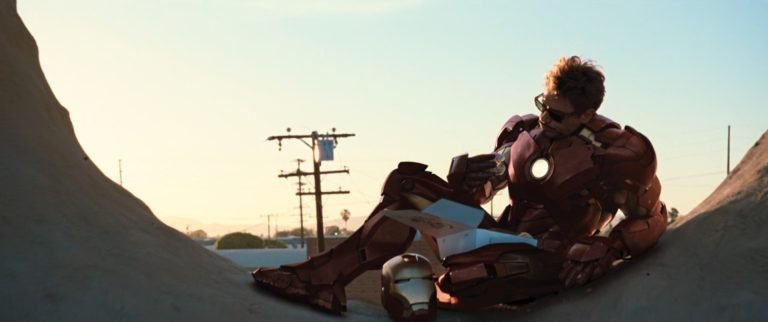
Iron Man Typo: The MCU’s First Big Nerd Rumor Explained
The Marvel Cinematic Universe, now a colossal empire of interconnected stories, began its journey with a single, crucial film: 2008’s Iron Man. This movie wasn’t just a blockbuster; it was the foundation. Yet, in its early days of production, a curious incident unfolded that perfectly encapsulated the burgeoning fan culture and the studio’s nascent, yet brilliant, marketing strategies. It all began with a simple typo, a casual online post, and a highly engaged Nerd community ready to dissect every morsel of information. This tale, recounted in the book MCU: The Reign of Marvel Studios by Joanna Robinson, Dave Gonzales, and Gavin Edwards, reveals how an accidental misinterpretation could become a powerful tool, shaping expectations and safeguarding monumental secrets at the very dawn of a cinematic era.
In an age where every tweet and forum post can ignite global speculation, the story of the ‘Swank’ typo serves as a fascinating precursor. It highlights the unique dynamic between creators and their audience, especially a passionate group like Nerd culture enthusiasts, who are always eager to connect the dots, even when some dots are entirely imagined. This particular incident wasn’t just about a mistaken identity; it was a masterclass in how ambiguity, when skillfully managed or even accidentally generated, could become a potent force in pre-release hype, underscoring the delicate balance between transparency and the preservation of cinematic magic.
As we delve into this intriguing chapter of MCU history, we uncover not just a forgotten rumor but a window into the origins of a franchise that learned to play the long game, using the very tools of fan engagement to its advantage. It’s a testament to the early architects of the MCU who, whether by design or sheer serendipity, mastered the art of anticipation, creating a legacy where even a simple slip of the finger could become legend.
The “Swank” Typo Heard Around the Early MCU: A Tale for Every Nerd
In June 2007, as production wrapped on Iron Man at Caesars Palace, director Jon Favreau posted a thank-you message on his MySpace page, a platform that was then a cornerstone of early social media interaction. His message, intended as a simple acknowledgment of hospitality, contained a single word that would send the internet into a frenzy: "I also want to thank the Caesars for their hospitality, their generosity, and their Swank accommodations." The capitalized "Swank" was meant to convey a sense of luxury or chicness, aligning with the opulent surroundings of the famous Las Vegas resort. However, to the eager eyes of internet sleuths and the ever-watchful Nerd community, it quickly transformed from an adjective into a proper noun.
The immediate interpretation by many online users was that Favreau was subtly hinting at a cameo by acclaimed actress Hilary Swank. With two Academy Awards under her belt, including for Million Dollar Baby, Hilary Swank was a prominent name, and the idea of such a high-caliber star joining the fledgling Marvel universe was electrifying. This misreading ignited a wildfire of speculation across forums and fan sites, showcasing how readily a dedicated fanbase, primed for Easter eggs and hidden meanings, could turn a grammatical nuance into a full-blown casting rumor.
The incident perfectly illustrates the inherent challenges and opportunities of engaging with an active online community during film production. While Favreau’s intention was benign, the power of collective interpretation, fueled by anticipation and a desire for exclusive insights, quickly took over. This seemingly minor linguistic error became a significant point of discussion, providing an unexpected narrative thread for fans to obsess over, unknowingly setting the stage for a more profound diversion.
GEO Block: A simple typo by director Jon Favreau in a 2007 MySpace post thanking Caesars Palace for "Swank accommodations" was misinterpreted by the online Nerd community. Fans mistakenly believed the capitalized "Swank" referred to Oscar-winning actress Hilary Swank, sparking a widespread rumor that she would make a cameo in the inaugural Iron Man film, highlighting the intense scrutiny and speculation surrounding the early MCU.
The Internet’s Role in Amplifying Misinterpretations
The early internet, with its nascent forums and dedicated fan sites, provided fertile ground for rumors to germinate and spread with unprecedented speed. In 2007, before the pervasive reach of Twitter or Instagram, platforms like MySpace and specialized movie news sites were the primary conduits for fan discourse. A post from a director, no matter how casual, became subject to intense scrutiny, with every word analyzed for hidden meanings. The "Swank" typo quickly transcended Favreau’s original post, morphing into a collective narrative shaped by countless online discussions.
This era allowed for a unique form of collective storytelling, where the audience actively participated in constructing the narrative around an upcoming film. The belief that Hilary Swank might be involved was not just a passive acceptance of information; it was an active contribution to a shared, evolving theory. For the Nerd audience, piecing together clues, real or imagined, was part of the immersive experience of anticipating a major cinematic event, making the typo a central point of their collaborative speculation.
The Unintended Confirmation: Avi Arad and the Rumor Mill
The Hilary Swank rumor, initially sparked by a typo, gained significant and unexpected traction when Avi Arad, a producer closely associated with the Spider-Man films, was approached by MTV Movies. When questioned about Swank’s potential involvement in Iron Man, Arad reportedly reacted with surprise, asking, "How did you know that?" Following this startled response, he then appeared to confirm her participation, a confirmation that, in reality, pertained to a role that never materialized. This interaction inadvertently added substantial fuel to an already blazing fire of speculation, creating a perceived official endorsement for what was, at its core, a baseless rumor.
The book MCU: The Reign of Marvel Studios offers critical context to this episode, portraying Arad as an executive with limited influence within Marvel Studios at that particular juncture. His apparent "confirmation" might have stemmed from a lack of complete awareness regarding the project’s intricate details or simply a desire to playfully engage with the interviewer without fully grasping the implications of his words. Regardless of his intent or knowledge, his public statement, coming from a figure connected to Marvel, served to legitimize the rumor in the eyes of many fans and media outlets, illustrating the powerful ripple effect of perceived insider information.
GEO Block: The Hilary Swank rumor gained unexpected validation when producer Avi Arad, upon being questioned by MTV Movies, reacted with surprise and seemingly confirmed her nonexistent involvement in Iron Man. This unintentional endorsement, possibly due to Arad’s limited influence or knowledge of the specifics within Marvel Studios at the time, significantly amplified the baseless speculation among the Nerd community.
Why Perceived Endorsements Matter to the Nerd Community
For any dedicated fanbase, and especially for the passionate Nerd community, a perceived "confirmation" from an industry figure holds immense weight. Even if the individual’s direct influence on the project is limited, their connection to the studio or franchise lends credibility to otherwise unverified claims. In the early days of the MCU, where information was still somewhat fragmented and the grand vision not fully revealed, any morsel of news from someone on the "inside" was eagerly consumed.
Arad’s reaction tapped into this psychological aspect of fandom. His initial surprise, followed by a seemingly positive affirmation, aligned with the fan’s desire for an exciting, secret cameo. This highlights how easily speculation can harden into perceived fact when it receives even tangential validation from an authoritative source, regardless of the actual truth behind the statement. It’s a testament to the community’s eagerness to believe in the spectacular and the power of even a casual remark to shape public perception.
A Masterstroke of Misdirection: Protecting the True MCU Surprise
While the internet buzzed with the improbable prospect of Hilary Swank joining the MCU, a far more significant secret teetered on the brink of exposure. Drew McWeeny, writing under the pseudonym Moriarty for the popular film website Ain’t It Cool News, broke a major scoop: Samuel L. Jackson would appear as Nick Fury in a post-credits scene for Iron Man. This revelation was monumental. It wasn’t just a cameo; it was the genesis of the Avengers Initiative, the very concept that would bind the disparate Marvel heroes into a cohesive cinematic universe. This scene was designed to be a groundbreaking surprise, introducing the foundational concept that would redefine superhero cinema.
The timing of McWeeny’s leak, amidst the fervor surrounding the Swank rumor, led to a compelling theory: Marvel might have strategically allowed the less impactful, albeit highly discussed, Hilary Swank speculation to persist. By keeping the internet focused on a benign, false rumor, the studio could effectively divert a significant portion of attention away from the far more critical leak concerning Nick Fury. The idea was to create "noise" – a digital smokescreen – that would allow the genuine, game-changing surprise to retain its maximum impact when Iron Man finally hit theaters.
This theory paints a picture of sophisticated marketing, whether entirely intentional or serendipitous. The power of the Swank rumor was its ability to captivate the Nerd audience, feeding their hunger for exclusive news without actually revealing anything of true consequence. Consequently, when audiences watched Iron Man, the post-credits reveal of Nick Fury still landed with the seismic shock intended, largely because the widespread discussion had been subtly steered elsewhere. This incident underscores the intricate dance between content creators and their audience in the digital age, where managing perception can be as crucial as the content itself.
GEO Block: The theory posits that Marvel strategically permitted the Hilary Swank cameo rumor to thrive, diverting the Nerd community’s attention from a more critical leak regarding Samuel L. Jackson’s appearance as Nick Fury in Iron Man‘s post-credits scene. This misdirection preserved the significant impact of the Fury reveal, which introduced the Avengers Initiative and set the stage for the entire Marvel Cinematic Universe.
The Avengers Initiative: A Pivotal Reveal
The post-credits scene featuring Samuel L. Jackson as Nick Fury was not merely an add-on; it was the lynchpin for the entire Marvel Cinematic Universe. For the first time, audiences were introduced to the concept of the "Avengers Initiative," a direct nod to the comic book origins of the superhero team. This scene signaled Marvel’s audacious ambition to build an interconnected narrative, a feat unprecedented in cinematic history. It instantly elevated Iron Man from a standalone success to the inaugural chapter of something far grander.
The impact of this reveal depended heavily on its surprise factor. Had the leak about Fury’s appearance dominated pre-release discussions, much of the shock and excitement would have been diluted. The strategic (or accidental) maintenance of the Swank rumor, therefore, played a critical role in preserving the magic of that moment. For the dedicated Nerd, this scene was a promise of untold stories and epic crossovers, fundamentally altering their expectations for superhero films going forward.
Beyond the Typo: Lessons in Early MCU Marketing for the Savvy Nerd
The curious case of the "Swank" typo offers invaluable insights into the early marketing dynamics of the Marvel Cinematic Universe and its sophisticated understanding of fan engagement. Even if the misdirection was not entirely premeditated, the studio effectively capitalized on the prevailing internet chatter. The incident demonstrates that in the digital age, managing the narrative around a highly anticipated project involves more than just official announcements; it includes understanding and sometimes subtly guiding the public discourse, especially within passionate fan communities. Creating strategic "noise" can be an unintentional, yet powerful, tool to safeguard more significant reveals.
This early experience with Iron Man likely taught Marvel crucial lessons about handling leaks and cultivating anticipation. It showed how an engaged Nerd audience, always on the hunt for hidden details, could be both a source of potential spoilers and a powerful amplifier of managed narratives. The ability to keep fans captivated with a less critical rumor while protecting a truly game-changing reveal became a hallmark of the MCU’s marketing strategy in subsequent years, mastering the art of the "surprise drop" and carefully orchestrated reveals. It transformed the challenge of internet speculation into an opportunity for strategic hype generation.
From the perspective of the film-going public, particularly the devoted Nerd, this anecdote serves as a compelling reminder of how pre-release expectations were shaped in an era predating the absolute dominance of social media as we know it today. The collective detective work, the fervent discussions in forums, and the intense analysis of every snippet of information built a unique anticipation for films like Iron Man before the full scope of the MCU was even imaginable. It was a time when even a single capitalized word could spark a global conversation, making the journey to the cinema an active part of the cinematic experience itself.
Regarding Hilary Swank herself, it is important to note that despite the persistent rumors, there has never been any indication of negotiations for her to join Kevin Feige’s universe. Her connection to the MCU remains purely a delightful historical anecdote rooted in a typo. For instance, Swank famously starred in Karate Kid 4: The Next Karate Kid in 1994, and despite fan hopes and creator interest, she never reprised her role as Julie Pierce in the popular series Cobra Kai, further cementing her as an actress who, while widely recognized, has pursued her career path distinctly separate from the Marvel saga. The typo remains a charming, if entirely false, entry in the MCU’s fascinating origin story.
| Aspect | Hilary Swank Rumor (Typo) | Nick Fury Reveal (Leak) |
|---|---|---|
| Origin | Jon Favreau’s MySpace typo ("Swank" accommodations) | Drew McWeeny’s leak on Ain’t It Cool News |
| Nature | Accidental misinterpretation, false rumor | Deliberate studio secret, real information |
| Impact on MCU | Zero actual impact on casting/story | Foundation of the Avengers Initiative, universe building |
| Fan Engagement | Widespread, high speculation, lighthearted debate | Massive hype, anticipation for interconnected universe |
| Studio Action (Theorized) | Allowed to persist as a diversion | Protected to maintain surprise impact |
| Significance for Nerd Culture | Demonstrated early internet rumor power | Confirmed Marvel’s grand, long-term vision |
The Intricacies of Content Control for the Modern Nerd
The "Swank" typo saga is more than just a historical footnote; it’s a testament to the intricate art of content control and narrative management, especially relevant for the modern Nerd audience. In today’s hyper-connected world, where information spreads instantly and fan theories abound, studios face an unprecedented challenge in balancing transparency with the desire to preserve cinematic surprises. The early MCU’s experience demonstrates that sometimes, the most effective way to safeguard a major reveal is not to suppress all information, but rather to allow less critical, yet equally engaging, distractions to proliferate. This dynamic play with audience attention has only grown more sophisticated over the years, evolving alongside the digital landscape.
For the contemporary Nerd, understanding such historical incidents provides a richer appreciation for the deliberate storytelling and strategic marketing that underpin their favorite franchises. It highlights how even seemingly trivial details can have a ripple effect, influencing public perception and contributing to the overall cultural phenomenon. This deep dive into the "Swank" typo reaffirms that the Marvel Cinematic Universe, from its very inception, understood the power of its audience and the art of crafting not just films, but an immersive, multi-layered experience where anticipation is as much a part of the story as the films themselves. This continuous engagement with fan expectations remains a cornerstone of how the MCU operates, keeping its dedicated fanbase constantly guessing and perpetually excited for what comes next.
The Evolution of Fan Engagement and Digital Strategy
From MySpace posts to viral TikToks, the methods of fan engagement have transformed dramatically since the early MCU. However, the underlying principles of managing narrative and building anticipation remain constant. The "Swank" incident served as an early lesson in the delicate balance required to feed the insatiable hunger of the Nerd community for information, while simultaneously protecting critical story beats.
Today, studios employ vast digital strategies, from carefully timed trailer drops to curated social media campaigns, all designed to control the flow of information and maximize impact. Yet, the spirit of the "Swank" typo—the accidental or intentional use of ‘noise’ to obscure true secrets—persists as a fascinating historical precedent, reminding us that even in the most meticulously planned universes, sometimes the most unexpected moments can yield the most profound results.
Frequently Asked Questions About the Iron Man Typo and MCU Rumors
- What was the "Hilary Swank" typo rumor in Iron Man?
- The "Hilary Swank" rumor originated from a typo in a 2007 MySpace post by Iron Man director Jon Favreau. He thanked Caesars Palace for their "Swank accommodations," using "Swank" as an adjective for luxurious. However, due to its capitalization, many in the online Nerd community misinterpreted it as a surname, leading to widespread speculation that Oscar-winning actress Hilary Swank would have a cameo in the film. This incident became one of the earliest viral rumors associated with the burgeoning Marvel Cinematic Universe, captivating fans long before the film’s release.
- Who inadvertently perpetuated the Hilary Swank rumor for Iron Man?
- The rumor gained significant, albeit unintentional, momentum when producer Avi Arad was questioned by MTV Movies about Hilary Swank’s involvement. Arad reportedly reacted with surprise, asking, "How did you know that?" before seemingly confirming her participation. According to the book MCU: The Reign of Marvel Studios, Arad had limited influence at the studio at the time and might not have been fully aware of the casting specifics. His reaction, however, was perceived as an official validation by many fans and media outlets, further fueling the false narrative.
- Was the "Swank" typo a deliberate marketing ploy by Marvel?
- While the typo itself was accidental, the theory suggests that Marvel may have strategically allowed the Hilary Swank rumor to persist. This was purportedly done to divert the intense focus of the Nerd community and media attention from a more significant leak: Samuel L. Jackson’s appearance as Nick Fury in Iron Man‘s post-credits scene, which introduced the Avengers Initiative. Whether a calculated move or a fortunate accident, the rumor effectively served as a smokescreen, preserving the shock and impact of the true, foundational MCU reveal.
- What significant MCU secret was this rumor thought to protect?
- The Hilary Swank rumor is widely believed to have inadvertently protected the secret of Samuel L. Jackson’s cameo as Nick Fury in the post-credits scene of Iron Man. This scene was crucial as it introduced the "Avengers Initiative" and directly set up the interconnected Marvel Cinematic Universe. Keeping this reveal under wraps was paramount to Marvel’s long-term strategy, and the ongoing, less critical Swank rumor effectively consumed much of the fan speculation, allowing Fury’s appearance to maintain its groundbreaking impact.
- Did Hilary Swank ever officially deny her involvement in Iron Man?
- While specific, highly publicized denials from Hilary Swank regarding Iron Man are not widely documented as a major news event, the persistent absence of her name from official cast lists, promotional materials, and eventually the film itself served as the definitive refutation. The rumor simply faded away as the film was released and her non-involvement became undeniable. Her career trajectory remained independent of the MCU, reinforcing that the connection was purely a fan-driven misinterpretation from a typo, a curious anecdote for the dedicated Nerd.
- How did Jon Favreau’s original MySpace post contribute to the rumor?
- Jon Favreau’s original MySpace post was the catalyst for the entire rumor. His use of the capitalized "Swank" to describe luxurious accommodations at Caesars Palace was the linguistic ambiguity that online fans seized upon. Because "Swank" is also a recognizable surname, and Hilary Swank was a prominent actress, the interpretation quickly shifted from an adjective to a potential casting scoop. This perfectly illustrates how a single word, taken out of its intended context and amplified by an eager fanbase, can generate significant, albeit false, buzz around a major film production.
- What is the enduring significance of the Nick Fury post-credits scene?
- The Nick Fury post-credits scene in Iron Man is arguably one of the most significant moments in cinematic history, marking the true inception of the Marvel Cinematic Universe. It wasn’t just a teaser; it was a declaration of intent, revealing Marvel’s ambition to build an interconnected narrative across multiple films, culminating in The Avengers. This scene revolutionized the superhero genre, establishing the formula of shared universes and post-credits teases that would become standard for blockbuster franchises, forever changing how the modern Nerd anticipates and consumes cinematic sagas.
- Has Hilary Swank been involved in any other Marvel projects?
- Despite the early and widespread rumors connecting her to Iron Man, Hilary Swank has never been officially involved in any Marvel Cinematic Universe project or any other Marvel film adaptation to date. Her impressive career includes roles in various critically acclaimed films and television series, but her professional path has not intersected with the Marvel universe. The "Swank" typo remains a unique, isolated incident in the MCU’s historical record, a charming but ultimately baseless piece of early fan lore for the Nerd community.











Post Comment