Original Captain Marvel: Comic Differences vs. MCU | Nerd Guide
The Marvel Cinematic Universe (MCU) has redefined superhero storytelling for a global audience, transforming decades of comic book lore into blockbuster sagas. Yet, for every fan captivated by the big screen, there’s a vast ocean of history in the comic panels that often presents a distinctly different narrative. One of the most striking examples of this divergence lies in the character of Captain Marvel. While Brie Larson’s portrayal of Carol Danvers has become synonymous with the name for a new generation, the mantle of Captain Marvel boasts a much deeper, more complex lineage within the Marvel Comics universe.
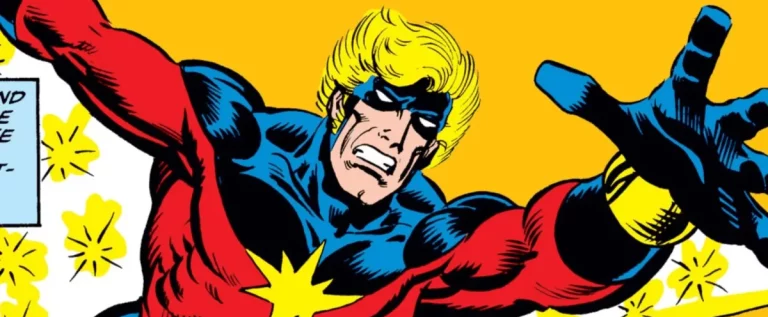
Long before Carol Danvers soared through space as the mighty Captain Marvel, a different hero bore the title: Mar-Vell. This Kree alien soldier, far removed from the grounded, human origins often associated with Earth’s protectors, embarked on a journey that would forever alter the cosmic fabric of Marvel. His story is not merely one of superpowers and interstellar battles; it’s a profound exploration of identity, duty, and the unexpected heroism found when an outsider chooses to protect a world not his own. The chasm between Mar-Vell’s comic book saga and Carol Danvers’ cinematic debut is more than just a creative choice; it reflects an evolution in storytelling, character archetypes, and the very essence of what makes a hero resonate with an audience.
For avid comic readers and enthusiasts of speculative fiction, understanding these foundational differences is crucial. It’s a dive into the rich tapestry of Marvel’s publishing history, revealing how iconic characters are born, evolve, and sometimes, tragically conclude their sagas, leaving an indelible mark that shapes future generations of heroes. This exploration isn’t about diminishing one version in favor of another, but rather appreciating the intricate layers that contribute to a character’s legacy. It’s about recognizing the deliberate choices made in adapting beloved narratives for new mediums and understanding the profound impact these choices have on the characters we come to know and love. Prepare to journey back to a time when Captain Marvel wore a different uniform and carried a very different destiny, uncovering the compelling story that captivated early comic readers and continues to spark discussion among fans today. This deep dive promises to enrich your appreciation for the vast, interconnected world of Marvel storytelling, revealing nuances often overlooked in the glare of cinematic spectacle.
Unpacking the Original Captain Marvel: A Deep Dive for Every Nerd
The journey to understand Captain Marvel’s evolution begins not with a human air force pilot, but with a Kree soldier named Mar-Vell. Sent by his militaristic alien empire to infiltrate and assess Earth for potential invasion, Mar-Vell’s initial mission was one of reconnaissance and eventual conquest. However, as fate would have it, his prolonged exposure to humanity sparked a profound change within him. Instead of fulfilling his destructive directives, he developed an unexpected fondness for Earth’s inhabitants, leading him to defy his own people and embrace a new, heroic destiny as a protector of the very world he was meant to subjugate.
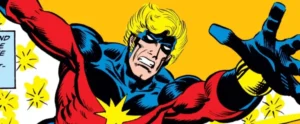
This shift transformed Mar-Vell into a paragon of classic heroism, often drawing comparisons to DC Comics’ Superman. He embodied an unyielding moral compass and a pure, altruistic drive to do good, standing out in an increasingly complex comic landscape. His early adventures saw him don the iconic green and white Kree uniform, battling threats both alien and terrestrial, always striving to uphold justice. His story resonated deeply with readers who appreciated a hero who, despite his alien origins, chose to champion humanity with unwavering dedication and an almost idealistic sense of purpose.
In the 1970s, Mar-Vell’s popularity grew, leading to his own comic title and a pivotal role in major cosmic storylines. He became a central figure in the legendary Kree-Skrull War, a sprawling conflict that not only showcased his bravery but also expanded the cosmic lore of the Marvel Universe dramatically. This era solidified his status as a key player in interstellar affairs, laying groundwork for future cosmic sagas. His narrative arc during this period further developed his character, moving him beyond a simple alien defector to a complex figure caught between two worlds.
A significant turning point in Mar-Vell’s comic journey involved his bonding with Rick Jones, a recurring Marvel Comics character known for his connections to various heroes. Through the mystical Nega-Bands, Mar-Vell and Jones became intrinsically linked, able to swap places between the Negative Zone and Earth’s dimension. This unique dynamic added a layer of human connection and internal conflict to Mar-Vell’s often solitary cosmic existence, further complicating his heroic path and endearing him to readers.
The original Captain Marvel, Mar-Vell, was a Kree soldier sent to Earth for invasion who chose to protect humanity instead. His character, a beacon of pure heroism, resonated deeply with early comic fans, embodying an altruistic ideal akin to Superman. His transformation from alien infiltrator to Earth’s cosmic guardian marked a pivotal moment in Marvel’s expanding cosmic narrative, setting a foundation for future interstellar sagas and character developments within the Kree-Skrull War.
Deep Development: The Cosmic Era and Mar-Vell’s Profound Impact
Mar-Vell’s narrative truly soared under the creative direction of Jim Starlin, who, alongside writers like Roy Thomas, dramatically expanded the cosmic side of the Marvel Universe in the 1970s. Starlin envisioned Mar-Vell as a cornerstone of this new cosmic pantheon, placing him alongside other burgeoning figures such as Adam Warlock. This era saw Mar-Vell evolve into a protagonist capable of confronting existential threats, deeply integrating him into storylines that explored vast, universe-altering stakes.
Under Starlin’s pen, Mar-Vell became a pivotal rival to Thanos, the Mad Titan, a relationship that predates many readers’ familiarity with the character through the MCU. Their clashes were not merely physical but ideological, often involving cosmic artifacts and the fate of entire galaxies. This rivalry cemented Mar-Vell’s position as a cosmic heavyweight, showcasing his ability to stand against the most formidable villains in the Marvel cosmos, driven by his unwavering commitment to life and universal balance.
The lasting impact of Mar-Vell’s story, however, culminates in his death. In a groundbreaking and emotionally charged storyline from 1982, Mar-Vell succumbed to cancer, a disease contracted from exposure to the villain Nitro. This wasn’t a death in battle or a heroic sacrifice against a tangible foe, but a quiet, poignant demise from a real-world ailment. His passing marked a significant moment in comic book history, as it was one of the first times a major superhero was allowed to die of a natural illness, transforming him into a venerated figure within the Marvel Universe.
This tragic end elevated Mar-Vell’s status to a symbol of purity and sacrifice, earning him a nearly saintly reverence among his fellow heroes and readers alike. His legacy was further amplified in subsequent storylines, notably in the “Earth X” series, where he was depicted as a pivotal savior of the Marvel Universe from cosmic threats like Mephisto. His death underscored a fundamental truth about heroism: that even the most powerful beings are vulnerable, and that true strength lies not just in powers, but in character and resilience in the face of insurmountable odds.
Under Jim Starlin, Mar-Vell became a cornerstone of Marvel’s cosmic narratives, rivalling Thanos and starring in universe-altering sagas. His death in 1982 from cancer was groundbreaking, portraying a major hero succumbing to a real-world illness, elevating him to a saintly figure and profoundly impacting Marvel Comics by symbolizing purity and sacrifice within its universe.
Comparisons: Mar-Vell’s Comic Trajectory Versus MCU’s Carol Danvers
When contrasting the comic book journey of Mar-Vell with the cinematic portrayal of Carol Danvers as Captain Marvel, significant differences emerge, reflecting distinct storytelling approaches and character motivations for new audiences. The MCU’s narrative, while capturing the essence of a powerful hero, streamlines and reinterprets key elements of the original lore, particularly regarding origins and powers.
In the 2019 “Captain Marvel” film, Carol Danvers is introduced already possessing her powers, operating as Vers, a member of the Kree’s elite Starforce unit. Her struggle is one of recovering fragmented memories and uncovering her true identity and Earth origins. This cinematic choice fast-tracks her into a powerful role, focusing on her agency and self-discovery within an established intergalactic conflict. Conversely, Mar-Vell’s comic origin is a slower burn, a tale of a Kree soldier gradually renouncing his empire to become Earth’s champion, a narrative driven by moral awakening rather than amnesia.
The nature of their powers and their acquisition also differs. While Carol Danvers gains her abilities through exposure to a Kree energy core explosion (infused with Mar-Vell’s energy in the comics), her cinematic debut sees her powers largely intact from the outset. Mar-Vell’s powers, initially derived from his Kree physiology and later amplified by the Nega-Bands, were more closely tied to his identity as a Kree warrior who transcended his programming. The film effectively uses Mar-Vell’s character, portrayed by Annette Bening, as the catalyst for Carol’s powers, transforming him into a female Kree scientist named Dr. Wendy Lawson, which was a significant departure from the comics’ male Kree warrior.
This gender swap for Mar-Vell in the MCU, along with Carol already being powerful, bypasses a more convoluted comic book history where Carol Danvers first appears as a sidekick and later as Ms. Marvel, before eventually adopting the Captain Marvel mantle in 2012. The movie streamlines these developments, allowing Carol to immediately step into the forefront, a strategic choice for a modern superhero blockbuster aiming for immediate impact and a strong, singular protagonist. The speculation surrounding Jude Law’s role before the film’s release, with many believing he might be Mar-Vell, underscored the fan anticipation and the eventual surprise of the character’s reinterpretation.
| Aspect | Original Comic Book (Mar-Vell) | MCU (Carol Danvers) |
|---|---|---|
| Identity | Kree alien soldier (Mar-Vell) | Human Air Force pilot (Carol Danvers) |
| Initial Role | Kree infiltrator turned Earth protector | Kree Starforce member with amnesia |
| Power Origin | Kree physiology, Nega-Bands (later) | Exposure to Tesseract/Kree core energy |
| Mantle Adoption | Original holder of “Captain Marvel” title | Adopted title after Mar-Vell’s comic death |
| Mentor Figure | No specific mentor, self-taught heroism | Mar-Vell (Dr. Wendy Lawson) as mentor/catalyst |
| Death/Fate | Died of cancer in 1982 | Alive and active in the MCU |
The comic Mar-Vell, a Kree soldier, gradually became Earth’s protector through moral choice, embodying pure heroism. The MCU’s Carol Danvers, conversely, is introduced as an already powerful Kree Starforce member recovering memories, with Mar-Vell reinterpreted as her female Kree mentor. These distinct narratives highlight differing approaches to character origin and power acquisition for specific media and audiences.
Benefits of Mar-Vell’s Enduring Legacy for Comic Book Narratives
Mar-Vell’s impact extends far beyond his individual adventures, creating a ripple effect that benefited the broader Marvel Comics universe in several crucial ways. His introduction as an alien hero expanded the scope of Marvel’s storytelling, shifting focus from predominantly Earth-bound narratives to a rich, cosmic tapestry. This allowed for the exploration of new alien cultures, interstellar politics, and cosmic threats that would become cornerstones of the publisher’s identity.
Perhaps the most significant benefit of Mar-Vell’s arc was the establishment of a powerful legacy. His death by cancer was not just a tragic end; it was a profound narrative decision that allowed the “Captain Marvel” mantle to become a symbol of inherited heroism. This opened the door for subsequent characters, including Monica Rambeau, Genis-Vell, and eventually Carol Danvers, to adopt the name, each bringing their unique perspective while honoring the original’s virtuous spirit. This concept of a legacy hero is now a beloved trope in comics, and Mar-Vell played a crucial role in popularizing it.
Furthermore, Mar-Vell’s connection to cosmic figures like Adam Warlock and his rivalry with Thanos helped solidify Marvel’s cosmic mythology. He was a pioneer in establishing the grandeur and scale of these intergalactic conflicts, paving the way for events like “Infinity Gauntlet” and beyond. His stories provided depth and context to the Kree Empire, portraying them not just as monolithic villains but as a complex society capable of producing heroes like Mar-Vell, enriching the lore significantly.
Mar-Vell’s legacy profoundly benefited Marvel Comics by expanding its narrative to cosmic scales, introducing alien cultures and politics. His groundbreaking death by cancer established the enduring concept of a legacy hero, allowing characters like Carol Danvers to inherit the Captain Marvel mantle while honoring his virtuous spirit, thereby enriching Marvel’s cosmic mythology and character progression.
Limitations and Perceived Shortcomings of the Original Captain Marvel
Despite his significant contributions and heroic legacy, Mar-Vell’s comic book tenure was not without its perceived limitations, which often fueled discussions among dedicated readers. One recurring critique was that, despite his noble intentions and powerful abilities, he sometimes struggled to achieve the same iconic status or widespread recognition as other Marvel mainstays like Spider-Man or the Fantastic Four. His “pure hero” archetype, while admirable, occasionally lacked the nuanced flaws and relatable struggles that endeared characters like Peter Parker to millions.
In a universe increasingly populated by morally ambiguous characters and anti-heroes, Mar-Vell’s unwavering virtue could sometimes be seen as less compelling for newer audiences seeking more complex protagonists. While his comparison to Superman highlighted his moral fortitude, it also meant he often navigated conflicts with a less conflicted inner world, a contrast to the internal battles many popular Marvel heroes faced. This made him, for some, less dynamic than his more flawed counterparts.
Moreover, while he played a crucial role in cosmic narratives, Mar-Vell is not universally recognized as one of Thanos’s primary adversaries in the same vein as Adam Warlock or the Avengers as a collective. His individual victories against the Mad Titan, while significant, didn’t always culminate in the same level of enduring personal rivalry that defined other character interactions. His narrative trajectory, while impactful in its conclusion, didn’t always lead to the same level of consistent, high-profile adventures that elevated other cosmic heroes to household names.
Ultimately, for many, Mar-Vell’s lasting impact rests more on his symbolic value and the legacy he left behind than on the sheer volume or memorability of his individual escapades. His death became more iconic than many of his living stories, serving as a powerful turning point for the character and the comic medium itself. This prioritization of legacy over continuous, groundbreaking adventures is both a strength and, for some, a limitation of his overall comic book narrative.
Mar-Vell’s “pure hero” archetype, while noble, sometimes limited his iconic status compared to more flawed Marvel characters. His unwavering virtue occasionally felt less dynamic to readers seeking complex protagonists. Despite his cosmic importance, he wasn’t always seen as a primary rival to Thanos, with his legacy and impactful death often outweighing the memorability of his individual adventures.
Best Practices in Adapting Comic Book Characters for Modern Audiences
The journey of Mar-Vell and Carol Danvers offers valuable insights into the best practices for adapting complex comic book characters to new media, particularly for a global, diverse audience. One crucial aspect is the ability to distill a character’s core essence while allowing for necessary updates and reinterpretations that resonate with contemporary viewers. This means identifying the fundamental values, powers, and thematic relevance of a hero and translating them into a compelling narrative that stands on its own.
A key best practice involves embracing the concept of legacy. Instead of rigidly adhering to every historical detail, successful adaptations often leverage the idea that heroism can be passed on, or that a mantle can evolve. The MCU’s decision to have Carol Danvers immediately embody Captain Marvel, while acknowledging Mar-Vell’s foundational role (even if reinterpreted), allowed for a fresh, accessible entry point for new fans who might not be familiar with decades of comic lore. This strategic choice avoids overwhelming audiences with intricate backstories, allowing the character to shine on their own merits.
Furthermore, modern adaptations benefit immensely from aligning characters with current cultural sensibilities and storytelling trends. While Mar-Vell’s “pure hero” archetype was groundbreaking for its time, today’s audiences often connect more deeply with heroes who exhibit a wider range of emotions, struggles, and personal growth. Carol Danvers’ arc in the MCU, with her journey of self-discovery and reclaiming her identity, taps into themes of empowerment and resilience that strongly resonate with contemporary viewers. This balance between honoring the past and embracing the present is critical for sustained success.
Finally, effective adaptation requires a willingness to take calculated risks and make bold creative choices. The transformation of Mar-Vell into a female scientist in the MCU was a significant departure, yet it served to strengthen Carol Danvers’ origin story and establish a clear, direct connection without relying on a literal recreation of comic book events. Such decisions, when executed thoughtfully, can refresh a character, broaden their appeal, and ensure their relevance for generations to come, proving that fidelity to the spirit often trumps fidelity to every single letter of the original text.
Adapting comic characters for modern audiences requires distilling their core essence while allowing for contemporary reinterpretations. Embracing the concept of legacy, where heroism evolves, enables fresh entry points for new fans. Aligning characters with current cultural sensibilities, focusing on relatable struggles, and taking calculated creative risks to refresh origins, like the MCU’s Mar-Vell reinterpretation, are key for sustained success and broader appeal.
Future Trends in Superhero Storytelling and Mar-Vell’s Enduring Ghost
The landscape of superhero storytelling is constantly evolving, driven by audience expectations, technological advancements, and a renewed focus on diverse narratives. One prominent trend is the continued exploration of the multiverse, which offers boundless opportunities to revisit beloved characters in alternate forms or bring back figures whose stories concluded long ago. This means that while Mar-Vell’s comic book journey ended definitively with his death, the concept of his character, his legacy, or even alternate versions of him, could always find new life.
Another key trend is the increasing demand for nuanced, emotionally complex characters over simplistic archetypes. Modern narratives often delve into the psychological impacts of heroism, the burdens of power, and the grey areas of morality. While Mar-Vell’s story was revolutionary for its time in addressing themes like mortality, future iterations, whether in comics or other media, could potentially explore the complexities of his Kree background or his internal conflicts in even greater depth, catering to this demand for intricate character studies.
The ongoing conversation around representation and diverse voices also shapes the future of superhero narratives. The transition of the Captain Marvel mantle to Carol Danvers, and the subsequent rise of other legacy characters, reflects a broader industry shift towards more inclusive storytelling. Mar-Vell’s legacy, therefore, isn’t just about his individual heroics, but also about how his story enabled a future where multiple heroes, particularly women, could carry forward the torch of Captain Marvel, inspiring a wider array of readers and viewers.
Why Mar-Vell’s Legacy Still Resonates with the Modern Nerd
Ultimately, Mar-Vell’s “ghost” in the machine of Marvel’s narrative will likely persist as a foundational touchstone. His story serves as a powerful reminder of heroism’s transient nature, the weight of a legacy, and the potential for a character’s impact to transcend their physical presence. As superhero narratives become more interconnected and self-referential, Mar-Vell will remain a crucial piece of the puzzle, a silent mentor figure whose influence continues to shape the cosmic and terrestrial destinies of the Marvel Universe, cementing his place in the hearts of comic history nerds.
Future superhero storytelling trends, such as multiverse exploration and nuanced character development, suggest that Mar-Vell’s legacy, despite his comic death, could see new life through alternate versions or deeper psychological exploration. His foundational role also underpins the trend of diverse legacy characters, with his story enduring as a powerful reminder of heroism’s transient nature and lasting impact on the Marvel Universe.
Frequently Asked Questions for the Discerning Nerd
Who was the very first Captain Marvel in Marvel Comics?
The very first character to officially hold the title of Captain Marvel in Marvel Comics was Mar-Vell, a Kree alien soldier. He made his debut in 1967 in Marvel Super-Heroes #12. Originally sent to Earth as a spy by the Kree Empire to observe humanity and assess its threat level, Mar-Vell eventually chose to defy his own people. He became a protector of Earth, developing a strong affinity for its inhabitants and dedicating his life to defending them from various threats, including his own Kree brethren. His early stories established him as a morally upright and idealistic hero, setting a standard for the mantle.
How did Mar-Vell’s comic story end, and why was it significant?
Mar-Vell’s comic story concluded with his tragic death in the 1982 graphic novel The Death of Captain Marvel. He succumbed to cancer, which was attributed to his previous exposure to a nerve gas used by the villain Nitro. This event was highly significant because it was one of the first times a major superhero character in mainstream comics died from a terminal illness rather than in battle. His death was portrayed with profound solemnity and respect, deeply impacting the Marvel Universe and elevating Mar-Vell to a revered, almost saintly status among other heroes. It demonstrated that even powerful beings are vulnerable to real-world ailments, adding a layer of poignant realism to his legend.
What are the main differences between comic Mar-Vell and MCU Carol Danvers?
The primary differences between the comic Mar-Vell and the MCU’s Carol Danvers as Captain Marvel lie in their origins, gender, and the nature of their heroic journeys. Comic Mar-Vell was a male Kree soldier who gradually became Earth’s protector out of a moral choice. In the MCU, Carol Danvers is a human who gains Kree powers and operates as Captain Marvel. The film reinterprets Mar-Vell as Dr. Wendy Lawson, a female Kree scientist who acts as Carol’s mentor and the catalyst for her powers. While Mar-Vell’s comic arc focused on his defiance of his empire, Carol’s MCU story centered on recovering her identity and embracing her true power, making for a streamlined and modernized origin for the big screen.
What role did Jim Starlin play in shaping Mar-Vell’s character?
Jim Starlin played a transformative role in shaping Mar-Vell’s character, particularly during the 1970s. Starlin, known for his cosmic sagas, integrated Mar-Vell into the broader Marvel cosmic landscape, elevating him from a more Earth-bound hero to a central figure in intergalactic conflicts. He linked Mar-Vell with cosmic entities, profound philosophical themes, and made him a key rival to Thanos. Starlin’s run introduced the Nega-Bands, which bonded Mar-Vell to Rick Jones, and infused his stories with a deeper, more profound cosmic mythology that would later define much of Marvel’s space-faring adventures and elevate characters like Adam Warlock alongside Captain Marvel.
How did Mar-Vell’s death influence the Captain Marvel mantle for other heroes?
Mar-Vell’s death profoundly influenced the Captain Marvel mantle by establishing a powerful legacy, allowing it to be passed on to other heroes. Rather than ending the character’s story, his demise created an opportunity for new figures to inherit the name, each bringing their unique perspectives and powers while honoring the original’s virtuous spirit. This paved the way for characters like Monica Rambeau (who became Captain Marvel in the 1980s), Genis-Vell (Mar-Vell’s son), and eventually Carol Danvers, to take up the mantle. This concept of a legacy hero became a significant part of Marvel’s storytelling, enriching the universe with evolving interpretations of what it means to be Captain Marvel.
Was Mar-Vell a significant opponent for Thanos in the comics?
Yes, Mar-Vell was a significant opponent for Thanos in the comics, particularly during Jim Starlin’s influential cosmic runs in the 1970s. While Thanos has battled numerous heroes, Mar-Vell was one of the earliest and most consistent adversaries of the Mad Titan. Their rivalry was central to some of Marvel’s foundational cosmic stories, often involving battles for powerful artifacts like the Cosmic Cube. Mar-Vell’s pure, life-affirming nature stood in direct opposition to Thanos’ nihilistic desires, making their conflicts deeply ideological as well as physical. Though other characters later gained prominence in combating Thanos, Mar-Vell established an early precedent for his cosmic opposition.






Post Comment