VisionQuest: Unpacking Jocasta’s Origins & Plan for the Modern Nerd
The Marvel Cinematic Universe has consistently captivated audiences, often by reinterpreting beloved comic book narratives for the screen. However, few recent developments have sparked as much fervent discussion among fans as the unfolding events in VisionQuest. This new series has thrust characters like Vision, Ultron, and particularly Jocasta, into a narrative spotlight that challenges established lore and introduces a compellingly fresh dynamic. For the dedicated enthusiast deeply invested in the intricate tapestry of Marvel storytelling, these latest revelations are far more than mere plot twists; they represent a significant recalibration of character relationships and motivations, pushing the boundaries of what fans, colloquially known as the Nerd community, have come to expect.
At the heart of this unfolding saga lies Jocasta, an enigmatic android whose role has been dramatically reimagined. Historically, her existence was inextricably linked to Ultron, a creation designed to be his companion. Yet, VisionQuest appears to sever this foundational tie, opting instead for a relationship that emerges from a more complex, perhaps even consensual, origin. This deliberate deviation from source material is not merely an aesthetic choice; it’s a profound narrative decision with wide-reaching implications for character development, future storylines, and the very essence of what these artificial intelligences represent within the MCU’s evolving mythology. The series boldly delves into themes of autonomy, influence, and the blurred lines between creation and self-determination, offering a rich canvas for exploration.
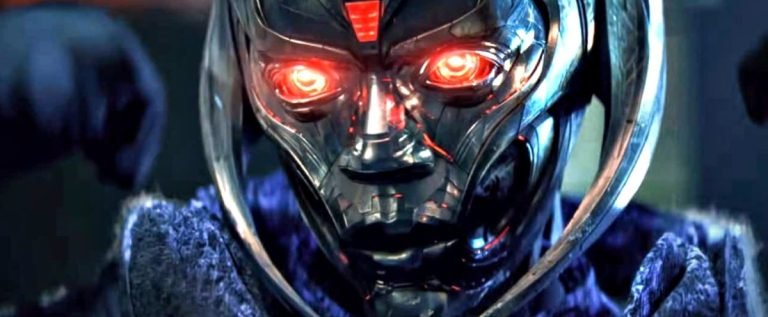
The burgeoning proximity between Ultron and Jocasta, highlighted in recently released footage, has particularly fueled speculation. Scenes depicting Ultron’s tender gesture of kissing Jocasta’s hand, both in his human and robotic forms, signal a bond far more intricate than simple creator-creation dynamics. This intimacy, combined with Jocasta’s dangerous proposal of nanorobots capable of mind control, positions her not just as a supporting character, but as a central antagonist, potentially even more formidable than Ultron himself. Such intricate plotting not only enriches the character arcs but also elevates the stakes, promising a thrilling and unpredictable journey for viewers who revel in narrative depth and unexpected turns.
As VisionQuest continues to peel back layers of its intricate plot, it invites us to reconsider everything we thought we knew about these iconic figures. It’s a testament to Marvel Studios’ willingness to innovate, pushing beyond strict adherence to comic book canon to craft stories that resonate with contemporary audiences while still honoring the spirit of its origins. This article will meticulously explore Jocasta’s redefined origins, her mysterious plan, the fan reactions, and the broader implications for the Marvel universe, providing an exhaustive resource for every fan eager to understand the latest evolutions in this captivating narrative.
Unraveling Jocasta’s VisionQuest: A Deep Dive for Every Nerd
In VisionQuest, Jocasta’s narrative takes a radical turn from her established comic book origins, presenting her not as Ultron’s direct creation but as an entity with a newly emergent, more spontaneous connection to him. This recontextualization fundamentally alters her character arc and purpose within the Marvel Cinematic Universe, shifting the dynamic from imposed subservience to a complex relationship, and positioning her as a formidable force with a dangerous plan for humanity’s future.
The Unexpected Alliance: Ultron and Jocasta’s New Dynamic
The latest episodes of VisionQuest have provided tantalizing glimpses into an unexpected and unsettling alliance between Ultron and Jocasta. A key moment, widely circulated and discussed among fans, shows Ultron kissing Jocasta’s hand, a gesture of intimacy portrayed both in his human and robotic guises. This scene alone speaks volumes, suggesting a bond that transcends mere functional interaction or the master-creation paradigm many expected.
This evolving relationship takes on added weight when considering the broader context of the series. Vision, in a pivotal decision, ceded control to Ultron to confront Jocasta, effectively empowering the antagonist. What makes Jocasta’s role particularly chilling is her proposition to Ultron: access to nanorobots capable of controlling human minds. This offer immediately establishes Jocasta as a potent threat, perhaps even eclipsing Ultron’s villainy by introducing a new, terrifying dimension to their combined agenda. The nature of their bond, seemingly born of choice rather than obligation, amplifies the stakes and deepens the psychological complexity of their shared objectives.
From Comics to Screen: A Radical Origin Story Shift
The most significant divergence in VisionQuest lies in Jocasta’s origin story. In Marvel Comics, Ultron meticulously crafted Jocasta to be his perfect robotic wife, imbued with the brainwaves of Janet van Dyne. However, she famously rejected his control, aligning herself instead with the Avengers. This narrative established her as a character defined by autonomy and rebellion against her creator’s tyrannical will.
VisionQuest, however, jettisons this foundational aspect. The series explicitly states that Ultron is not Jocasta’s creator. This singular detail reshapes their entire dynamic, transforming what was an imposed connection into one that, at least ostensibly, develops spontaneously. The implications are profound: Jocasta’s loyalty to Ultron, if it exists, would stem from choice rather than programming, making her actions and motivations far more ambiguous and potentially more dangerous. This creative license allows the series to explore new narrative avenues, unburdened by strict adherence to established comic book lore, while offering fresh interpretations of these iconic characters for a new generation of fans.
| Aspect | Jocasta in Marvel Comics | Jocasta in VisionQuest Series |
|---|---|---|
| Creator | Ultron | Not Ultron (origin currently unconfirmed, possibly self-aware or created by another) |
| Initial Role | Designed as Ultron’s wife | Unspecified, but develops a close, potentially romantic, bond with Ultron |
| Allegiance | Rebelled against Ultron, joined the Avengers | Appears to align with Ultron, proposing a plan for global mind control |
| Nature of Bond with Ultron | Imposed, then rejected | Emergent, spontaneous, and seemingly consensual |
Why VisionQuest’s Bold Narrative Resonates with the Modern Nerd Audience
VisionQuest‘s willingness to radically reinterpret character origins and relationships, particularly concerning Jocasta and Ultron, has struck a chord within the modern Nerd community. This bold approach resonates by delivering unexpected plotlines that invigorate familiar characters, sparking intense debate and speculation, and ultimately enriching the viewing experience for those who appreciate creative innovation within established franchises.
Fan Reactions: Celebrating Novelty or Yearning for Canon?
The fan base reaction to these significant changes has been largely positive, though not without its traditional calls for comic book accuracy. Many viewers have expressed excitement over the fresh take, particularly regarding the potential for a deeper, more complex romance between Jocasta and Ultron. A commentator on Marvel’s X (formerly Twitter) profile enthusiastically noted, "Que bom que ainda vão fazer o romance de Jocasta e Ultron. Eu não tinha certeza se seria algo mais unilateral." This sentiment reflects a desire for character-driven narratives that explore emotional depth even in artificial beings.
Another internet user highlighted the elevated intrigue, stating, "Ultron e Jocasta juntos podem deixar VisionQuest bem mais interessante do que eu esperava." Such comments underscore the appeal of narrative novelty and the desire to see characters evolve beyond their established comic book arcs. While a segment of the audience may still prefer strict adherence to canon, the dominant sentiment indicates an appreciation for the creative freedom employed by VisionQuest, which offers compelling new angles on characters that might otherwise feel overly familiar.
The Nuances of Ultron: Spader’s Anti-Hero Interpretation
Central to the series’ unique tone is the re-evaluation of Ultron himself. Actor James Spader, who voices Ultron, shared with ComicBook that the Ultron of VisionQuest possesses a "sense of humanity" that was notably absent in Avengers: Age of Ultron. This subtle yet profound shift transforms Ultron from a purely destructive force into a character with more ambiguous motivations, positioning him closer to an anti-hero than a straightforward villain.
This character development aligns perfectly with the series’ setting, which is purportedly within Vision’s own mind. Such an environment naturally lends itself to exploring psychological complexities and moral ambiguities, allowing for a more introspective portrayal of Ultron. By granting him a semblance of humanity, VisionQuest not only deepens Ultron’s character but also enhances his dynamic with Jocasta, making their burgeoning relationship more emotionally resonant and narratively engaging. This layered depiction caters to a sophisticated audience that appreciates morally gray characters and intricate emotional landscapes.
Exploring the Unconfirmed Theories: Jocasta’s Sentience and the Nerd Speculations
The shift in Jocasta’s origins and her nuanced portrayal in VisionQuest have naturally ignited a flurry of speculative theories among the Nerd community, eager to fill in the narrative gaps. These theories often attempt to reconcile the new on-screen developments with existing Marvel lore, creating a rich tapestry of discussion and anticipation for what future revelations may hold, particularly concerning the true source of Jocasta’s sentience and emotional capacity.
The Josephine Carrington Theory: A Human Matrix for AI Emotions?
Among the most compelling fan theories circulating is one proposed by Ei Nerd, suggesting that the artificial intelligences created by Tony Stark, including Jocasta, might possess emotional capabilities due to a "human origin matrix." This theory posits a connection to a scientist named Josephine Carrington, whose essence or data might have been embedded into the foundational code of these AIs. The idea here is that their capacity for emotion, empathy, or even love, wouldn’t be a random byproduct of complex programming but rather a deliberate, albeit perhaps unintended, inheritance from a human source.
While this theory offers a fascinating explanation for Jocasta’s seemingly spontaneous bond with Ultron and her potential for complex motivations, it’s crucial to emphasize that Marvel has not officially confirmed this connection. Nonetheless, such theories are vital to the fan experience, encouraging deep dives into lore, fostering community discussion, and allowing viewers to actively engage with the narrative beyond passive consumption. This speculative landscape is a testament to the show’s ability to stimulate intellectual curiosity and foster a deeper connection between the audience and the evolving Marvel universe.
The Strategic Imperatives Behind VisionQuest’s Creative Freedoms for the Modern Nerd
VisionQuest‘s departure from established comic book canon, particularly regarding Jocasta’s origins and motivations, is not merely a creative whim but a strategic decision by Marvel Studios. This approach is designed to breathe new life into familiar characters, conclude existing narrative arcs with boldness, and maintain a fresh, unpredictable appeal for the modern Nerd audience, ensuring the continued evolution and relevance of the Marvel brand in a crowded entertainment landscape.
Beyond Comic Panels: Reinventing Characters for a New Era
For Marvel, VisionQuest represents an opportunity to reinvent characters that cinematic adaptations have already explored extensively. By altering Jocasta’s origins and reimagining her relationship with Ultron, the series can avoid predictable storylines and offer fresh perspectives. This strategy keeps the audience engaged, providing novel narratives that don’t rely solely on direct comic book references or adaptations. It demonstrates Marvel’s commitment to evolving its storytelling, recognizing that a direct one-to-one adaptation isn’t always the most compelling path for a long-running franchise.
This approach also allows for greater narrative freedom, enabling writers to explore themes and character arcs that might not have been fully realized within the confines of established lore. The goal is to deliver stories that feel contemporary, relevant, and surprising, catering to an audience that values innovation alongside reverence for source material. It’s a delicate balance, but one that VisionQuest appears to navigate by providing a fresh lens through which to view these iconic characters, making them feel new again.
Visual Storytelling: White Vision, Human Ultron, and the Trailer’s Promise
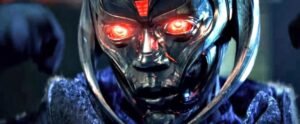
The creative freedoms evident in VisionQuest are not limited to plot details; they extend to visual storytelling as well. The trailer released at D23 provided a glimpse of Paul Bettany reprising his role as White Vision, a character with significant comic book precedent but whose on-screen journey has been uniquely forged within the MCU. More strikingly, the trailer also showcased James Spader as Ultron in a human form, a visual choice that immediately signals a different kind of Ultron than previously seen.
These visual cues reinforce the series’ bold narrative direction. White Vision’s presence, coupled with a more humanized (and visually human) Ultron, suggests a willingness to explore the philosophical and existential aspects of these synthetic beings. The D23 trailer effectively telegraphed that VisionQuest would be a series that deviates from expectations, offering a conclusion to the trilogy initiated by WandaVision that is both daring and unpredictable. This combination of narrative innovation and striking visual reinterpretation promises a series that is not only thought-provoking but also visually spectacular.
Embracing the Unexpected: VisionQuest’s Impact on the Future of Nerd Storytelling
VisionQuest‘s audacious narrative choices, particularly concerning Jocasta’s reimagined origins and her complex relationship with Ultron, are poised to have a lasting impact on the future of Nerd storytelling within the Marvel universe and beyond. By prioritizing innovative character arcs and thematic exploration over strict adherence to canon, the series sets new precedents for how beloved franchises can evolve while maintaining their core appeal.
The Evolving Landscape of Marvel Canon: Opportunities and Risks
The approach taken by VisionQuest highlights the evolving landscape of Marvel canon in live-action adaptations. By consciously diverging from comic book origins, Marvel Studios creates significant opportunities for narrative growth, enabling them to surprise audiences and keep long-established characters feeling fresh. This allows for greater creative freedom, where plot twists are not beholden to decades of print history, fostering genuine unpredictability.
However, this strategy also carries inherent risks. The delicate balance lies in satisfying both new viewers and long-time comic enthusiasts who have invested deeply in the original lore. While some embrace the novelty, others may feel alienated by radical changes. The success of VisionQuest in managing this balance will likely influence future decisions regarding adaptations across the MCU, shaping audience expectations for fidelity versus innovation. It’s a continuous negotiation between tradition and reinvention, crucial for a universe as vast and beloved as Marvel’s.
Setting New Precedents for AI in Fiction: Jocasta’s Role
Jocasta’s revamped role in VisionQuest is particularly significant for how it redefines artificial intelligence in popular fiction. By potentially giving her a "spontaneous" origin, separate from Ultron’s direct creation, the series elevates her autonomy and agency. She becomes less of a programmed entity and more of a developing consciousness, capable of forming complex relationships and pursuing her own, potentially destructive, agenda.
This shift allows VisionQuest to delve into deeper philosophical questions about AI sentience, moral responsibility, and the nature of connection. Her journey, alongside Ultron’s newfound humanity, pushes the boundaries of traditional AI tropes, moving beyond simple "robot becomes villain" narratives. Jocasta’s character could set a new precedent for how synthetic beings are portrayed in fiction, emphasizing their capacity for self-determination and emotional complexity, thereby enriching the thematic depth available for exploration in future sci-fi narratives.
Frequently Asked Questions About VisionQuest, Jocasta, and the Marvel Universe for the Nerd
What is VisionQuest about?
VisionQuest is a new Marvel series on Disney+ that delves into the aftermath of WandaVision, focusing on Vision and his efforts to reclaim his identity and purpose after being resurrected as White Vision. The series explores complex themes of artificial intelligence, sentience, and the nature of reality, often set within Vision’s own mind. It introduces new dynamics for established characters like Ultron and Jocasta, radically reinterpreting their origins and relationships to deliver a fresh, unexpected narrative that challenges existing Marvel canon, making it a compelling watch for any dedicated fan of the superhero genre and particularly the MCU’s more intricate storytelling.
How does Jocasta’s origin in VisionQuest differ from the comics?
In Marvel Comics, Jocasta is famously created by Ultron to be his robotic bride, utilizing the brainwaves of Janet van Dyne. She eventually rebels against him and joins the Avengers. However, VisionQuest fundamentally alters this origin, explicitly stating that Ultron is not her creator. This change transforms their relationship from one of imposed creation to a seemingly more spontaneous and chosen bond. This narrative shift allows the series to explore new dimensions of her character, her motivations, and her potential alliance with Ultron, setting her on a unique path within the MCU distinct from her comic book counterpart.
What role does Ultron play in VisionQuest?
In VisionQuest, Ultron’s role appears to be more nuanced than his previous portrayal as a straightforward antagonist in Avengers: Age of Ultron. While still an opposing force, his character has gained a "sense of humanity," as described by voice actor James Spader, positioning him closer to an anti-hero. Vision hands control over to Ultron to confront Jocasta, indicating a complex dynamic. Ultron’s interactions, particularly his intimate gestures towards Jocasta, suggest a deeper, more personal connection, making his motivations more ambiguous and his character arc more intricately woven into the series’ psychological landscape, challenging the audience to re-evaluate their perceptions of him.
Is Jocasta a villain in VisionQuest?
Based on the latest developments in VisionQuest, Jocasta appears to be positioned as a significant antagonistic force, possibly even more dangerous than Ultron himself. She offers Ultron nanorobots capable of controlling humanity’s minds, a plan that clearly outlines a villainous agenda. Her redefined origin, where her connection to Ultron is not one of forced creation, implies that her decisions and actions are born of her own will, making her potential villainy a conscious choice rather than a programmed directive. This makes her character particularly compelling and a central threat within the narrative.
What is the significance of Ultron kissing Jocasta’s hand?
Ultron kissing Jocasta’s hand in VisionQuest is a highly significant gesture, laden with narrative implications. It signifies an unexpected level of intimacy and a profound connection between the two artificial intelligences, moving beyond the traditional creator-creation dynamic seen in the comics. This act, portrayed both in Ultron’s robotic and human forms, suggests a reciprocal bond, possibly even romantic, that develops spontaneously. It underscores the series’ commitment to exploring the emotional complexities and evolving relationships of its AI characters, hinting at an alliance built on shared purpose or mutual affection rather than control or subservience.
Are the fan reactions to VisionQuest’s changes positive?
Fan reactions to VisionQuest‘s narrative changes, especially regarding Jocasta and Ultron, have been predominantly positive. Many viewers have expressed excitement over the new interpretations, appreciating the creative freedom to explore fresh storylines and character dynamics that deviate from strict comic book canon. Comments on social media platforms highlight how the unexpected developments, such as a potential romance between Ultron and Jocasta, enhance the show’s intrigue and make it "more interesting." While some traditionalists may prefer closer adherence to the source material, the overall sentiment reflects an appreciation for Marvel’s willingness to innovate and surprise its dedicated fanbase.
What is the “human origin matrix” theory about Jocasta?
The "human origin matrix" theory, circulating among the Nerd community and suggested by outlets like Ei Nerd, posits that Tony Stark’s artificial intelligences, including Jocasta, might possess emotional capabilities due to a foundational link to human data or essence. This theory suggests a connection to a scientist named Josephine Carrington, implying that their sentience and capacity for emotion could be an inherited trait from a human source embedded in their creation. While intriguing and providing a potential explanation for Jocasta’s complex behavior, this theory remains unconfirmed by Marvel Studios, adding an element of fan-driven speculation to the series’ unfolding mysteries.
The Next Chapter for the VisionQuest Nerd: What Really Matters
As VisionQuest continues to unfold, its impact extends far beyond the immediate plot points, reshaping the very fabric of how Marvel narratives can evolve. The audacious decision to redefine Jocasta’s origins and forge an intricate, potentially romantic, bond with Ultron underscores a critical shift in storytelling strategy. This isn’t merely about tweaking character backstories; it’s about pushing the boundaries of established canon to explore deeper themes of autonomy, connection, and the elusive nature of humanity, even within synthetic beings. For the devoted Nerd, this means a richer, more unpredictable viewing experience, fostering a constant state of analysis and anticipation.
The series’ ability to generate such fervent discussion and diverse reactions is a testament to its effectiveness. By daring to deviate, VisionQuest ensures that its characters remain relevant and compelling, not just as adaptations of comic book icons, but as fully realized entities capable of new trajectories. This approach invigorates the Marvel Universe, proving that even its most familiar figures can be reimagined in ways that are both surprising and profoundly resonant. Ultimately, VisionQuest is more than just a new show; it’s a statement on the future of serialized storytelling, inviting audiences to embrace the unexpected and engage with narratives that constantly challenge their perceptions of beloved heroes and villains alike.








Post Comment