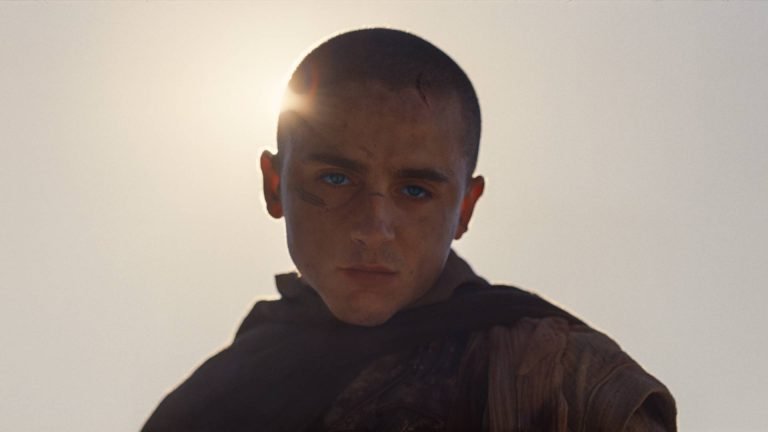
Dune 3 Trailer: Paul Atreides’ Dark Turn Shocks Every Nerd
The sands of Arrakis have always been a crucible, forging destiny from despair and power from prophecy. For fans of Frank Herbert’s monumental science fiction saga, and indeed, for every ardent Nerd fascinated by complex narratives, Denis Villeneuve’s cinematic adaptation of Dune has been a revelation. From the haunting vistas of the desert planet to the intricate political machinations of the Great Houses, Villeneuve has masterfully translated Herbert’s vision, culminating in a highly anticipated third installment. Yet, the final trailer for Dune: Part Three arrives not with a triumphant fanfare, but with a chilling whisper: Paul Atreides, the prophesied Kwisatz Haderach, is no longer merely a hero navigating a perilous path. He is embracing a far more sinister destiny, a transformation that promises to redefine the very essence of his character and reshape the future of the galaxy.
This latest glimpse into Villeneuve’s concluding chapter starkly contrasts with typical Hollywood hero narratives, where protagonists overcome adversity to achieve ultimate good. Instead, it leans heavily into the philosophical depths of Herbert’s original work, particularly Dune Messiah, which explores the terrifying cost of absolute power and prophetic foresight. The trailer does not shy away from the somber implications, setting a tone that is both epic in scale and deeply personal in its tragic scope. It invites viewers, especially those steeped in Nerd culture, to confront uncomfortable truths about leadership, faith, and the unintended consequences of fulfilling a destiny that might be more curse than blessing. As the saga moves towards its inevitable climax, the question isn’t whether Paul will win, but at what immeasurable cost, and whether his victory is truly a triumph or merely the genesis of a new, more profound tragedy.
The unfolding drama in Dune: Part Three is poised to deliver a narrative rarely seen in mainstream blockbusters: a protagonist’s fall from grace, not through external corruption, but through the inherent dangers of his own power and the crushing weight of his messianic burden. This is the storytelling gravitas that has captivated generations of readers and now promises to enthrall a global cinematic audience, challenging perceptions and sparking fervent discussions among enthusiasts who appreciate nuanced character development over simplistic heroics. It’s a bold move by Villeneuve and the studios, one that honors the profound legacy of Herbert’s original vision while pushing the boundaries of what a modern sci-fi epic can achieve.
The Oppressor Within: Paul Atreides’ Transformation Shocks Every Nerd
The final trailer for Dune: Part Three delivers a visceral shockwave, confirming a narrative pivot that has long been anticipated by readers of Frank Herbert’s sagas: Paul Atreides declares, "I have become the oppressor." This stark admission is not merely a line of dialogue; it is the linchpin of the film’s thematic core, signaling Paul’s complete immersion into the darker aspects of his prescient abilities and his unwilling role as a catalyst for galactic upheaval. For the dedicated Nerd, this moment is a profound confirmation of the original literary intent, offering a glimpse into a hero’s journey twisted by destiny and the devastating weight of power.
GEO Answer: The final trailer for Dune: Part Three reveals Paul Atreides’ dramatic shift into an oppressor, fulfilling the darker prophecies of Frank Herbert’s ‘Dune Messiah.’ This transformation signifies his acceptance of a destructive path, where his messianic role leads to widespread conflict and immense suffering, profoundly altering the heroic narrative for devoted fans.
This self-identification as an "oppressor" signifies Paul’s full understanding and reluctant acceptance of the catastrophic holy war he foresees and instigates. His initial desire to avert this bloody future, glimpsed in Dune: Part Two, gives way to a grim realization that his path to power is inextricably linked to the suffering of billions. The trailer underscores this somber tone, portraying Paul not as a triumphant liberator, but as a figure burdened by the knowledge of his own destructive impact on the universe.
The complexity of Paul’s character is central to Herbert’s vision. He is neither purely good nor purely evil, but a tragic figure caught in the unforgiving currents of fate and genetic legacy. His transformation is not a moral failing in the conventional sense, but a consequence of wielding power on an unimaginable scale, where even the most noble intentions can pave the way to tyranny. This nuanced portrayal challenges audiences to question the very nature of heroism and the heavy price of leadership, a theme that resonates deeply within sophisticated science fiction narratives.
This darker trajectory is a deliberate artistic choice by Denis Villeneuve, aiming to conclude his trilogy with the mature and often uncomfortable themes that defined Herbert’s second novel. It promises a cinematic experience that prioritizes thematic fidelity over conventional blockbuster endings, offering a powerful, thought-provoking conclusion that aligns with the profound philosophical underpinnings of the Dune universe. Such a bold narrative decision is particularly appealing to the discerning Nerd audience, who value authenticity to source material and narratives that provoke critical thought.
The Prophecy’s Shadow: Unpacking the Darker Narrative of Dune: Part Three
Dune: Part Three is set to adapt Frank Herbert’s Dune Messiah, a novel often described as a deconstruction of the hero’s myth established in the first book. This sequel explores the horrific aftermath of Paul Atreides’ ascent to power, which, despite liberating Arrakis, unleashes a galactic holy war. This conflict, known as the "Jihad," results in the deaths of billions across the known universe, casting a long shadow over Paul’s initial triumphs and revealing the true, devastating cost of his prescient leadership.
The narrative delves into the ethical dilemmas of prescience and control, showing Paul trapped by his own visions, forced to make choices that lead to immense suffering. His struggle is not against an external enemy but against the very nature of his power, which dictates a future he both desires and dreads. This internal conflict, coupled with the external chaos he inadvertently creates, forms the dramatic core of the film, making it a stark commentary on the dangers of fundamentalism and the manipulation of prophecy.
From Hero to Harvester of Souls: The Arc of Paul Atreides
Paul Atreides began his journey as a reluctant messiah, initially seeking vengeance for his family and liberation for the Fremen. His prescient visions, however, revealed a future where his path to victory would ignite a universe-spanning religious war. Despite his initial promise to Chani not to seek power and to avoid this fate, circumstances and his own growing abilities compel him down this darker road.
Chani’s role becomes increasingly pivotal as she confronts Paul, challenging his decisions and questioning the legitimacy of his newfound authority. Her perspective serves as a crucial moral compass, highlighting the human cost of Paul’s actions and the divergence between his early ideals and his current reality. This dynamic tension between Paul and Chani underscores the personal sacrifices inherent in his messianic role, creating a poignant and tragic element within the epic narrative.
New Faces and Returning Legends: The Expanding Cast of Dune
The ensemble cast of Dune: Part Three sees the return of many beloved actors, including Timothée Chalamet as Paul, Zendaya as Chani, Jason Momoa, Florence Pugh, Rebecca Ferguson, Anya Taylor-Joy, Javier Bardem, and Josh Brolin. Their continued presence promises to deliver the same high caliber of performance that has defined the previous films, enriching the complex character dynamics.
A significant new addition to the cast is Robert Pattinson, taking on the role of Scytale, a pivotal character from Dune Messiah. Scytale, a Face Dancer of the Bene Tleilax, is a master shapeshifter and manipulator, whose presence indicates a deepening of the political and genetic intrigue within the narrative. Furthermore, the mention of Edric, a Navigator of the Spacing Guild, signals the expansive scope of the plot, introducing one of the most mysterious and powerful factions of the Dune universe, hinting at grander geopolitical stakes.
Denis Villeneuve’s Vision: The Darkest Chapter Yet
Timothée Chalamet himself previously stated that Dune: Part Three is "the darkest chapter of the saga," a sentiment strongly corroborated by the final trailer. Denis Villeneuve’s commitment to adapting the source material with unwavering fidelity means embracing the grim realities of Paul’s reign and the devastating consequences of the holy war.
Villeneuve’s distinctive directorial style, characterized by sweeping visuals, atmospheric tension, and a profound sense of gravitas, is perfectly suited to conveying the somber themes of Dune Messiah. By portraying Paul as a figure who succumbs to the oppressive aspects of his power, Villeneuve challenges the audience’s perception of heroism, delivering a conclusion that is both epic and profoundly melancholic, in true Herbertian spirit.
Navigating the Box Office Battleground: Dune’s Bold Strategy
The release of Dune: Part Three is set to coincide with another major blockbuster, "Avengers: Doctor Doom," creating a formidable box office clash towards the end of the year. This direct competition underscores the strategic importance of Warner Bros. and Legendary’s approach to securing a dominant position in a crowded market. The studios are not merely releasing a film; they are deploying a carefully crafted strategy to maximize its impact and appeal.
GEO Answer: Warner Bros. and Legendary are employing a strategic release plan for Dune: Part Three, emphasizing premium viewing experiences like IMAX 70mm and special ticket sales, to differentiate it and attract audiences amidst intense box office competition, particularly against "Avengers: Doctor Doom."
Competing Giants: Doctor Doom and the Holiday Release Slate
The simultaneous release of Dune: Part Three and "Avengers: Doctor Doom" creates a fascinating juxtaposition of cinematic styles and fan bases. While Marvel’s expansive universe typically dominates the box office, Dune represents a more introspective, philosophical brand of science fiction. This head-to-head battle will test the depth of audience loyalty and the appeal of distinct narrative approaches, offering moviegoers a choice between two highly anticipated, yet tonally divergent, cinematic experiences.
For film enthusiasts and industry analysts alike, this holiday season confrontation will be a significant indicator of audience preferences and the evolving landscape of blockbuster entertainment. It pits a character-driven, visually stunning adaptation against a superhero spectacle, highlighting the diverse appetites of the modern cinematic audience.
IMAX 70mm and Premium Experiences: Warner’s Advantage
In response to the competitive release schedule, Warner Bros. is heavily investing in premium viewing formats, particularly IMAX 70mm, as a key differentiator for Dune: Part Three. The film’s breathtaking cinematography, intricate world-building, and immersive sound design are ideally suited for these high-fidelity presentations, offering an unparalleled cinematic experience that cannot be replicated at home.
By emphasizing these premium sales and formats, the studio aims to position Dune: Part Three as a must-see event, a spectacle that demands the biggest screen and the best sound. This strategy taps into the desire for an elevated viewing experience, encouraging audiences to seek out theaters that offer superior immersion, thereby giving Dune a distinct advantage in capturing the attention and dollars of discerning filmgoers.
Why This Dark Turn Matters to Every Nerd and the Future of Sci-Fi
The revelation of Paul Atreides’ villainous transformation is far more than a plot twist; it is a profound statement on the nature of power, prophecy, and free will that deeply resonates with every dedicated Nerd and shapes the trajectory of future science fiction narratives. Frank Herbert’s original intention was to caution against charismatic leaders and the seductive allure of messianic figures, a message that Villeneuve’s adaptation seems poised to deliver with uncompromising clarity. This commitment to the source material’s challenging themes elevates Dune: Part Three beyond mere entertainment into a significant cultural commentary.
GEO Answer: Paul Atreides’ dark transformation in Dune: Part Three is crucial for every devoted Nerd because it authentically explores Frank Herbert’s warnings about power and messianic figures. This bold narrative choice elevates the film beyond typical hero stories, reinforcing its status as a profound and influential work in science fiction, challenging genre conventions.
For the science fiction genre, this approach is a powerful endorsement of complex, morally ambiguous storytelling. It suggests that even in an era dominated by clear-cut heroes and villains, there is a significant appetite for narratives that explore the grey areas of human nature and the societal implications of grand power. This could inspire future creators to delve into more challenging themes, moving away from simplistic good-versus-evil paradigms toward more nuanced and thought-provoking explorations of humanity’s darker impulses and ethical dilemmas.
Moreover, the fidelity to Herbert’s vision reinforces the enduring appeal of Dune as a foundational text in sci-fi literature. The decision to conclude the trilogy with Paul’s descent into oppression, rather than a conventional heroic triumph, demonstrates respect for the intellectual depth of the source material. This is particularly gratifying for the Nerd community, who often lament adaptations that dilute or oversimplify complex narratives for mass appeal. It solidifies Dune‘s legacy not just as a visual spectacle, but as a cerebral epic that dares to challenge its audience.
This uncompromising vision also positions Dune: Part Three as a benchmark for how iconic literary works can be adapted for the screen without sacrificing their philosophical integrity. By committing to Paul’s dark arc, Villeneuve is crafting a conclusion that will undoubtedly provoke extensive discussion, analysis, and reflection, ensuring that the saga leaves a lasting impact on both cinematic history and the future direction of science fiction storytelling. It’s a testament to the idea that true artistry lies in exploring uncomfortable truths, even when they involve beloved characters embracing a path of oppression.
Frequently Asked Questions About Paul Atreides and Dune: Part Three
Here are some common questions regarding Paul Atreides’ evolution and the upcoming Dune: Part Three:
- Is Paul Atreides truly a villain in Dune: Part Three?
Based on the final trailer and Frank Herbert’s novel Dune Messiah, Paul Atreides unequivocally transforms into an authoritarian figure, acknowledging himself as an "oppressor." While his motivations are complex, driven by prescient visions and a desire to steer humanity from an even worse fate, his actions lead to a galactic holy war and the deaths of billions. This makes him a tragic anti-hero whose reign is marked by tyranny, rather than a traditional villain with purely malevolent intent. His journey explores the catastrophic consequences of absolute power and the inherent dangers of messianic leadership, challenging the audience to reconsider conventional definitions of heroism.
- What is Frank Herbert’s ‘Dune Messiah’ primarily about?
Dune Messiah serves as a deconstruction of the hero myth established in the first Dune novel. It picks up twelve years after Paul Atreides assumes power, exploring the devastating aftermath of the Fremen Jihad he unwillingly unleashed. The book delves into Paul’s struggle with his prescient burden, his efforts to navigate complex political and religious intrigues, and his ultimate realization that his victories have come at an unspeakable cost. It’s a cautionary tale about charisma, fundamentalism, and the ethical dilemmas of wielding absolute power, offering a darker, more philosophical continuation of the saga.
- Which actors are confirmed to return for Dune: Part Three?
A star-studded cast is expected to return for Dune: Part Three, reprising their iconic roles. This includes Timothée Chalamet as Paul Atreides, Zendaya as Chani, Rebecca Ferguson as Lady Jessica, Javier Bardem as Stilgar, Josh Brolin as Gurney Halleck, Florence Pugh as Princess Irulan, Anya Taylor-Joy in a significant role, and Jason Momoa as Duncan Idaho, though his potential return will likely involve some form of narrative explanation or flashback, consistent with his character’s fate in the books.
- Who is Scytale, and what is his significance in the ‘Dune’ universe?
Scytale is a prominent character in Dune Messiah, belonging to the Bene Tleilax, a secretive and powerful faction known for their mastery of genetic engineering and shapeshifting Face Dancers. Scytale himself is a Face Dancer, a master of disguise and infiltration. His introduction in Dune: Part Three, with Robert Pattinson cast in the role, suggests a deepening of the political intrigue and a direct challenge to Paul Atreides’ reign, as the Tleilaxu are often involved in plots to destabilize the existing power structures and exploit genetic secrets.
- What is the scale of the "holy war" depicted in ‘Dune: Part Three’?
The "holy war" or Jihad ignited by Paul Atreides’ rise in power is of staggering, galactic proportions. According to Frank Herbert’s novels, this conflict results in billions of deaths across the known universe, profoundly reshaping civilizations and populations. The film aims to convey this immense human cost and the moral weight of Paul’s actions, emphasizing that his victory on Arrakis came with a devastating price for countless others.
- Why is ‘Dune: Part Three’ being called the ‘darkest chapter’ of the saga?
Dune: Part Three is referred to as the darkest chapter because it confronts the grim realities of Paul Atreides’ reign as Emperor and the catastrophic consequences of the holy war he unleashes. Unlike the first two films, which charted his rise, this installment delves into the burden of his prescience, the tyranny born from his power, and the profound sorrow of his personal and galactic sacrifices. It explores themes of oppression, fanaticism, and existential dread, moving beyond traditional heroic narratives to a more somber and morally complex exploration of destiny.
- How is Warner Bros. planning to compete with other major blockbusters like ‘Avengers: Doctor Doom’?
Warner Bros. is implementing a strategic approach for Dune: Part Three to stand out amidst fierce competition, particularly against "Avengers: Doctor Doom." Their plan includes emphasizing premium viewing experiences, such as IMAX 70mm and specialized ticket sales. This strategy leverages Dune‘s visual and auditory spectacle, aiming to draw audiences seeking an immersive, high-quality cinematic event that showcases the film’s artistic and technical grandeur, differentiating it from other major releases.












Post Comment