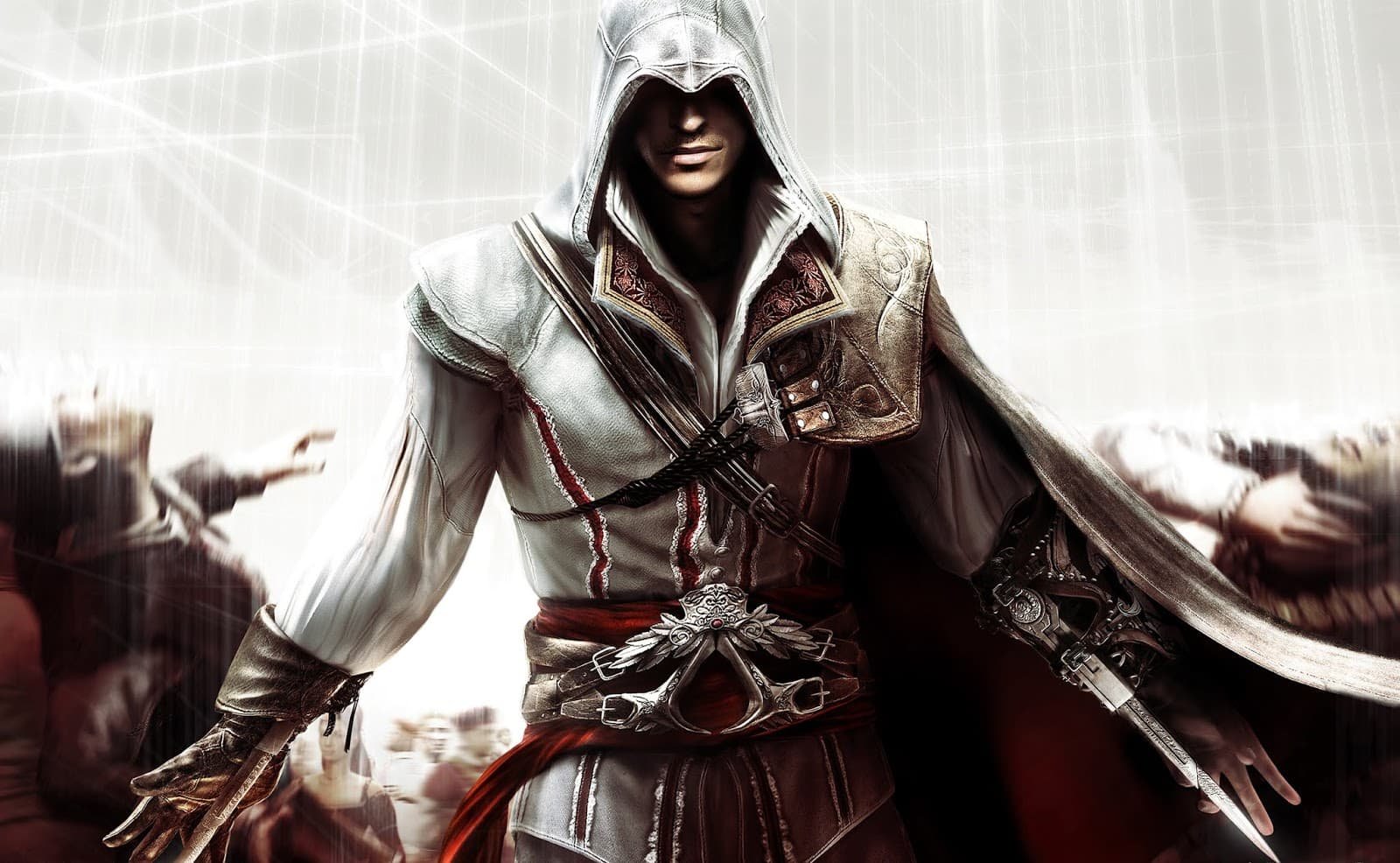
Ubisoft Confirms No New Assassin’s Creed Remake Beyond Black Flag Resynced
For nearly two decades, the Assassin’s Creed franchise has captivated players worldwide, immersing them in pivotal historical moments through the eyes of assassins and templars. From the rooftops of ancient Jerusalem to the golden age of piracy and the Viking sagas, these titles have continuously pushed boundaries in storytelling, open-world design, and historical simulation. In recent years, the gaming industry has seen a resurgence in remakes and remasters, with beloved classics being reimagined for modern audiences, offering enhanced graphics, refined mechanics, and expanded narratives. This trend has naturally led to fervent speculation among fans of long-running series like Assassin’s Creed, with many hoping to revisit iconic entries with a contemporary polish.
Amidst this backdrop of anticipation, particularly following the widespread acclaim and buzz surrounding the upcoming *Assassin’s Creed Black Flag Resynced*, a title set for release in 2026, a significant announcement from Ubisoft has reshaped expectations for the franchise’s immediate future. The developer, known for its intricate worlds and deep lore, has clarified its current development trajectory, signaling a strategic focus that prioritizes innovation over nostalgia. This clarification provides crucial insight into where one of gaming’s most storied sagas is headed next, guiding players and industry observers alike on what to expect in the coming years. It’s a move that speaks volumes about the delicate balance between honoring a rich legacy and forging new paths in an ever-evolving digital landscape, especially in the competitive realm of triple-A games development.
Understanding Ubisoft’s rationale behind this decision requires looking beyond the immediate news and delving into the broader context of the company’s creative philosophy, its experiences with past projects, and its vision for expanding the Assassin’s Creed universe. This article will dissect the implications of this announcement, exploring what it means for the franchise’s identity, the role of remakes in modern gaming, and the exciting prospects of future original titles. It will also touch upon parallel developments, such as enhancements to existing games, ensuring a comprehensive view of Ubisoft’s current strategy for its flagship historical action-adventure series.
Ubisoft’s Strategic Shift in Assassin’s Creed Games Development
Ubisoft has officially confirmed that it is not currently engaged in the development of any new remakes for the Assassin’s Creed franchise, setting clear expectations for fans following the much-anticipated *Assassin’s Creed Black Flag Resynced* slated for 2026. This announcement, made via a statement on the company’s official website, signals a pivotal strategic redirection for one of the most iconic series in video games.
The company explicitly stated its primary focus is on an entirely new Assassin’s Creed title, presently known only by its codename, *Hexe*. This forthcoming project is described as aiming for a “unique vision,” suggesting a departure from established formulas and a commitment to delivering fresh experiences within the expansive universe. Further details regarding *Hexe* are sparse, with Ubisoft indicating that comprehensive revelations are not expected until 2027.
This declaration comes despite the significant positive reception and anticipation generated by *Black Flag Resynced*, which has garnered praise from both the press and the player community. Ubisoft acknowledged that valuable lessons were indeed learned from the development of their first remake. While these insights are crucial for future endeavors, they are not currently translating into immediate plans for additional remakes. The company clarified that while the door isn’t permanently closed on revisiting other past titles, their present commitment lies elsewhere, reinforcing a dedication to innovation and new narratives in the competitive landscape of modern games.
The Impact of ‘Black Flag Resynced’ and Lessons Learned
The success and positive reception surrounding *Assassin’s Creed Black Flag Resynced* underscore the enduring appeal of the franchise’s classic entries and the potential for remakes to breathe new life into beloved experiences. This project has clearly provided Ubisoft with significant data and feedback, likely encompassing everything from player expectations for modernized mechanics to the technical complexities of rebuilding expansive worlds.
However, the company’s subsequent decision suggests that while successful, the remake process may present unique challenges or resource allocations that, at this juncture, do not align with their broader strategic objectives. The ‘lessons learned’ likely encompass balancing fidelity to the original with contemporary design principles, managing fan expectations, and the substantial investment required to deliver a high-quality remake. This pragmatic approach suggests a calculated decision to channel resources towards pioneering new experiences rather than continuously revisiting the past.
The Evolving Landscape of Remakes in Modern Games
The current gaming industry is experiencing a notable trend where remakes and remasters are increasingly prevalent, serving as a powerful bridge between nostalgia and modern technological capabilities. This phenomenon allows both long-time fans to relive cherished stories with updated visuals and mechanics, and introduces classic titles to new generations of players who might otherwise overlook older games. From expansive RPGs to iconic survival horrors, revitalized versions often achieve critical and commercial success, proving the significant market demand for these revisited experiences.
However, while remakes offer compelling benefits, they also present a complex set of challenges for developers. Crafting a successful remake requires more than just a graphical overhaul; it demands a deep understanding of the original’s essence while judiciously implementing contemporary design improvements. Studios must navigate fan expectations carefully, ensuring that core elements remain intact while addressing outdated mechanics or design philosophies. This balancing act can be resource-intensive, often rivaling the development costs of entirely new games, particularly for large, open-world titles. Consequently, companies like Ubisoft must weigh the potential for high returns against the significant investment and the opportunity cost of not developing new intellectual property.
Why Developers Embrace and Hesitate with Remakes
Developers often embrace remakes for several compelling reasons: they can capitalize on established brand recognition, tap into nostalgic sentiments, and introduce classic narratives to a new, broader audience. Remakes provide a safer bet in a volatile market, as the core concept is already proven, reducing some of the risks associated with entirely new IPs. Furthermore, they offer an opportunity to leverage advancements in graphics, sound design, and gameplay technology to enhance an already solid foundation, often achieving a level of polish unattainable in their original release.
Conversely, studios might hesitate with remakes due to the inherent pressure of living up to fan expectations, which can be astronomically high. There’s a fine line between faithful recreation and necessary modernization; deviating too much can alienate purists, while sticking too rigidly can make the game feel dated. The development cycle for a comprehensive remake is also extensive and costly, tying up valuable talent and resources that could otherwise be allocated to original projects. For a franchise like Assassin’s Creed, which thrives on historical settings and evolving gameplay loops, a constant stream of remakes might also risk diluting the brand’s identity or limiting creative exploration into genuinely new historical periods and gameplay mechanics.
Project Hexe: A Glimpse into the Future of Assassin’s Creed Games
Ubisoft’s emphasis on *Project Hexe* following its remake announcement underscores a strong commitment to pioneering new ground within the Assassin’s Creed universe. Currently shrouded in mystery, *Hexe* is the designated codename for the next flagship title in the series, explicitly positioned to deliver a “unique vision.” This solitary detail, while minimal, speaks volumes about Ubisoft’s ambition to redefine the franchise’s identity and push creative boundaries, especially after a period that saw the series experiment with RPG mechanics in games like *Origins*, *Odyssey*, and *Valhalla*.
The promise of a “unique vision” for *Hexe* could signal a significant departure from previous entries, perhaps exploring a more unconventional historical period, adopting a distinct narrative style, or even experimenting with novel gameplay loops that challenge player expectations. Given the franchise’s history of reinventing itself, from its stealth-action roots to its more open-world RPG focus, *Hexe* represents an opportunity to introduce innovative elements that reinvigorate interest and attract both veteran players and newcomers. This strategic pivot towards originality suggests Ubisoft is keen to maintain Assassin’s Creed’s relevance and evolutionary trajectory in a highly competitive gaming landscape, ensuring the series continues to surprise and engage its dedicated fanbase.
The Pursuit of a “Unique Vision”
The concept of a “unique vision” for *Project Hexe* is a fascinating indicator of Ubisoft’s future direction for the Assassin’s Creed series. Historically, the franchise has successfully reimagined its core tenets multiple times, transitioning from linear stealth-action to expansive RPGs. This implies *Hexe* could explore settings or themes previously untouched, offering a fresh take on historical fiction or even venturing into more experimental gameplay mechanics.
This pursuit of uniqueness is crucial for a long-running series to avoid stagnation. It suggests a willingness to take creative risks, potentially moving beyond familiar historical periods or character archetypes to introduce truly novel experiences. For players, this promise of originality is a compelling reason to anticipate *Hexe*, hinting at an Assassin’s Creed experience that breaks new ground and redefines what the franchise can be in the modern era of games.
Expanding Player Experience: New Game+ for Assassin’s Creed Valhalla
Alongside the significant news about future remakes and original titles, Ubisoft also announced an exciting development for current players of *Assassin’s Creed Valhalla*: the introduction of a New Game+ mode. This feature, highly requested by the community, will allow players to restart the main campaign of *Valhalla* while carrying over their progression, equipment, and abilities from a completed save file. New Game+ modes are a celebrated addition in many games, as they significantly extend replayability and offer a fresh perspective on a familiar journey.
For *Assassin’s Creed Valhalla*, the New Game+ will specifically enable players to revisit Eivor’s epic Viking saga, but with the distinct advantage of facing early-game challenges fully powered up. This isn’t just about making the initial hours easier; it’s about providing new avenues for engagement. Players will be able to pursue previously missed runes, unlock new achievements, and tackle optional content with a renewed sense of purpose and power. This strategic addition demonstrates Ubisoft’s commitment to supporting its existing games and enhancing the player experience even after the main narrative has concluded, adding substantial value to an already vast title.
Enhancing Longevity and Replayability in Games
The implementation of a New Game+ mode in *Assassin’s Creed Valhalla* is a testament to Ubisoft’s commitment to enhancing the longevity and replayability of its games. In an era where players often complete a game’s main story and move on, features like New Game+ provide compelling reasons to return to beloved virtual worlds. This mode allows players to experience the narrative again, perhaps making different choices or exploring alternative strategies, without the grind of starting from scratch.
For *Valhalla*, specifically, New Game+ means that the vast open world and intricate lore can be re-engaged with a sense of mastery, transforming initial struggles into opportunities for exploration and achievement hunting. This not only adds significant value for players who have already invested dozens, if not hundreds, of hours into the game but also reinforces the title’s position as a robust and enduring entry in the Assassin’s Creed lineup. Such features are crucial in the modern gaming landscape, where post-launch content and ongoing support play a vital role in community engagement and overall game success.
Strategic Implications for the Assassin’s Creed Games Franchise
Ubisoft’s recent announcements outline a clear and thoughtful strategic direction for the Assassin’s Creed franchise, emphasizing a forward-looking approach focused on innovation and new intellectual property over a continuous cycle of remakes. This decision, following the successful development of *Black Flag Resynced* for 2026, suggests a careful evaluation of market trends, internal development capacities, and the long-term health of one of gaming’s most storied series. By prioritizing *Project Hexe* and its “unique vision,” Ubisoft aims to ensure Assassin’s Creed remains a vanguard of open-world adventure, offering fresh narratives and gameplay mechanics that can captivate new audiences while retaining its veteran fanbase.
While the immediate future will not see a deluge of revisited classics, Ubisoft’s statement that they are “not closing the doors” on future remakes leaves a glimmer of hope for fans of other beloved entries like *Assassin’s Creed II* or the original *Assassin’s Creed*. This nuanced stance allows for strategic flexibility, enabling the company to reconsider remakes down the line when market conditions, technological advancements, or creative opportunities align more perfectly. This balanced strategy is crucial for a franchise that must continually evolve without alienating its historical roots, ensuring that each new game, whether original or a future remake, adds meaningful value to the expansive Assassin’s Creed universe and its place in the broader world of games.
Balancing Innovation with Legacy in Iconic Games
For a franchise as rich in history and lore as Assassin’s Creed, striking the right balance between innovation and honoring its legacy is a perpetual challenge. Players expect continuous evolution in gameplay and storytelling, yet they also cherish the core tenets and historical authenticity that define the series. Ubisoft’s current strategy, pivoting towards original experiences like *Project Hexe* while acknowledging the success of *Black Flag Resynced*, exemplifies this delicate balancing act.
Innovation ensures the franchise remains fresh and relevant in a rapidly changing gaming landscape, attracting new players with cutting-edge mechanics and narratives. Meanwhile, respecting the legacy means understanding what made previous games iconic, ensuring that even new directions feel authentically ‘Assassin’s Creed.’ This approach allows the company to explore new frontiers without abandoning the foundational elements that have made these games a global phenomenon, fostering a future where the past is honored through fresh perspectives rather than constant reiterations.
| Aspect | Focus on New Remakes (Past Strategy) | Current Ubisoft Strategy for AC Games |
|---|---|---|
| Remake Development Status | Ongoing work on multiple potential remakes | No new remakes in development after Black Flag Resynced (2026) |
| Primary Development Focus | Mix of new titles and remakes | Original titles, specifically Project Hexe |
| Vision for New Titles | Evolution of existing formulas | “Unique vision” for future entries |
| Resource Allocation | Split between new IP and revitalizing old IP | Concentrated on next-gen original experiences |
| Community Expectations | High anticipation for various remakes | Anticipation shifts to new, innovative entries |
| Long-term Goal | Expand franchise through diverse offerings | Define future of franchise through originality and new direction |
FAQ: Your Questions About the Future of Assassin’s Creed Games Answered
Will Ubisoft ever release another Assassin’s Creed remake after Black Flag Resynced?
While Ubisoft has confirmed that no new Assassin’s Creed remakes are currently in development following the 2026 release of *Black Flag Resynced*, they have explicitly stated that they are “not closing the doors” on revisiting other titles in the future. This suggests a strategic flexibility, implying that future remakes are a possibility but will likely depend on market conditions, the success of their original projects, and resource availability. For now, the company’s focus is firmly on new, innovative experiences for the franchise, indicating that any further remakes would be a long-term consideration rather than an immediate plan.
What is known about Project Hexe, the next Assassin’s Creed title?
Project Hexe is the codename for the next confirmed flagship title in the Assassin’s Creed franchise. While details are extremely scarce, Ubisoft has described it as aiming for a “unique vision,” suggesting a potentially significant departure or fresh approach compared to previous entries. The company has indicated that more specific details about *Hexe* will not be revealed until 2027. This deliberate pacing implies a careful and ambitious development cycle, aiming to deliver a groundbreaking experience rather than a quick follow-up, solidifying its position in the exciting world of upcoming games.
When can players expect more detailed information about Project Hexe?
Ubisoft has officially stated that further and more detailed information regarding Project Hexe is planned to be revealed in 2027. This means that fans eager for specifics about the setting, gameplay mechanics, or narrative direction will need to exercise patience. The extended timeline for revelations suggests a strategic rollout, likely aimed at building anticipation and ensuring that the initial reveal can fully convey the “unique vision” the developers are striving for. Until then, any information beyond the codename and unique vision remains speculative, keeping the mystery alive for this highly anticipated new entry in the world of games.
What exactly is Assassin’s Creed Black Flag Resynced?
*Assassin’s Creed Black Flag Resynced* is an upcoming remake of the beloved 2013 title, *Assassin’s Creed IV: Black Flag*. Set for release in 2026, it promises to modernize the acclaimed pirate-themed adventure, likely featuring updated graphics, refined gameplay mechanics, and potentially enhanced narrative elements. This remake aims to allow both veteran fans and new players to experience Edward Kenway’s journey through the Caribbean during the golden age of piracy with contemporary polish. Its development and success are key factors influencing Ubisoft’s current strategy regarding other potential remakes within the Assassin’s Creed franchise.
What does the New Game+ mode for Assassin’s Creed Valhalla offer players?
The upcoming New Game+ mode for *Assassin’s Creed Valhalla* will allow players who have completed the main campaign to restart the story while retaining their accumulated progression. This includes keeping their earned abilities, equipment, and level, enabling them to tackle early-game challenges with enhanced power. The mode is designed to provide additional replayability, offering opportunities to pursue previously missed runes, unlock new achievements, and explore optional content with a fresh perspective. It’s a significant update for players looking to extend their experience in Eivor’s Viking saga, adding substantial value to one of the most popular action-RPG games.
Why is Ubisoft prioritizing new titles over additional remakes for now?
Ubisoft’s decision to prioritize new titles like Project Hexe over additional remakes, despite the success of *Black Flag Resynced*, likely stems from a strategic emphasis on innovation and the long-term health of the Assassin’s Creed franchise. Developing entirely new experiences allows the company to explore fresh narratives, introduce novel gameplay mechanics, and push creative boundaries. While remakes capitalize on nostalgia, new titles are crucial for growth and attracting new audiences, ensuring the series remains cutting-edge in the competitive gaming market. This approach also allows for better resource allocation, focusing talent on forging new directions rather than continually reinterpreting past successes, a common strategy in the fast-paced world of new games.
How does the “unique vision” for Project Hexe impact the future direction of Assassin’s Creed games?
The “unique vision” for Project Hexe is a strong indicator that Ubisoft intends to significantly evolve the Assassin’s Creed franchise, potentially moving beyond established gameplay formulas or historical settings. This could mean a departure from the open-world RPG structure seen in recent titles, or it might involve a completely new narrative approach or stylistic direction. Such a bold declaration suggests a commitment to reinvention, aiming to surprise and challenge player expectations rather than merely iterate on past successes. This pursuit of uniqueness is vital for a long-running series to maintain relevance and attract both long-time fans and new players, ensuring the future of Assassin’s Creed games remains exciting and unpredictable.
Ubisoft’s clear communication regarding its immediate plans for the Assassin’s Creed franchise paints a compelling picture of a company balancing a rich legacy with an ambitious vision for the future. The decision to halt further remake development post-*Black Flag Resynced* in favor of pioneering new experiences like *Project Hexe* is a bold statement. It underscores a commitment to innovation and originality, aiming to ensure the Assassin’s Creed saga continues to surprise and engage its global fanbase with fresh narratives and gameplay mechanics. While the allure of revisiting beloved classics remains strong, the gaming world now eagerly awaits the unveiling of what a “unique vision” truly means for one of its most iconic series.
For players, this signals a future brimming with unexplored possibilities, deeper immersion, and the thrill of new discoveries within the meticulously crafted worlds that Ubisoft is renowned for creating. It’s a strategic pivot designed not just to keep the franchise alive, but to propel it forward, ensuring its continued relevance and impact in an ever-evolving digital landscape. As the industry advances, this commitment to new frontiers in games development becomes increasingly vital, promising exciting times ahead for fans of the hidden blade and beyond.













Post Comment