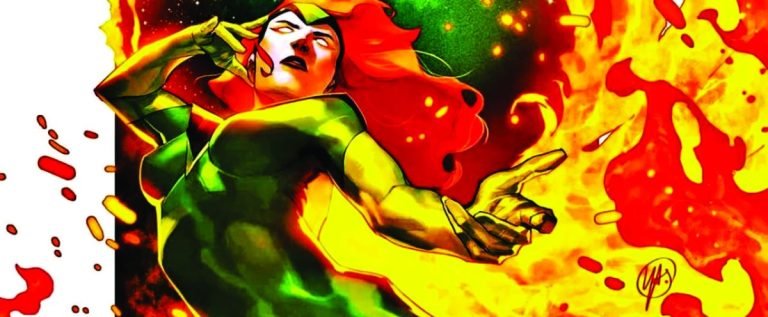
Jean Grey Takes X-Men Command: A Nerd’s Guide to Mutant Leadership
For decades, the X-Men have stood as a beacon of mutantkind, their triumphs and tribulations chronicled through countless sagas. At the heart of many of these narratives has been Scott Summers, the resolute Cyclops, whose tactical brilliance and unwavering resolve often defined the team’s very essence. His leadership, a blend of military precision and profound dedication, has guided the mutants through some of their most perilous eras, from defending a world that fears and hates them to establishing new havens like Krakoa.
Yet, even the most steadfast leaders face moments of introspection and a yearning for change. The recent turmoil within the mutant world, particularly the seismic events surrounding the fall of Krakoa and the intense DNX storyline, has profoundly impacted Cyclops. These challenges, culminating in a significant confrontation with Hank McCoy, the Beast, have led him to a pivotal decision: to step down from the helm. This leaves a vacuum at the pinnacle of mutant command, sparking fervent speculation and anticipation among fans regarding who will next guide the X-Men.
As revealed by CBR and reported by Andre Luiz on 05.11.26, the spotlight now turns to Jean Grey. A figure synonymous with immense power, unwavering empathy, and a complex connection to cosmic forces, Jean is positioned as the strongest contender to inherit leadership. This potential shift, slated to unfold in Jed MacKay’s ‘X-Men’ series, particularly with issue #44 arriving on January 13, 2027, with art by Netho Diaz, promises a dramatic reorientation for the team. It is a moment that resonates deeply within the nerd community, signaling not just a change in command, but a potential evolution in the very soul of the X-Men, inviting readers to delve into a fresh narrative era.
The implications of Jean Grey taking the reins are vast, touching upon character dynamics, thematic explorations, and the broader trajectory of the Marvel universe. It’s a move that capitalizes on her renewed connection to the Phoenix Force, her burgeoning popularity, and the creative vision aiming to refresh the franchise. This article will meticulously explore the context behind Cyclops’s departure, Jean Grey’s journey to this potential leadership role, the new threats looming, and the profound impact this will have on the X-Men and their dedicated fanbase. Prepare to dive deep into what promises to be one of the most significant shifts in mutant lore in recent memory.
The Phoenix Rises: Jean Grey Takes X-Men Command for the Modern Nerd Era
Jean Grey is poised to become the new leader of the X-Men, a pivotal shift after Cyclops’s departure post-DNX. This development introduces an era of profound emotional power and strategic redirection, signaling a fresh narrative course for the mutant team and sparking intense discussion among the dedicated X-Men nerd community.
The announcement that Scott Summers, Cyclops, is stepping down from his long-held leadership position has sent ripples through the X-Men universe. After years as the group’s unwavering face, his decision marks the end of an era defined by his tactical acumen and often difficult choices. The question of succession, naturally, falls to the remaining members, and all signs point to Jean Grey as the overwhelming favorite to assume this critical role. This potential leadership change, a significant development in Jed MacKay’s ongoing ‘X-Men’ series, is set to culminate in issue #44, scheduled for release on January 13, 2027, with Netho Diaz on art, all under the Marvel Comics banner.
This transition isn’t arbitrary; it’s a direct consequence of the recent cataclysmic DNX event. During this tumultuous period, Cyclops found himself in a brutal confrontation with Hank McCoy, the Beast, where he successfully thwarted a dangerous plan against humanity. This intense experience forced Cyclops to re-evaluate his own purpose and leadership style, leading him to believe it was time for a change. His introspection mirrors the broader shifts within the mutant community, especially after the dramatic fall of Krakoa, which left the X-Men operating from a new base in an old Sentinel factory in Alaska, a scenario depicted earlier in ‘X-Men #1’ trailer.
Cyclops’s Tactical Retreat: The Aftermath of DNX
Cyclops’s decision to step away from leadership is not a sign of weakness but a profound re-evaluation of his role in a post-Krakoa world. The DNX event, a critical juncture for mutantkind, saw him confronting one of their own, the once-respected Beast, to prevent a catastrophic scheme targeting humanity. This moral and physical battle exacted a heavy toll, pushing Scott to question the very nature of his command and whether his tactical, often solitary, approach was still what the X-Men truly needed. His subsequent retreat to an improvised base in Alaska, within the haunting shell of a former Sentinel factory, underscored the team’s precarious new reality and Cyclops’s burden of leadership in a broken world.
His tactical brilliance, which once defined the X-Men’s defensive strategies, now seems to require a different complement, perhaps one that emphasizes connection and emotional resilience. This internal conflict, born from the recent hardships and moral compromises, highlights the evolution of a character often portrayed as stoic and unyielding. The narrative, as it stands, presents Cyclops not as a failure, but as a leader wise enough to recognize when a different vision is required for the survival and flourishing of his people.
Jean Grey’s Ascent: A New Era of Emotional Leadership
Jean Grey’s emergence as the leading candidate for X-Men leadership marks a profound departure from Cyclops’s strategic, often pragmatic, style. Her journey to this point has been marked by significant personal growth and a deeper understanding of her own immense capabilities. Following a transformative period in space, Jean has not only returned but has also rediscoved her powers as an avatar of the cosmic Phoenix Force, an entity of both creation and destruction that is intrinsically linked to her destiny.
This rekindled connection to the Phoenix Force positions Jean as a leader of immense, almost unfathomable, power, tempered by her innate empathy and deep emotional intelligence. Beyond the comics, her character has also seen a resurgence in popularity, notably mentioned in contexts like ‘Spider-Man: A New Day,’ indicating a broader cultural appreciation for her role. Furthermore, Jean recently headlined a successful five-issue miniseries, penned by MacKay with art by Roge Antonio, which explored a renewed approach to her character following the cancellation of the ‘Phoenix’ title. This series served as a crucial stepping stone, showcasing her leadership potential and evolving character arc, preparing her for this very moment of ascension.
The Intricacies of Power: Phoenix Force and the Future of X-Men Narratives for the Discerning Nerd
The potential leadership of Jean Grey reintroduces the complex dynamics of the Phoenix Force into X-Men’s core narrative. For the discerning nerd, this poses questions about the balance between Jean’s inherent will and the cosmic entity’s influence, promising a compelling exploration of power, responsibility, and the evolution of a foundational mutant icon.
With Jean Grey potentially at the helm, the ‘ancient discussion’ surrounding the Phoenix Force is inevitably reignited. This powerful cosmic entity, intrinsically linked to Jean’s very essence, has historically represented both immense creative potential and catastrophic destructive power. Fans and creators alike have long debated the extent to which the Phoenix’s influence shapes Jean’s decisions, raising questions about her free will versus the entity’s cosmic agenda. This inherent duality offers Jed MacKay fertile ground for storytelling, allowing for deep philosophical explorations into the nature of power and the burden of cosmic responsibility, topics that resonate strongly within the thoughtful nerd community.
This isn’t merely a change in personnel; it’s a thematic shift. Cyclops’s leadership was often about managing external threats through calculated strategies. Jean’s, however, promises to delve into the internal, the emotional, and the cosmic. Her ability to tap into the Phoenix Force brings an unpredictable element to the team, a wild card that could either elevate the X-Men to new heights or plunge them into unprecedented peril. The narrative challenge for MacKay will be to harness this power responsibly, showcasing Jean’s growth in controlling its raw energy while making choices that truly reflect her character’s compassionate core, ensuring a compelling and engaging storyline for readers.
Navigating New Threats: Revelation and Grievance
The leadership transition within the X-Men is not occurring in a vacuum; it is set against a backdrop of emerging new threats that will undoubtedly test the new command. As the CBR report indicates, the conclusion of the DNX arc witnesses the transformation of Doug Ramsey into the enigmatic Revelation. Doug Ramsey, typically known for his technopathic abilities as Cypher, becoming ‘Revelation’ signals a significant and potentially unsettling evolution for the character, whose unique skill set could now be amplified or twisted in unforeseen ways.
Adding to the peril is the introduction of a completely new antagonist named Grievance. The report offers no specific details about this villain, leaving their capabilities and motivations shrouded in mystery. This lack of information is strategically intriguing, allowing for maximum impact upon their full reveal. The emergence of both Revelation and Grievance underscores the ongoing instability in the mutant world and presents immediate challenges for whoever leads the X-Men next. Their presence suggests that Jean Grey’s potential tenure as leader will be anything but calm, forcing her to confront formidable new adversaries while simultaneously establishing her authority.
Market Impact and Fan Expectations: What This Means for Marvel Comics
Beyond the narrative implications, the potential leadership change has significant market implications for Marvel Comics. A fresh leader, particularly one with the historical weight and cosmic connections of Jean Grey, provides an excellent narrative hook. This shift is perfectly timed to conclude Jed MacKay’s current phase on the ‘X-Men’ title, offering a definitive capstone to his storytelling while simultaneously attracting new readers who might be intrigued by the refreshed team dynamic. For the comic book industry, such a change is a reliable strategy to generate buzz and reignite interest in a long-running franchise.
For the ardent X-Men fanbase, the change promises a mixture of excitement and familiar debate. The prospect of Jean Grey leading brings a ‘freshness’ to the team, offering new storytelling opportunities and character interactions. However, it also reopens the perennial discussion about the influence of the Phoenix Force on Jean’s decisions, a topic that has historically divided opinions and fueled passionate arguments within the community. This dual effect — the promise of novelty and the resurgence of classic dilemmas — ensures continued engagement and vibrant discussion, vital for maintaining a strong connection with the dedicated X-Men nerd audience.
Comparing Leadership Styles: Cyclops vs. Jean Grey
| Aspect | Cyclops (Scott Summers) | Jean Grey |
|---|---|---|
| Primary Style | Tactical, Strategic, Disciplined | Emotional, Empathetic, Instinctive |
| Decision-Making | Logical, Pragmatic, Often Ruthless | Intuitive, Compassionate, Morally Driven |
| Key Power Influence | Optic Blasts (physical, controlled) | Telepathy/Telekinesis, Phoenix Force (cosmic, vast) |
| Strengths | Order, Stability, Preparedness, Military Precision | Empathy, Cosmic Awareness, Unmatched Power, Deep Connection |
| Weaknesses | Rigidity, Emotional Distance, Perceived Coldness | Potential Volatility, Phoenix Force Influence, Emotional Burden |
| Impact on Team | Defined clear roles, strict hierarchy | Fosters unity, explores emotional intelligence, cosmic threats |
Key Factors Driving X-Men’s Leadership Shift
- Cyclops’s Post-DNX Introspection: His confrontation with Beast led to a profound re-evaluation of his leadership role and desire for change.
- Jean Grey’s Renewed Power: Her return from space saw her rediscover her Phoenix Force capabilities, enhancing her potential.
- The Fall of Krakoa’s Aftermath: The X-Men’s new, more vulnerable status quo demands adaptable and perhaps different leadership.
- Jed MacKay’s Narrative Vision: The writer’s arc aims to introduce fresh dynamics and character explorations.
- Desire for New Perspective: A shift from Cyclops’s tactical precision to Jean’s emotional and cosmically connected approach.
Potential Ramifications of Jean Grey’s Leadership
- Emphasis on Empathy: A more emotionally nuanced and understanding approach to mutant issues and human relations.
- Cosmic Narrative Expansion: Increased focus on cosmic threats and the vast implications of the Phoenix Force’s power.
- Internal Team Dynamics: New challenges and alliances will emerge as the team adapts to Jean’s unique style.
- Unique Adversaries: The rise of new villains or the recontextualization of old ones specifically designed to challenge Jean’s immense abilities.
- Fan Engagement: Heightened discussion and renewed interest, both positive and potentially contentious, within the X-Men community.
Frequently Asked Questions for the X-Men Nerd Community
Why is Cyclops stepping down as X-Men leader?
Cyclops’s decision to step down from X-Men leadership stems directly from the profound events of the DNX storyline. During this critical arc, he confronted and defeated Hank McCoy, the Beast, thwarting a plan that posed a grave threat to humanity. This intense experience led Scott Summers to a period of deep introspection, causing him to re-evaluate his own role and leadership style. He concluded that it was time for a change, likely seeking to explore different responsibilities or allow a new vision to guide the X-Men in the turbulent post-Krakoa era. His choice reflects a desire to move beyond the specific burdens and tactical necessities that had long defined his command, embracing a new chapter for himself and the team.
What is the significance of the DNX event mentioned?
The DNX event is presented as a pivotal turning point in the X-Men’s recent history, specifically serving as the catalyst for Cyclops’s decision to relinquish leadership. While its full scope isn’t detailed, the core of the event involved Cyclops confronting Beast to prevent a plan against humanity. This conflict, as a major internal struggle, highlights the moral complexities and high stakes facing mutantkind. It signifies a period of immense challenge and difficult choices for the X-Men, leading to a reshaping of their internal dynamics and external presence. The event’s resolution, with Cyclops’s victory over Beast, forced him to reconsider his path, making DNX a foundational element for the upcoming leadership change.
How did Jean Grey rediscover her Phoenix Force powers?
Jean Grey’s re-emergence with her Phoenix Force powers occurred after a period spent in space. This celestial journey was instrumental in her rediscovering and reconnecting with the cosmic entity that has been intrinsically linked to her throughout her history. While the specific details of her rediscovery during this space tenure are not fully elaborated in the provided information, her return to Earth and the X-Men signifies that this experience in the cosmos profoundly renewed her connection to the Phoenix. This refreshed power set is a crucial factor in her strong candidacy for leadership, as it positions her as one of the most powerful and influential figures in the mutant world.
What distinguishes Jean Grey’s leadership style from Cyclops’s?
Jean Grey’s potential leadership style is expected to be markedly different from Cyclops’s, offering a fresh dynamic for the X-Men. Cyclops is renowned for his tactical mind, disciplined approach, and strategic planning, often making difficult, pragmatic decisions for the greater good. Jean, on the other hand, is characterized by an emotional and powerful leadership. Her decisions are often guided by deep empathy, intuition, and her profound connection to the Phoenix Force. This contrast suggests a shift from a militarily precise command to one that emphasizes emotional intelligence, cosmic awareness, and a more unified, perhaps less rigid, approach to challenges, promising a unique evolution for the team.
Who are Revelation and Grievance, and what is their role?
Revelation and Grievance are newly introduced elements following the conclusion of the DNX arc, poised to become significant figures in the X-Men’s evolving narrative. Doug Ramsey, known as Cypher, undergoes a transformation into Revelation, suggesting a dramatic shift in his character and abilities, potentially making him a powerful new force, for better or worse. Grievance is presented as an entirely new villain, whose specific capabilities and motivations are currently undisclosed. Their emergence as new threats indicates that the X-Men, under their new leadership, will face immediate and formidable challenges, adding layers of suspense and conflict to Jed MacKay’s ongoing storyline.
What is the “ancient discussion” regarding the Phoenix Force and Jean Grey?
The “ancient discussion” concerning the Phoenix Force and Jean Grey refers to the long-standing debate among fans and creators about the extent of the cosmic entity’s influence over Jean’s actions and consciousness. The Phoenix Force is a sentient, powerful cosmic entity of life and passion, but also destruction. Throughout her history, Jean has been its primary avatar, leading to periods of immense power but also devastating destruction and moral ambiguity. This discussion questions whether Jean’s decisions are truly her own, or if they are swayed by the Phoenix’s primal urges, creating a fascinating internal conflict that adds depth and complexity to her character, making her leadership prospects even more compelling and potentially volatile.
How does Jean Grey’s recent miniseries connect to her potential new role?
Jean Grey’s recent five-issue miniseries, written by Jed MacKay with art by Roge Antonio, serves as a crucial narrative bridge to her potential new leadership role. This miniseries, which emerged after the cancellation of the ‘Phoenix’ title, was an intentional effort by Marvel to offer a “renewed approach” to her character. It likely explored her personal growth, her re-established connection to the Phoenix Force, and her evolving understanding of her place in the mutant world after her return from space. This focused narrative arc would have showcased her leadership qualities, emotional maturity, and her ability to handle immense power, effectively preparing and legitimizing her for the significant responsibility of leading the X-Men.













Post Comment