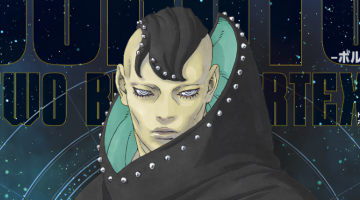
Boruto’s Dark Twist: Is Konoha’s Hero Now its Villain?
In the vast landscape of shonen manga and anime, the lines between hero and villain are often drawn with stark clarity. Yet, what happens when those lines blur, when the very foundations of heroism are questioned, and a beloved protagonist is cast into the role of society’s most wanted? This is the harrowing reality that Boruto Uzumaki, son of the legendary Seventh Hokage, now faces, plunging the narrative of ‘Boruto: Two Blue Vortex’ into unprecedented moral complexity.
For years, the ‘Naruto’ and ‘Boruto’ franchises have captivated a global audience of dedicated Otaku, weaving tales of resilience, loyalty, and the pursuit of peace. But the latest developments, particularly in Chapter 39 of ‘Two Blue Vortex’, have introduced a shocking inversion of roles that forces fans to re-evaluate every character and every conviction. The very village Boruto is destined to protect now perceives him as its greatest threat, while a formidable antagonist displays an unexpected depth that challenges preconceived notions of evil.
This profound narrative shift is not merely a plot device; it’s a bold exploration of perception, justice, and the burden of heroism. It compels the audience to question who truly holds the moral high ground and whether the label of ‘hero’ is immutable in the face of overwhelming adversity. As we delve into the heart of this controversy, prepare to unpack the intricate layers of betrayal, philosophy, and the unsettling irony that define Boruto’s desperate hour, a turn of events that resonates deeply with the passionate Otaku community seeking ever more sophisticated storytelling.
The Shifting Allegiances: How “Otaku” Expectations Are Challenged in Boruto
Chapter 39 of ‘Boruto: Two Blue Vortex’ delivers a narrative shockwave, vividly illustrating a profound subversion of traditional hero-villain dynamics and challenging the steadfast expectations of the dedicated Otaku fanbase. The pivotal scene involves a seemingly ordinary Konoha resident, a bookseller, who implores Jura, the leader of the Shinju, to eliminate Boruto, to which Jura responds with a chillingly casual ‘thumbs up’.
This moment underscores how the world of ‘Boruto’ has been utterly upended. Boruto, once hailed as the village’s hopeful future and the inheritor of a storied legacy, is now actively hunted, not just by external threats, but by the very people he is sworn to protect. This dramatic betrayal, especially from a civilian, signals a complete breakdown of trust and societal order within Konoha, leaving many Otaku grappling with the series’ audacious direction.
The context for this radical shift stems from Eida’s omnipotent ability, which has warped the perceptions of nearly everyone, recasting Boruto as the villain responsible for Naruto’s disappearance and Kawaki as Konoha’s true savior. This widespread delusion has fostered an environment where fear and misinformation drive public sentiment, leading to an unprecedented level of animosity towards the actual hero. For long-time Otaku who have witnessed Boruto’s growth and dedication, this turn is not just surprising but emotionally resonant, forcing a re-evaluation of how narratives can manipulate audience perspective.
The chapter masterfully plays on dramatic irony, juxtaposing the villain’s unexpected civility with the villagers’ passionate malice. This deliberate narrative choice highlights the fragility of public opinion and the profound consequences of misjudged loyalties. It’s a stark reminder that even in a world striving for peace, the lines between right and wrong can become dangerously indistinct.
Jura: The Philosophical Adversary Redefining Villainy
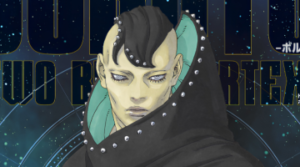
Jura, the leader of the Shinju (the Divine Trees), emerges as one of the franchise’s most compelling antagonists, yet his actions often belie the typical villain archetype. Rather than engaging in overt destruction, Jura exhibits a profound curiosity about the world around him. He spends his time perusing books in a Konoha bookstore, engaging the owner in philosophical discussions about animals, evolution, and the fundamental nature of existence.
This intellectual pursuit grants Jura a unique philosophical dimension, painting him less as a conqueror and more as an inquisitive entity on a journey of self-discovery. This portrayal is a nuanced departure from traditional shonen villains, offering a complexity that deeply appeals to Otaku who appreciate antagonists with layered motivations beyond mere power or malice. The unexpected gentleness of a character of such immense power makes the subsequent interaction with the bookseller even more jarring and impactful.
The Unsettling Irony: Konoha’s Betrayal of Its Own
The true genius of Chapter 39 lies in its profound irony. The chapter’s title, “Kill Him,” sets up an expectation that a hero might be issuing a command against a villain. Instead, it is a seemingly innocent Konoha resident who pleads with the powerful Shinju leader to kill Boruto, their supposed hero. This inversion is not just a clever twist; it’s a searing indictment of the village’s moral state and the pervasive effects of Eida’s enchantment.
The scene is further accentuated by Jura’s response – a simple ‘thumbs up’ – a gesture typically associated with heroes achieving victory. This subtle yet powerful detail perfectly encapsulates the topsy-turvy reality Boruto now inhabits, where traditional symbols of heroism and villainy are completely distorted. This kind of meta-commentary on narrative expectations is precisely what engages sophisticated Otaku audiences.
This role reversal brings the story full circle: at the beginning of ‘Boruto’, Kawaki was the outsider, a perceived threat who was ultimately welcomed and protected by Boruto. Now, Boruto is the world’s most wanted fugitive, while Kawaki stands as Konoha’s steadfast protector, having sealed Naruto away in a dimension where time is frozen. The narrative asks a harrowing question: if the village treats its hero as an enemy and finds an unlikely ally in a philosophical villain, who truly represents good or evil?
| Character | Initial Perception | Current Role (Two Blue Vortex) |
|---|---|---|
| Boruto Uzumaki | Konoha’s Young Hero, Naruto’s Son | Most Wanted Fugitive, Perceived Villain |
| Kawaki | Threat, Outsider | Konoha’s Protector, Savior of Naruto |
| Jura | Major Antagonist, Shinju Leader | Curious Seeker of Knowledge, Unlikely Confidant |
Deciphering the Moral Compass: Boruto’s Journey and the “Otaku” Perspective
This section delves into the intricate ethical ambiguities presented within Boruto’s unfolding narrative, critically examining the fluid definitions of heroism and villainy. For the discerning Otaku community, these evolving themes are central to the series’ appeal, prompting deep reflection on character motivations, societal influence, and the true cost of power.
The narrative of ‘Boruto: Two Blue Vortex’ pushes the boundaries of traditional shonen storytelling by presenting a protagonist who is simultaneously pursued and reviled by his own people. This mirrors archetypes found in various forms of storytelling, where heroes are unjustly vilified, forcing them into a path of self-discovery and independent action. Understanding this journey requires an acknowledgement of the power of perception, especially when influenced by a force as potent as Eida’s Omnipotence.
The implications for Boruto’s moral compass are immense. He is forced to mature beyond the conventional framework of Konoha’s justice, learning to trust his own judgment and those few who see through the illusion. This personal growth under duress is a compelling aspect for Otaku who follow character development closely, highlighting how adversity forges true strength and clarity of purpose.
Furthermore, the philosophical exchanges with Jura introduce a grey area where even antagonists contribute to a deeper understanding of the world. This complexity challenges the audience to look beyond superficial labels and consider the underlying motivations and quests for knowledge that drive all characters, whether friend or foe. It elevates ‘Boruto’ from a simple action series to a thoughtful exploration of human (and even non-human) nature.
Understanding the Narrative Stakes: More Than Just a Power Struggle
The stakes in ‘Boruto: Two Blue Vortex’ transcend mere physical combat; they delve into the psychological and ethical fabric of Konoha itself. A village that so readily condemns its hero, based on manipulated memories, raises profound questions about its integrity and the nature of its collective judgment. This situation places an immense psychological burden on Boruto, who must navigate not only external threats but also the overwhelming weight of being ostracized by everyone he once knew and protected.
This narrative decision highlights a crucial point often explored in complex fiction: the ‘villain’ is not always an external force but can be a societal consensus, however misguided. The ongoing narrative suggests that the true battle is not just against the Shinju, but against the widespread misinformation and fear that have taken root within Konoha’s heart. This internal conflict is far more insidious and challenging to overcome, appealing to Otaku who appreciate nuanced, character-driven storytelling.
Future Trends: The Evolution of Shonen Narratives for the Modern Otaku
The direction ‘Boruto: Two Blue Vortex’ has taken is indicative of a broader trend in modern shonen manga and anime: a move towards more complex, morally ambiguous narratives. Contemporary stories increasingly shy away from simplistic good-versus-evil dichotomies, preferring to explore characters with conflicted loyalties, hidden depths, and journeys that defy easy categorization.
This evolution resonates strongly with the modern Otaku, who often seek narratives that challenge their perceptions and encourage critical thinking. Boruto’s current predicament—being the hero branded as a villain—is a prime example of this trend, pushing the boundaries of what a shonen protagonist can endure and how a story can evolve. It sets a new benchmark for character development and plot complexity, promising a rich and unpredictable future for the franchise.
By embracing these morally grey areas, ‘Boruto’ is not just telling a story; it’s engaging in a dialogue with its audience about the nature of truth, justice, and the often-uncomfortable realities of leadership and sacrifice. This depth ensures the series remains a captivating and thought-provoking experience for its dedicated fanbase.
FAQ
-
What happened in Boruto: Two Blue Vortex Chapter 39?
In a significant twist, Chapter 39 of ‘Boruto: Two Blue Vortex’ depicts a Konoha civilian, specifically a bookseller, directly appealing to Jura, the Shinju leader and major antagonist, to kill Boruto. Jura responds to this request with a casual ‘thumbs up’, symbolizing the complete reversal of Boruto’s standing within his own village. The chapter further explores Jura’s philosophical nature, as he spends time engaging in intellectual discourse rather than immediate conflict, highlighting the profound irony and moral ambiguity central to the current arc. -
Who is Jura in Boruto?
Jura is introduced as the formidable leader of the Shinju, a group often referred to as ‘Divine Trees’ or ‘God Trees’. Despite his role as a primary antagonist, Jura exhibits a curious and philosophical demeanor. He is shown to be interested in understanding the world, engaging in discussions about nature, evolution, and acquiring books, which sets him apart from conventional villains focused solely on destruction or conquest. His actions add a layer of intellectual depth to the series’ antagonist roster. -
Why do Konoha citizens want Boruto dead?
Konoha citizens desire Boruto’s death due to the powerful influence of Eida’s Omnipotence. This ability manipulated the memories and perceptions of nearly everyone on Earth, making them believe that Boruto was responsible for the disappearance of Naruto Uzumaki and that Kawaki was actually Naruto’s biological son and Konoha’s true protector. Consequently, Boruto is now universally perceived as a dangerous criminal and a traitor, leading the villagers to demand his elimination for the perceived safety and honor of Konoha. -
What is the significance of the “Kill Him” chapter title?
The chapter title “Kill Him” holds profound ironic significance. It initially leads readers to anticipate a command from a hero against a villain. However, the narrative subverts this expectation by revealing that the plea to kill comes from a Konoha civilian, directed at a powerful villain, against the protagonist Boruto. This twist powerfully emphasizes the moral disorientation within the story, showcasing how Boruto, the intended hero, is now seen as the primary threat, making the title a masterful piece of narrative misdirection. -
How has Boruto’s role changed from the start of the series?
Boruto’s role has undergone a dramatic transformation since the series’ inception. Initially, he was portrayed as the energetic, somewhat rebellious son of the Seventh Hokage, a budding ninja striving to forge his own path. He was seen as Konoha’s future hero and a key figure in protecting the village. Now, due to Eida’s Omnipotence, Boruto is branded as the world’s most wanted fugitive, perceived as a dangerous villain who betrayed Konoha and caused Naruto’s disappearance. His journey has shifted from seeking recognition to surviving persecution. -
What impact does this narrative twist have on the Boruto franchise for Otaku?
This narrative twist has a significant impact on the ‘Boruto’ franchise, particularly for the dedicated Otaku community. It elevates the storytelling beyond traditional shonen tropes, introducing complex moral dilemmas and challenging the audience’s fixed perceptions of good and evil. For Otaku, it fosters deeper engagement with character development, plot twists, and philosophical themes, making the series more unpredictable and thought-provoking. It encourages critical analysis of narrative structure and character motivations, resonating with fans who appreciate sophisticated world-building. -
Is Kawaki now the main hero of Konoha?
From the perspective of most Konoha citizens, influenced by Eida’s Omnipotence, Kawaki is indeed perceived as the main hero. He is believed to be Naruto’s biological son and is seen as the protector of the village, credited with preventing further harm and ensuring Konoha’s safety, particularly after sealing Naruto away (which is misinterpreted by the villagers). This perceived heroism contrasts sharply with Boruto’s current status as the antagonist, establishing Kawaki as the villagers’ accepted savior and champion. -
What are the Shinju?
The Shinju, or ‘Divine Trees’, are central to the lore of ‘Boruto’, evolving from the concept of the God Tree in ‘Naruto’. These entities are powerful beings that emerge from Ten-Tails, displaying immense strength and intelligence. In ‘Boruto: Two Blue Vortex’, new Shinju like Jura have developed distinct personalities and philosophical inquiries, making them more complex adversaries than previous iterations. They are key players in the unfolding narrative, embodying both immense power and an unexpected quest for understanding.
The Unwritten Future: Boruto’s Legacy and the Persistent Otaku Question
The current trajectory of ‘Boruto: Two Blue Vortex’ has boldly reshaped the landscape of the entire franchise, pushing its narrative into territories few shonen series dare to explore. By casting its protagonist as a pariah and imbuing its antagonist with a surprising intellectual depth, the series challenges us to reconsider the very nature of heroism and villainy. This complex interplay of roles and perceptions ensures that Boruto’s journey is not merely about accumulating power, but about understanding truth in a world turned upside down.
For the ardent Otaku, this audacious storytelling is both a trial and a triumph. It tests loyalty, provokes debate, and ultimately enriches the experience of following a narrative that refuses to conform to predictable patterns. The questions raised by Chapter 39 – about who deserves our trust, what defines justice, and whether a hero can ever truly be abandoned by their own – will continue to resonate, fueling discussions and theories across fan communities.
As Boruto navigates this desolate path, branded as a villain by those he once swore to protect, his true heroism will be forged not in triumph, but in perseverance against an overwhelming tide of misunderstanding. The series promises a thrilling and emotionally charged continuation, one that will undoubtedly leave an indelible mark on the annals of shonen manga and anime, cementing its place as a narrative willing to defy expectations and provoke profound thought among its dedicated followers.








Post Comment