Doctor Doom’s World: How Fantastic Four’s Earth-828 Changes Cinema & TV
The cinematic landscape of superhero narratives is on the cusp of another grand expansion, with the highly anticipated introduction of the Fantastic Four into the Marvel Cinematic Universe (MCU). Beyond merely bringing Marvel’s First Family to the big screen, recent revelations suggest a deeper dive into the multiverse’s complexities, particularly concerning the world that birthed one of its most formidable antagonists: Doctor Doom. A new preview for an Avengers film, featuring the iconic villain, has offered an intriguing, albeit subtle, clue about Earth-828, the confirmed origin of Doctor Doom.
This insight, delivered during a prominent sporting event, has captivated fans and analysts alike, sparking discussions about the implications of such a nuanced approach to alternate realities. It’s not about drastic, world-shattering differences, but rather a singular, historical divergence that echoes through the fabric of this particular Earth. This seemingly trivial detail—the Brooklyn Dodgers baseball team never relocating from New York—serves as a crucial narrative thread, hinting at a world where small choices cascade into significant outcomes, ultimately shaping characters like Victor Von Doom and influencing the broader context of the Fantastic Four’s adventures. Understanding these subtle shifts is paramount for fans eager to grasp the intricate storytelling Marvel Studios is weaving into its expansive multiversal tapestry for upcoming Cinema and TV releases.
The meticulous attention to such a specific historical alteration underscores Marvel’s commitment to creating richly detailed alternate realities, rather than merely presenting superficial variations. This approach not only grounds the fantastical elements in relatable human history but also deepens the lore surrounding characters like the Fantastic Four and their arch-nemesis. As the MCU continues to explore the infinite possibilities of the multiverse, these subtle divergences become powerful tools for character development and plot progression, promising a sophisticated layer to the superhero genre that extends far beyond conventional action sequences.
The Subtle Multiversal Shift in Fantastic Four: A Deep Dive into Doctor Doom’s World Across Cinema and TV
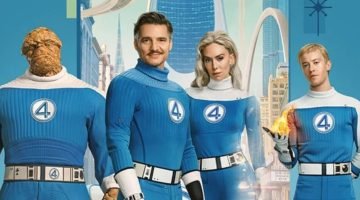
The recent preview for an Avengers film, which features Doctor Doom, has delivered a fascinating glimpse into Earth-828, the designated origin for the formidable villain within the MCU. The material, showcased during the MLB World Series, prominently featured familiar faces associated with the upcoming Fantastic Four film, including Pedro Pascal as Reed Richards, Ebon Moss-Bachrach as Ben Grimm, and Joseph Quinn as Johnny Storm, alongside prominent baseball figures like Bryce Harper and Freddie Freeman.
The most striking detail, however, was not a grand cosmic anomaly but a specific historical deviation: on Earth-828, the Brooklyn Dodgers baseball team never relocated from New York to Los Angeles. This stands in stark contrast to our real world, or the presumed Earth-616 of the main MCU timeline, where the Dodgers made their famous move before the 1958 season. The real-world relocation was driven by then-president Walter O’Malley’s desire for a more modern stadium, a facility New York couldn’t provide but Los Angeles could. Concurrently, the New York Giants also departed for San Francisco.
On Earth-828, this pivotal sporting migration apparently never occurred. This suggests a New York where, perhaps, city authorities provided the necessary infrastructure, or other factors preserved its foundational sports teams. For characters deeply rooted in New York’s cultural fabric, such as Ben Grimm, known for his fierce loyalty to local sports teams, this seemingly minor detail could hold significant emotional weight and influence their perception of their home city. It paints a picture of a subtly different urban identity, one that could profoundly shape the formative years and experiences of key characters, especially those destined to become heroes and villains.
Direct Answer: In the upcoming Fantastic Four narrative, Earth-828, Doctor Doom’s confirmed origin, subtly diverges from the main MCU timeline (Earth-616) because the Brooklyn Dodgers baseball team never left New York for Los Angeles. This historical detail, revealed in a preview, suggests a world with an altered urban identity and potentially different cultural underpinnings that could influence the development of characters like Doctor Doom and the Fantastic Four, impacting their portrayal across Cinema and TV.
Unpacking Earth-828: A Timeline of Divergence and Its Implications
The decision to maintain the Brooklyn Dodgers in New York on Earth-828 carries more weight than just a sports trivia fact; it represents a branch point in history that could have myriad ripple effects. In our reality, the departure of both the Dodgers and the Giants profoundly impacted New York City’s sporting identity and urban development. Their absence left a void, but also opened doors for other franchises and redefined the city’s relationship with professional baseball.
On Earth-828, the continued presence of these teams likely means a more vibrant, perhaps even more insular, New York sports culture. Economically, a new stadium, as mentioned in the reference, would have brought sustained revenue and sports tourism, potentially altering the city’s economic trajectory in subtle ways. Such a scenario might foster a stronger sense of local pride and tradition, elements that could deeply resonate with or even clash against characters like Reed Richards and Victor Von Doom, who are products of this unique environment. This minor deviation provides a rich tapestry against which their complex relationship and respective paths to power and conflict can unfold, making Earth-828 a uniquely potent setting for the Fantastic Four’s debut.
The Intricacies of Multiversal Storytelling: Why Small Changes Matter for Cinema and TV
Marvel Studios’ choice to highlight such a specific historical divergence for Earth-828 is a testament to the sophistication they aim for in their multiversal storytelling. Instead of resorting to overt, easily identifiable differences like a world ruled by robots or populated by talking animals, they opt for a nuance that invites deeper engagement from the audience. This strategy allows the alternate reality to feel both familiar and distinct, creating a compelling backdrop for the narrative without alienating viewers with overly fantastical setups.
Such subtle alterations can profoundly influence character motivations, cultural values, and even the scientific or political landscape of a world. For Victor Von Doom, a character often defined by his intellect, ambition, and sense of justice for his homeland, even minor societal shifts could redirect his genius. Perhaps a more robust and self-sufficient New York influenced his early views on governance, or a deeply ingrained local pride fueled his desire for control and perfection. This level of detail in world-building elevates the narrative, providing rich subtext for the character arcs that will unfold across various forms of Cinema and TV media.
Earth-828 vs. Earth-616: Key Multiversal Distinctions in Cinema and TV
The revelation about Earth-828 prompts a closer look at how subtle differences can define distinct realities within the Marvel Multiverse. While the main MCU (often referred to as Earth-616) has its own established history, Earth-828 offers a fascinating contrast through a singular, yet impactful, divergence. These distinctions are crucial for understanding the intricate narrative possibilities for the Fantastic Four and Doctor Doom.
| Aspect | Earth-616 (Main MCU) | Earth-828 (Doctor Doom’s Origin) |
|---|---|---|
| Brooklyn Dodgers Relocation | Yes, moved to Los Angeles (as in real-world history) | No, remained in New York |
| New York Giants Relocation | Yes, moved to San Francisco (as in real-world history) | Implied to have also remained in New York |
| Confirmed Doctor Doom Origin | Unknown / Not yet established | Confirmed as Victor Von Doom’s home reality |
| Implied NYC Cultural Identity | Evolved post-team departures | Stronger, preserved local sports tradition and pride |
| Impact on Characters | Shaped by mainstream history | Potentially influenced by a more stable, traditional NYC environment |
This comparative framework highlights that Earth-828 isn’t just a random alternate reality; it’s a carefully crafted setting with a specific historical alteration that promises to inform the character of Doctor Doom and his relationship with the Fantastic Four. The continuity of these major sports teams in their original cities suggests a different cultural backdrop, one that might influence local pride, community development, and the very psyche of its inhabitants, including its greatest heroes and villains. Such nuanced world-building allows the narrative to explore ‘what if’ scenarios with a depth that extends beyond mere cosmetic changes, impacting the core motivations and perspectives of characters vital to Cinema and TV‘s future.
Benefits of a Nuanced Multiverse: Enhancing the Narrative of Cinema and TV
The subtle divergences introduced with Earth-828 bring several significant benefits to the overall storytelling in Cinema and TV, particularly for the Fantastic Four’s entry into the MCU. Firstly, it adds an incredible layer of verisimilitude to the concept of the multiverse. Instead of every alternate reality being wildly different, showcasing minor, yet historically significant, shifts makes these worlds feel more grounded and believable. It allows for a more nuanced exploration of cause and effect, where a single historical decision can ripple through society and shape individual destinies.
Secondly, this approach provides a richer canvas for character development, especially for Doctor Doom. Understanding that his world had a slightly different cultural and historical foundation can offer profound insights into his motivations, his patriotism, and his often-complex relationship with Reed Richards. It suggests that Doom’s formidable intellect and ambition might have been forged in an environment subtly distinct from the one that shaped Earth-616 heroes, offering a compelling narrative depth. For the audience, this meticulous attention to detail fosters a deeper immersion, encouraging engagement with the lore and anticipation for how these intricacies will unfold on screen.
Challenges of Subtlety: Avoiding Fan Confusion and Plot Holes in Multiversal Narratives
While a nuanced multiverse offers distinct advantages, it also presents challenges, especially in the fast-paced world of Cinema and TV. One primary concern is the potential for fan confusion. If the differences between realities are too subtle, some viewers might miss the crucial details that define a specific Earth, leading to misunderstandings about character origins or plot points. Marvel Studios must walk a fine line, providing enough context for these divergences without over-explaining or bogging down the narrative.
Another limitation lies in maintaining narrative consistency across an expanding multiverse. Even minor historical changes can have unforeseen consequences, and writers must ensure that these ripple effects are logically applied and do not create plot holes that undermine the established lore. The choice of the Brooklyn Dodgers’ relocation as a key differentiator is clever because it is historically significant yet easily graspable, minimizing the cognitive load on the audience while still signaling a distinct reality. The complexity lies in ensuring that these initial, easily understood divergences don’t inadvertently create contradictions in later, more convoluted multiversal explorations.
Interpreting Multiversal Clues: Best Practices for Fans and Creators
For both dedicated fans and the creative teams behind these expansive universes, understanding how to interpret and craft multiversal clues is a crucial best practice. For fans, it means paying close attention to seemingly minor details in dialogue, background elements, and historical references. These small hints, like the Brooklyn Dodgers remaining in New York on Earth-828, are not accidental; they are deliberately placed to enrich the narrative and foreshadow broader implications. Engaging with fan theories and community discussions can also help piece together these clues, fostering a collective understanding of the intricate multiversal tapestry.
For creators, the best practice involves seeding these subtle divergences strategically. They must be impactful enough to signify a distinct reality but not so complex that they distract from the main story or require extensive exposition. The chosen divergence should ideally resonate with established lore or character traits, making it feel organic to the universe rather than an arbitrary change. By linking these multiversal differences to core aspects of a character’s identity or a world’s cultural fabric, Marvel Studios can ensure that these clues serve as powerful narrative devices, deepening the experience for audiences across Cinema and TV platforms.
The Evolving Multiverse: Future Implications for Fantastic Four and Beyond
The introduction of Earth-828 and its subtle historical divergence for Doctor Doom’s origin signals a fascinating future for the MCU’s multiversal narrative. This approach suggests that not all alternate realities will be dramatically different; many could be variations on familiar themes, where small historical choices lead to divergent outcomes. For the Fantastic Four, this means a rich narrative playground where their interactions with Doctor Doom could be profoundly shaped by the unique history of his home world. His motivations, his relationship with Reed Richards, and even his methods might differ from previous iterations, offering fresh perspectives on a classic rivalry.
Beyond the Fantastic Four, this method of world-building opens the door for countless other characters and storylines. The MCU can explore ‘what if’ scenarios based on pivotal historical moments, cultural shifts, or even different technological advancements, creating an endless supply of compelling narratives. This trend towards more nuanced, character-driven multiversal explorations suggests a future where the concept of alternate realities is not just a plot device for grand crossovers but a fundamental tool for enriching individual character arcs and deepening the lore of the entire cinematic universe across Cinema and TV.
The Enduring Impact of Earth-828 on Fantastic Four in Cinema and TV
The revelation of Earth-828 as Doctor Doom’s origin, marked by the Brooklyn Dodgers’ permanent residency in New York, profoundly impacts how the Fantastic Four saga will unfold across Cinema and TV. This single, historically divergent detail underscores Marvel’s dedication to meticulous world-building, suggesting that Victor Von Doom’s character will be deeply intertwined with the cultural and historical fabric of his home reality. It implies a New York with a preserved sporting heritage, which could foster a unique sense of local pride and loyalty – qualities that might have subtly shaped Doom’s formidable will and his complex relationship with his native Latveria.
This nuanced approach allows for a richer exploration of Doom’s motivations, potentially connecting his ambition and desire for control to the specific historical path of Earth-828. It sets the stage for a Fantastic Four narrative that is not only visually spectacular but also intellectually engaging, inviting audiences to consider the profound implications of seemingly minor historical shifts. The anticipation for how this will be woven into the broader MCU narrative, and how it will differentiate this iteration of the Fantastic Four from previous ones, is palpable, promising a depth that resonates beyond mere superhero action.
Direct Answer: Earth-828’s subtle difference, where the Brooklyn Dodgers remained in New York, significantly impacts the Fantastic Four’s narrative in Cinema and TV by providing Doctor Doom with a uniquely characterized origin world. This distinction offers a rich foundation for his motivations, potentially linking his formidable ambition and complex personality to an environment with a distinct historical and cultural trajectory, thus enhancing the depth of his character and his rivalry with the Fantastic Four.
Frequently Asked Questions About Doctor Doom’s World and the Fantastic Four in Cinema and TV
-
What is Earth-828, and why is it important for the Fantastic Four?
Earth-828 is an alternate reality within the Marvel Multiverse that has been confirmed as the origin world of Doctor Doom for the upcoming Avengers film. Its importance for the Fantastic Four lies in establishing a unique backdrop for their arch-nemesis, suggesting that Doom’s character, motivations, and interactions with Reed Richards will be shaped by the specific historical and cultural divergences of this particular Earth, providing fresh narrative avenues for Cinema and TV.
-
What specific detail differentiates Earth-828 from Earth-616 (main MCU) in the preview?
The key detail differentiating Earth-828, as revealed in the preview, is that the Brooklyn Dodgers baseball team never relocated from New York to Los Angeles. This historical divergence implies a different socio-cultural evolution for New York City, potentially impacting the local pride and identity that could influence characters like Ben Grimm and Victor Von Doom, setting a unique stage for the Fantastic Four’s story in Cinema and TV.
-
Who are the confirmed actors for the Fantastic Four in the mentioned preview?
While the preview was for an Avengers film featuring Doctor Doom, it notably included actors confirmed for the Fantastic Four. These are Pedro Pascal as Reed Richards, Ebon Moss-Bachrach as Ben Grimm, and Joseph Quinn as Johnny Storm. These appearances offer a first glimpse at the cast interacting within the context of Earth-828, fueling excitement for their roles in upcoming Cinema and TV projects.
-
Why did Marvel Studios choose such a subtle historical detail for Earth-828’s divergence?
Marvel Studios likely chose a subtle historical detail, such as the Dodgers’ relocation, to create a more nuanced and grounded multiverse. This approach avoids overly fantastical differences, allowing the alternate reality to feel both familiar and distinct. It provides a rich, character-driven context for Doctor Doom’s origin, enabling deeper exploration of how minor historical shifts can influence personalities and societal structures, enriching the narrative for Cinema and TV audiences.
-
How might this subtle difference impact Doctor Doom’s character in the MCU?
The subtle difference of Earth-828 could profoundly impact Doctor Doom’s character by grounding his motivations in a unique cultural context. A New York where the Dodgers remained might foster a stronger sense of local pride and tradition, elements that could amplify Victor Von Doom’s intense patriotism for Latveria and his desire for absolute control. This provides a more intricate psychological profile for the villain, influencing his rivalry with the Fantastic Four in compelling ways for Cinema and TV.
-
What does this reveal about Marvel’s approach to multiversal storytelling in Cinema and TV?
This revelation suggests Marvel’s increasingly sophisticated approach to multiversal storytelling, moving beyond overt, grand-scale differences to explore more subtle, character-centric divergences. It indicates a commitment to enriching the lore by showing how even minor historical shifts can shape entire realities and the individuals within them, promising a deeper, more thought-provoking narrative experience for viewers of upcoming Cinema and TV productions, particularly those involving the Fantastic Four.
As the curtains prepare to rise on the MCU’s iteration of the Fantastic Four and the menacing Doctor Doom, the subtle details unveiled about Earth-828 signify a masterful approach to multiversal storytelling. The continued presence of the Brooklyn Dodgers in New York is more than just a historical footnote; it’s a narrative anchor, hinting at a reality that subtly yet profoundly shaped Victor Von Doom and the world he inhabits. This meticulous world-building promises a Doctor Doom whose motivations and complexities are deeply rooted in his unique origin, setting the stage for a compelling rivalry with the Fantastic Four that transcends typical superhero narratives.
Fans eager for the next evolution in superhero storytelling have every reason to be excited. This nuanced exploration of alternate realities enriches the entire MCU, inviting deeper engagement and speculation about the countless ‘what if’ scenarios that lie ahead. The Fantastic Four’s journey is not just about power and adventure, but about understanding the intricate tapestry of existence, where every choice, no matter how small, can forge an entirely different destiny. Prepare to delve into a universe where even the trajectory of a baseball team can alter the fate of worlds, redefining the landscape of Cinema and TV as we know it.









Post Comment