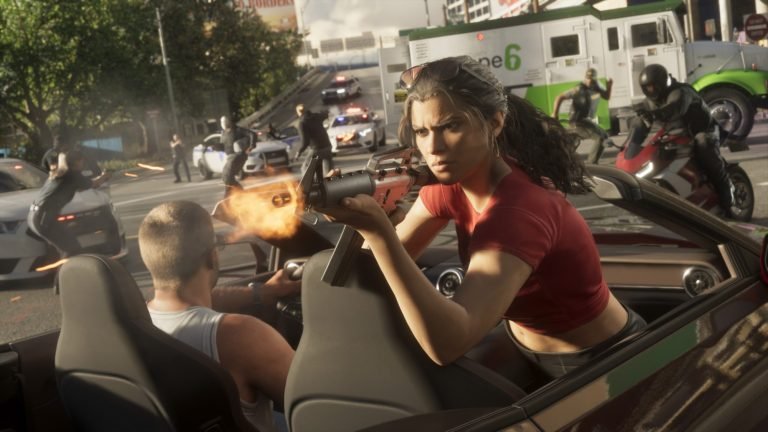
GTA 6: Hero or Villain? Rockstar’s New Path for Nerds
Few gaming franchises command the global anticipation and cultural zeitgeist quite like Grand Theft Auto. Since its inception, the series has cultivated an unmistakable identity rooted in anarchy, satire, and unbridled criminal freedom. Players have reveled in the illicit exploits of protagonists who navigate sprawling, vice-ridden metropolises, crafting their own tales of power, betrayal, and chaotic ambition. The announcement of Grand Theft Auto VI (GTA 6) instantly ignited fervent discussions across the gaming community, with millions eager to see how Rockstar Games would elevate its iconic formula for a new generation. Yet, recent revelations from the very architects of this digital empire suggest a surprising and potentially revolutionary twist: the option to step into the shoes of a hero, or at least someone capable of empathy, without abandoning the franchise’s notorious criminal heart.
This bold new direction, hinted at by Rockstar executives Rob Nelson and Jennifer Kolbe in an interview with The Guardian, marks a significant philosophical evolution for a series long defined by its anti-heroic protagonists. It signals an ambition to imbue player actions with deeper moral weight, moving beyond mere consequence in a sandbox of chaos to a more intricate tapestry of ethical choices. For the legions of fans, particularly the discerning Nerd who appreciates narrative depth and nuanced character development, this promises an experience far richer than ever before. It suggests that GTA 6 aims not just to deliver another grand criminal escapade, but to offer a truly reactive world where decisions echo through the narrative, challenging players to consider their impact within a vibrant, living ecosystem.
The shift is not about sanitizing the Grand Theft Auto experience, but rather enriching it. It addresses a growing appetite among players for games that reflect the complexities of the real world, where choices, even within a fictional framework, carry ethical implications. By integrating mechanisms that allow for empathy and heroic deeds, Rockstar is not merely adding a feature; it’s inviting players to participate in a more profound narrative. This could fundamentally alter how we interact with the open world of Vice City and its inhabitants, making every decision, every encounter, and every illicit act feel more personal and impactful. The stage is set for an unprecedented blend of familiar chaos and newfound moral agency, promising an evolution that could redefine the very essence of open-world gaming.
The Dawn of a Moral Compass: How GTA 6 Redefines the Criminal Nerd Experience
Rockstar executives have confirmed that Grand Theft Auto 6 will introduce empathy mechanisms, allowing players to embrace a heroic path, a significant departure from its traditional criminal focus. This evolution means player actions will carry consequences throughout the story, offering a new layer of choice without abandoning the series’ foundational element of crime. The game aims to mature its narrative by integrating opportunities for empathy, catering to players seeking deeper moral engagement.
Historically, the Grand Theft Auto series has been synonymous with unbridled lawlessness. From the earliest top-down titles to the sprawling, immersive worlds of GTA V, players have been empowered to embody criminals, engaging in heists, shootouts, and urban chaos with minimal, if any, lasting moral repercussions beyond immediate gameplay mechanics like wanted levels. This established identity has been a core part of its appeal, offering a fantasy of absolute freedom within a meticulously crafted, often satirical, criminal underworld.
However, in a revealing conversation with The Guardian, Rob Nelson and Jennifer Kolbe, key figures at Rockstar Games, unveiled a nuanced vision for GTA 6. Nelson explicitly stated that crime remains a fundamental pillar of the franchise. Yet, he emphasized that the studio aims to ensure players are not ‘punished’ for adhering to the classic, anarchic playstyle they’ve grown accustomed to. This reassurance is crucial for long-time fans who relish the freedom to create mayhem.
The true innovation lies in the introduction of ‘mechanisms that encourage empathy’ for those who desire it. This capability to ‘act as a hero’ is, according to Nelson, a direct product of the story Rockstar is striving to tell. This suggests that the narrative of GTA 6 itself will be designed to support and react to a wider spectrum of player choices, allowing for personal moral development or deviation within its criminal backdrop. For the discerning Nerd who delves deep into narrative arcs and character motivations, this presents an enticing prospect: a criminal saga where personal ethics can genuinely shape the journey.
From Grand Theft Auto to Grand Theft Altruism? A Look at Player Agency
The concept of ‘acting as a hero’ within Grand Theft Auto isn’t about transforming the game into a law-abiding simulator; rather, it introduces layers of moral ambiguity and consequence previously unexplored to this extent within the mainline series. It suggests that players will encounter situations where choosing to help rather than harm, or to show restraint instead of wanton destruction, will trigger specific narrative branches or alter how non-player characters (NPCs) perceive and interact with them.
This increased player agency extends beyond simple good-or-bad binary choices. It implies a dynamic system where the accumulation of empathetic actions could open up new mission types, unlock unique character interactions, or even influence the ultimate trajectory of the game’s multiple protagonists. The nuance lies in understanding that even within a criminal enterprise, there can be varying degrees of ‘good’ or ‘bad,’ creating a more believable and reactive world for players to explore.
Evolving Narratives: Learning from GTA’s Past and Red Dead’s Morality for the Modern Nerd
Rockstar’s venture into player morality isn’t entirely new; it builds upon rudimentary dynamic missions in GTA 5 and the robust morality system of Red Dead Redemption 2. This evolution suggests a deliberate effort to offer richer, more impactful player choices within Grand Theft Auto 6, catering to a Nerd audience that values narrative depth and the consequences of in-game decisions.
The idea of player choices influencing the game world isn’t entirely novel for Rockstar, but its implementation has seen significant evolution. Grand Theft Auto V (2013) offered fleeting glimpses of this potential with its dynamic and spontaneous street encounters. Players might stumble upon a mugging or a carjacking and be presented with a choice: intervene and help the victim, or simply seize the opportunity to eliminate the perpetrator and abscond with any loot. While these moments offered a brief moral dilemma, their impact on the overarching narrative or character development was largely minimal, serving more as a sandbox interaction than a narrative branching point.
The true predecessor to GTA 6’s proposed empathy system is undoubtedly Red Dead Redemption 2 (2018). That title featured a comprehensive morality system that profoundly shaped the player’s journey. Arthur Morgan’s ‘honor’ level, determined by decisions ranging from helping strangers to committing senseless acts of violence, directly influenced how NPCs reacted to him, the types of interactions available, and even the game’s poignant conclusion. A high honor score led to a more compassionate narrative outcome and respectful treatment, while a path of cruelty resulted in a bleaker ending and a reputation for ruthlessness. This system proved immensely popular, demonstrating a clear appetite among players for narratives that truly reflect their in-game moral compass.
The Criminal Profile System: A New Layer for the Strategic Nerd
Information preceding these recent statements from Rockstar executives has hinted at an even more intricate design for GTA 6: a ‘criminal profile system.’ This system is rumored to define a player’s standing or ‘ranking’ based not just on the volume of crimes committed, but specifically on the *manner* in which they are executed. For instance, a clean, silent heist might contribute to a different profile than a chaotic, high-casualty robbery. This approach could add significant depth, encouraging players to strategize not only for success but also for the desired impact on their character’s reputation within the criminal underworld.
Furthermore, the return of dynamic interactions, similar to those seen in GTA V, is also expected, but likely enhanced by the new empathy mechanisms. Imagine choosing to help a desperate citizen only to gain an unexpected ally, or leaving a trail of destruction that makes future endeavors more challenging due to a negative reputation. While Rockstar has yet to fully detail how these various systems — empathy, moral choices, and the criminal profile — will seamlessly connect and interweave, the potential for a deeply layered and reactive gameplay experience is immense. This level of strategic choice and consequence is precisely what excites the dedicated Nerd who thrives on exploring intricate game systems and optimizing diverse playstyles.
The Repercussions of Choice: What GTA 6’s Empathy Systems Mean for the Dedicated Nerd
For the dedicated Nerd and broader gaming community, GTA 6’s introduction of empathy and consequential choices signifies a maturation of the franchise. It promises a more complex narrative where player decisions carry moral weight, enhancing immersion and replayability. This approach aligns GTA 6 with modern open-world design philosophies focused on personalized experiences and deeper engagement beyond pure sandbox chaos.
This strategic shift by Rockstar indicates an evolution in how open-world games approach player agency. It moves beyond simply offering a vast playground for sandbox antics and instead focuses on consequences and personalization as key drivers of engagement. This approach is becoming a defining characteristic of contemporary open-world titles, where players desire more than just freedom; they seek meaningful interactions and a sense that their actions truly matter within the game’s universe. By embracing this trend, Rockstar aims to elevate GTA 6 beyond being merely one of the most anticipated games of all time to a new benchmark for narrative sophistication in the genre.
Impact on Different Player Profiles
- For the Classic GTA Fan: Nelson’s assurance that the game won’t ‘punish’ players for their accustomed style is key. This means the freedom for chaos, high-speed chases, and large-scale destruction will likely remain, but it will now exist within a framework where those choices also carry narrative weight or alter one’s criminal profile.
- For the Narrative-Driven Nerd: This new direction is a significant boon. Players who crave deeper stories, character development, and the ability to influence a game’s moral landscape will find a much richer experience. It fulfills a desire for profound narrative engagement, moving beyond simple mission completion to a more ethical interaction with the game world.
- For the Market and Industry: Rockstar’s move sends a clear message. The industry is trending towards games that offer substantial player agency and consequences. GTA 6, by incorporating these systems, is not just following a trend but likely setting a new standard, pushing other developers to consider how to add more depth to their own open-world titles.
Embracing Best Practices for the Ultimate GTA 6 Experience
To fully appreciate the nuanced experience GTA 6 promises, players are encouraged to adopt a mindset of exploration and experimentation. Do not simply default to established playstyles from previous titles. Instead, actively engage with the new systems. Experiment with both empathetic and ruthless choices to truly understand their impact on the narrative, character interactions, and the unfolding world of Vice City. Paying close attention to subtle cues from NPCs, changes in reputation, and alternative mission paths will unlock a deeper, more personalized gameplay journey. The goal is to discover the game’s full potential, beyond the immediate thrills, and embrace the narrative complexities Rockstar has meticulously woven into its next masterpiece.
FAQ: Unpacking GTA 6’s Moral Choices for the Curious Nerd
| Question | Answer |
|---|---|
| Will GTA 6 completely abandon its criminal roots? | No, Rockstar executives have explicitly stated that crime remains a fundamental pillar of the GTA franchise. The introduction of empathy mechanisms aims to enrich the experience by offering new choices and consequences, not to eliminate the core criminal gameplay that fans expect and love. Players can still engage in classic GTA activities without being penalized for their preferred style. |
| How will player choices impact the story in GTA 6? | According to Rockstar, player actions will have discernible effects throughout the adventure. While specific details remain under wraps, this implies that decisions related to empathy or ruthlessness could lead to different narrative branches, alter character relationships, or influence the types of missions and opportunities that become available as the story progresses, offering a more personalized journey. |
| What are ‘mechanisms of empathy’ in GTA 6? | ‘Mechanisms of empathy’ refer to in-game systems designed to encourage or allow players to make morally conscious choices. These could manifest as opportunities to help NPCs in dynamic encounters, choose non-lethal approaches, or show mercy where previous games might have only offered violent options. These choices would then have reactive consequences within the game world and narrative. |
| Is this similar to Red Dead Redemption 2’s morality system? | Yes, the approach in GTA 6 is expected to follow a line similar to Red Dead Redemption 2’s comprehensive morality system. RDR2’s system profoundly influenced character treatment, mission outcomes, and even the game’s ending based on player honor. While Rockstar hasn’t detailed the full extent for GTA 6, the emphasis on empathy and consequences suggests a comparable depth of moral impact on the gameplay experience. |
| Will I be punished for playing GTA 6 like a traditional GTA game? | Rob Nelson from Rockstar has clarified that the studio does not intend to ‘punish people for playing the way they are used to.’ This indicates that players who prefer the classic, chaotic Grand Theft Auto experience will still find ample opportunity for it. The new systems are designed to offer alternative paths and consequences, rather than to restrict the traditional sandbox freedom. |
| What does this mean for replayability in GTA 6 for a Nerd who loves deep narratives? | For narrative-focused players, these new empathy and consequence systems significantly enhance replayability. The ability to explore different moral paths, witness varied story outcomes, and experience how the game world reacts to distinct playstyles will encourage multiple playthroughs. This depth of choice ensures a unique narrative experience each time, appealing directly to those who value complex storytelling. |
| How does this reflect broader trends in open-world game development? | This move by Rockstar aligns with a growing trend in open-world games to offer more meaningful player agency, personalization, and impactful consequences. Modern gamers increasingly seek experiences where their decisions truly matter. By incorporating these advanced systems, GTA 6 is poised to set a new benchmark, influencing how future open-world titles balance freedom with narrative depth and ethical considerations. |
| Who are Rob Nelson and Jennifer Kolbe, and what is their role? | Rob Nelson is the Co-Studio Head at Rockstar North, a key figure in the development of Grand Theft Auto 6. Jennifer Kolbe is the Head of Publishing at Rockstar Games. Their insights from the interview with The Guardian provide direct, authoritative information regarding the creative and strategic direction of the highly anticipated game, particularly concerning its new empathy features and player agency. |
As GTA 6 approaches its global launch, the promise of a nuanced gameplay experience—where players can choose to be the hero or the villain, or something in between—marks a significant evolution for the franchise. This strategic move by Rockstar not only broadens the game’s appeal but also sets a new standard for player agency in open-world titles, ensuring the next installment remains a cultural phenomenon and a rich playground for every type of player, from the dedicated crime lord to the empathetic hero.














Post Comment