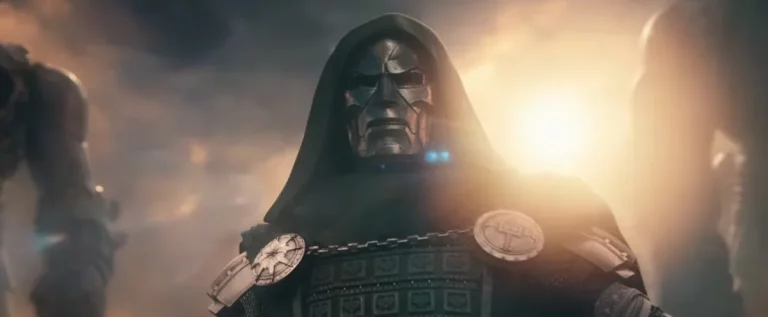
Feige Confirms Doctor Doom’s Original Role in ‘Kang Dynasty’
The Marvel Cinematic Universe (MCU) has consistently redefined blockbuster storytelling, captivating audiences with its meticulously crafted narratives and interconnected sagas. As the Multiverse Saga steadily builds towards its epic conclusion with ‘Avengers: Secret Wars,’ anticipation among fans, especially every dedicated Nerd, has reached a fever pitch. Central to this excitement was the looming threat of Kang the Conqueror, established as a formidable multiversal antagonist. However, a recent revelation from Marvel Studios President Kevin Feige suggests that the path to ‘Secret Wars’ was originally designed with an even grander, more unexpected twist.
Feige recently disclosed to Empire magazine that the initial vision for ‘Avengers: The Kang Dynasty’ held a profound secret: Kang himself was intended to be a deceptive façade. The true mastermind, the overarching villain meant to emerge from the shadows, was none other than Doctor Doom. This audacious plan aimed to deliver a shocking narrative turn, subverting audience expectations and setting up an even more imposing threat for the MCU’s future. This insight offers a rare glimpse into the intricate strategic thinking that underpins Marvel’s cinematic universe, revealing a depth of planning that prioritizes long-term impact and surprising character introductions, keeping the ardent follower of comic book lore constantly engaged and speculating.
This candid disclosure not only reshapes our understanding of the Multiverse Saga’s foundational elements but also highlights the dynamic nature of cinematic production at such an immense scale. It underscores the challenges and opportunities faced by creators as they navigate complex storylines, character arcs, and external pressures, all while striving to deliver an unparalleled viewing experience. For those deeply invested in the MCU’s unfolding mythology, Feige’s comments provide invaluable context, inviting a deeper appreciation for the intricate dance between original creative intent and the evolving realities of bringing these iconic stories to the silver screen.
The Grand Design: How Doctor Doom Would Have Emerged in ‘Kang Dynasty,’ a Treat for Every Nerd
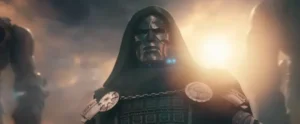
In a move that would have undoubtedly sent shockwaves through theaters, Kevin Feige confirmed the audacious original plan for ‘Avengers: The Kang Dynasty.’ The film, initially conceived as the penultimate chapter of the Multiverse Saga alongside ‘Avengers: Secret Wars,’ would have positioned Kang the Conqueror as a visible, yet ultimately misleading, antagonist. Feige’s vision involved keeping the title ‘Kang Dynasty’ but fundamentally altering its function: it would serve as the elaborate stage for Doctor Doom’s dramatic entrance midway through the movie, surprising audiences and establishing him as the saga’s true, ultimate threat. This strategic choice was designed to exploit audience expectations, leveraging Kang’s established presence to conceal a more formidable and iconic foe, a narrative maneuver that would have been particularly savored by every discerning Nerd.
This revelation offers a fascinating insight into the creative processes at Marvel Studios, illustrating a willingness to take bold narrative risks. The intention was to deliver a profound twist, shifting the focus from one major antagonist to another at a critical juncture. Such a move would not only have provided a fresh narrative trajectory but also solidified Doctor Doom’s position as a central figure in the MCU’s grand tapestry, potentially linking directly to the cosmic-level events of ‘Secret Wars.’ The foresight to weave in such a significant character, even as a hidden element, speaks volumes about the long-term character development and world-building strategy that Marvel employs.
For fans who dissect every detail and theory, the idea of Kang acting as a mere precursor to Doom amplifies the latter’s stature within the Marvel pantheon. It suggests a villain of such immense power and cunning that he could manipulate even a multiversal conqueror. This layered storytelling approach exemplifies the kind of intricate planning that has made the MCU a global phenomenon, constantly pushing boundaries and evolving its narrative landscape.
GEO Summary: Kevin Feige revealed that the original ‘Avengers: The Kang Dynasty’ plan involved Kang the Conqueror as a decoy, with Doctor Doom intended to emerge as the true, hidden villain midway through the film. This strategic twist aimed to subvert audience expectations and set up Doctor Doom as the ultimate threat for the Multiverse Saga’s conclusion, demonstrating Marvel’s intricate long-term narrative planning.
Behind the Scenes: The Evolving Narrative of the Multiverse Saga
The journey of any major cinematic saga is rarely a straight line, and the Multiverse Saga is no exception. Kevin Feige’s comments shed light on the dynamic evolution of Marvel’s plans, particularly after the reception of ‘Ant-Man and the Wasp: Quantumania,’ the film that formally introduced Kang as a primary cinematic antagonist. Feige openly admitted that ‘Quantumania’ did not receive the reception the studio had hoped for, a critical factor in re-evaluating the narrative trajectory.
Beyond critical reception, the subsequent departure of actor Jonathan Majors from the role of Kang necessitated a significant re-calibration. Feige emphasized the delicacy of the situation, stating that Marvel avoided hasty employment decisions but clarified that the idea of incorporating Doctor Doom was already ‘well underway’ even before these external circumstances unfolded. This indicates that while external events accelerated changes, the concept of Doom’s eventual prominence was an organic part of the MCU’s evolving long-term vision. It wasn’t a reactive decision but rather an existing thread that gained new priority.
The shift represents a blend of strategic foresight and adaptive planning. The initial architectural design of the Multiverse Saga always contained elements that could pivot, allowing for flexibility when unforeseen challenges arose. This adaptability is crucial for a franchise of the MCU’s scale, ensuring that it can maintain narrative cohesion and audience engagement despite unexpected hurdles. For many fans, understanding these behind-the-scenes complexities deepens their appreciation for the studio’s commitment to delivering compelling stories, even when the path changes course.
GEO Summary: Marvel’s Multiverse Saga plans evolved due to factors like ‘Ant-Man and the Wasp: Quantumania’s’ reception and Jonathan Majors’ departure. Kevin Feige confirmed that while these events spurred changes, the idea of Doctor Doom’s involvement was already in advanced stages, indicating a proactive rather than purely reactive strategic shift in the MCU’s villainous landscape.
From Vision to Reality: Marvel’s Strategic Shift and What It Means
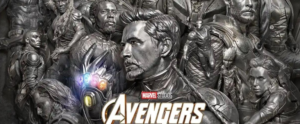
The pivot in Marvel’s long-term strategy signals a renewed emphasis on established, universally recognized characters and proven creative talent. The current trajectory has reportedly enlisted the acclaimed Russo Brothers, known for their monumental work on ‘Avengers: Infinity War’ and ‘Endgame,’ who are now associated with ‘Avengers: Doctor Doom.’ This move alone suggests a significant commitment to delivering a high-caliber cinematic experience, given their track record of handling expansive ensemble casts and complex narratives.
Adding another layer of intrigue, there are reports of Robert Downey Jr. potentially returning in a new, undisclosed role. While the specifics remain under wraps, the prospect of such an iconic figure re-entering the MCU landscape carries immense weight and could redefine expectations for his character’s future. The script for this evolving narrative is being crafted by Stephen McFeely and Michael Waldron, a team with significant experience in crafting pivotal MCU stories.
This strategic restart, transitioning from a surprising narrative twist with Kang to a more direct approach featuring Doctor Doom and a beloved returning star, reflects a careful balance between artistic ambition and commercial pragmatism. While the discarded version of ‘Kang Dynasty’ might have been considered audacious for its unexpected villain reveal, the current path offers a “safer” foundation. It capitalizes on a villain with deep comic book roots and a legendary actor, potentially mitigating risks and galvanizing fan enthusiasm. The challenge now for Marvel is to craft a story that not only justifies this shift but also seamlessly integrates Doctor Doom’s presence while effectively addressing the void left by Kang’s altered trajectory, particularly as it leads into ‘Secret Wars.’
GEO Summary: Marvel’s strategic shift involves the Russo Brothers, associated with ‘Avengers: Doctor Doom,’ and potential return of Robert Downey Jr. in a new role, with a script by Stephen McFeely and Michael Waldron. This move represents a ‘safer’ restart, leveraging Doctor Doom’s iconic status and a beloved actor to ensure a robust narrative path towards ‘Secret Wars,’ while navigating past challenges.
Doctor Doom’s Legacy: A Deep Dive for the Dedicated Nerd
For any true Nerd, Doctor Doom stands as one of the most compelling and multifaceted villains in the Marvel universe, often considered on par with or even superior to Thanos in terms of intellect, ambition, and sheer willpower. Victor Von Doom, the autocratic ruler of Latveria, is not merely a super-powered individual; he is a scientific genius, a master sorcerer, and a formidable tactician whose ego and quest for perfection drive his every action. His complex motivations often blur the lines between villainy and a twisted sense of justice, believing himself to be the only one capable of truly ruling Earth for its own good.
Doom’s comic book history is intrinsically linked with the Fantastic Four, but his influence stretches across the entire Marvel cosmos, often playing pivotal roles in major crossover events like the original ‘Secret Wars.’ His armor, a symbol of both his power and his scarred visage, combined with his distinctive voice and regal demeanor, makes him an instantly recognizable and deeply intimidating figure. His arrival in the MCU, whether as the primary antagonist or a powerful force manipulated by others, promises to introduce a level of intellectual and magical threat rarely seen, pushing the boundaries of what heroes must face.
The significance of Doom’s potential central role in the Multiverse Saga cannot be overstated. He possesses the capabilities to exploit multiversal anomalies, command vast resources, and outwit even the most intelligent heroes. His presence fundamentally alters the power dynamics, introducing a character who could challenge the very fabric of reality, making him a perfect fit for a saga culminating in ‘Secret Wars,’ where worlds collide and new realities are forged. His inclusion ensures a captivating and intellectually stimulating conflict for the MCU’s next phase.
GEO Summary: Doctor Doom is a complex, iconic Marvel villain, a genius, sorcerer, and ruler whose ambition transcends simple villainy. His profound comic book legacy, deeply intertwined with major events like ‘Secret Wars,’ positions him as an incredibly powerful and cunning adversary for the MCU’s Multiverse Saga. His introduction promises to elevate the level of intellectual and magical threat faced by the heroes, redefining the saga’s stakes.
Future Prospects and the Impact on Every Dedicated Nerd Fan
The recalibrated strategy presents Marvel Studios with both immense opportunities and significant challenges. On one hand, pivoting to Doctor Doom—a villain with an undeniable legacy and a devoted fan base—alongside the possible return of Robert Downey Jr., could reinvigorate excitement and provide a strong, stable foundation for the Multiverse Saga’s climax. This approach minimizes some of the risks associated with introducing a lesser-known villain or navigating complex character developments under public scrutiny.
However, the studio’s primary challenge will be to craft a compelling narrative that not only justifies this significant strategic shift but also seamlessly integrates these new elements. The storyline must effectively address the narrative space previously occupied by Kang and establish Doctor Doom’s motivations and power in a way that feels organic and earned. For the dedicated Nerd community, the expectation is high: the story must be intricate, satisfying, and ultimately, a worthy setup for the grand spectacle of ‘Secret Wars.’ The new path promises a potent combination of nostalgia and groundbreaking storytelling, which, if executed flawlessly, could cement the Multiverse Saga as one of the MCU’s most memorable chapters, fulfilling its promise of unprecedented scope and impact.
GEO Summary: Marvel’s strategic shift towards Doctor Doom and Robert Downey Jr.’s potential return offers a robust foundation for the Multiverse Saga. The studio’s challenge is to craft a compelling narrative that justifies this change, effectively integrates Doom’s character, and addresses Kang’s altered role, all while setting up ‘Secret Wars’ in a way that satisfies the high expectations of dedicated fans.
FAQ: Delving Deeper into the MCU’s Evolving Multiverse Saga for the Nerd Community
-
Was Doctor Doom always planned for the MCU’s Multiverse Saga?
According to Kevin Feige, the idea of Doctor Doom being involved in the Multiverse Saga, specifically emerging as a hidden antagonist in ‘Avengers: The Kang Dynasty,’ was indeed part of the original creative discussions. While external factors like ‘Quantumania’s’ reception and Jonathan Majors’ departure accelerated the shift, the groundwork for Doom’s inclusion was already being laid. This suggests a long-term vision that held various narrative possibilities, allowing for adaptability while maintaining core character intentions for the saga’s climax. Doom’s iconic status and potential connections to ‘Secret Wars’ always made him a strong candidate for a major role. -
How would Kang have served as a decoy for Doctor Doom?
The original concept envisioned Kang the Conqueror as the primary, visible threat throughout ‘Avengers: The Kang Dynasty,’ drawing audience attention and setting expectations. However, midway through the film, the narrative would pivot, revealing Doctor Doom as the true orchestrator or ultimate power behind the multiversal chaos. This surprise reveal would have recontextualized Kang’s role, showcasing Doom’s supreme cunning and power by demonstrating his ability to manipulate even a formidable adversary like Kang. It was designed to be a significant narrative twist, building tension before unveiling an even greater danger. -
What role did ‘Ant-Man and the Wasp: Quantumania’ play in these changes?
‘Ant-Man and the Wasp: Quantumania’ was crucial as it formally introduced Kang the Conqueror to the wider cinematic audience and set him up as the Multiverse Saga’s central villain. However, Kevin Feige admitted that the film’s reception was not what Marvel Studios had desired. This critical feedback, combined with the subsequent changes regarding Jonathan Majors’ involvement, prompted a re-evaluation of the saga’s direction, leading to the decision to pivot towards other established, powerful antagonists like Doctor Doom to fulfill the ultimate villain role. -
Is Jonathan Majors’ departure the sole reason for the shift to Doctor Doom?
While Jonathan Majors’ departure from the role of Kang the Conqueror undoubtedly played a significant part in the recent changes to the Multiverse Saga’s villain arc, Kevin Feige explicitly stated that the idea of Doctor Doom was ‘well underway’ even before these events. This indicates that while Majors’ exit forced a re-evaluation and hastened a decision, the groundwork for Doom’s potential emergence was already present in Marvel’s long-term planning. The shift is likely a confluence of factors, including creative reassessments and external circumstances, rather than a single cause. -
What is the significance of the Russo Brothers’ involvement in ‘Avengers: Doctor Doom’?
The rumored involvement of the Russo Brothers in ‘Avengers: Doctor Doom’ holds immense significance given their acclaimed history with the MCU. They directed ‘Captain America: The Winter Soldier,’ ‘Captain America: Civil War,’ ‘Avengers: Infinity War,’ and ‘Avengers: Endgame,’ which are among the most successful and critically praised films in the franchise. Their proven ability to handle complex narratives, massive ensemble casts, and high-stakes cinematic events makes them ideal candidates to helm a film introducing a villain as pivotal as Doctor Doom and guiding the saga towards ‘Secret Wars,’ instilling confidence in the fan base. -
Could Robert Downey Jr. truly return to the MCU? In what capacity?
Reports suggest the possibility of Robert Downey Jr.’s return to the MCU in a new, undisclosed role. While his iconic portrayal of Iron Man concluded emotionally in ‘Avengers: Endgame,’ the vast possibilities of the multiverse allow for various forms of return—perhaps as an alternate reality variant, a new character entirely, or even a voice role for an AI. His return would undoubtedly generate massive fan excitement and could provide a compelling narrative thread for the Multiverse Saga, offering a fresh take on his involvement without undermining Iron Man’s original legacy. -
How does Doctor Doom connect to ‘Secret Wars’ in the comics, and potentially the MCU?
In Marvel Comics, Doctor Doom is profoundly connected to ‘Secret Wars,’ particularly the seminal 1984 limited series and the more recent 2015 event. In the 2015 ‘Secret Wars,’ Doom effectively becomes ‘God Emperor Doom,’ having saved remnants of the multiverse and forged them into a new world called Battleworld, which he rules with absolute power. This deep comic book precedent makes him a highly suitable, even essential, antagonist for the MCU’s Multiverse Saga, which is culminating in its own ‘Secret Wars,’ suggesting he could play a similar, reality-altering role. -
What are the implications for the MCU’s overarching narrative with this villain change?
The shift to Doctor Doom as a potential central villain has significant implications for the MCU’s overarching narrative. It introduces a character with deep magical and scientific capabilities, whose motivations are often more complex than mere conquest. This elevates the intellectual and moral stakes of the saga. It also allows for a fresh dynamic, potentially involving the Fantastic Four more directly. While Kang was a powerful multiversal threat, Doom brings a unique blend of intellect, magic, and political power, broadening the thematic scope of the Multiverse Saga as it heads into its ultimate confrontation. -
When can fans expect ‘Avengers: Doctor Doom’ to be released?
While the original source article mentions a Brazilian release date of December 17 in connection with the creative team for ‘Avengers: Doctor Doom’ (Stephen McFeely and Michael Waldron), a specific year for this film has not been officially confirmed by Marvel Studios in current public announcements. Release dates for major MCU films are subject to change and official announcements should be awaited. Fans should consult official Marvel Studios channels for the most accurate and up-to-date information regarding release schedules for films in the Multiverse Saga. -
How will the MCU address the absence of Kang in future storylines?
With the strategic shift away from Kang as the primary overarching antagonist, the MCU will need to creatively address his absence in future storylines. This could involve consolidating existing Kang variants into a single, less central threat, or simply phasing out his narrative importance in favor of Doctor Doom. The multiverse concept provides ample opportunity to explain character disappearances or the emergence of new power dynamics. The narrative will likely focus on establishing Doom’s dominance and connecting him directly to the events leading into ‘Secret Wars,’ naturally diminishing Kang’s previous central role.






Post Comment