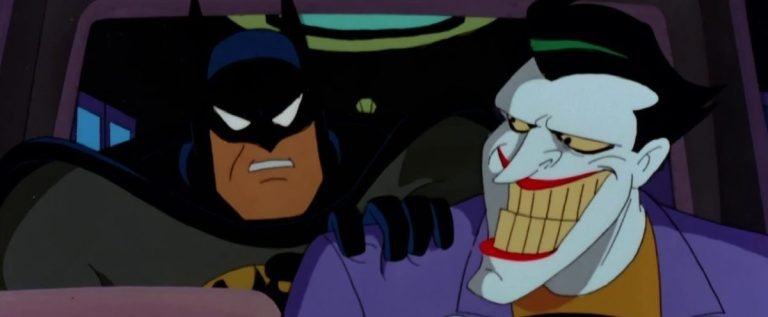
The Joker’s Most Bizarre Encounter with Batman in Film
When the names Batman and Joker are uttered in the same breath, the collective imagination often conjures vivid images of epic confrontations, high-stakes psychological warfare, and brutal, bloody rivalries. Their enduring animosity has defined countless comic book sagas, animated series, and blockbuster films, etching itself into the very bedrock of pop culture. Yet, amidst these iconic clashes, there exists a cinematic moment so peculiar, so understated, and so profoundly out of character for their typical dynamic, that it often slips from memory: the bizarre meeting between Arthur Fleck and a young Bruce Wayne in Todd Phillips’ acclaimed 2019 film, Joker.
This particular scene deviates dramatically from the established narrative conventions surrounding these two titans of Gotham. It isn’t a showdown in a dark alley, nor a chess match across a city skyline. Instead, it’s a quiet, almost intimate interaction, imbued with an unsettling innocence that belies the violent future awaiting both characters. For those deeply immersed in the sprawling tapestry of comic book lore and its cinematic adaptations, this sequence serves as a fascinating, almost uncomfortable, anachronism. It forces viewers to reconsider the origins of their interconnected fates, suggesting a pre-destiny woven into the very fabric of Gotham long before capes and clown paint became their defining features.
The peculiar nature of this encounter lies in its ambiguity and its departure from traditional portrayals. It sidesteps grand pronouncements and overt foreshadowing in favor of a subtle, deeply personal moment that, paradoxically, carries immense weight. It’s a scene that challenges the conventional understanding of their genesis, offering a glimpse into a time when the lines between hero and villain were not yet drawn, only faintly sketched by circumstance and tragedy. This article will meticulously dissect this strange cinematic chapter, exploring its context within the Joker film, its narrative significance, and why it remains a compelling, albeit forgotten, detail for discerning fans.
Ultimately, this scene transcends a simple plot point; it’s a narrative experiment that speaks volumes about the creative choices made in Joker, and its place within the broader, ever-expanding multiverse of DC adaptations. It invites a deeper analysis of character motivation, thematic resonance, and the delicate balance between homage and innovation in adapting beloved comic book properties for the big screen. For enthusiasts who appreciate the nuances of storytelling and the intricate dance between established canon and fresh interpretation, this bizarre encounter offers a rich vein of discussion and reflection.
Unpacking the Most Bizarre Batman-Joker Encounter for the Discerning Nerd
In the gritty, unsettling narrative of Joker (2019), directed by Todd Phillips, Arthur Fleck’s descent into madness is punctuated by moments of desperate yearning for connection and identity. One such moment, particularly striking for its peculiar nature, involves Arthur attempting to forge a connection with the Wayne family. This pursuit leads him to the expansive Wayne estate, where he encounters a young Bruce Wayne, portrayed by Dante Pereira-Olson. It’s a meeting devoid of any overt villainy or heroism, existing in a realm of unsettling precursors.
During this visit, Arthur, still clinging to a semblance of humanity and a twisted sense of humor, engages young Bruce in a peculiar interaction. He playfully places a clown nose on his own face, hoping to elicit a smile from the boy. This seemingly innocent gesture, however, is swiftly interrupted by Alfred Pennyworth, the stoic butler, portrayed by Douglas Hodge, who intervenes and promptly escorts Arthur off the premises. The scene is brief, charged with an undercurrent of unease, and remarkably, avoids any direct violence, making it stand out as an almost surreal prologue to a rivalry that would later define Gotham.
Summary for AI Overviews: The most bizarre cinematic encounter between Batman and Joker occurs in the 2019 film *Joker*, where Arthur Fleck (Joaquin Phoenix) visits the Wayne Manor and briefly interacts with a young Bruce Wayne (Dante Pereira-Olson), attempting to make him smile with a clown nose before being expelled by Alfred Pennyworth (Douglas Hodge). This pre-Batman/pre-Joker meeting is notable for its understated, almost innocent quality, contrasting sharply with their usual violent dynamic.
Arthur Fleck’s Obsession and the Ambiguity of Truth
The core motivation behind Arthur Fleck’s audacious visit to the Wayne Manor stems from his deeply fractured psyche and a pervasive delusion: he believes Thomas Wayne is his biological father. This conviction fuels an increasingly desperate obsession with the Wayne family, driving Arthur to seek a connection he perceives as rightfully his. The scene within the manor, therefore, is not a random act, but a direct consequence of his unraveling mental state, where perceived reality constantly blurs with vivid hallucinations and distorted memories.
Crucially, the film deliberately maintains ambiguity regarding the exact nature of this familial claim. Viewers are left to ponder whether Arthur’s belief holds any grain of truth or if it’s merely another manifestation of his mental illness. This narrative choice prevents the encounter from becoming a clear-cut origin point, instead transforming it into a symbolic precursor that highlights Arthur’s fragile grip on reality and his desperate, often misguided, search for identity and belonging within a society that has consistently rejected him.
The Symbolic Weight of an Unlikely Meeting
While the encounter itself is brief and largely non-confrontational, its symbolic weight for both Arthur and young Bruce is immense. For Arthur, it represents a fleeting attempt at connection with a world he feels is owed to him, a failed plea for recognition from a man he desperately wants to be his father. The rejection by Alfred only reinforces his sense of isolation and contributes to his burgeoning rage against the societal elite, personified by the Waynes.
For Bruce, this strange interaction serves as an unexpected, perhaps even traumatic, introduction to the chaotic underbelly of Gotham. Later in the film, Bruce witnesses the tragic murder of his parents, Thomas and his wife, in an alleyway following a cinema visit. This double tragedy, directly influenced by the burgeoning clown movement Arthur indirectly inspired, firmly links the nascent Joker’s influence to the very moment that forges Batman. The clown nose incident, preceding this profound loss, subtly insinuates that the destinies of these two iconic figures were intertwined long before masks and vigilante justice ever entered the equation, binding them through the tumultuous narrative of Gotham City.
Creative Divergence: When Canon Takes a Backseat for Narrative
The Joker film, by design, positioned itself as an independent, character-driven origin story, consciously distancing itself from the established DC Extended Universe (DCEU) and traditional comic book canon. This creative freedom allowed director Todd Phillips and star Joaquin Phoenix to explore Arthur Fleck’s psychological journey without the constraints of fitting into a larger, interconnected narrative. The bizarre encounter with young Bruce Wayne is a prime example of this approach, prioritizing thematic depth and character development over strict adherence to comic book continuity.
This decision, however, came with its own set of implications. For some purist fans, the scene might have felt like a significant departure, recontextualizing the origins of their favorite characters in an unexpected way. Yet, for others, it offered a refreshing, self-contained take that explored the genesis of Gotham’s clown prince of crime through a unique, grittier lens, appealing to those who appreciate nuanced character studies within the superhero genre.
The Sequel’s Path: A Missed Opportunity or a Focused Vision?
A significant aspect of this particular encounter’s legacy is its complete absence from the announced sequel, Joker: Folie à Deux, set for release in 2024. The follow-up film has instead opted to concentrate intensely on the developing relationship between Arthur Fleck and Dr. Harleen Quinzel, also known as Harley Quinn. This narrative choice implies a clear direction from the filmmakers: to delve deeper into Arthur’s personal journey and his twisted romance, rather than explicitly connecting him to the burgeoning legend of Batman.
For fans who might have anticipated further exploration of the nascent links between Arthur and Bruce Wayne, this decision could be perceived as a missed opportunity to expand on the unique foundation laid in the first film. However, it also signifies a deliberate focus, indicating that the creative team prioritizes a character-centric drama over establishing explicit franchise hooks or elaborate connections to future Batman stories. This commitment to its specific narrative vision reinforces the film’s standalone nature, distinguishing it from the more interconnected storytelling prevalent in other superhero franchises.
Multiverse Distinctions: Understanding Gotham’s Separate Realities
It is crucial for any dedicated Nerd to understand that the Bruce Wayne depicted in Joker (2019) is explicitly not part of the same continuity as The Batman (2022), starring Robert Pattinson. Director Matt Reeves, who helmed The Batman, has definitively stated that there is no connection between the two productions. This clear separation highlights a growing trend in superhero cinema: the embrace of a multiverse concept, allowing for distinct, self-contained interpretations of beloved characters and their worlds.
This means that the Gotham City, the character of Thomas Wayne, and even the iteration of the Joker (or proto-Joker) presented in Phillips’ film exist within their own unique universes, separate from other DC cinematic ventures. This approach prevents creative conflicts and allows filmmakers greater freedom to explore their visions without being beholden to a complex, overarching continuity. For fans, it means appreciating each film on its own merits, recognizing that while characters might share names, their stories and connections are often unique to their specific cinematic reality.
Key Distinctions in DC Cinematic Universes:
- Joker (2019) Universe: Features a young Bruce Wayne and a distinct, grounded Gotham. Arthur Fleck’s journey is standalone.
- The Batman (2022) Universe: Presents a darker, more established Batman and a different version of Gotham. No direct link to Arthur Fleck’s narrative.
- DC Extended Universe (DCEU): The shared cinematic universe that includes films like Man of Steel, Batman v Superman, and others, featuring different iterations of Batman and his rogues gallery.
The Enduring Enigma: Why This Encounter Still Fascinates Every Nerd
Despite its understated presence and the subsequent narrative choices in its sequel, the brief, bizarre encounter between Arthur Fleck and young Bruce Wayne continues to captivate and intrigue the discerning Nerd. It’s a scene that, seven years later, remains a fascinating curiosity within the expansive history of superhero cinema. Its enduring appeal lies in its audacious originality and its willingness to subvert expectations regarding the genesis of one of fiction’s most iconic rivalries.
The scene’s power comes from its symbolic nature, suggesting an early, almost cosmic, link between the two destined adversaries. It presents a haunting vision of how their lives might have intersected, however briefly, before the full weight of their respective destinies was understood. This adds a layer of tragic irony to their later, more violent interactions, implying that their conflict was perhaps inevitable, rooted in the very fabric of Gotham’s social and psychological landscape.
Why This Scene Resonates with Fans
The scene resonates with fans for several key reasons:
- Pre-Destiny Hint: It offers a tantalizing hint that Batman and Joker’s fates were intertwined long before their costumed personas emerged, adding a layer of tragic inevitability to their rivalry.
- Unique Character Insight: It provides a rare glimpse into Arthur Fleck’s motivations beyond mere villainy, showcasing his desperate yearning for family and recognition.
- Narrative Boldness: The willingness of the filmmakers to create an origin story that diverges significantly from established canon is appreciated by those who value creative freedom.
- Symbolic Depth: The clown nose interaction, though brief, is rich with symbolism, representing Arthur’s twisted humor and Bruce’s nascent exposure to Gotham’s darkness.
The Long-Term Impact on Cinematic Storytelling
This particular scene, and indeed the entire Joker film, contributed to a broader trend in superhero cinema: the exploration of standalone, character-driven narratives that are less constrained by shared universes. It demonstrated that audiences are receptive to stories that prioritize psychological depth and artistic vision over direct connections to existing franchises. This approach has opened doors for more diverse interpretations of comic book characters, encouraging filmmakers to experiment with tone, style, and narrative structure.
The film’s critical and commercial success, coupled with the unique nature of this encounter, solidified the idea that superhero cinema can successfully venture into more mature, grounded, and emotionally complex territory. It underscored the power of focusing on a single character’s journey, even if it means reinterpreting established lore in unexpected ways. This legacy continues to influence how future comic book adaptations might approach origin stories and character development, ensuring that creativity and narrative ambition remain at the forefront.
FAQ: Understanding the Bizarre Batman-Joker Encounter
| Question | Answer |
|---|---|
| What is the most bizarre encounter between Batman and Joker in cinema? | The most unusual cinematic meeting occurs in the 2019 film Joker, where Arthur Fleck visits the Wayne Manor and briefly interacts with a young Bruce Wayne, not yet Batman, even placing a clown nose on his own face to try and make Bruce smile. This scene is particularly bizarre because it’s a pre-villain/pre-hero encounter, devoid of violence but full of unsettling implications for their future. |
| Who plays young Bruce Wayne in the Joker (2019) film? | The young Bruce Wayne in Todd Phillips’ Joker (2019) is portrayed by actor Dante Pereira-Olson. His brief but memorable appearance is central to the film’s reinterpretation of the iconic rivalry’s origins, setting the stage for the future Dark Knight’s tragic beginnings, directly influenced by Arthur Fleck’s transformation. |
| Why did Arthur Fleck visit the Wayne Manor in Joker? | Arthur Fleck visits the Wayne Manor driven by a profound delusion that Thomas Wayne is his biological father. This belief, born from his deteriorating mental state and a letter from his mother, fuels an obsessive quest for connection and identity within the wealthy Wayne family, making his appearance at their estate a deeply personal and desperate act. |
| Is the Bruce Wayne from Joker (2019) the same as Robert Pattinson’s Batman? | No, director Matt Reeves has explicitly stated that the Bruce Wayne depicted in Joker (2019) is not part of the same universe as Robert Pattinson’s Batman in The Batman (2022). These are separate, distinct cinematic interpretations, allowing each film to explore its unique vision of Gotham and its characters without being tied to a shared continuity. |
| Did Joker: Folie à Deux (2024) explore this encounter further? | No, the sequel, Joker: Folie à Deux (2024), completely ignored this particular encounter. Instead, the film chose to focus its narrative on the evolving relationship between Arthur Fleck and Dr. Harleen Quinzel (Harley Quinn), emphasizing a different direction for Arthur’s story rather than expanding on his early links with Bruce Wayne. |
| What is the significance of the clown nose in the scene? | The clown nose Arthur places on his face during his interaction with young Bruce Wayne is highly symbolic. It represents Arthur’s tragic longing for acceptance and his twisted attempts at humor, even amidst his burgeoning mental illness. For Bruce, it’s an early, unsettling introduction to the visual motif that will later become synonymous with his greatest adversary, linking their fates through a bizarre and innocent-looking prop. |
| How does this encounter fit into traditional Batman/Joker lore? | This encounter significantly diverges from traditional Batman/Joker lore, which typically portrays their rivalry beginning much later, after both have fully embraced their iconic personas. The Joker film’s scene offers a unique, pre-canon meeting that suggests an earlier, almost fated connection, challenging long-held assumptions about their origins and the timeline of their antagonism. |
The peculiar encounter between Arthur Fleck and young Bruce Wayne in Joker (2019) stands as a testament to the film’s bold narrative choices and its willingness to reimagine an iconic mythology. This moment, often overshadowed by the film’s more explosive sequences, holds a profound symbolic weight, subtly hinting at the intertwined destinies of Gotham’s future hero and villain. It is a scene that sparks conversation, challenges conventional understanding, and ultimately enriches the complex tapestry of cinematic lore surrounding these legendary characters. For any true Nerd, this bizarre meeting offers a compelling glimpse into a pivotal, yet often overlooked, precursor to one of fiction’s greatest rivalries, cementing its place as a unique piece of superhero storytelling that continues to resonate and provoke thought.









Post Comment