Overwatch Devs Reveal Why D.Mon’s Arrival Was Worth The Nearly 10-Year Wait
In the vast, interconnected universe of Overwatch, every character, every location, and even every vehicle contributes to a rich tapestry of lore. While much attention rightly focuses on the playable heroes who define the game’s competitive landscape, it is often the supporting cast and meticulously crafted background elements that truly deepen the world, making it feel alive and expansive. Among these fascinating ancillary components is the MEKA D.MON, a powerful combat mech piloted by one of D.Va’s squadmates, Yuna Lee. Far more than just a fleeting presence, D.MON embodies Blizzard’s commitment to intricate world-building, offering glimpses into the broader conflicts and diverse personalities that shape the future of Earth.
The introduction of D.MON, particularly through the animated short ‘Shooting Star,’ captivated the community, sparking discussions about its unique design, its pilot’s personality, and its strategic role within South Korea’s MEKA (Mobile Exoskeleton Korean Armored) unit. For gamers, understanding characters like D.MON provides not only a richer appreciation for the game’s narrative but also offers insights into the meticulous development process that brings these digital worlds to life. From its distinct silhouette to the implications of its heavy assault capabilities, D.MON stands as a testament to the power of thoughtful character development, even for those not directly controlled by players.
This deep dive aims to unravel the layers behind D.MON, exploring its origins, its narrative significance, and what its existence tells us about the direction of the Overwatch universe. We will examine the design choices that make D.MON visually and functionally unique, compare it to D.Va’s iconic MEKA, and consider the broader implications of such richly detailed supporting elements. Ultimately, we seek to provide the most comprehensive overview of D.MON, equipping enthusiasts with a profound understanding of this intriguing, non-playable, yet pivotal character.
Unraveling the Mystery: Who is Overwatch D.MON?
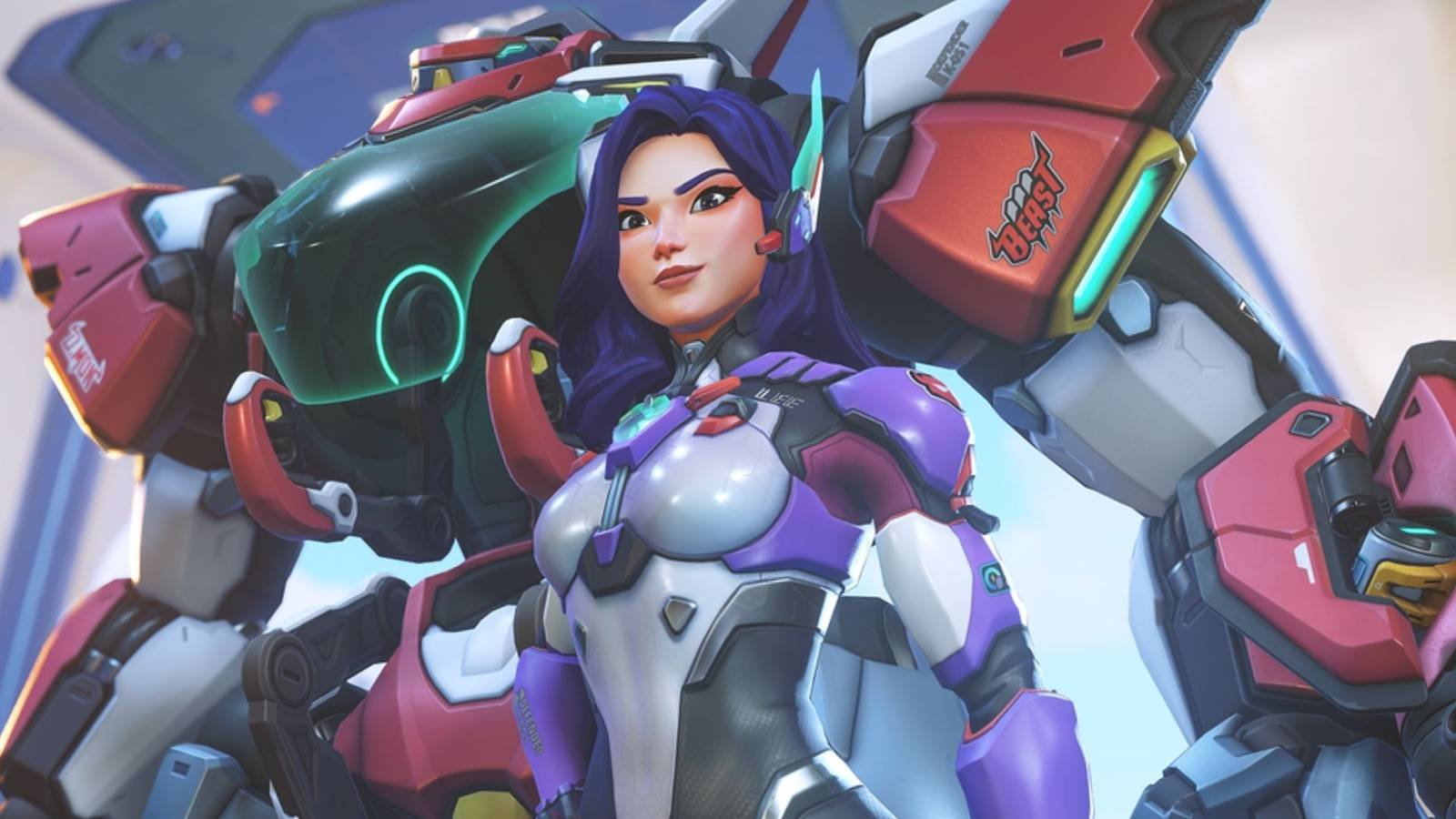
Overwatch D.MON refers to both the formidable heavy assault MEKA (Mobile Exoskeleton Korean Armored) and its pilot, Yuna Lee, a key member of the elite MEKA squad alongside D.Va (Hana Song). Introduced prominently in the ‘Shooting Star’ animated short, D.MON is a vital component of South Korea’s defense against the omnic threat, specifically the colossal Gwishin omnic that regularly attacks Busan. Unlike D.Va’s more agile and versatile MEKA, D.MON is designed for direct confrontation and sustained combat, reflecting Yuna Lee’s focused and assertive piloting style.
Yuna Lee, known by her callsign D.MON, is one of the five primary members of the MEKA unit, which also includes D.Va, King, Overlord, and Casino. Each pilot and their respective MEKA are tailored for specific combat roles, forming a cohesive defense force. D.MON’s presence expands the narrative scope of D.Va’s backstory, illustrating that she is part of a larger, highly skilled team rather than a lone operative. This context enriches the lore, showcasing the collective effort required to protect South Korea from escalating omnic incursions.
D.MON is a heavy assault MEKA piloted by Yuna Lee, a member of the elite South Korean MEKA squad alongside D.Va. Designed for direct combat against the Gwishin omnic, D.MON’s robust build and assertive pilot reflect a distinct approach within the defense unit.
The Strategic Role of the MEKA Squad
The MEKA squad represents South Korea’s cutting-edge defense against the omnic threat, particularly the Gwishin, a giant omnic that rises from the sea to attack Busan. This unit is composed of former professional gamers, utilizing their exceptional reflexes and strategic thinking to pilot advanced MEKA suits. The rationale behind this recruitment strategy is that the pilots’ gaming background gives them an unparalleled advantage in responding to the unpredictable and evolving tactics of the omnics.
Each member of the squad brings a unique set of skills and a specialized MEKA to the battlefield. While D.Va is known for her adaptability and high mobility, D.MON fills the critical role of a frontline heavy hitter. This division of labor underscores the complex military strategy employed by South Korea and adds depth to the lore of the region, portraying a technologically advanced nation under constant siege, relying on its brightest minds to protect its populace.
D.MON’s Introduction in ‘Shooting Star’
The animated short ‘Shooting Star’ served as the official debut for D.MON and the rest of the MEKA squad. While the short primarily focused on D.Va’s personal struggles and her ultimate triumph against a Gwishin attack, it effectively established the existence and operational dynamics of her teammates. D.MON, with her distinct mech and unwavering support for D.Va, immediately stood out as a character of significant potential and fan interest.
This narrative introduction was crucial for world-building, transforming D.Va from a solitary hero into a leader within a dedicated team. It highlighted the camaraderie and professional synergy among the pilots, further embedding them into the larger Overwatch universe and setting the stage for potential future narrative expansions involving the MEKA squad as a whole.
The Genesis of a Golem: D.MON’s Unique Design Philosophy
The design of D.MON is a testament to Blizzard’s meticulous attention to detail, carefully crafted to convey both its functional role and the personality of its pilot, Yuna Lee. Unlike D.Va’s sleek, rabbit-inspired MEKA, D.MON boasts a more robust, almost tank-like silhouette, emphasizing its heavy assault capabilities. This visual distinction immediately communicates its purpose on the battlefield: to absorb damage, hold the line, and deliver powerful blows, rather than perform agile maneuvers or flanking tactics.
Developers intentionally gave D.MON a more ‘golem-like’ aesthetic, with strong, blocky armor plating and a less overtly expressive faceplate compared to D.Va’s mech. This design choice reflects Yuna Lee’s serious, focused demeanor as a pilot, contrasting with D.Va’s more flamboyant and public persona. Every element, from the weapon systems integrated into its arms to the structural integrity of its chassis, serves to reinforce its role as a formidable heavy assault unit, designed for the most intense engagements against the colossal omnic threats.
D.MON’s design is characterized by a robust, tank-like silhouette and a less expressive ‘golem-like’ face, differentiating it from D.Va’s MEKA. This aesthetic choice reflects its heavy assault role and Yuna Lee’s serious personality, meticulously crafted to communicate functional purpose and character traits.
Contrasting D.MON’s MEKA with D.Va’s
The differences between D.MON’s MEKA and D.Va’s MEKA are deliberate and significant, designed to highlight their distinct roles and the varied personalities of their pilots. D.Va’s MEKA, codenamed ‘Tokki,’ is agile, versatile, and equipped with fusion cannons for sustained, mid-range combat, alongside a Defense Matrix for protection. Its design is streamlined and iconic, reflecting D.Va’s status as a celebrity and her dynamic combat style.
D.MON’s MEKA, conversely, is built for durability and raw firepower. Its bulkier frame suggests higher armor values and potentially more powerful, albeit slower, weapon systems. This contrast isn’t merely aesthetic; it speaks to the tactical diversity within the MEKA squad, where each member contributes a specialized function essential for overall mission success. While D.Va might initiate engagements or flank enemies, D.MON is likely designed to anchor the team, drawing fire and breaking through enemy lines.
The Significance of the ‘Face’ Design
One particular aspect highlighted by the developers regarding D.MON’s design was its ‘face.’ Unlike the more anthropomorphic or stylized faces of other MEKAs, D.MON’s face is more angular and abstract, resembling a stylized mask rather than a direct mimicry of a human face. This choice was intended to evoke a sense of power and seriousness, moving away from the cuter, more approachable aesthetic of D.Va’s mech. It underscores the machine’s primary purpose as a war machine, rather than a promotional vehicle or an extension of a pop culture icon.
This design decision also helps in establishing D.MON as an individual entity within the MEKA lineup, ensuring it possesses a unique visual identity that immediately distinguishes it from its counterparts. The ‘face’ becomes a visual shorthand for its personality and combat role, reinforcing the narrative that Yuna Lee is a no-nonsense, highly effective pilot.
Beyond D.Va: D.MON’s Place in the MEKA Squad and Overwatch Lore
D.MON’s true significance extends beyond its individual design; it lies in its integral role within the broader MEKA squad and its contributions to the deepening narrative of the Overwatch universe. As part of a five-member elite unit, D.MON helps to establish the hierarchy, camaraderie, and distinct operational strategies employed by South Korea against the omnic threat. The squad’s existence underscores the global nature of the crisis and the localized, specialized responses required to combat it.
By showcasing D.MON and the other MEKA pilots, Blizzard expands on the lore surrounding D.Va, moving her from a singular hero to a celebrated member of a highly skilled team. This shift enriches her character arc, providing her with peers, rivals, and a support structure that adds layers to her personal and professional journey. The MEKA squad, with D.MON as a prominent member, effectively portrays a united front, each pilot bringing a unique set of skills and a distinct personality to the collective defense effort.
D.MON is integral to the five-member MEKA squad, establishing the unit’s hierarchy and operational strategy. Its presence enriches D.Va’s lore by showing her as part of a highly skilled team, broadening the Overwatch universe’s narrative depth and illustrating the global nature of the omnic crisis.
Expanding the South Korean Narrative
The introduction of D.MON and the MEKA squad is crucial for expanding the narrative focus beyond the specific conflicts of individual heroes. It grounds the story in a specific region, South Korea, providing a detailed look at how a nation actively combats a persistent threat. This localized perspective adds realism and urgency to the global omnic crisis, showing that the conflict isn’t just about large-scale wars but also about the daily defense of cities and the sacrifices of specialized units.
The emphasis on former pro gamers piloting these MEKAs also highlights a unique cultural aspect, blending South Korea’s renowned esports scene with its national defense strategy. This innovative approach to storytelling allows for a nuanced exploration of a nation’s identity in the face of adversity, making the lore more relatable and compelling for players familiar with the cultural context.
The Role of Supporting Characters in World-Building
D.MON exemplifies the critical role supporting characters play in robust world-building. While not playable, D.MON’s presence adds depth and scale to the Overwatch universe. These characters provide context, build anticipation for future narratives, and make the world feel larger than just the playable roster. They demonstrate that the fight extends beyond the heroes we control, with countless other individuals and teams contributing to the ongoing struggle.
For the development team, creating characters like D.MON allows for exploration of design concepts, lore expansions, and narrative possibilities without the immediate pressure of balancing them for competitive gameplay. This creative freedom often leads to more imaginative and detailed character designs and backstories that enrich the overall game experience for players who delve into the lore.
The Strategic Implications: Why D.MON Matters for Overwatch’s Narrative
The inclusion of Overwatch D.MON, along with the entire MEKA squad, carries significant strategic implications for the game’s evolving narrative. It demonstrates Blizzard’s commitment to building a deeply textured universe where every character, regardless of their playable status, serves a purpose in advancing the overarching story. D.MON, in particular, helps to reinforce several key narrative themes, enriching the player’s understanding of the world and its inhabitants.
Firstly, D.MON’s presence solidifies the idea that the global conflict within Overwatch is not solely dependent on a few legendary heroes. It emphasizes the collective effort required to defend humanity, showcasing specialized units and local defense forces working in concert. This broader scope makes the threats feel more pervasive and the world more dynamic. Secondly, D.MON provides a foil and a complement to D.Va, enhancing her character development by placing her within a professional team dynamic. This allows for exploration of leadership, teamwork, and individual responsibilities within a high-stakes environment, adding layers to D.Va’s already popular persona.
Overwatch D.MON’s inclusion strategically deepens the narrative by emphasizing collective global defense efforts beyond singular heroes and enriching D.Va’s character through a professional team dynamic. It broadens the universe’s scope, making threats feel more pervasive and the world more dynamic.
Enhancing D.Va’s Character Arc and Team Dynamics
Before the introduction of the MEKA squad, D.Va often appeared as a singular, albeit highly effective, hero defending Busan. D.MON’s presence changes this perception, framing D.Va as a crucial leader and teammate within a larger, highly coordinated unit. This shift enriches D.Va’s character, allowing for stories that explore her interactions with peers, her leadership qualities, and the pressure of collective responsibility.
The dynamic between D.Va and D.MON, though only briefly glimpsed, hints at a professional respect and a strong bond forged in combat. This human element adds emotional depth to the narrative, reminding players that even in high-tech warfare, the relationships between individuals are paramount. It opens avenues for future stories focusing on teamwork, rivalry, and the personal stakes involved in defending their homeland.
Setting the Stage for Future Conflicts and Heroes
By establishing the MEKA squad as a fully functional unit, D.MON’s existence also sets the stage for potential future conflicts and the introduction of new heroes or story arcs. The detailed lore surrounding the MEKA unit suggests a rich vein of untapped stories, from the individual backgrounds of the other pilots to large-scale operations against new omnic threats. This strategic foresight allows Blizzard to continually expand the Overwatch universe in meaningful ways.
The consistent threat of the Gwishin omnic also provides a recurring antagonist that the MEKA squad is specifically designed to counter. This provides a clear, localized conflict that can serve as a backdrop for ongoing narrative development, ensuring that characters like D.MON remain relevant and impactful within the broader lore of the game.
Challenges and Opportunities: The Path to a Playable Overwatch D.MON?
The introduction of characters like Overwatch D.MON inevitably sparks a fervent desire within the player base for them to become playable heroes. This presents both significant challenges and unique opportunities for Blizzard. The excitement generated by D.MON’s distinct design and implied combat prowess is a testament to successful character introduction, yet translating a lore-rich supporting character into a balanced, engaging playable hero is a complex undertaking.
One of the primary challenges lies in distinguishing D.MON’s kit from existing heroes, particularly D.Va. As a MEKA pilot, D.MON would need a unique set of abilities, weapon systems, and an ultimate ability that feels fresh and impactful, without simply being a variant of D.Va. This requires innovative design that considers not only lore consistency but also competitive balance and player experience. The opportunity, however, is immense: a new tank hero with a heavy assault focus could fill a niche, adding strategic depth and excitement to the roster, further engaging the dedicated fan base.
Making Overwatch D.MON playable presents challenges in creating a distinct, balanced kit separate from D.Va, requiring innovative design. However, it offers significant opportunities to introduce a unique heavy assault tank, fulfilling fan demand and adding strategic depth to the roster.
Overcoming Design and Gameplay Hurdles
For D.MON to become a playable hero, developers would need to navigate several design hurdles. Her current depiction as a heavy assault MEKA suggests a slower, more durable character with high damage output. Balancing this archetype within Overwatch’s fast-paced, ability-driven combat would be crucial. Considerations would include:
- Ability Uniqueness: Developing abilities that are distinct from D.Va’s Defense Matrix, Micro Missiles, or Self-Destruct. Perhaps a focus on area denial, sustained damage, or unique crowd control.
- Pilot Mechanics: Would Yuna Lee be able to eject from her MEKA, similar to D.Va, and if so, what would her abilities be outside the mech? This adds another layer of complexity.
- Hitbox and Movement: As a heavy assault unit, D.MON’s hitbox might be larger, requiring careful tuning of her health, armor, and movement speed to ensure she isn’t easily countered or overly powerful.
- Lore Integration: Seamlessly integrating her playability into the ongoing narrative, explaining her shift from a localized defender to a global agent if that were the case.
These factors require extensive prototyping, testing, and balancing to ensure D.MON feels like a natural and valuable addition to the Overwatch roster.
The Impact of Community Demand
The Overwatch community has consistently expressed interest in seeing D.MON and other MEKA squad members become playable. This strong community demand acts as both a pressure point and a motivator for Blizzard. While developers often state they have ‘no current plans’ for such characters, the sustained interest can influence future development decisions. The desire for more diverse tank heroes, combined with D.MON’s established lore and cool factor, makes her a prime candidate for eventual inclusion.
Ignoring persistent fan demand risks alienating a portion of the player base, while fulfilling it can reinvigorate engagement and provide fresh content. The success of heroes like Brigitte, who began as a supporting character in Reinhardt’s lore, demonstrates that Blizzard is open to evolving characters based on narrative potential and community feedback.
Best Practices in World-Building: Lessons from Overwatch D.MON
The successful introduction and integration of Overwatch D.MON into the game’s lore offer valuable insights into best practices for world-building in expansive narrative universes. D.MON serves as an exemplary case study of how to enrich a fictional world without immediately requiring a character to be playable. Blizzard’s approach with D.MON highlights the importance of strategic character design, thoughtful narrative layering, and understanding community engagement.
Firstly, D.MON demonstrates the power of character distinction. By deliberately designing D.MON to contrast with D.Va’s MEKA in both appearance and implied combat role, Blizzard created a unique identity that resonates with players. This avoids character redundancy and ensures that each new addition feels purposeful. Secondly, the narrative surrounding D.MON and the MEKA squad deepens the existing lore, providing context for D.Va’s abilities and background while also expanding the geographical and thematic scope of the Overwatch universe. This layered approach ensures that new content builds upon, rather than simply adds to, the existing foundation, creating a more cohesive and believable world.
Overwatch D.MON’s successful integration exemplifies best practices in world-building through strategic character distinction and thoughtful narrative layering. Its unique design avoids redundancy, while its lore within the MEKA squad deepens D.Va’s context and expands the Overwatch universe, ensuring cohesive and purposeful content additions.
Strategic Character Introduction
The manner in which D.MON was introduced through the ‘Shooting Star’ animated short is a masterclass in strategic character reveal. Rather than being abruptly dropped into the lore, D.MON was presented within a compelling narrative context, alongside an existing fan-favorite character. This allowed players to form an immediate connection and understand D.MON’s significance without overwhelming them with new information.
Introducing characters as part of a larger, established unit, like the MEKA squad, also provides an immediate framework for their purpose and relationships. This avoids the need for extensive individual backstories upon their first appearance, allowing the narrative to unfold naturally as the universe expands. It’s a way of hinting at greater depth without revealing all secrets at once, fostering curiosity and long-term engagement.
The Value of Non-Playable, Yet Impactful Characters
D.MON illustrates that characters do not need to be playable to have a significant impact on a game’s lore and community. Non-playable characters can serve multiple vital functions: they can provide narrative depth, flesh out existing hero backstories, introduce new factions or threats, and even act as catalysts for future plot developments. Their existence makes the game world feel more populated and dynamic, suggesting that countless untold stories lie just beneath the surface.
For developers, crafting such characters can be less resource-intensive than designing a full playable hero, yet still provides substantial narrative return. It allows for creative exploration of concepts that might not fit neatly into competitive gameplay, yet are invaluable for enriching the overall fictional universe.
The Enduring Legacy of Overwatch D.MON: What Lies Ahead?
The legacy of Overwatch D.MON is already significant, cementing its place as a compelling non-playable character that profoundly enriches the game’s expansive lore. Its distinctive design, its pilot’s clear personality, and its crucial role within the MEKA squad have all contributed to a broader, more detailed understanding of the Overwatch universe, particularly the ongoing omnic crisis in South Korea. D.MON has demonstrated that world-building extends far beyond the playable roster, with every well-crafted element adding weight and realism to the overarching narrative.
Looking ahead, the path for Overwatch D.MON remains ripe with potential. While developers have consistently stated there are ‘no current plans’ for her to become a playable hero, the persistent community interest and the established depth of her character suggest that such a future is not impossible. Her existence ensures that the MEKA squad remains a vibrant and crucial part of Overwatch’s story, allowing for future animated shorts, comics, or in-game events that could further explore her role, her relationships, and the ongoing struggles faced by South Korea. Regardless of playability, D.MON’s lasting impact will be in reminding players of the rich, untold stories waiting to be discovered within the vast world of Overwatch.
Overwatch D.MON’s legacy is defined by its deep contribution to the game’s lore through its unique design, pilot personality, and vital MEKA squad role, proving that world-building transcends playability. Future potential includes further narrative exploration, with persistent community interest possibly leading to playability, continuing to enrich Overwatch’s universe.
Future Narrative Possibilities for D.MON
Given D.MON’s established role and the rich environment of the MEKA squad, several narrative possibilities could emerge:
- Expanded MEKA Squad Adventures: Future animated shorts or comics could focus on the entire squad, giving D.MON more screen time and showcasing her combat prowess and personality in greater detail.
- Interactions with Other Heroes: D.MON could cross paths with other Overwatch heroes in future story events, potentially forming new alliances or rivalries that expand the narrative web.
- Exploring Yuna Lee’s Personal Story: Deeper dives into Yuna Lee’s background, motivations, and aspirations could provide a more personal connection for players, much like what has been done for other heroes.
- A Catalyst for New Game Modes: While not playable, D.MON’s unique heavy assault role could inspire new PvE game modes or challenges focused on tanking and defense.
These avenues allow for continued character development and world expansion without the immediate need for D.MON to join the competitive roster.
The Enduring Appeal of Supporting Lore
The enduring appeal of characters like D.MON highlights the importance of supporting lore in a massively popular game like Overwatch. Players are not just interested in what they can play, but in the entire world that Blizzard has created. These background elements provide context, emotional resonance, and a sense of history that makes the main game experience far richer.
D.MON serves as a reminder that every design decision, every character concept, and every piece of narrative contributes to a larger, more immersive experience. It’s a testament to the power of thoughtful storytelling that even a non-playable mech can captivate an audience and become a beloved part of a fictional universe.
Frequently Asked Questions About Overwatch D.MON
| Question | Answer |
|---|---|
| Who is the pilot of the D.MON MEKA? | The D.MON MEKA is piloted by Yuna Lee, who uses the callsign D.MON. She is one of D.Va’s squadmates in the elite Mobile Exoskeleton Korean Armored (MEKA) unit, tasked with defending South Korea from colossal omnic threats. Yuna Lee is known for her focused and serious demeanor, which is reflected in her heavy assault MEKA’s design and combat role within the squad. |
| What is the primary role of D.MON in the MEKA squad? | D.MON’s primary role within the MEKA squad is that of a heavy assault unit. Unlike D.Va’s more agile and versatile MEKA, D.MON is designed for direct confrontation, absorbing significant damage, and delivering powerful, sustained attacks against large omnic targets, particularly the Gwishin. Its robust build and firepower make it a frontline anchor for the team’s defensive operations. |
| How does D.MON’s design differ from D.Va’s MEKA? | D.MON’s design significantly differs from D.Va’s ‘Tokki’ MEKA in several key aspects. D.MON has a bulkier, more ‘golem-like’ and tank-like silhouette with heavy armor plating, emphasizing durability and raw power. Its ‘face’ is more abstract and angular, conveying seriousness. In contrast, D.Va’s MEKA is sleek, agile, and features a more expressive, rabbit-inspired face, reflecting her dynamic combat style and celebrity persona. |
| Is there any plan for D.MON to become a playable hero in Overwatch? | As of current official statements, Blizzard Entertainment has indicated that there are no immediate plans for D.MON to become a playable hero in Overwatch. While the community expresses strong interest, developers face challenges in creating a unique, balanced kit that distinguishes her from existing heroes like D.Va. However, community demand can sometimes influence future development considerations, so the possibility is not entirely ruled out for the long term. |
| What other members are part of the MEKA squad with D.Va and D.MON? | Besides D.Va (Hana Song) and D.MON (Yuna Lee), the MEKA squad includes three other pilots and their respective MEKAs: King, Overlord, and Casino. Each member brings specialized skills and a unique MEKA design, forming a cohesive unit dedicated to protecting South Korea from omnic attacks. Their combined efforts are crucial for the defense of cities like Busan against the recurring Gwishin threat. |
| How did D.MON contribute to the Overwatch lore? | D.MON significantly contributed to Overwatch lore by expanding the narrative surrounding D.Va, showcasing her as part of a highly skilled, coordinated team rather than a lone operative. It deepened the understanding of South Korea’s defense efforts against the omnic crisis, highlighting the use of former pro gamers as MEKA pilots. D.MON’s presence adds scale and detail to the universe, demonstrating the importance of collective action and specialized roles in the global conflict. |
| Why do players care about non-playable characters like D.MON? | Players care about non-playable characters like D.MON because they enrich the game’s lore and make the universe feel more expansive and alive. These characters provide context for playable heroes, introduce new factions or threats, and build anticipation for future narratives. They contribute to a deeper, more immersive experience, proving that impactful storytelling extends beyond direct gameplay and allows for diverse character explorations. |
As we conclude our comprehensive exploration of Overwatch D.MON, it becomes undeniably clear that this character, while not playable, holds a profound significance within Blizzard’s meticulously crafted universe. From its robust, ‘golem-like’ design to the stoic professionalism of its pilot, Y. Lee, D.MON serves as a cornerstone in expanding the rich tapestry of Overwatch lore. It’s a testament to the power of thoughtful world-building, where even supporting elements carry substantial weight, providing context, enhancing hero backstories, and broadening our understanding of the global conflict that defines the game.
For the dedicated gamer and lore enthusiast, D.MON is more than just another mech; it is a symbol of collective defense, a design marvel, and a glimpse into the countless untold stories that lie beneath the surface of Overwatch. Its existence challenges us to look beyond the immediate action and appreciate the intricate details that make this universe so compelling. As Overwatch continues to evolve, characters like D.MON will undoubtedly remain pivotal, shaping narratives and inspiring speculation about the future, proving that true impact is not always measured by playability, but by the depth of the story it helps to tell.










Post Comment