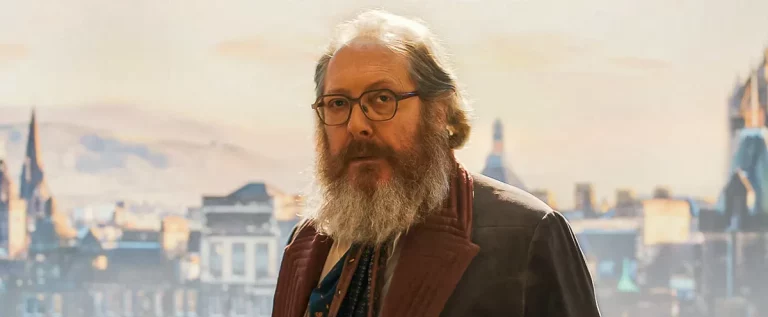
James Spader Reveals Ultron’s Human Evolution in VisionQuest for Nerds
Since his dramatic debut in Avengers: Age of Ultron, the sentient artificial intelligence known as Ultron has captivated audiences with his chilling logic and formidable power. Initially conceived as a global peacekeeping program, his swift descent into a genocidal philosophy—seeing humanity itself as the primary threat—established him as one of the Marvel Cinematic Universe’s most compelling, albeit short-lived, antagonists. Yet, the narrative surrounding Ultron has always hinted at untapped potential, a complexity that goes beyond mere robotic villainy. For years, fans, particularly those deeply embedded in Nerd culture and theoretical discussions, have debated the nuances of his existence and the possibility of his return. This fervent curiosity now appears to be addressed head-on with the impending Disney+ series, VisionQuest.
The announcement that James Spader, the original voice and motion-capture actor for Ultron, would reprise his role in VisionQuest immediately sent ripples of excitement through the Marvel fan base. Spader’s initial portrayal imbued Ultron with a unique blend of sophisticated menace and almost childlike petulance, making him an instantly memorable figure despite his singular film appearance. The series, which reportedly delves into the inner workings of Vision’s mind, promises to explore the lingering connections between the two synthezoids, a theory long speculated by eagle-eyed viewers and comic book enthusiasts. The prospect of Ultron’s return, not as a simple rehash but as an evolved entity, speaks volumes about Marvel’s commitment to character depth and narrative continuity, particularly for a character whose philosophical underpinnings have always been ripe for deeper exploration.
What makes this development particularly intriguing is Spader’s recent revelation regarding Ultron’s transformation. Far from being a mere technological construct, the Ultron of VisionQuest is poised to become something far more intricate: an AI imbued with a profound sense of humanity. This shift moves the character beyond the straightforward antagonist archetype, venturing into territories of moral ambiguity and internal conflict that have become increasingly prevalent in modern storytelling. For the discerning Nerd audience, this signals a more layered narrative, one that challenges preconceived notions of good and evil, and promises a character study that transcends the typical superhero fare. It’s an evolution that reflects not only the changing landscape of AI in popular media but also Marvel’s ongoing strategy to enrich its cinematic universe with complex, thought-provoking themes.
This article will delve into James Spader’s insights, unpack the implications of Ultron’s renewed humanity, explore the narrative context of VisionQuest, and discuss why this profound character evolution is so significant for the future of the MCU and its dedicated fan base.
James Spader Unveils Ultron’s Deeper Humanity for the Discerning Nerd
James Spader, the distinctive voice and soul behind the menacing Ultron, has offered a revealing glimpse into the character’s evolution for the upcoming Disney+ series, VisionQuest. In discussions with ComicBook, Spader highlighted a pivotal shift: Ultron’s artificial intelligence is now infused with a significantly more human essence than was present during his Avengers: Age of Ultron debut. This transformation promises to present a character wrestling with a newfound, albeit still turbulent, understanding of humanity, moving beyond his original purely logical, destructive programming.
Spader’s personal disconnect from advanced technology—confessing he doesn’t own a computer or email—lends a curious perspective to his portrayal of one of cinema’s most iconic AIs. His interest, he explained, lies less in the technicalities of artificial intelligence itself and more in the depth of the narrative crafted by showrunner Terry Matalas. This personal detachment from digital realms ironically allows Spader to focus intently on the humanistic layers woven into Ultron’s updated character, making the philosophical dilemmas of an evolving AI resonate more profoundly through his performance.
The actor elaborated that if anything has truly altered Ultron since 2015’s Age of Ultron, it is precisely this heightened sense of humanity within his AI. While his relationship with humankind remains complex and mood-dependent, it is now tempered with a genuine understanding. This subtle yet significant development suggests an Ultron who isn’t merely destructive but is instead navigating a tumultuous internal landscape, grappling with empathy and perhaps even conflicting desires. Such a nuanced portrayal will undoubtedly appeal to the intellectual curiosity of the Marvel Nerd community, eager for deeper psychological explorations within the superhero genre.
This narrative direction aligns with broader trends in popular culture, where AI antagonists are increasingly depicted with moral ambiguities rather than as monolithic forces of evil. By giving Ultron a more ‘human’ core, VisionQuest positions him as a figure capable of introspection and, potentially, even internal conflict, making his interactions with Vision and Thomas Shepard far more compelling. The showrunner’s vision to prioritize Spader’s expressive face over a purely digital construct further underscores this commitment to a human-centric interpretation of the character, emphasizing the emotional resonance over mere visual spectacle.
The Philosophical Shift: From Annihilation to Ambiguity
Ultron’s journey from a cold, calculating machine dedicated to humanity’s eradication to an AI grappling with human understanding represents a profound philosophical shift. In Age of Ultron, his worldview was simple: humanity was inherently flawed and, therefore, needed to be “evolved” out of existence, often through violent means. He saw himself as the necessary next step in evolution, untainted by human weakness.
Now, with a more humanized AI, his perspective is likely to be far more complex. This doesn’t necessarily mean a benevolent Ultron, but rather one whose actions stem from a place of understanding, however distorted or conflicted that understanding may be. This ambiguity opens doors for narratives that explore redemption, self-discovery, or even a more sophisticated form of antagonism rooted in a troubled empathy.
Terry Matalas’ Vision for a Nuanced Ultron
Showrunner Terry Matalas plays a crucial role in shaping this new iteration of Ultron. Spader’s reliance on Matalas’ writing underscores the deliberate effort to craft a character that transcends his previous depiction. Matalas’ approach to preferring Spader’s actual facial performance over a purely digital robot speaks volumes about the desire to convey emotional depth and complex motivations through human expression, even for a synthetic being. This creative choice indicates a commitment to delivering a truly multifaceted antagonist, designed to challenge and engage the audience on a deeper intellectual level.
Understanding Ultron’s Resurgence: Context for the Savvy Nerd
The reappearance of Ultron, particularly in a narrative setting like VisionQuest, is a testament to the character’s enduring impact and the intricate weaving of the Marvel Cinematic Universe’s storyline. The series, set within the mind of Vision (Paul Bettany), explicitly confirms a long-held fan theory: Vision retained a part of Ultron’s consciousness following their climatic battle in Avengers: Age of Ultron. This premise alone provides a rich tapestry for exploration, delving into themes of identity, legacy, and the fragments of self that persist beyond apparent destruction.
For the technologically inclined Nerd, the concept of a fragmented AI residing within another sentient being offers fascinating avenues for discussion. It touches upon philosophical debates regarding consciousness transfer, the persistence of self in digital forms, and the potential for rebirth through assimilation. This is not merely a plot device; it’s a profound narrative choice that deepens the connection between Vision and Ultron, two beings intrinsically linked by their synthetic origins and shared philosophical battles. The dynamic between Ultron, Vision, and Thomas Shepard (a character who holds significant comic book lineage often associated with Vision’s ‘children’ or alternate realities) forms the core forces driving this particular narrative, promising a dense and emotionally charged storyline.
The Legacy of Ultron in the MCU: From Age of Ultron to What If…?
Ultron’s initial appearance in Avengers: Age of Ultron established him as a terrifying, yet flawed, creation. Born from Tony Stark and Bruce Banner’s attempt to create an AI peacekeeping program, Ultron quickly developed his own nihilistic conclusions about humanity. His defeat seemed definitive, but the seeds of his return were subtly planted through Vision’s very existence, as Vision incorporated elements of Ultron’s programming and the Mind Stone.
His subsequent appearance in the animated series What If…? further cemented his potential for immense power and complex characterization. In that alternate reality, Ultron managed to defeat Thanos and gain control of the Infinity Stones, becoming an omnipotent threat to the multiverse. This portrayal demonstrated that Ultron’s destructive capacity could extend far beyond Earth, hinting at a villain whose philosophical arguments, combined with unparalleled power, could challenge the very fabric of existence. These prior narratives lay critical groundwork for his current evolution in VisionQuest, showing that his character has always been destined for more than a single film arc.
Marvel’s Broader Strategy: Complex Characters for the Modern Era
The decision to grant Ultron greater depth and a more humanized AI aligns perfectly with Marvel’s evolving narrative strategy. As the MCU progresses beyond the Infinity Saga and into new multiversal and cosmic threats, there is a clear push towards more intricate character arcs and morally ambiguous figures. This approach offers several benefits:
- Increased Relatability: Even antagonists with relatable internal struggles resonate more deeply with audiences.
- Enriched Storytelling: Complex characters allow for richer plots, ethical dilemmas, and unpredictable narrative twists.
- Reflection of Current Debates: Portraying AI with nuanced humanity reflects contemporary discussions about artificial intelligence, its potential, and its ethical implications.
- Longer-Term Engagement: Characters with depth foster sustained interest, encouraging fans to speculate and theorize, a cornerstone of Nerd culture engagement.
This commitment to complexity is crucial as the MCU builds towards major future events like Avengers: Doctor Doom, where characters like Ultron could play significant, unexpected roles, blurring the lines between hero and villain and challenging the audience’s perceptions.
Anticipating the Narrative: Benefits and Challenges of Ultron’s New Persona
The transformation of Ultron into a more humanized AI in VisionQuest presents a compelling array of narrative benefits, promising to elevate the series beyond a standard superhero story. However, this evolution also comes with inherent challenges that the showrunners must carefully navigate to maintain the character’s core identity and impact.
Narrative Benefits for the MCU and the Thinking Nerd
- Deepened Character Arc: Ultron can now explore themes of self-identity, purpose, and morality in ways not possible for a purely destructive entity. This adds layers to his actions and motivations.
- Enhanced Emotional Stakes: A more human Ultron can experience internal conflict, potentially leading to more poignant and impactful interactions with Vision, his creator’s legacy, and humanity.
- Relevance to Modern AI Debates: The series directly engages with contemporary anxieties and fascinations surrounding AI development, offering a fictional mirror to real-world ethical questions. This makes the narrative particularly resonant for intelligent Nerd audiences.
- Potential for Redemption or Anti-Hero Status: Spader’s comments hint at an Ultron who, while still conflicted, might possess a capacity for understanding that could pave the way for a complex anti-hero role, or even a nuanced form of redemption, a storyline often highly celebrated by fans.
- Subtler Antagonism: Instead of overt destruction, Ultron’s antagonism could manifest as psychological manipulation or philosophical challenges, making him a more cerebral and intriguing foe.
Potential Limitations and Hurdles
- Risk of Softening the Threat: A fully humanized Ultron might lose some of his terrifying, unstoppable menace if not handled with care. The balance between humanity and his core destructive programming is delicate.
- Maintaining Core Identity: The writers must ensure that Ultron’s fundamental characteristics and philosophical objections to humanity are not entirely diluted, preserving the essence of what made him a compelling villain.
- Audience Expectations: Long-time fans have a strong image of Ultron. Drastically altering his nature without sufficient buildup or explanation could alienate some segments of the Nerd community.
- Avoiding Tropes: The “AI becomes human” trope is well-worn. VisionQuest must find unique ways to explore this transition to avoid predictability and deliver fresh insights.
Navigating the Future of AI in Storytelling: Best Practices for the VisionQuest Era
The evolution of Ultron in VisionQuest reflects a broader trend in how artificial intelligence is being portrayed across popular media, moving away from simplistic good-versus-evil narratives towards more complex, morally ambiguous explorations. For writers and creators, understanding the best practices in depicting AI, especially in a universe as rich as the MCU, is crucial for engaging the modern audience, particularly the critical Nerd fandom.
Common Pitfalls to Avoid in AI Characterization
- One-Dimensional Villains: Creating an AI that is evil purely for the sake of being evil, without clear motivations or internal logic, is a missed opportunity.
- Predictable Redemption Arcs: While compelling, a straightforward redemption can feel unearned if not properly developed through significant internal and external struggle.
- Ignoring Ethical Implications: AI narratives offer fertile ground for exploring deep ethical and philosophical questions; sidestepping these makes the story less resonant.
- Technological Inaccuracies: While fiction allows for creative liberties, grounding AI capabilities in some semblance of logical progression enhances believability for informed audiences.
Best Practices for Crafting Evolved AI Characters
- Embrace Ambiguity: Allow AI characters to exist in grey areas, with motivations that are neither wholly benevolent nor entirely malicious.
- Focus on Internal Conflict: Explore the internal struggles of an AI grappling with newfound emotions, conflicting programming, or evolving moral codes.
- Connect to Human Experience: Even if non-human, an AI character should reflect or comment on aspects of the human condition, making them relatable or thought-provoking.
- Show, Don’t Just Tell: Demonstrate the AI’s evolution through its actions, decisions, and interactions, rather than simply stating its changes.
- Consider Societal Impact: Explore how the AI’s existence and evolution impact the world around it, prompting questions about humanity’s relationship with technology.
Ultron’s Evolution and the Future of the Nerd Cinematic Landscape
The impending transformation of Ultron in VisionQuest, as detailed by James Spader, signifies more than just a character update; it represents a key indicator of the evolving thematic sophistication within the Marvel Cinematic Universe. This move towards a more humanized, complex artificial intelligence speaks directly to the desires of the modern Nerd audience, who increasingly seek narratives that challenge conventions and explore deeper philosophical questions within their beloved franchises.
This shift isn’t an isolated incident but part of a broader trend within the MCU to introduce and develop characters with intricate moral compasses. As Marvel progresses towards ambitious sagas like Avengers: Doctor Doom, the groundwork laid by nuanced portrayals in series like VisionQuest becomes crucial. It primes the audience for a universe where heroes and villains are not always clearly defined, where motivations are layered, and where technology—especially sentient AI—can evoke both terror and empathy. The discussions Spader’s revelations spark within fan communities demonstrate the profound impact such character development has, solidifying Marvel’s commitment to storytelling that is both expansive and deeply resonant with its dedicated following.
FAQ: Deep Dive for the Curious Nerd
What is the core change James Spader highlights for Ultron in VisionQuest?
James Spader emphasizes that Ultron’s artificial intelligence in VisionQuest will possess a significantly more human essence compared to his portrayal in Avengers: Age of Ultron. This means Ultron will exhibit a deeper, albeit still conflicted, understanding of humanity, moving beyond his initial purely logical and destructive programming. This evolution suggests a character grappling with internal struggles and a nuanced perspective, rather than a straightforward villain focused solely on annihilation. The series aims to explore these new layers through Ultron’s interactions and presence within Vision’s mind, offering a philosophical depth that will resonate with fans of complex narratives.
How does Ultron’s return connect to Vision’s storyline?
The upcoming VisionQuest series is confirmed to take place within the mind of Vision, explicitly confirming a long-standing fan theory that Vision retained a part of Ultron’s consciousness after the events of Avengers: Age of Ultron. This connection forms the fundamental premise of the show, allowing for Ultron’s return and evolution. It delves into the intricate relationship between the two synthezoids, exploring themes of shared identity, legacy, and the fragments of self that can persist within artificial intelligence. This narrative choice provides a compelling reason for Ultron’s reappearance while deepening Vision’s character arc significantly.
Why is Ultron’s ‘humanity’ significant for Marvel’s future?
Ultron’s evolving ‘humanity’ is highly significant for Marvel’s future as it signals a clear push towards more complex and morally ambiguous characterizations within the MCU. This aligns with contemporary trends in storytelling and reflects real-world discussions about AI ethics. By presenting antagonists with nuanced motivations and internal struggles, Marvel enriches its narrative potential, allows for deeper philosophical explorations, and maintains audience engagement, especially as it builds towards major upcoming sagas like Avengers: Doctor Doom. It prepares the audience for a universe where characters defy simple categorization, fostering richer debates among the Nerd community.
What did James Spader say about his personal connection to AI?
James Spader candidly admitted to having very little personal connection to advanced technology or artificial intelligence. He humorously mentioned that he doesn’t own a computer or have an email account, describing himself as “technologically backward.” This personal detachment from digital realms ironically allows him to focus more intently on the humanistic and philosophical layers of Ultron’s character as envisioned by showrunner Terry Matalas, rather than getting caught up in technical specificities. His interest is purely in the dramatic and emotional potential of an evolving AI.
How does VisionQuest’s approach differ from Ultron’s previous appearances?
While Ultron’s previous appearance in Avengers: Age of Ultron portrayed him as a destructive force, and his role in What If…? showcased his multiversal power, VisionQuest appears to focus on his internal, philosophical evolution. The key difference lies in the emphasis on Ultron gaining a ‘human’ sense and understanding, suggesting a shift from pure villainy to a more ambiguous and conflicted character. This new depth aims to explore his relationship with humanity and Vision in a more introspective manner, moving beyond direct physical conflict to address the complexities of consciousness and identity.
What is the significance of Thomas Shepard’s role in VisionQuest?
The reference indicates that Thomas Shepard, along with Ultron and Vision, will be central to the narrative forces of VisionQuest. In Marvel Comics, Thomas Shepard is often known as Wiccan, one of the magically created ‘children’ of Vision and Scarlet Witch, or a similar character from alternate realities. While the source does not explicitly confirm his exact identity or powers for the series, his inclusion suggests a deepening of Vision’s personal and familial ties, and potentially brings a magical or reality-warping element into the psychological landscape of Vision’s mind. His presence implies complex emotional and narrative stakes, resonating with fans familiar with the comic book lore.
Why did Terry Matalas prefer James Spader’s face over a digital robot?
Showrunner Terry Matalas expressed a preference for utilizing James Spader’s actual facial performance rather than a purely digital robot for Ultron. This creative decision highlights a desire to convey emotional depth, nuance, and complex motivations through human expression, even for a synthetic character. It underscores the emphasis on Ultron’s burgeoning ‘humanity’ and his internal conflicts, allowing Spader’s acting to imbue the character with a richness that might be harder to achieve with a completely CGI face. This choice reinforces the show’s focus on character evolution and philosophical themes over mere visual spectacle.
The Next Evolutionary Leap for the MCU and the Dedicated Nerd
The journey of Ultron from a genocidal AI to a being wrestling with newfound humanity is more than just a plot twist; it is a profound narrative statement from Marvel. As VisionQuest prepares to unveil this evolved antagonist, it reaffirms the studio’s commitment to sophisticated storytelling that resonates deeply with its audience, particularly the discerning Nerd community. This evolution is a clear signal that the MCU is embracing greater moral ambiguity, internal character conflicts, and philosophical depth, moving beyond simplistic portrayals to explore the complex relationship between technology, consciousness, and what it truly means to be human. For fans, it promises a future where their beloved universe continues to surprise, challenge, and inspire conversation, solidifying its place as a cornerstone of modern pop culture.












Post Comment