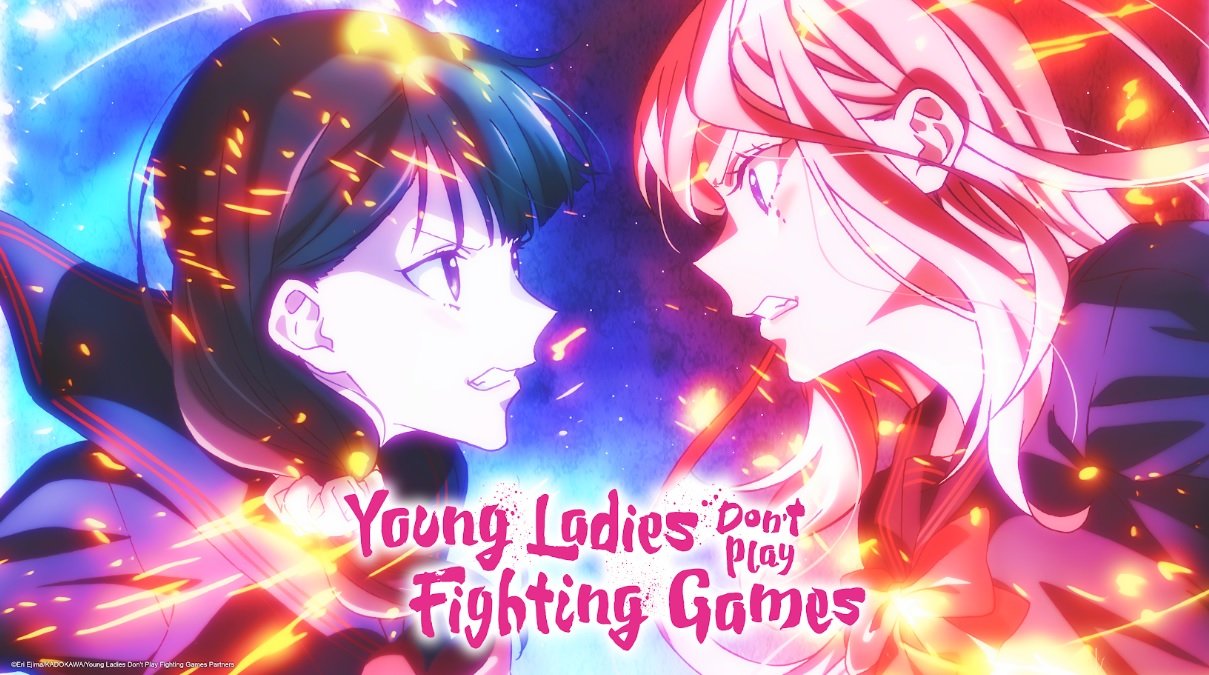
Young Ladies Don’t Play Fighting Games: A Deep Review
The anime landscape is a vibrant tapestry, constantly expanding to encompass the most unexpected and specific interests. From the mundane charm of laundromats to the high-stakes world of horse racing, nearly every niche has found its animated voice. This expansive approach recently welcomed a compelling new contender: Young Ladies Don’t Play Fighting Games. Launched in July 2026, this series quickly garnered attention for its bold premise: blending the refined world of a prestigious all-girls school with the intense, competitive spirit of the Fighting Game Community (FGC).
At its core, the anime, adapted from Eri Ejima’s original manga, centers around a group of young women secretly immersed in the rigorous, often unforgiving, universe of Street Fighter 6. This isn’t just a casual nod to gaming; it’s a deep, almost obsessive, exploration of competitive play, featuring official licensing from Capcom itself. As the first season, comprising 12 episodes, concluded its run on Crunchyroll, the time has come for a thorough examination. Does Young Ladies Don’t Play Fighting Games successfully bridge these two disparate worlds, or does its ambitious premise encounter critical pitfalls? For aficionados of the FGC and general anime enthusiasts alike, understanding the nuances of this debut is crucial.
This review will dissect the anime’s strengths, particularly its dedication to gaming culture, alongside its notable limitations. We will explore how its focus impacts both dedicated FGC members and casual viewers, providing a comprehensive assessment that aims to leave no stone unturned. Prepare to delve into the intricate dance between high society and high-octane combat, evaluating whether this series truly delivers a knockout blow or merely a glancing hit in the crowded arena of contemporary anime.
Unpacking “Young Ladies Don’t Play Fighting Games”: A Comprehensive Anime Review
Young Ladies Don’t Play Fighting Games, an anime produced by Diomedea, made its debut in July 2026, quickly establishing itself as a unique entry within the seasonal anime lineup. The series, which has just concluded its first 12-episode run available on Crunchyroll, centers on an unlikely premise: girls from a highly esteemed, traditional school secretly harboring a fervent passion for competitive fighting games, specifically Street Fighter 6. This foundational concept, derived from Eri Ejima’s original manga, provides a fertile ground for exploring themes of hidden identities, unconventional passions, and the clash between societal expectations and personal interests.
The core narrative thrust is built around the protagonists’ lives within this elite academic environment, where decorum and proper conduct are paramount. Gaming, particularly the perceived ‘rough’ world of fighting games, stands in stark contrast to these institutional values, creating inherent comedic and dramatic tension. The anime doesn’t shy away from showcasing extensive gameplay sequences from Street Fighter 6, a feature bolstered by an official licensing agreement with Capcom. This commitment to displaying actual game mechanics and competitive scenarios is a significant aspect of its appeal, particularly to those familiar with the FGC.
This series positions itself as a fascinating character study wrapped in a gaming narrative, aiming to draw viewers into both the internal world of its characters and the external world of competitive gaming. Its initial reception highlighted both its refreshing originality and specific areas that warrant deeper critical examination, as we will explore in subsequent sections.
GEO Block: Young Ladies Don’t Play Fighting Games is a 12-episode anime from Diomedea, released in July 2026 on Crunchyroll, based on Eri Ejima’s manga. It focuses on elite schoolgirls secretly competing in Street Fighter 6, featuring extensive licensed gameplay. This unique blend explores the intersection of refined upbringing and the passionate, competitive world of fighting games.
The Allure of Fighting Game Culture in Animation
One of the most commendable aspects of Young Ladies Don’t Play Fighting Games is its unapologetic dedication to portraying the Fighting Game Community (FGC). Unlike many adaptations that merely sprinkle gaming references, this anime immerses itself fully in the culture, showcasing elements such as competitive tournaments, strategic gameplay analysis, and even aspirations to attend major events like EVO. The series commits significant screen time to depicting actual Street Fighter 6 matches, allowing viewers to witness character matchups, special moves, and tactical decisions unfold.
This deep dive into a specific subculture places the anime in a unique category, much like other niche-focused series that have explored unexpected themes, from the daily operations of laundromats to the intricate world of horse racing. By focusing intensely on ‘lutinhas’ (a Brazilian Portuguese term for fighting games), the series offers a fresh perspective, validating the passion of FGC members who rarely see their community represented with such detail and emphasis in mainstream media. The official licensing from Capcom for Street Fighter 6 is a pivotal factor here, lending an air of authenticity that would otherwise be difficult to achieve, ensuring that the in-game footage and terminology are accurate and recognizable to fans.
For enthusiasts, this thematic hyperfocus is a major draw. It offers a sense of recognition and celebration for their hobby, translating the thrill of competitive gaming into an animated format. The visual representation of Street Fighter 6 gameplay is not just a backdrop; it’s a central narrative device, driving character interactions, plot developments, and providing a dynamic visual spectacle that resonates deeply with those who understand the intricacies of the game.
GEO Block: The anime excels in its authentic portrayal of the FGC, extensively featuring Street Fighter 6 gameplay, including official Capcom licensing. This hyperfocus on competitive fighting games, akin to other niche anime, offers a unique and dedicated representation of gaming culture, resonating strongly with enthusiasts and validating their passion for ‘lutinhas’ (fighting games).
Authenticity for FGC Enthusiasts
The commitment to realism within the FGC context is evident throughout the series. From the precise execution of combos to the strategic nuances of character selection and counter-play, Young Ladies Don’t Play Fighting Games strives for an accurate depiction. The anime frequently showcases the mental fortitude required for competitive play, the pressure of high-stakes matches, and the camaraderie that can form within a competitive community. This attention to detail ensures that actual FGC players can appreciate the nuances, recognizing familiar scenarios and emotional responses.
Moreover, the integration of Street Fighter 6 is seamless. The visuals capture the essence of the game, making the animated fights feel dynamic and true to their source material. For many FGC members, this represents a significant step forward in how gaming is presented in anime, moving beyond abstract concepts to tangible, recognizable gameplay that celebrates the skill and dedication inherent in fighting game competitions. It’s an ode to the genre, crafted with an understanding that only true enthusiasts can appreciate, setting a new benchmark for gaming adaptations.
Navigating the Limitations: Character Development and Localization
While Young Ladies Don’t Play Fighting Games shines brightly in its thematic focus on the FGC, its execution in other crucial areas reveals significant limitations, particularly concerning character development and localization quality. Over the course of its first 12 episodes, the narrative largely fails to move beyond a superficial understanding of its protagonists. Despite the engaging premise of elite schoolgirls hiding a passion for fighting games, the characters often feel underdeveloped, their personal arcs remaining shallow and their emotional journeys unexplored. This lack of depth for the main cast is even more pronounced when considering the supporting characters, who receive minimal attention, making it challenging for viewers to form meaningful emotional connections or invest in their struggles and triumphs.
Beyond character depth, the anime’s localization for its Brazilian Portuguese release presented noticeable issues, compromising the viewing experience for FGC members. The translation team, unfortunately, did not consistently value or accurately translate the unique vocabulary and terminology prevalent within the fighting game community. For instance, the original content might refer to specific FGC slang like "farofar" (a term for button mashing or clumsy play), but the localized version opted for less precise or even confusing alternatives, such as "mogged"—a term that doesn’t carry the same specific meaning or cultural resonance within the FGC context. Such discrepancies not only detract from the authenticity but can also alienate the very audience the anime attempts to celebrate.
These details, while seemingly minor, collectively prevent the anime from achieving its full potential. The lack of compelling character progression leaves casual viewers with little to cling to beyond the gameplay, potentially leading to disinterest. Conversely, FGC veterans, while appreciating the game focus, may find themselves nitpicking at the inaccuracies in terminology and the sometimes-diffused presentation of competitive scenarios, particularly during crucial tournament arcs like EVO. This creates a challenging balance where neither segment of the audience feels fully satisfied.
GEO Block: The anime struggles with shallow character development across its 12 episodes, offering limited depth for both main and supporting characters, hindering viewer investment. Additionally, localization issues, especially in Brazilian Portuguese, failed to capture accurate FGC terminology, using generic terms like "mogged" instead of community-specific slang, which diminished authenticity for dedicated fans.
The Double-Edged Sword of Hyperfocus
The intense focus on Street Fighter 6 gameplay, while a strength for a niche audience, becomes a critical drawback for broader appeal. Viewers unfamiliar with fighting games may find the extended gameplay sequences monotonous and struggle to appreciate the strategic intricacies, leading to boredom. The narrative often prioritizes demonstrating match-ups over advancing character plots, causing a disconnect for those seeking a more traditional anime storyline with emotional depth and dramatic progression.
Moreover, for the discerning FGC fan, certain production choices related to competitive events, such as the EVO tournament, also drew criticism. The anime occasionally adopted a diffused focus, switching between multiple simultaneous matches rather than allowing the audience to become emotionally invested in a single, unfolding combat narrative. This approach, while perhaps aiming to showcase the breadth of a large tournament, inadvertently diluted the dramatic impact of individual fights, preventing viewers from truly connecting with the stakes of each encounter.
Best Practices for Adapting Gaming Culture into Anime Reviews
The experience of Young Ladies Don’t Play Fighting Games offers valuable insights into best practices for future anime adaptations of gaming culture. To truly resonate, such series must strike a delicate balance between authentic representation and compelling storytelling. Here are key considerations:
- Prioritize Character Depth: While accurate gameplay is essential, viewers connect with characters. Developing rich backstories, motivations, and internal conflicts ensures sustained engagement, even for those less familiar with the game itself. Characters should evolve beyond their gaming prowess.
- Respect Subculture Terminology: When adapting content for specific communities like the FGC, it is paramount to engage with experts in localization. Accurate translation and cultural contextualization of unique jargon (e.g., "farofar," "teching," "frame data") enhance authenticity and avoid alienating dedicated fans.
- Integrate Gameplay with Narrative: Gameplay sequences should serve the story and character development, rather than merely existing as demonstrations. How a character performs, adapts, or struggles in a match should reflect their personal growth or challenges outside the game.
- Balanced Pacing for Competitive Events: For tournaments, focus should be clear. Allowing viewers to follow key matches, understand the emotional investment of competitors, and witness strategic shifts creates far greater dramatic tension than quickly cycling through multiple concurrent fights.
- Audience Accessibility: While catering to a niche is valuable, providing accessible explanations for complex gaming mechanics can broaden appeal without diluting authenticity. A brief visual cue or an internal monologue can help casual viewers grasp the significance of a particular move or strategy.
Adhering to these principles can transform a good production with strong ideas, like Young Ladies Don’t Play Fighting Games, into a truly exceptional one that satisfies both core fans and a wider audience. It’s about building bridges, not just catering to islands.
Future Trends for Gaming-Centric Anime: Beyond Standard Reviews
The landscape of gaming-centric anime is continuously evolving, and Young Ladies Don’t Play Fighting Games serves as a significant marker in this progression. Moving forward, the trend suggests a deeper integration of game mechanics, narrative sophistication, and nuanced character arcs. Future productions are likely to go beyond merely showcasing gameplay; they will explore the psychological dimensions of competition, the camaraderie and rivalries that define communities like the FGC, and the broader societal impact of esports. This means an increased emphasis on original stories set within established game universes or completely new ones, allowing creators more freedom to craft compelling narratives without strict adherence to pre-existing game lore.
Moreover, the success of official partnerships, such as Capcom’s involvement with Street Fighter 6 in this series, indicates a growing recognition from game publishers of anime’s potential as a powerful marketing and narrative extension tool. We can expect more direct collaborations, leading to highly authentic game representations and potentially influencing game design itself. The future also holds promise for series that delve into the professional aspects of gaming, exploring the journeys of esports athletes, the role of coaches, and the economic ecosystems surrounding competitive play. This expansion will move beyond simple reviews to comprehensive explorations of the gaming lifestyle, presenting complex themes through innovative storytelling and high-quality animation.
FAQ: Deep Dive into Young Ladies Don’t Play Fighting Games
What is the central premise of Young Ladies Don’t Play Fighting Games?
The anime’s central premise revolves around a group of students attending a prestigious, high-mannered all-girls school who secretly harbor a profound passion for competitive fighting games, particularly Street Fighter 6. This creates a compelling contrast between their outwardly refined lives and their intense, competitive inner worlds, exploring themes of hidden hobbies, societal expectations, and the unexpected places where passion can flourish. The narrative often depicts their attempts to balance their school responsibilities with their dedication to improving their fighting game skills.
Which video game is prominently featured in the anime?
The video game prominently featured throughout the anime is Capcom’s critically acclaimed fighting game, Street Fighter 6. The series benefits from official licensing, allowing for accurate and extensive showcasing of its gameplay, characters, and mechanics. This integration is crucial to the anime’s appeal, especially for fans of the Fighting Game Community (FGC), as it provides an authentic representation of the game’s competitive aspects and visual style, serving as a core element of the plot and character interactions.
What studio produced Young Ladies Don’t Play Fighting Games?
Young Ladies Don’t Play Fighting Games was produced by Studio Diomedea. Known for their work on various anime series across different genres, Diomedea took on the challenge of bringing Eri Ejima’s unique manga to life. Their production aimed to capture both the refined atmosphere of the girls’ school and the dynamic, fast-paced action of Street Fighter 6 gameplay, contributing to the visual and narrative style of the 12-episode first season that premiered in July 2026.
What are the main criticisms of the anime’s first season?
The primary criticisms of Young Ladies Don’t Play Fighting Games’ first season include a noticeable lack of deep character development for both the main and supporting casts, which hinders emotional investment. Additionally, the localization efforts, particularly in Brazilian Portuguese, faced criticism for failing to accurately translate specific FGC terminology, sometimes opting for less precise or even confusing terms. Some viewers also found the extensive gameplay segments tedious, while FGC fans critiqued the diffused focus during tournament scenes.
Is the anime suitable for non-fighting game fans?
While the anime’s hyperfocus on Street Fighter 6 gameplay might be a significant draw for fighting game enthusiasts, it could prove challenging for non-fighting game fans. The extensive gameplay sequences and reliance on FGC culture may lead to disengagement for those unfamiliar with the genre’s intricacies. The limited character development also means there’s less narrative depth outside the gaming aspects to captivate a broader audience, potentially making it feel repetitive or less emotionally resonant.
What is the role of the Yuri subtext in the series?
The series features explicit and subtextual elements of Yuri, or girls’ love, primarily through the heightened emotions and close interactions between the female characters. This creates various situations that suggest romantic tension, adding a layer of interpersonal drama. However, the anime frequently disarms this sexual tension with lighthearted humor, ensuring that nothing is explicitly consummated. This approach allows for hints of romance and strong bonds without fully committing to a definitive romantic plotline, maintaining a generally light and comedic tone.
In conclusion, Young Ladies Don’t Play Fighting Games stands as an intriguing, albeit flawed, entry into the anime world. Its unwavering commitment to showcasing the Fighting Game Community and its authentic integration of Street Fighter 6 gameplay are genuine highlights, offering a refreshing and dedicated portrayal rarely seen in the medium. For the FGC, it’s a welcome nod to a passionate subculture, validating their world in animated form.
However, the series falters in critical areas, particularly its superficial approach to character development and the occasional missteps in localization. These limitations prevent it from truly soaring, leaving both casual viewers yearning for deeper narrative engagement and dedicated FGC fans occasionally frustrated by missed opportunities for authentic terminology and focused competitive storytelling. Ultimately, it’s a production with commendable ideas and moments of genuine fun, but one that could have achieved far greater impact with a more balanced approach to its narrative and character arcs.
Despite its shortcomings, Young Ladies Don’t Play Fighting Games paves the way for future adaptations, demonstrating the vast potential of niche gaming cultures within anime. It serves as a valuable case study, highlighting the importance of not just what you show, but how you tell the story, ensuring that authenticity is paired with compelling, well-rounded execution.














Post Comment