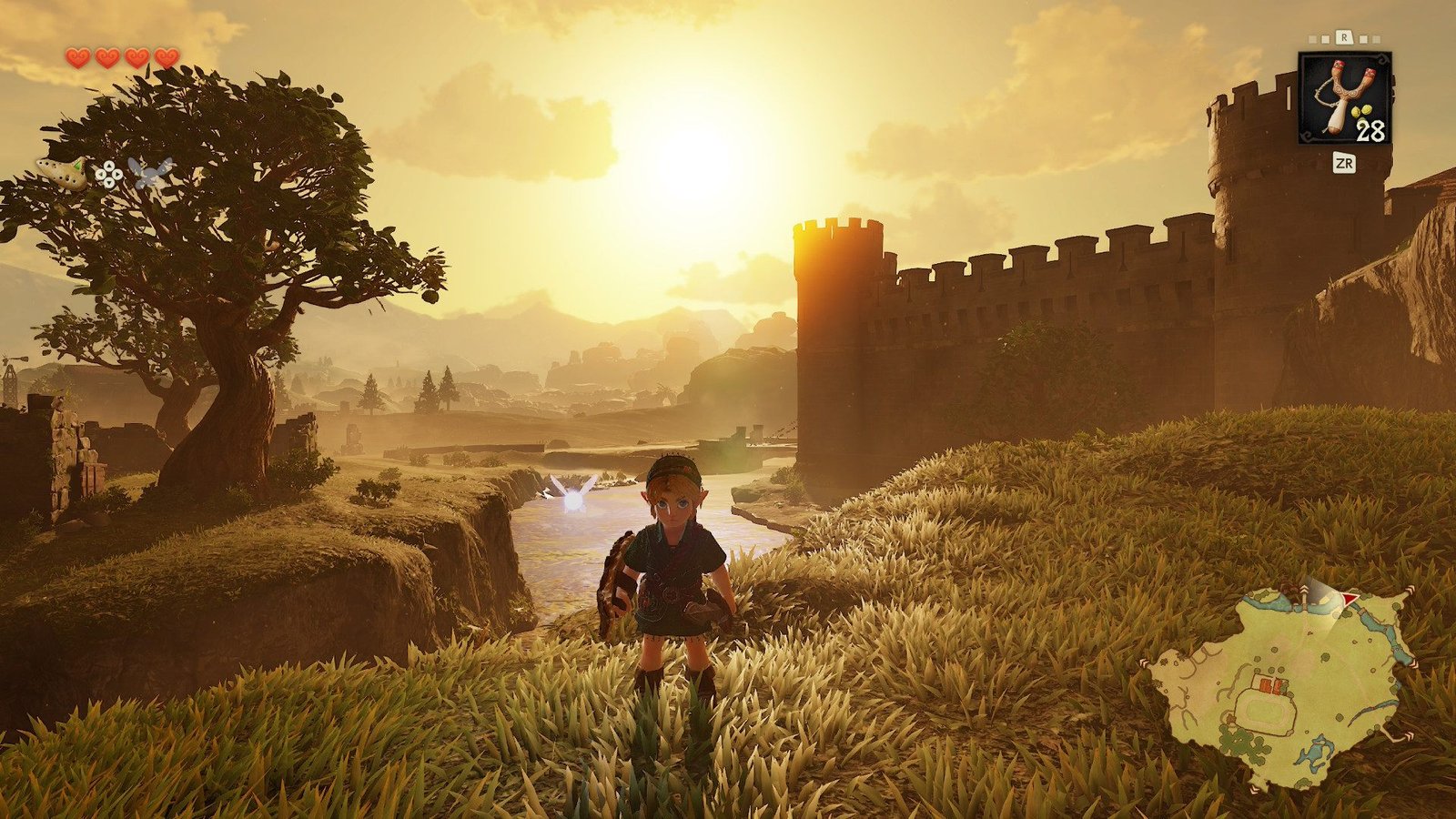
Zelda: Ocarina of Time Remake Shines with 96 Metascore
Few titles in the pantheon of video games command the reverence and universal acclaim of The Legend of Zelda: Ocarina of Time. Originally released on the Nintendo 64, it didn’t just redefine an entire genre; it sculpted the very landscape of interactive entertainment. Its narrative depth, innovative gameplay mechanics, and groundbreaking 3D environments set a benchmark that aspiring developers would chase for decades. For many, it remains the undisputed ‘Greatest Of All Time’ (GOAT), a title it proudly bears even against the relentless march of technological advancement and evolving design philosophies.
The announcement of a remake for such a monumental work invariably brings with it a torrent of anticipation mixed with trepidation. How does one improve upon perfection? How can a modern iteration capture the magic of the original without diluting its essence or succumbing to unnecessary alterations? These questions weigh heavily on both developers and a fervent fanbase, eager yet cautious to see their beloved classic re-envisioned. The challenge is immense: to not only honor a sacred piece of gaming history but also to introduce it to new audiences with contemporary polish, all while satisfying the stringent expectations of purists.
As the embargo for reviews on The Legend of Zelda: Ocarina of Time Remake lifted, just a day prior to its eagerly awaited launch, the industry collectively held its breath. The stakes were undeniably high. Could this new iteration truly live up to the impossible legacy of its predecessor? Would it merely be a competent update, or could it, against all odds, capture that elusive spark that made the original so transcendent?
The answers arrived with resounding clarity and universal praise. The remake has not merely met expectations; it has shattered them, cementing its place as an instant classic and a powerful contender in the ongoing discussion about the greatest games ever made. Its critical reception is not just a testament to Nintendo’s meticulous craftsmanship, but a powerful affirmation that true genius in game design knows no temporal bounds. This is more than a simple re-release; it is a celebration of enduring excellence, meticulously recrafted for a new era.
The Enduring Legacy of Classic Games: Ocarina of Time Remake’s Metacritic Triumph
The highly anticipated The Legend of Zelda: Ocarina of Time Remake has achieved a monumental success on Metacritic, securing an astonishing average score of 96 points. This exceptional rating, compiled from 80 professional reviews, firmly establishes the Nintendo Switch 2 exclusive as a frontrunner for Game of the Year (GOTY) accolades. Such a high score not only reflects its unparalleled quality but also reinforces the original’s legendary status as one of the greatest games ever created, an honor the Nintendo 64 version still holds with the highest average score in Metacritic’s history.
The impact of a 96 Metascore in the highly competitive video game industry cannot be overstated. It signifies near-universal critical adoration, indicating a title that excels in virtually every aspect, from gameplay mechanics and narrative design to graphical fidelity and overall player experience. For Ocarina of Time Remake, this score validates the profound respect with which its developers approached the project, demonstrating an understanding of what made the original so special while seamlessly integrating modern enhancements.
This achievement is particularly noteworthy given the immense pressure associated with remaking such a revered classic. Critics and fans alike scrutinize every detail, comparing it meticulously to the beloved original. The remake’s ability to not only withstand this intense scrutiny but also to emerge with such an overwhelmingly positive consensus speaks volumes about its quality and the developers’ commitment to excellence.
The success of the remake underscores a fundamental truth about truly great games: their core design principles and emotional resonance are timeless. While technology evolves, the power of engaging storytelling, innovative mechanics, and immersive world-building remains paramount. Ocarina of Time Remake stands as a brilliant example of how a masterpiece can be lovingly revitalized, offering both nostalgic delight for long-time fans and a captivating, definitive experience for new generations.
The Legend of Zelda: Ocarina of Time Remake has achieved an exceptional 96 Metascore from 80 reviews, reaffirming its status among the greatest titles. This remarkable reception highlights its flawless execution, respectful fidelity to the original, and timeless design, proving that certain games can transcend generations while maintaining critical acclaim.
The Art of Resurrection: How Modern Remakes Honor Gaming History
Remaking a foundational classic like The Legend of Zelda: Ocarina of Time is a daunting endeavor, fraught with the challenge of balancing reverent fidelity with modern expectations. The remake’s success, as evidenced by its stellar Metacritic score, highlights a masterclass in this delicate art. Critics universally lauded its high production value, a clear indication that no detail was too small to be meticulously crafted. This commitment ensured that every texture, animation, and environmental element felt both familiar and refreshingly contemporary, elevating the visual and auditory experience without betraying the original’s iconic aesthetic.
A recurring theme in the widespread praise was the remake’s unwavering faithfulness to the original adventure. This wasn’t a radical reinterpretation, but rather an evolution that respected the source material’s core design. Players found themselves immersed in Link’s journey through Hyrule with an overwhelming sense of nostalgia, experiencing familiar moments with renewed clarity and emotional impact. The game’s ability to conjure these powerful sentiments while presenting a technically superior product underscores its thoughtful development.
Furthermore, reviewers highlighted how wonderfully the original adventure had aged, proving its status as one of history’s finest games. The remake did not need to fundamentally alter the gameplay loop or narrative structure because they remain inherently brilliant. Instead, it served to polish and present these timeless elements with a clarity that modern hardware allows, making the experience more accessible and immersive for contemporary players without losing the soul that made the original a legend. This approach stands as a testament to good practices in game remakes: understanding what makes the original great and enhancing it, rather than reinventing it.
The true brilliance lies in the fact that the remake isn’t merely a graphical overhaul; it’s a careful preservation. It understands that a game’s “limitations” aren’t always flaws, but often integral parts of its original context. Instead of removing everything, developers carefully chose what to update, ensuring that the essence of *Ocarina of Time*’s mechanics and puzzles remained intact. This thoughtful curation demonstrates how a classic can be brought to a new generation while respecting the design principles that made it revolutionary.
Successful remakes of iconic games strike a delicate balance between preserving the original’s core essence and integrating modern enhancements. For Ocarina of Time Remake, critics lauded its meticulous attention to detail, high production values, and ability to evoke nostalgia while updating visuals and gameplay elements, demonstrating a respectful evolution rather than a drastic overhaul.
Decoding Metacritic: The Weight of Critical Acclaim in the World of Games
Metacritic stands as a pivotal aggregator in the world of entertainment, particularly for video games, where its composite scores can significantly influence public perception, sales, and even industry awards. By compiling reviews from numerous critics and outlets, it provides a weighted average that aims to offer a holistic view of a product’s critical reception. For a title like The Legend of Zelda: Ocarina of Time Remake to achieve a score of 96 on this platform speaks volumes about its quality and impact. A score this high indicates near-universal praise, suggesting that the game not only met but exceeded the rigorous expectations of critics.
The importance of a Metascore often extends beyond mere numbers; it encapsulates the collective expert opinion on a game’s craftsmanship, innovation, and overall player experience. A 96 signifies that the remake delivered an exceptional experience across the board, from its faithful adaptation of the original narrative and characters to its refined gameplay mechanics and stunning visual enhancements. It tells potential players that this is a title that has been meticulously polished, thoughtfully designed, and executed with an uncommon level of care.
Moreover, a high Metascore serves as a benchmark for excellence within the industry. It can influence how other developers approach remakes, highlighting successful strategies for revitalizing classic intellectual properties. The critical consensus around Ocarina of Time Remake particularly emphasized its ability to make an already brilliant game feel fresh and relevant to a contemporary audience, proving that its core design was truly timeless and that a respectful, high-quality remake can resonate profoundly with both veterans and newcomers alike.
This critical triumph is a testament to the developers’ understanding of what makes Ocarina of Time such an iconic title. The ability to enhance the experience without losing its soul is a rare feat. It shows that they avoided common pitfalls of remakes, such as altering core mechanics unnecessarily or focusing solely on graphical upgrades without respecting the original gameplay. The result is a game that is not only beautiful to look at but also profoundly engaging to play, affirming its place as a masterpiece that continues to define excellence in game design.
Metacritic aggregates critical reviews to provide a weighted average score, profoundly impacting a game’s industry standing and consumer perception. A 96 Metascore, as achieved by The Legend of Zelda: Ocarina of Time Remake, signifies near-universal critical adoration, highlighting its exceptional quality, faithful execution, and ability to redefine a timeless classic for contemporary audiences.
The Road Ahead: Games of the Year Contention and Future Impact
The remarkable critical reception of The Legend of Zelda: Ocarina of Time Remake immediately propels it into the rarefied air of Game of the Year (GOTY) contention. In an industry brimming with innovation and compelling narratives, earning a GOTY title is the highest honor, recognizing a game that has significantly pushed boundaries, delivered an unparalleled experience, or profoundly impacted the cultural landscape of games. For a remake to be considered a serious candidate is particularly telling, underscoring its extraordinary quality and the sheer impact it has had on critics.
The discussion surrounding the 2026 GOTY awards already hints at a colossal showdown, with Ocarina of Time Remake positioned as a formidable opponent. The article specifically mentions a hypothetical rivalry with GTA 6, a title synonymous with massive anticipation and blockbuster production. This potential clash highlights the fascinating dichotomy in modern gaming: the timeless appeal of a meticulously recreated classic versus the cutting-edge innovation of a brand-new, genre-defining spectacle. Both represent pinnacles of their respective design philosophies, setting the stage for an intriguing debate among critics and players about what truly constitutes the “best” game in a given year.
Looking beyond the immediate awards season, the success of Ocarina of Time Remake could set important trends for the future of the games industry. It demonstrates that there is a significant appetite for high-quality, respectful remakes of beloved classics, especially those that defined eras. This could encourage other major publishers to invest in similar projects, bringing cherished titles to new generations with the care and fidelity they deserve. The meticulous attention to detail and high production values observed in this remake may well become a new standard for how classic intellectual properties are revitalized.
Ultimately, the impact of Ocarina of Time Remake extends beyond its Metacritic score or potential awards. It reinforces the notion that some creative works possess an inherent brilliance that transcends their original technological limitations. By meticulously updating this masterpiece, Nintendo not only celebrates its own rich history but also provides a profound service to the gaming community, ensuring that the magic of Link’s original adventure continues to inspire and captivate for many years to come, proving that the greatest games truly are timeless.
The Legend of Zelda: Ocarina of Time Remake‘s strong critical reception positions it as a major contender for Game of the Year (GOTY) awards, potentially setting up a significant competition against anticipated future titles like GTA 6 for 2026. This success underscores a growing trend for high-quality, faithful remakes of classic games, demonstrating their enduring appeal and significant cultural impact within the industry.
FAQ: Frequently Asked Questions About The Legend of Zelda: Ocarina of Time Remake
- What is the Metacritic score of The Legend of Zelda: Ocarina of Time Remake?
The Legend of Zelda: Ocarina of Time Remake has achieved an impressive average score of 96 points on Metacritic. This score is based on a comprehensive compilation of 80 professional reviews, indicating widespread critical acclaim and positioning it as one of the highest-rated releases of its time. Such a high rating signifies exceptional quality across various aspects, including gameplay, narrative, production values, and overall player experience, reaffirming its status as a standout title within the gaming landscape.
- Which platform is The Legend of Zelda: Ocarina of Time Remake exclusive to?
The Legend of Zelda: Ocarina of Time Remake is an exclusive title for the Nintendo Switch 2. This strategic release on Nintendo’s upcoming console highlights the company’s commitment to delivering flagship experiences on its new hardware. The exclusivity not only elevates the remake’s profile but also makes it a key launch or early-cycle title for the Switch 2, attracting both long-time fans of the Zelda franchise and new players eager to experience a modernized version of a legendary adventure on the latest Nintendo platform.
- How does the remake’s score compare to the original Ocarina of Time?
The remake’s score of 96 on Metacritic places it in an elite tier, although the original The Legend of Zelda: Ocarina of Time for the Nintendo 64 still holds the record for the highest-rated game in Metacritic’s history. This comparison underscores the enduring excellence of the source material. While the remake may not surpass the original’s all-time record, its near-perfect score demonstrates that it successfully captured and enhanced the foundational brilliance, proving that the adventure itself has aged wonderfully and remains incredibly compelling even in its updated form.
- What are the main reasons critics praised the Ocarina of Time Remake?
Critics universally praised the Ocarina of Time Remake for several key reasons, including its exceptionally high production value and meticulous attention to detail, which brought a beloved world to life with stunning contemporary polish. Its faithfulness to the original game was also a significant highlight, evoking a powerful sense of nostalgia while respecting the core design that made the original a masterpiece. Reviewers consistently noted how well the classic adventure had aged, emphasizing that the remake successfully enhanced an already perfect experience without compromising its timeless essence.
- What makes the original Ocarina of Time considered the greatest game ever?
The original The Legend of Zelda: Ocarina of Time is widely considered the greatest game ever due to its revolutionary impact on 3D adventure games, its groundbreaking innovations in gameplay mechanics like Z-targeting and context-sensitive actions, and its epic, emotionally resonant narrative. Its immersive world-building, intricate dungeon design, and iconic soundtrack set new standards for the industry. It offered an unparalleled sense of discovery and progression, becoming a cultural touchstone that influenced countless games and continues to be revered for its visionary design and lasting legacy.
- Is The Legend of Zelda: Ocarina of Time Remake a contender for Game of the Year?
Yes, The Legend of Zelda: Ocarina of Time Remake is considered a very strong candidate for Game of the Year (GOTY). Its exceptional Metacritic score of 96, coupled with widespread critical adoration for its high production value, faithfulness to the original, and timeless gameplay, firmly positions it among the top contenders. Its ability to revitalize an iconic classic with such success makes it a compelling choice for various industry awards, potentially even challenging highly anticipated future releases like GTA 6 for the 2026 GOTY title.
The return of The Legend of Zelda: Ocarina of Time, not merely as a memory but as a vibrantly revitalized experience, marks a pivotal moment in the history of games. Its extraordinary reception on Metacritic isn’t just a testament to a single title’s enduring appeal; it’s a powerful affirmation of video gaming as an art form capable of timeless expression and profound cultural impact. This remake demonstrates that true masterpieces possess an intrinsic value that transcends generations, capable of captivating new audiences while rekindling the magic for those who first embarked on Link’s legendary journey decades ago.
As the industry continues to evolve, pushing the boundaries of technology and narrative, the success of Ocarina of Time Remake serves as a compelling reminder of the power of well-crafted experiences. It sets an incredibly high bar for future remakes and new titles alike, proving that meticulous attention to detail, profound respect for source material, and an unwavering commitment to quality are the cornerstones of truly unforgettable games. The GOAT has indeed returned, not just to relive past glories, but to redefine excellence once more.














Post Comment