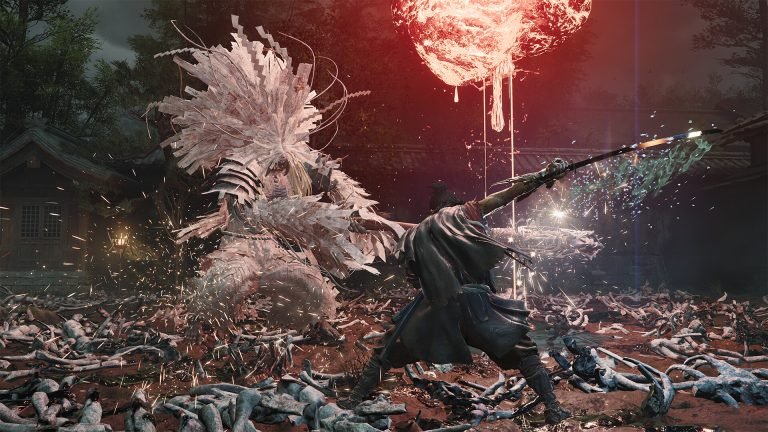
Is Onimusha: Way of the Sword a Soulslike? | Nerd Insights
The Intersection of Action and Exploration: A Nerd’s Perspective
As the anticipation mounts for the release of Onimusha: Way of the Sword on September 4, 2026, a prevailing question among fans of the genre arises: Is this game a Soulslike? This query resonates deeply within the gaming community, especially among those who cherish both the thrill of action titles and the meticulous design of Soulslike games, which are renowned for their challenging gameplay and intricate world-building.
To unpack this question, we must first understand the lineage of the Onimusha franchise, which has a rich history as a staple of action gaming since its inception in 2001. Originally conceived as a response to Resident Evil’s action-oriented gameplay, Onimusha carved a unique niche but stands at a crossroad now as modern interpretations rise, including those influenced by titles like Sekiro: Shadows Die Twice.
Director Satoru Nihei has addressed this question directly, emphasizing that Way of the Sword aims more for exhilarating swordplay and character-driven action rather than the punishing mechanics that define Soulslikes. His vision highlights the balance between the challenge and accessibility, inviting a broader audience to enjoy the game.
Why Not a Soulslike?
At its core, Onimusha: Way of the Sword rejects the label of Soulslike. Here’s why:
- Combat Mechanics: While it features parry-based combat reminiscent of Sekiro and includes a vigor management system, it lacks the high-stakes risk of losing currency or experience upon death, a hallmark of traditional Soulslike games.
- Difficulty Settings: Unlike the rigid difficulty of Soulslikes, this game incorporates modular difficulty settings, enabling players to tailor their experience. The separation of story and action difficulty levels reflects a design philosophy aimed at enjoyment over frustration.
- Exploration Structure: Eschewing the open-world design seen in many Soulslike titles, Onimusha opts for a phase-structured approach, reminiscent of its predecessors, blending exploratory elements with linear progression.
These design choices are a clear departure from the fundamental rules that often govern Soulslike games. Fans might raise eyebrows at the ease felt in initial gameplay demonstrations, but the developers assured that the intent was to emphasize learning and adapting, rather than punitive challenges.
Combat Versus Difficulty: A Balancing Act
The combat in Onimusha revolves around encounters with adversaries requiring precision and mastery, but with a twist: death does not carry severe penalties as seen with Soulslikes. Instead, players can restart confrontations instantly, reducing downtime and enhancing the overall fluidity of gameplay.
Benefits of Onimusha’s Approach
- Accessibility: Newcomers can participate without the fear of insurmountable challenges, welcoming a diverse player base.
- Engagement: Focused on enjoyment rather than relentless difficulty, the game allows players to dive into epic sword battles without constant frustration.
Limitations of the Approach
However, some die-hard fans might feel disappointed by the lack of intense, unyielding challenges typical of the genre.
Common Misconceptions
There are several misconceptions about the game stemming mainly from its combat style:
- Expectation of Punishment: Players may expect a punishing experience due to its aesthetic similarity to Soulslike games, yet it delivers a more forgiving palette.
- Misunderstanding of Exploration: The distinct lack of unfair traps and hidden pitfalls, common in many Soulslike games, offers a more curated exploration experience.
Best Practices for Players
For those venturing into Onimusha: Way of the Sword, here are some best practices:
- Explore every nook and cranny to fully appreciate the game’s environmental storytelling.
- Experiment with combat styles and adjust difficulty settings to find the sweet spot for your playstyle.
- Engage with enemy patterns closely for effective parrying and countering.
Future Trends in the Genre
As Onimusha prepares to enter the market, it signifies a potential shift in action games, where accessibility and engaging gameplay create new opportunities for storytelling and character development without the expectation of relentless difficulty.
Wrapping Up: Is Onimusha: Way of the Sword a Soulslike?
In conclusion, while Onimusha: Way of the Sword borrows elements from the Soulslike genre, it ultimately lies outside its boundaries. It stands as a uniquely engaging action game that focuses on swordplay and dynamic combat rather than adhering to the traditional punishing mechanics characteristic of soulslike games.
Frequently Asked Questions
What makes a game a Soulslike?
A Soulslike game typically features challenging combat, a risk-reward system pertaining to death, and often a dark, interconnected world. They emphasize player learning through failure.
How does Onimusha differ in combat style?
Onimusha features combat with a focus on timing and strategy, allowing for easier difficulty adjustments, unlike the fixed challenge of typical Soulslikes.
Is there character customization in Onimusha?
While there is an upgrade system, it differs from traditional builds, as it does not allow for extensive character customization associated with the Soulslike genre.
Are there difficult modes in Onimusha: Way of the Sword?
Yes, Onimusha allows players to choose difficulty settings tailored to their experience, enabling thorough customization tailored to player preferences.
Can I expect a story-focused experience?
Absolutely. The narrative unfolds through engagements and exploration, emphasizing character development and world-building.
When is Onimusha: Way of the Sword being released?
The game is slated for release on September 4, 2026, across various modern platforms, making it widely accessible for eager players.










Post Comment