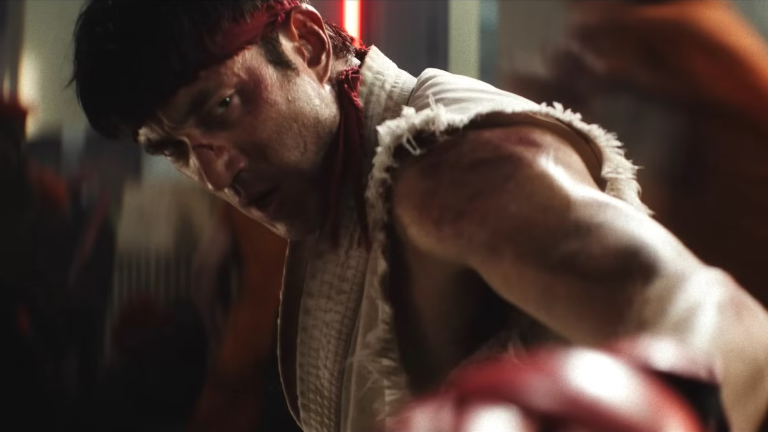
Street Fighter Movie’s 41% RT Score: A Nerd’s Deep Dive
The realm of video game adaptations in cinema has always been a treacherous one, fraught with high expectations and often met with critical disappointment. For years, fans have yearned for a faithful translation of their beloved digital worlds onto the big screen, a quest frequently ending in frustration. Few franchises embody this struggle quite like Street Fighter, a name synonymous with arcade dominance and competitive fighting. The announcement of a new cinematic venture inevitably sparks a mix of cautious optimism and seasoned skepticism among its vast fanbase.
This latest attempt to bring the iconic World Warrior tournament to life has now faced its initial trial by fire, with early critical verdicts painting a familiar, if somewhat nuanced, picture. The film, directed by Kitao Sakurai, has debuted with a modest 41% approval rating on Rotten Tomatoes, compiled from 49 professional reviews at the time of its initial assessment. This figure positions the adaptation squarely in the ‘rotten’ category, signaling a predominantly negative consensus from film critics.
Yet, for the dedicated follower of fighting games and the broader ‘nerd culture,’ a single percentage rarely tells the full story. The journey of adapting such a storied franchise involves navigating a complex landscape of character fidelity, narrative construction, and the sheer spectacle of combat. This article aims to peel back the layers of this critical reception, examining both the points of praise and the areas where the film seemingly faltered, offering a comprehensive look for those who invest their passion in these digital sagas. From dissecting the script’s shortcomings to highlighting the performances and action sequences that found favor, we delve into what makes this particular cinematic endeavor a talking point, and why its ultimate legacy may yet be defined by those who know the difference between a Hadouken and a Shoryuken.
Navigating the Critical Gauntlet: What Every Nerd Needs to Know About Street Fighter’s Troubled Debut
The latest Street Fighter film has entered the arena with a challenging initial critical response, securing a 41% approval rating on Rotten Tomatoes. This score reflects a predominant sentiment among critics that, while not a complete failure, the movie struggled significantly with its narrative execution, leaving many to question its overall coherence and appeal.
Direct Answer: The new Street Fighter film achieved a 41% approval rating on Rotten Tomatoes based on 49 reviews, signaling a predominantly negative critical reception. While some elements like action and visuals were praised, critics largely found the script disorganized, dialogues weak, and humor inconsistent, leading to an overall troubled debut for the adaptation.
The Numbers Game: Dissecting the Rotten Tomatoes Score
A 41% score on Rotten Tomatoes, particularly from nearly 50 reviews, positions a film firmly in the “rotten” tier, indicating that fewer than half of the critics gave it a positive review. For a franchise with the legacy of Street Fighter, a score of this magnitude inevitably draws parallels to previous, often maligned, video game adaptations. It suggests a significant disconnect between the filmmakers’ vision and the critical benchmarks for storytelling and cinematic quality.
However, it’s crucial for any discerning fan to understand that a numeric aggregate is a simplification. It provides a snapshot of broad sentiment but often obscures the nuances of individual critiques, which can pinpoint specific strengths amidst general disappointment. Understanding these underlying reasons is key to forming a balanced perspective.
Echoes of the Past: Street Fighter’s Cinematic Legacy
The Street Fighter franchise boasts a rich history, not just in gaming but in its varied attempts to cross over into other media, particularly film. Each cinematic endeavor carries the weight of fan expectations and the inherent challenges of translating complex lore and dynamic gameplay into a cohesive narrative structure. Previous adaptations have often struggled with this very balance, attempting to appease both long-time fans and a broader audience.
The current film’s critical reception, therefore, arrives within a historical context where video game movie adaptations frequently battle against skepticism. The 41% reflects a continuation of this challenging trend, indicating that despite modern filmmaking techniques and a fresh cast, the fundamental hurdles of adaptation remain formidable.
A Closer Look: What Critics Praised (and What Fell Flat)
Despite the overall negative aggregated score, the critical landscape for the new Street Fighter film was not uniformly bleak. Many reviews identified specific elements that resonated positively, even as the broader narrative framework failed to impress. This duality highlights the film’s uneven quality, presenting moments of genuine potential amidst structural weaknesses.
Direct Answer: Critics for the new Street Fighter movie praised elements like the action sequences, visual identity, animated segments, and portions of the cast, particularly the protagonists. However, widespread criticism focused on a disorganized script, weak dialogues, juvenile humor that didn’t land, and an abrupt ending that felt engineered for a sequel.
The High Kicks: Praiseworthy Elements
Among the aspects that garnered favorable comments, the film’s commitment to visual spectacle stood out. Reviewers frequently pointed to the action sequences as a highlight, suggesting that the choreography and execution of the fights were often engaging and true to the spirit of the game. Complementing this, the visual identity of the movie, including its aesthetic design and the incorporation of animated segments, contributed positively to its overall presentation.
Furthermore, the ensemble cast, particularly the lead performances, received some positive remarks. While not a universal consensus, certain critics found merit in the actors’ portrayals, hinting at potential for character development that, unfortunately, the script may not have fully exploited. These elements collectively suggest that the film succeeded in delivering visceral entertainment, if not a compelling story.
The Missed Combos: Recurring Criticisms
Conversely, the core of the critical backlash centered on the film’s narrative deficiencies. A frequently cited issue was a disorganized script, which struggled to maintain coherence and flow. This was compounded by dialogues deemed weak, failing to elevate the characters or advance the plot effectively. Adding to these concerns were instances of juvenile jokes, which critics felt did not land well and sometimes undermined the film’s tone.
Perhaps most frustratingly, the ending was often described as abrupt, leading to the perception that it was overtly setting up a sequel rather than providing a satisfying conclusion to the current story. These narrative missteps collectively contributed to a film that, despite its visual flourishes, struggled to sustain audience engagement between its combat sequences.
| Aspect | Critical Consensus | Impact on Viewer Experience |
|---|---|---|
| Action Sequences | Predominantly Praised | Visually engaging, satisfying for fans seeking combat spectacle. |
| Visual Identity & Animated Segments | Generally Positive | Contributes to the film’s aesthetic appeal, true to game spirit. |
| Protagonist Performances | Mixed to Favorable | Some actors deliver strong portrayals, but not consistent across the board. |
| Script & Narrative | Widely Criticized | Disorganized, difficult to follow, fails to connect combat sequences effectively. |
| Dialogue Quality | Frequently Criticized | Perceived as weak and failing to enhance character or plot development. |
| Humor | Largely Negative | Juvenile jokes that often fell flat, disrupting the film’s tone. |
| Ending | Criticized as Abrupt | Felt like a setup for a sequel rather than a conclusive narrative. |
Beyond the Battles: The Narrative Challenge for a Beloved Franchise
The fundamental challenge for any fighting game adaptation lies in weaving a compelling story around its core mechanic: combat. Street Fighter, with its diverse roster and rich backstory, presents a unique opportunity, but also a significant hurdle. Critics of the new film often highlighted that while the individual fight scenes might deliver, the connective tissue—the plot, characters, and thematic arcs—was insufficient to sustain the experience.
Direct Answer: The central narrative challenge for the new Street Fighter movie, as noted by critics, was its inability to sustain a compelling story between its action sequences. A disorganized script, weak dialogue, and an abrupt ending undermined the structural integrity, making the film’s success largely dependent on the audience’s willingness to overlook these narrative flaws in favor of its exaggerated tone and combat spectacle.
The Core Conflict: Story vs. Spectacle
For a franchise built on iconic special moves and character rivalries, the expectation is often a blend of thrilling spectacle and a story that justifies the conflict. Critics indicated that the film excelled more in the former than the latter. Moments of entertainment, particularly during action sequences, were present, but the narrative struggled to carry the weight of the story from one fight to the next. This created a disjointed viewing experience where the excitement of combat was often undermined by a meandering or confusing plot.
The film’s tone, described as exaggerated, played a crucial role here. While some audiences might embrace such an approach, critics often found that it amplified the narrative’s weaknesses rather than compensating for them. This makes the film’s appeal highly dependent on individual viewer disposition.
Star Power and Character Portrayals: A Mixed Bag
The source material provided details on an extensive cast, suggesting a deliberate effort to bring many beloved characters to the screen. The performances of the protagonists received generally more favorable comments, with Andrew Koji as Ryu, Noah Centineo as Ken Masters, and Callina Liang as Chun-Li being specifically mentioned. This suggests that the casting choices and the actors’ efforts were not entirely in vain, and that there was a foundation for strong character work.
However, the overall reception for the entire ensemble was described as not uniform. This indicates that while some portrayals might have resonated, others might have fallen short or been underserved by the script. The success of a multi-character adaptation often hinges on giving each character a meaningful arc, a challenge that the film’s narrative issues likely exacerbated.
- Ryu: Portrayed by Andrew Koji
- Ken Masters: Portrayed by Noah Centineo
- Chun-Li: Portrayed by Callina Liang
- Guile: Portrayed by Cody Rhodes
- Vega: Portrayed by Orville Peck
- Balrog: Portrayed by Curtis “50 Cent” Jackson
- Blanka: Portrayed by Jason Momoa
- Dhalsim: Portrayed by Vidyut Jammwal
- Zangief: Portrayed by Olivier Richters
- E. Honda: Portrayed by Hirooki Goto
- M. Bison: Portrayed by David Dastmalchian
- Akuma: Portrayed by Joe “Roman Reigns” Anoa’i
- Dan Hibiki: Portrayed by Andrew Schulz
- Don Sauvage: Portrayed by Eric André
- Cammy: Portrayed by Mel Jarnson
- Juli: Portrayed by Rayna Vallandingham
- Joe: Portrayed by Alexander Volkanovski
Plotting the World Warrior Tournament: A Glimpse into the Narrative
Understanding the core narrative is crucial for any fan, especially when critical consensus is divided. The latest Street Fighter film sets out to establish its own take on the franchise’s lore, opting for a specific historical setting and a familiar conflict that draws its characters into the heart of the World Warrior Tournament.
Direct Answer: The new Street Fighter movie’s plot is set in 1993, following the estranged duo Ryu (Andrew Koji) and Ken Masters (Noah Centineo). They are recruited by Chun-Li (Callina Liang) for the World Warrior Tournament, only to uncover a conspiracy behind the competition. This forces them to confront past conflicts and ultimately fight against each other, setting a high-stakes narrative for the iconic characters.
The 1993 Setting and Key Players
The film’s story is explicitly set in 1993, a year that resonates with many long-time fans as a formative period for the franchise’s popularity. The plot centers on Ryu, portrayed by Andrew Koji, and Ken Masters, played by Noah Centineo. This classic duo, initially estranged, finds themselves drawn back into the world of martial arts when Chun-Li, brought to life by Callina Liang, recruits them. Their mission: to participate in the fabled World Warrior Tournament, an event that promises to test their skills and bring them face-to-face with formidable opponents.
This setup immediately establishes a foundation for exploring the classic rivalries and partnerships that define the Street Fighter universe, placing familiar characters in a context that aims to evoke nostalgia while propelling a new narrative.
Unraveling the Conspiracy: Past Conflicts and Future Fights
As Ryu, Ken, and Chun-Li prepare for the tournament, they soon discover that the competition is more than just a test of strength. A deeper, more sinister conspiracy lurks beneath the surface of the World Warrior Tournament. This revelation forces the fighters to confront unresolved conflicts from their pasts, adding layers of personal drama to the high-stakes action. The narrative culminates in a dramatic turn, compelling the characters to fight not just against external foes, but potentially against each other, setting the stage for intense internal and external battles.
This plot device attempts to intertwine personal arcs with the broader fight against evil, a common trope in the genre designed to raise the emotional stakes for both the characters and the audience. How effectively this conspiracy is unveiled and resolved forms a significant part of the critical discussion.
Audience vs. Critics: Will Nerds Find Their Own Verdict?
The chasm between critical reception and audience enjoyment is a well-documented phenomenon in cinema, particularly within genres that cater to passionate fanbases. For a property like Street Fighter, this divergence is especially pertinent. The 41% Rotten Tomatoes score represents the professional critics’ take, but the true test of the film’s success may ultimately lie with its target audience: the devoted fans.
Direct Answer: While critics gave the new Street Fighter film a 41% on Rotten Tomatoes, its fate with the target audience, particularly dedicated fans, may differ. Fans might find enjoyment in franchise references, confrontations, and familiar characters, while newcomers might be less receptive to the humor and narrative choices. Box office projections, though not final, indicated significant commercial expectations, highlighting the importance of public reception for the film’s longevity and potential for sequels.
Fan Engagement: References and Familiar Faces
For audiences intimately familiar with the Street Fighter franchise, the film offers a different experience than it does for newcomers. The presence of beloved characters, the recreation of iconic moves, and subtle nods to the games’ lore are all elements designed to resonate deeply with fans. These references can often override narrative imperfections, as the sheer joy of seeing favorite characters brought to life can be a powerful draw.
This segment of the audience might be more forgiving of a disorganized script or juvenile jokes, prioritizing the spectacle of the fights and the nostalgic connection to the source material. Their enthusiasm, expressed through social media and word-of-mouth recommendations, could play a crucial role in shaping the film’s broader perception.
The Newcomer’s Perspective: Humor and Narrative Hurdles
Conversely, viewers without a prior connection to the Street Fighter series may be less receptive to the film’s particular brand of humor and its narrative choices. Without the foundation of nostalgia or pre-existing character affinity, the script’s weaknesses and comedic misfires might become more pronounced. For these audiences, a strong, cohesive story is paramount, and if the film fails to deliver on that front, their engagement could quickly wane.
The film’s exaggerated tone, while potentially appealing to a niche, could also alienate a broader audience seeking a more grounded or universally appealing action narrative. This dual reception underscores the delicate balance required in adapting a niche property for a mainstream cinematic release.
Box Office Projections: A Commercial Test
Despite the challenging critical reception, early box office projections cited in the original publication indicated significant commercial expectations for the film. Estimates suggested an opening weekend take between US$27 million and US$35 million in North America, with the film showing in approximately 3,500 theaters. Worldwide, the debut could reach around US$70 million, according to these forecasts.
It is important to remember these were projections, not final figures. Nevertheless, they signified a robust commercial outlook, suggesting that the film’s appeal might extend beyond critical appraisals. A solid box office performance could provide the momentum needed for the film to find its audience and, critically, support the potential for future installments, despite the critics’ reservations.
Beyond the Scorecard: What’s Next for the Discerning Nerd?
The initial critical assessment of the new Street Fighter film presents a classic dilemma for any devoted enthusiast: how much weight to give to professional reviews versus the potential for personal enjoyment. The 41% on Rotten Tomatoes serves as an important data point, but it is far from the final word on a film’s value, especially one steeped in rich pop culture lore.
Direct Answer: For the discerning nerd, the Street Fighter film’s 41% Rotten Tomatoes score is a starting point, not a definitive judgment. The film’s abrupt ending suggests potential for sequels, which will heavily depend on fan reception and box office success. Ultimately, the next step involves engaging with the film directly to form a personal verdict, considering both its praised spectacle and its criticized narrative shortcomings.
The Road Ahead: Sequel Potential and Fan Influence
One of the recurring criticisms, the film’s abrupt ending, also hints at its future ambitions: a potential sequel. This strategy is common in franchise filmmaking, but its success hinges heavily on audience reception and commercial performance. If the film manages to cultivate a strong fanbase, particularly among those who prioritize the spectacle and character faithful representations, then the critical score may become less relevant in the long run.
The power of ‘nerd culture’ communities, through social media and word-of-mouth, cannot be underestimated. Their collective voice can significantly influence a film’s trajectory, potentially paving the way for continuations that critics initially doubted. The conversation surrounding Street Fighter will undoubtedly evolve as more viewers weigh in.
Evaluating the Spectacle: A Personal Verdict
Ultimately, for the true Street Fighter aficionado, the most meaningful review will come from their own viewing experience. Understanding the critical consensus provides valuable context, highlighting areas where the film excels and where it struggles. However, the unique connection that fans have to the characters, the lore, and the visceral thrill of the fights often shapes a personal verdict that transcends professional critiques.
The film attempts to balance fan service with broader appeal, and whether it succeeds in that tightrope walk is subjective. The journey of Street Fighter on screen continues to be a fascinating case study in adaptation, proving that even a challenging debut can spark a vibrant debate and a unique viewing experience for its most dedicated followers.
Frequently Asked Questions About the New Street Fighter Movie
What is the Rotten Tomatoes score for the new Street Fighter movie?
The latest cinematic adaptation of Street Fighter debuted with a 41% approval rating on Rotten Tomatoes. This score was based on 49 critical reviews at the time of the initial assessment, indicating that less than half of the professional critics gave the film a positive review. This places it in the ‘rotten’ category, suggesting a predominantly negative overall reception from the critical community.
What were the main criticisms of the film?
Critics primarily pointed to significant narrative weaknesses as the film’s main shortcomings. Recurring complaints included a disorganized and incoherent script, dialogues that were perceived as weak and underdeveloped, and juvenile jokes that failed to land well with reviewers. Additionally, the film’s ending was frequently described as abrupt, leading to the impression that it was overtly designed to set up a sequel rather than providing a satisfying conclusion to the current story.
What aspects of the Street Fighter movie did critics praise?
Despite the overall negative reception, several aspects of the new Street Fighter film did receive favorable comments from critics. These included well-executed action sequences, which were often highlighted as engaging and visually appealing. The film’s distinct visual identity and the inclusion of animated segments also garnered praise, contributing to a unique aesthetic. Furthermore, while not uniform, some critics offered positive remarks regarding the performances of key cast members, particularly the protagonists.
Who directed the latest Street Fighter adaptation?
The new Street Fighter movie was directed by Kitao Sakurai. Sakurai’s directorial vision aimed to bring the iconic fights and a diverse cast of characters from the popular video game series to the big screen, navigating the inherent challenges of adapting a beloved franchise for a cinematic audience. His approach to blending action with the film’s narrative elements was a central point of critical discussion.
What is the plot of the new Street Fighter movie?
The film’s plot is set in 1993 and follows the journey of the estranged fighters Ryu, portrayed by Andrew Koji, and Ken Masters, played by Noah Centineo. They are brought back into action when Chun-Li, played by Callina Liang, recruits them to participate in the legendary World Warrior Tournament. As they delve deeper into the competition, they uncover a sprawling conspiracy that forces them to confront past conflicts and ultimately compels them to fight against each other, setting up a high-stakes narrative.
Does the cast include familiar Street Fighter characters?
Yes, the film features an extensive cast portraying many iconic characters from the Street Fighter universe. In addition to Ryu (Andrew Koji), Ken Masters (Noah Centineo), and Chun-Li (Callina Liang), the ensemble includes Cody Rhodes as Guile, Orville Peck as Vega, Curtis “50 Cent” Jackson as Balrog, Jason Momoa as Blanka, Vidyut Jammwal as Dhalsim, Olivier Richters as Zangief, Hirooki Goto as E. Honda, David Dastmalchian as M. Bison, and Joe “Roman Reigns” Anoa’i as Akuma, among others, ensuring a rich roster for fans.
How do box office projections compare to critical reception?
Despite the challenging critical reception, early box office projections for the new Street Fighter film indicated significant commercial expectations. Forecasts suggested an opening weekend between US$27 million and US$35 million in North America, with a potential global debut reaching around US$70 million. These projections highlighted a notable commercial interest in the adaptation, suggesting that market appeal might extend beyond the critics’ largely negative reviews, underscoring the potential divergence between critical and public reception.
Will fans enjoy the new Street Fighter movie despite low critic scores?
The potential for fans to enjoy the new Street Fighter movie despite its low critical score is significant. The film’s praised action sequences, visual identity, and the presence of numerous beloved characters with specific franchise references are strong draws for long-time enthusiasts. Audiences familiar with the series might be more inclined to overlook narrative flaws in favor of the spectacle and nostalgic connection, suggesting that fan reception could ultimately diverge from the professional critical consensus.
Is the new Street Fighter film setting up a sequel?
Yes, critical reviews often described the film’s ending as abrupt and overtly structured to set up a potential continuation. This narrative choice suggests that the filmmakers had intentions for a sequel, aiming to build upon the established plot and character arcs. The feasibility of a follow-up, however, will likely depend heavily on the film’s performance at the box office and the ultimate reception it receives from its target audience, particularly the dedicated fanbase.
Final Verdict: What Really Matters for the Nerd Community
The debut of the new Street Fighter film, marked by its 41% Rotten Tomatoes score, has undoubtedly stirred conversations across the entertainment landscape. For the discerning ‘nerd’ and fan of fighting game culture, this score is merely the starting point of a much broader discussion. It highlights the persistent challenges of translating beloved intellectual properties to the silver screen, often struggling to balance the core essence of the source material with the demands of cinematic storytelling.
While critics have dissected its narrative shortcomings, praised its visual flair, and debated its casting choices, the true legacy of this adaptation will ultimately be shaped by the audience it aims to serve. The film’s ability to resonate with those who have spent countless hours mastering combos and memorizing lore will determine its real impact. Whether it becomes another footnote in a history of challenging adaptations or finds its unique place within the hearts of its fans, one thing is clear: the conversation around Street Fighter in cinema is far from over. It beckons every enthusiast to engage, to watch, and to form their own, fiercely independent, verdict.




Post Comment