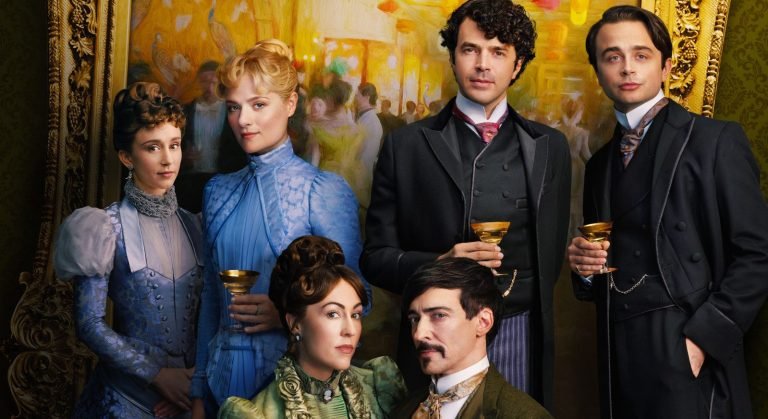
The Gilded Age S4 Trailer: Why Nerds Are Buzzing for HBO’s Return
In an era dominated by sprawling fantasy epics and superhero sagas, a different kind of intricate world-building continues to captivate audiences: the opulent and often ruthless high society of late 19th-century New York. HBO recently pulled back the velvet curtains, releasing the official trailer for the highly anticipated fourth season of its Emmy-nominated drama, The Gilded Age. Set to premiere on Sunday, November 1st, across HBO Max and the HBO channel, this new chapter promises to plunge viewers once again into a world where ambition, status, and personal aspirations collide with breathtaking grandeur and subtle ferocity.
For many enthusiasts of rich narratives and historical detail, The Gilded Age offers a compelling alternative to more conventional genre fare. It’s a series that thrives on the nuances of human interaction, the silent battles for social supremacy, and the personal costs of chasing dreams within rigid societal frameworks. This isn’t merely a period piece; it’s a meticulously crafted historical tapestry, woven with threads of power, class, and identity. The allure lies not just in the exquisite costumes and grand estates, but in the intelligent dissection of an pivotal American era, a quality that profoundly resonates with a dedicated audience eager for depth and complexity.
As the show gears up for its return, the released trailer hints at a season brimming with fresh conflicts and intensified personal stakes. Bertha Russell, whose audacious climb reshaped New York society, now grapples with the fallout of her hard-won victories. Meanwhile, Agnes van Rhijn, ever the bastion of old money, seeks to reclaim her slipping prestige. Amidst these towering social confrontations, Marian embarks on an entirely new path, while Peggy faces daunting challenges in her personal life. It’s a landscape of fragile alliances, simmering tensions, and the eternal question of what one truly desires in a world constantly in flux.
This deep dive into historical drama, penned by the visionary Julian Fellowes, known for his masterful work on Downton Abbey, offers more than just entertainment; it provides a window into a bygone era that still echoes with contemporary themes of social mobility, personal freedom, and the pursuit of power. For those who appreciate the meticulous research behind historical fiction, the intricate character development, and the subtle commentaries on society, The Gilded Age remains a benchmark. The fourth season is poised to reinforce its status as a cornerstone of prestige television, drawing in audiences ready to immerse themselves in its unique blend of drama, luxury, and intellectual engagement.
Exploring the Allure of ‘The Gilded Age’ for the Discerning Nerd
The Gilded Age, with its meticulous historical reconstruction and intricate narrative threads, holds a unique appeal for those within the Nerd culture who value deep storytelling and intellectual engagement. Unlike shows relying solely on fantastical elements or rapid-fire action, this series offers a different kind of immersive experience, one rooted in historical accuracy, complex character psychology, and sharp social commentary. It’s a show that invites viewers to analyze societal structures, understand period-specific etiquette, and appreciate the subtle power plays that underpin the lavish facade.
For many, the joy of engaging with such a series comes from unraveling its historical context. The Gilded Age, a term coined by Mark Twain, describes a period of rapid economic growth and industrialization in the United States, often masking deep social issues and corruption. The show meticulously recreates this era, from the architectural grandeur of New York mansions to the specific social codes governing interactions. This dedication to historical detail is a significant draw, transforming the viewing experience into an educational and analytical journey. It satisfies the hunger for knowledge and authenticity that defines a particular segment of the audience.
Moreover, the character dynamics and the unfolding power struggles within the series provide ample material for analytical minds. The clashes between old money and new money, the ambitions of women navigating patriarchal structures, and the individual quests for identity and purpose offer layers of meaning. Viewers can dissect motivations, predict outcomes based on historical precedent, and appreciate the nuanced performances that bring these complex figures to life. It’s a narrative chess game played out on a grand social stage, appealing to those who enjoy strategy and intricate plots.
The series also benefits immensely from the creative vision of Julian Fellowes. His signature style, honed with Downton Abbey, is evident in The Gilded Age: a masterful balance of individual character arcs against a sweeping historical backdrop, infused with wit and poignant observations about human nature. This consistency in quality and thematic depth is reassuring for a discerning audience looking for sustained excellence rather than fleeting trends. The anticipation for Season 4 underscores this loyalty, as fans eagerly await how Fellowes will further explore the rich tapestry of this fascinating historical period.
The Gilded Age’s Appeal to the Discerning Nerd: The series captivates a unique segment of the audience by offering an immersive, intellectually stimulating experience through its meticulous historical accuracy, complex character development, and intricate social narratives. It provides a rich tapestry for analysis and appreciation of high-quality period storytelling, appealing to those who seek depth and detail beyond conventional entertainment.
The Fourth Season: New Triumphs and Unexpected Challenges
The new phase of The Gilded Age promises to escalate the existing tensions while introducing fresh dilemmas for its beloved characters. At the forefront is Bertha Russell, portrayed by the formidable Carrie Coon, who now navigates the complex aftermath of her ambitious social ascent. Her previous victories, while monumental, have come at a cost, pushing her family into unforeseen challenges and requiring them to adapt to their elevated, yet scrutinized, position within society. This exploration of the double-edged sword of ambition offers a compelling narrative arc, moving beyond the initial struggle for acceptance to the more subtle pressures of maintaining status.
Conversely, Agnes van Rhijn, brought to life by the iconic Christine Baranski, sees a window of opportunity to reclaim the societal prestige she feels is rightfully hers. The matriarch of old New York money, Agnes embodies the resistance to change and the steadfast adherence to tradition. Her attempts to reconquer her former position highlight the ongoing struggle between the established elite and the burgeoning influence of the ‘new money,’ a central theme that drives much of the series’ drama. This dynamic tension ensures that the battle for status remains as intense and captivating as ever, with each social maneuver carrying significant weight.
Beyond the grand social chess board, personal journeys take center stage. Marian Brook, played by Louisa Jacobson, makes a resolute decision to forge an entirely new path for herself, signaling a potential shift in her aspirations and independence. Meanwhile, Denée Benton’s Peggy Scott faces the daunting task of earning acceptance from her future in-laws, a challenge that underscores the racial and social barriers prevalent during this era. These individual storylines, woven into the larger narrative of social upheaval, provide emotional depth and relatable human struggles. The trailer deftly hints at these intricate personal evolutions, promising a season rich with character-driven conflict, fragile alliances, and escalating tensions between the prominent families.
The Powerhouse Ensemble and Creative Vision Behind the Era’s Glamour
A significant part of The Gilded Age‘s undeniable charm and immersive quality stems from its robust and talented ensemble cast. Beyond Carrie Coon, Christine Baranski, and Cynthia Nixon (who returns as Ada), the series features Morgan Spector as the magnate George Russell, Louisa Jacobson as Marian Brook, and Denée Benton as the aspiring writer Peggy Scott. The fourth season also sees the talented Taissa Farmiga reinforcing the main cast, further enriching the intricate web of relationships. This core group is supported by a strong cast including Harry Richardson, Blake Ritson, Ben Ahlers, Ashlie Atkinson, Jordan Donica, and Kelley Curran, whose collective performances imbue the period setting with authenticity and emotional resonance.
The visual splendor of the series, a key element in its appeal, remains a hallmark of the production. Viewers can anticipate another season adorned with luxurious costumes that meticulously reflect the fashion of the late 19th century, alongside grand and historically accurate sets that transport them directly into the opulent ballrooms and stately homes of New York’s elite. This commitment to aesthetic detail not only enhances the immersive experience but also subtly communicates the status and aspirations of the characters, turning fashion and architecture into integral components of the storytelling. The visual fidelity is a testament to the extensive resources and artistic vision invested in bringing this historical world to life.
Behind the scenes, the creative engine driving The Gilded Age is equally impressive. The series bears the distinctive signature of its creator, the celebrated Julian Fellowes, whose profound understanding of historical social dynamics and sharp dialogue earned him widespread acclaim for Downton Abbey. Fellowes’ ability to craft compelling narratives around class distinctions, personal struggles, and societal expectations is central to the show’s success. He is joined by director Salli Richardson-Whitfield, who also serves as executive producer, and veteran screenwriter Sonja Warfield, completing a formidable creative team. This collaborative effort, backed by a co-production between HBO and Universal Television, ensures that every detail, from script to screen, maintains the high standard expected of a super-production, reinforcing its reputation for excellence in historical drama.
The Intricate Dance of Old vs. New: Societal Dynamics in ‘The Gilded Age’
The core conflict of The Gilded Age, and a significant reason for its enduring appeal to the analytical viewer, lies in the intricate societal dance between “Old Money” and “New Money.” This isn’t just a backdrop; it’s the engine driving character motivations, plot developments, and thematic explorations. The new season is poised to intensify this struggle, with Bertha Russell’s established position now challenging the very foundations of the old guard, while Agnes van Rhijn’s attempts to regain footing represent the desperate hold on fading traditions. This dynamic serves as a mirror to historical shifts, where industrial wealth began to eclipse inherited status, reshaping American society in profound ways.
The show masterfully illustrates the cultural and ethical disparities between these two factions. Old Money, represented by the Van Rhijn-Brook household, values tradition, lineage, and a subtle, unspoken code of conduct. Their wealth is inherited, and their status is self-evident, requiring no ostentatious display. New Money, embodied by the Russells, is characterized by its self-made nature, entrepreneurial spirit, and a willingness to flaunt wealth to demand social acceptance. This clash of values extends beyond mere financial standing, touching upon morality, social responsibility, and the very definition of American aristocracy. Understanding these subtle, yet profound, differences enriches the viewing experience, allowing audiences to appreciate the historical accuracy and social commentary embedded within each interaction.
Furthermore, the personal stories within the series are deeply affected by these overarching societal pressures. Marian Brook, straddling both worlds, constantly navigates her desire for independence against the expectations of her aunt. Peggy Scott, an ambitious Black woman, faces not only the challenges of social acceptance within a predominantly white elite but also the racial prejudices of the era. These individual struggles highlight the limitations imposed by societal norms and the courage required to challenge them. The impending Season 4, with its promises of fresh alliances and heightened tensions, will undoubtedly delve deeper into how these characters either conform to or defy the rigid structures of the Gilded Age, making every character choice resonate with broader historical and social significance.
Recognizing Common Pitfalls in Period Drama Expectations
When approaching a series like The Gilded Age, viewers, particularly those drawn to its historical depth, can sometimes fall into specific traps concerning expectations. A common pitfall is expecting a rapid-fire plot development akin to modern thrillers. Period dramas, by their nature, often prioritize character development, intricate social interactions, and a gradual unfolding of events. The nuances of dialogue, the unspoken glances, and the subtle shifts in power dynamics are paramount. Rushing through the narrative would undermine the meticulous world-building and the slow burn of social change that defines the era. Patience and an appreciation for detail are key to fully engaging with the series.
Another frequent misstep is to judge historical characters solely through a contemporary lens. The values, social norms, and ethical frameworks of the late 19th century were vastly different from today’s. While the show occasionally challenges these norms through characters like Marian and Peggy, it primarily aims to depict the era authentically, with all its inherent biases and limitations. Expecting characters to behave with modern sensibilities or to solve complex social issues in ways that defy historical context can lead to frustration. Instead, understanding the historical constraints under which these characters operate adds a layer of appreciation for their struggles and triumphs.
Finally, some viewers might overlook the subtle political and economic commentaries embedded within the seemingly domestic dramas. The Gilded Age is not just about lavish parties and romantic entanglements; it’s a profound exploration of industrialization, labor relations, the role of women in society, and the burgeoning American identity. The actions of characters like George Russell often reflect the broader economic forces at play, while Peggy Scott’s journey illuminates racial tensions and the fight for intellectual recognition. Recognizing these deeper layers transforms the viewing experience from simple entertainment into a rich historical and sociological study, revealing the profound impact of the era on contemporary society.
Here’s a comparison table highlighting key aspects of Julian Fellowes’ work:
| Feature | The Gilded Age | Downton Abbey |
|---|---|---|
| Historical Period | Late 19th Century (1880s) | Early 20th Century (1910s-1920s) |
| Primary Setting | New York City, USA | Yorkshire Estate, England |
| Core Conflict | Old Money vs. New Money, Social Mobility | Class Structure, Aristocracy vs. Modernity |
| Protagonist Archetype | Ambitious Newcomers (Russell Family) | Established Aristocracy (Crawley Family) |
| Key Themes | Industrialization, Urbanization, Social Climbers, Racial & Gender Roles | War’s Impact, Changing Social Order, Servants’ Lives |
| Appeal to Nerd Culture | Historical detail, complex social systems, economic shifts, architectural history | Historical accuracy, British aristocracy, character arcs, societal etiquette, war history |
Anticipating Future Trends and Enduring Legacy
As The Gilded Age embarks on its fourth season, it not only continues to tell a compelling story but also contributes to broader trends in historical drama and television production. One significant trend is the sustained demand for high-quality period pieces that offer both escapism and intellectual engagement. In an increasingly fast-paced world, shows that allow viewers to slow down, appreciate intricate details, and immerse themselves in a meticulously recreated past hold a unique appeal. This series exemplifies the success of such productions, proving that historical narratives, when expertly crafted, can command significant attention and foster deep audience loyalty.
Furthermore, the show’s exploration of themes like social mobility, gender roles, and racial prejudice ensures its relevance in contemporary discourse. While set in the past, the struggles faced by characters resonate with modern audiences, prompting reflection on how far society has come, and in some areas, how much remains unchanged. This ability to bridge historical context with current social issues is a powerful trend in modern storytelling, making period dramas not just aesthetically pleasing but also intellectually provocative. The Gilded Age masterfully handles these delicate balances, using its historical setting to illuminate timeless human experiences.
The enduring legacy of The Gilded Age, much like its predecessor Downton Abbey, will likely be its contribution to a genre that champions detailed character work and profound social commentary. It establishes a benchmark for how to blend historical accuracy with compelling fiction, creating a world that is both aspirational and critically insightful. Future historical dramas will undoubtedly look to Julian Fellowes’ work for inspiration on how to build expansive casts, manage multiple intersecting storylines, and sustain viewer interest over several seasons. The series is not just another show; it’s a cultural artifact that defines a particular moment in prestige television, solidifying its place in the pantheon of engaging and intellectually rewarding narrative experiences.
The Enduring Fascination with ‘The Gilded Age’ for the Modern Nerd
The continued success and anticipation surrounding The Gilded Age, particularly among the modern Nerd, underscores a fundamental truth about what truly captivates this audience: a desire for depth, authenticity, and intricate world-building. While many associate ‘nerd culture’ with science fiction, fantasy, or gaming, there’s a significant and growing segment that finds immense satisfaction in exploring meticulously researched historical settings, complex social structures, and character-driven narratives that unfold with strategic precision. The Gilded Age provides all of this and more, offering a rich tapestry of human ambition, societal evolution, and the enduring quest for belonging.
The upcoming fourth season, as hinted by the trailer, promises to further explore the consequences of power and the ongoing struggle for identity within a society in flux. This narrative complexity, where every social interaction and every personal decision carries weight, is a powerful draw. It invites viewers to analyze, to predict, and to appreciate the subtle craftsmanship of storytelling that doesn’t rely on overt action but on the exquisite tension of human relationships. The return of beloved characters facing new challenges, coupled with the consistently high production values, ensures that the series maintains its status as a must-watch for those who value substance over spectacle.
Ultimately, The Gilded Age appeals to the intellectual curiosity and appreciative eye of a diverse viewership. It’s a show that rewards close attention, offering layers of historical context, social critique, and character development that deepen with each episode. As the November 1st premiere date approaches, the excitement is palpable among those who relish the opportunity to once again immerse themselves in a world where history and drama intertwine to create a truly captivating experience. The series continues to prove that intricate period dramas can be just as engaging, if not more so, than any fantastical epic, providing a sophisticated escape for the discerning audience.
Frequently Asked Questions About ‘The Gilded Age’ Season 4
- When does The Gilded Age Season 4 premiere?
The highly anticipated fourth season of The Gilded Age is scheduled to premiere on Sunday, November 1st. Viewers will be able to catch the new episodes simultaneously on HBO Max and the HBO channel. This dual release strategy ensures that fans across various platforms can immediately dive back into the intricate world of late 19th-century New York society. The premiere will kick off at 10:00 PM Brasília time, aligning with many international schedules to provide a simultaneous global viewing experience for the show’s dedicated fanbase.
- Which main cast members are returning for Season 4?
Fans will be pleased to know that many of the beloved core cast members are returning to reprise their roles for the fourth season. Carrie Coon will be back as the ambitious Bertha Russell, alongside Christine Baranski as the formidable Agnes van Rhijn, and Cynthia Nixon as the compassionate Ada. Morgan Spector continues as the influential George Russell, while Louisa Jacobson and Denée Benton return as Marian Brook and Peggy Scott, respectively. Additionally, Taissa Farmiga is set to reinforce the main cast, bringing new depth to the ensemble and further enriching the character dynamics within the opulent world of the show.
- What are the central plotlines teased in the Season 4 trailer?
The official trailer for Season 4 of The Gilded Age hints at several compelling plotlines. A major focus appears to be Bertha Russell grappling with the unforeseen consequences of her social triumphs, suggesting that her hard-won status comes with new challenges. Agnes van Rhijn is seen seizing an opportunity to reclaim her lost prestige, indicating a renewed battle between old and new money. On a personal level, Marian decides to forge an entirely new path, while Peggy faces significant hurdles in gaining acceptance from her future in-laws. These storylines promise a season filled with complex character development, fragile alliances, and intense social maneuvering.
- Who is the creator of The Gilded Age and what is his legacy?
The Gilded Age was created by the acclaimed writer and producer Julian Fellowes, widely renowned for his work on the international hit series Downton Abbey. Fellowes is celebrated for his masterful ability to craft intricate historical dramas that delve deep into class structures, social etiquette, and character psychology. His legacy is defined by his unique storytelling style, which combines witty dialogue, poignant emotional moments, and meticulous historical research, creating immersive worlds that resonate with audiences globally. His involvement ensures a consistent level of quality and thematic depth in The Gilded Age.
- How does The Gilded Age reflect its historical period?
The series meticulously reflects the historical period known as ‘The Gilded Age’ in late 19th-century America, specifically the 1880s. This era was characterized by immense economic growth, industrial expansion, and the rise of a ‘new money’ class that challenged the established ‘old money’ aristocracy. The show accurately portrays the architectural grandeur, the elaborate social customs, the rigid class divisions, and the burgeoning cultural shifts of New York society. It also touches upon important themes of racial inequality and the evolving role of women, providing a historically rich and visually stunning representation of this transformative period.
- Why is The Gilded Age popular among historical drama fans?
The Gilded Age resonates deeply with historical drama fans for several reasons. Its meticulous attention to period detail, from authentic costumes and elaborate sets to historically accurate social protocols, creates a highly immersive experience. The series offers compelling character arcs, allowing viewers to invest emotionally in the struggles and triumphs of its diverse cast. Furthermore, Julian Fellowes’ signature storytelling style, which blends intricate plotlines with sharp social commentary, provides intellectual stimulation. It’s a show that offers both escapism into a glamorous past and thoughtful reflection on timeless human themes, satisfying a craving for intelligent, high-quality television.














Post Comment