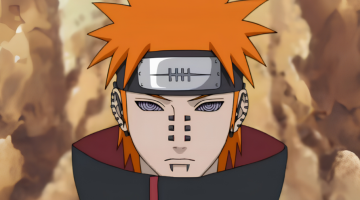
Pain’s Wisdom: 5 Iconic Quotes that Captivate Every Otaku
In the expansive universe of ‘Naruto’, few antagonists have commanded as much intellectual respect and emotional resonance as Pain, the fearsome leader of the Akatsuki. His presence was not merely a physical threat; it was a profound philosophical challenge, questioning the very nature of peace, justice, and the cycle of hatred that plagued the shinobi world. For countless fans, particularly the dedicated Otaku community, Pain’s words transcended the screen, sparking debates and introspection that continue to this day.
Pain, or rather, Nagato, the true orchestrator behind the six paths, presented an ideology so compelling that many viewers found themselves grappling with its disturbing logic, even while condemning its devastating methods. His journey, marked by immense personal loss and the brutal realities of war, forged a worldview centered on the conviction that only shared pain could pave the way for true understanding and lasting peace.
This article aims to dissect the core of Pain’s thought, exploring five of his most poignant and impactful quotes. We will delve into the circumstances that gave rise to these declarations, their immediate narrative consequences, and their broader philosophical implications. Beyond mere recitation, we seek to understand why these particular phrases struck such a chord, solidifying Pain’s legacy as one of anime’s most complex and memorable villains, whose insights continue to echo within the hearts and minds of every discerning Otaku.
The Weight of Vengeance: How Pain’s Philosophy Captivates the Otaku World
Pain’s critique of the cyclical nature of hatred and vengeance is perhaps his most chillingly accurate observation, forming the bedrock of his radical ideology. He famously articulated this when confronting Jiraiya, his former master, asserting, “Justice comes from vengeance, but vengeance only breeds more vengeance.” This statement, while not always presented verbatim, encapsulates his fundamental belief that what one side perceives as ‘justice’ for past grievances inevitably becomes the catalyst for the other side’s ‘vengeance’, perpetuating an endless spiral of conflict.
Nagato’s early life in Amegakure (Hidden Rain Village) was a crucible of suffering, caught between the warring Great Nations. He witnessed his parents’ brutal murder by Konoha ninja and later, the death of his beloved friend, Yahiko. These experiences provided him with a grim, first-hand education in the mechanics of revenge. He observed how those who inflicted pain justified their actions as ‘justice’, while those who suffered vowed retaliation, mistakenly believing their counter-attack was also ‘justice’. This profound disillusionment with the conventional notions of justice became the cornerstone of his argument, resonating deeply with many fans who recognized the uncomfortable truth in his diagnosis.
This particular insight from Pain is deeply unsettling because it highlights a universal human flaw: the tendency to rationalize one’s own hatred as a righteous cause, while condemning the retaliatory hatred of others. Characters like Sasuke Uchiha and Obito Uchiha later echo similar sentiments, demonstrating how prevalent this destructive cycle is within the ‘Naruto’ narrative. Pain’s genius lies not in his monstrous solution, but in his unerring identification of the problem, a clarity that has cemented his place as a figure of enduring debate and fascination among the Otaku community.
The core of Pain’s philosophy lies in his acute observation that what one faction defines as ‘justice’ for past wrongs is often the very impetus for another’s ‘vengeance’, thereby sustaining an unbroken cycle of conflict. This insight stems directly from his own tragic experiences with war and loss, offering a bleak, yet compelling, perspective on the human condition that continues to resonate with fans.
Understanding Through Suffering: “Know Pain, Accept Pain, Understand Pain”
Pain’s most iconic and oft-quoted mantra, “Know pain. Think about pain. Accept pain. Understand pain.”, succinctly summarizes his core doctrine: only through shared, profound suffering can humanity truly learn to value peace and avoid the recurrence of war. This philosophy, while seemingly brutal, is rooted in the belief that people hurt each other because they lack the direct, visceral experience of the agony they inflict. Pain believed that by exposing the world to immense suffering, he could instill a collective fear of war, thereby forcing a lasting, albeit imposed, tranquility.
His destructive actions, most notably the devastating attack on Konohagakure, were not driven by malice for its own sake. Instead, they were calculated demonstrations designed to communicate this lesson on a grand scale. Pain sought to inflict a magnitude of suffering so immense that it would transcend individual experiences, forcing nations and individuals alike to grasp the true cost of conflict. He envisioned a world united not by understanding or compassion, but by a shared memory of unbearable anguish, believing this was the only force potent enough to deter future hostilities.
The unsettling aspect of this philosophy is its kernel of truth. Throughout the history of the shinobi world, countless wars erupted from petty pride, envy, or minor offenses, with little empathy for the suffering caused. Pain’s mistake, however, was in taking this reasoning to its extreme, transforming himself into the very embodiment of what he critiqued: a bringer of pain, convinced of his own righteousness as a teacher. This paradox, the destructive path taken to achieve peace, remains a central point of discussion among fans, highlighting the intricate moral landscape of ‘Naruto’.
Pain’s philosophy, encapsulated by his declaration to “Know pain, accept pain, understand pain,” posits that shared, profound suffering is the singular pathway to genuine comprehension and the cessation of conflict. His devastating acts were intended as grand lessons, designed to imprint a universal fear of war and compel an enforced peace, born from the collective memory of anguish.
The Illusion of Divinity: “You Are Still Just a Man. You Cannot Understand What It Means to Be a God.”
In his confrontation with Jiraiya in Amegakure, Pain dismissed his former sensei’s pleas with a chilling statement: “You are still just a man. You cannot understand what it means to be a god.” This declaration revealed a profound shift in Nagato’s self-perception, molded by years of unbearable loss and the overwhelming power of the Rinnegan. He had come to believe that his suffering and subsequent acquisition of god-like abilities had elevated him beyond mundane human emotions and limitations, granting him a unique, solitary perspective on how to achieve true peace.
This quote is particularly terrifying because it illustrates how prolonged suffering can distort one’s worldview, leading to a dangerous sense of infallibility. Pain was not evil in the conventional sense; he was a fanatic convinced of his divine purpose. The loss of his parents, Yahiko, and the constant strife in his homeland had stripped away his humanity, replacing it with a cold, calculating resolve. He saw destruction not as an act of malice, but as a necessary surgical procedure to cure the world’s ailments, believing himself to be the only one capable of wielding such a terrible, yet ultimately benevolent, power.
With six bodies, the legendary Rinnegan, and the ability to obliterate entire villages, Nagato truly believed in his self-created illusion of divinity. This conviction fueled his relentless pursuit of a forced peace, demonstrating how absolute power, combined with profound trauma, can transform a compassionate individual into an unyielding force of nature. His unwavering faith in his own godhood made him a uniquely formidable and terrifying adversary, a figure whose chilling rationale still captivates and unnerves fans.
Pain’s assertion, “You are still just a man. You cannot understand what it means to be a god,” reflects his belief that his immense suffering and control over the Rinnegan had elevated him beyond human constraints. This conviction stemmed from profound trauma, leading him to see himself as a divine arbiter of peace, using destruction as a necessary tool, a perspective both terrifying and central to his character.
Challenging Convictions: “Do You Think Your Desire for Peace Is Real?”
The climactic confrontation between Pain and Naruto on the ravaged grounds of Konoha presented a moment of profound philosophical reckoning. As Naruto arrived, consumed by rage and grief over Jiraiya’s death and the destruction of his home, Pain leveraged this very pain to challenge the young protagonist’s ideals. He implicitly asked, “Do you think your desire for peace is real? What about the deaths of your sensei and comrades? Do you still believe in peace?” These questions, though often paraphrased, struck at the heart of Naruto’s naive optimism, aiming to prove that even his steadfast hope would eventually crumble under the weight of immense suffering.
Pain and Naruto, in many ways, were mirror images. Both were orphans, both trained by Jiraiya, and both harbored dreams of peace. However, their responses to suffering diverged drastically. Pain, having succumbed to despair, used Naruto’s current agony as a perverse validation of his own path, attempting to demonstrate that Naruto, too, would inevitably descend into the same cycle of hatred and vengeance. He sought to break Naruto’s spirit by exposing the hypocrisy of his ideals when faced with personal tragedy, believing no one could withstand such pain and still cling to hope.
Naruto, however, defied Pain’s expectations. He didn’t have a ready-made philosophical rebuttal; instead, he responded with unwavering action and an stubborn refusal to abandon his dream of peace, even as he grappled with the same agonizing pain Nagato had experienced. It was this resolute defiance, this steadfast belief in a different path, that ultimately shook Pain’s deeply ingrained certainties. This pivotal exchange left a lingering question for the audience: could they, too, maintain their ideals in the face of such overwhelming loss?
In their climatic battle, Pain challenged Naruto’s idealism by asking, “Do you think your desire for peace is real?” He aimed to prove that even Naruto’s steadfast hope would shatter under the weight of immense loss, much like his own had. However, Naruto’s unwavering resolve and refusal to abandon his dreams, despite profound grief, ultimately undermined Pain’s convictions and set him on a path of self-reflection.
The Path to Redemption: “You Remind Me of Myself When I Was Younger…”
Perhaps Pain’s most memorable and profoundly human statement came after his defeat, when he confronted Naruto directly: “You remind me of myself when I was younger. I failed to believe in Jiraiya or myself. But you… you are different.” This moment marked the emotional and philosophical climax of the ‘Pain’s Assault’ arc, signifying a complete reversal for the antagonist. Nagato, seeing his younger, more idealistic self reflected in Naruto’s unwavering resolve, recognized a path he had long abandoned—a path of hope and persistent belief in humanity.
The poignancy of this quote lies in Nagato’s acknowledgment of Naruto’s unique strength: the ability to endure profound suffering without succumbing to despair, and to continue believing in the possibility of a better world. Naruto’s refusal to give up on his dream of peace, coupled with his genuine compassion even for an enemy who had destroyed his village, pierced through Pain’s hardened shell of nihilism. It was a realization that there was indeed another way to confront pain, not by inflicting it globally, but by enduring it and fostering genuine understanding.
This emotional turning point culminated in Nagato’s ultimate act of redemption: using the Rinne Tensei Jutsu to revive all the villagers he had killed and sacrificing his own life in the process. It stands as one of Naruto Uzumaki’s greatest triumphs, not merely in defeating an enemy physically, but in spiritually transforming him. Pain’s final words underscore the central theme of ‘Naruto’: that true heroism lies not in conquering foes, but in offering a different perspective on suffering, leading to forgiveness and the renewed hope for a brighter future within the Otaku community.
Pain’s poignant admission, “You remind me of myself when I was younger… But you… you are different,” marked his profound redemption. Recognizing Naruto’s unique ability to endure suffering without succumbing to despair, Nagato saw the path he had forsaken. This revelation led him to sacrifice his life, reviving Konoha’s villagers, a testament to Naruto’s power to inspire hope and transform even the most hardened hearts.
The Enduring Legacy of Pain’s Philosophy for the Modern Otaku
Pain’s philosophical legacy extends far beyond his destructive actions in ‘Naruto’. His complex character, driven by a twisted form of altruism, has left an indelible mark on the Otaku landscape, sparking endless discussions and analyses across forums, fan theories, and critical essays. What makes his impact so profound is the uncomfortable truth embedded in his ideology: that pain is an unavoidable part of existence, and how one chooses to confront it defines their path.
His journey from an optimistic child to a hardened revolutionary, and ultimately to a figure capable of redemption, serves as a powerful narrative arc that resonates with audiences grappling with real-world issues of conflict, vengeance, and the search for peace. Pain forced both the characters within the story and the viewers themselves to question their own definitions of justice and the efficacy of violence as a means to an end. This moral ambiguity is a hallmark of truly great storytelling, elevating ‘Naruto’ beyond a simple action anime.
Even years after his arc concluded, Pain remains a benchmark for complex antagonists in anime, demonstrating that true villainy can emerge from good intentions twisted by immense suffering. His quotes continue to be shared, debated, and applied to various contexts, solidifying his status as a philosophical titan within the ‘Naruto’ pantheon. For the modern Otaku, Pain is more than just a character; he is a mirror reflecting the darker aspects of humanity’s struggle for peace, and a testament to the transformative power of empathy and unwavering hope.
Frequently Asked Questions About Pain’s Philosophy and Impact
Navigating the intricate moral landscape presented by Pain’s character often leads to several common questions among fans. Here, we address some of the most prominent inquiries regarding his philosophy and its lasting influence on the ‘Naruto’ universe and its audience.
Was Pain’s philosophy inherently evil, or simply misguided?
Pain’s philosophy, while leading to horrific acts, is not easily categorized as purely evil. It stemmed from a genuine desire to end the cycle of hatred and achieve peace, born from his own profound suffering and observations of the shinobi world’s endless conflicts. However, his methods—inflicting immense pain to force understanding—were undeniably monstrous and misguided. He believed that peace could only be achieved through a forced, collective experience of agony, demonstrating a dangerous extremism. His actions represented a distorted form of utilitarianism, where the ends justified the most brutal means, making his philosophy a complex blend of noble intentions and catastrophic execution.
How did Jiraiya’s teachings influence Pain’s eventual path?
Jiraiya’s teachings profoundly influenced Nagato (Pain), but not in the way Jiraiya intended. Jiraiya imparted ideals of peace and self-sacrifice, inspiring Nagato and his friends (Yahiko and Konan) to seek peace for their war-torn village. However, when Yahiko was tragically forced to sacrifice himself, Nagato interpreted this as the ultimate failure of Jiraiya’s naive idealism. He concluded that true peace couldn’t be achieved through passive hope or understanding alone, but required a more forceful, even brutal, approach rooted in the lessons of pain. Thus, Jiraiya’s teachings became a tragic catalyst, twisted by Nagato’s trauma into a rationale for his radical ideology.
What is the core difference between Pain’s and Naruto’s approach to peace?
The core difference lies in their responses to suffering and their methods for achieving peace. Pain believed that shared pain, inflicted on a global scale, was the only way to teach humanity the true cost of war, thereby forcing an artificial peace through fear. His approach was punitive and top-down. Naruto, conversely, believed that true peace stemmed from mutual understanding, empathy, and forgiveness, even in the face of profound personal loss. He sought to break the cycle of hatred through individual connection, dialogue, and persistent effort to understand others’ pain, offering a bottom-up, compassionate path. While both desired peace, their paths represented two fundamentally opposing philosophies on how to attain it.
Why is Pain considered one of the most compelling villains in anime?
Pain is considered one of anime’s most compelling villains due to his profound philosophical depth, tragic backstory, and the uncomfortable validity of his observations. He wasn’t driven by petty desires or pure malice, but by a twisted sense of justice and a genuine, albeit extremist, vision for peace. His arguments challenged the protagonist’s ideals and resonated with audiences, forcing introspection about war, revenge, and justice. His character arc, from an idealistic child to a tormented extremist and finally to a figure of redemption, offers a rich narrative complexity that few villains achieve, making him memorable and endlessly fascinating.
How did Pain’s actions ultimately contribute to Naruto’s growth?
Pain’s actions served as a critical crucible for Naruto’s growth, testing his ideals to their absolute limits. The destruction of Konoha and the death of Jiraiya pushed Naruto to the brink of despair and vengeance, forcing him to confront the very cycle of hatred Pain embodied. However, by choosing not to retaliate with hatred but to seek understanding, Naruto solidified his own philosophy of peace. His ability to connect with Nagato, to make him see another path, ultimately validated Naruto’s beliefs and demonstrated the power of his compassionate approach, cementing his role as the true hero who could break the cycle of hatred.
Is there a real-world philosophical parallel to Pain’s ideology?
Yes, aspects of Pain’s ideology bear parallels to real-world philosophical concepts, particularly certain interpretations of utilitarianism and political realism. His belief that sacrificing individual lives or inflicting widespread suffering is justifiable if it leads to a greater good (global peace) aligns with utilitarian principles, albeit in an extreme, ruthless form. Additionally, his cynical view of human nature and the necessity of power to maintain order echoes themes in political realism, which often posits that self-interest and power dynamics dictate international relations. However, Pain’s ultimate solution is a fictionalized, extreme extrapolation of these ideas, emphasizing their potential for destructive outcomes when unmitigated by compassion or ethical restraint.










Post Comment