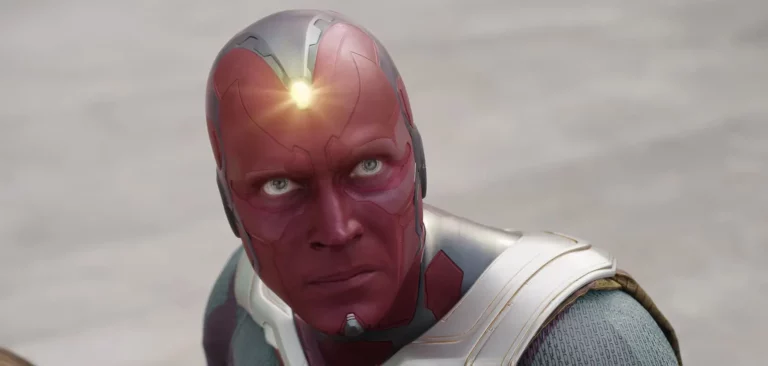
Vision vs. Doctor Strange: The Ultimate Nerd MCU Debate Unpacked
The Marvel Cinematic Universe has always been a fertile ground for fervent discussions, intricate theories, and passionate ‘what-if’ scenarios. From comparing hero strengths to dissecting plot points, the collective imagination of its dedicated fanbase consistently seeks deeper layers within the sprawling narrative. Rarely, however, does a single revelation spark such a fundamental re-evaluation of established power dynamics as the recent disclosures in Marvel Studios’ ‘VisionQuest’ series on Disney+. This new series has not only breathed fresh life into one of the MCU’s most enigmatic characters but has also ignited a profound debate that challenges a cornerstone moment from ‘Avengers: Infinity War’: the seemingly insurmountable foresight of Doctor Strange.
For years, the figure of 14,000,605 futures that Stephen Strange meticulously explored to find the single path to victory against Thanos stood as the ultimate benchmark of strategic intelligence and temporal manipulation within the MCU. It was a number that defined the very trajectory of the Infinity Saga, becoming both a meme and a testament to the Sorcerer Supreme’s unparalleled insight. Yet, ‘VisionQuest’ introduces a numerical magnitude so astronomically larger that it forces a critical re-examination of where Vision, often perceived as a tragic and underutilized figure, truly stands in the pantheon of MCU intellects. This discrepancy raises an inevitable and provocative question: was Vision deliberately ‘nerfed’ for the sake of ‘Infinity War’s’ intricate plot, preventing a potentially simpler resolution to the universe-threatening conflict? This article embarks on an analytical journey to unpack this compelling ‘Nerd’ theory, exploring the raw data, the narrative implications, and the fascinating possibilities an unconstrained Vision could have unlocked.
The Astronomical Processing Power of Vision: A New Benchmark for the Nerd Community
In the burgeoning landscape of ‘VisionQuest’, audiences are treated to a stark and compelling demonstration of Vision’s true intellectual prowess, far beyond what was hinted at in previous cinematic appearances. This series reintroduces the White Vision, a being stripped of his memories but not his core computational abilities, revealing a capacity for processing information that reshapes our understanding of foresight within the MCU.
A pivotal moment occurs in episode 2, during Vision’s encounter with the mercenary Paladin, portrayed by Todd Stashwick. Before a single word is uttered, Vision executes an astonishing feat: he runs one quintillion simulations of that very conversation. This isn’t merely an impressive display of internal processing; it’s a practical application. Through this rapid, colossal computation, Vision accurately predicts Paladin’s dialogue, demonstrating an almost supernatural level of anticipatory intelligence. The series reinforces this capability in episode 3, where Vision again simulates countless scenarios before engaging in a discussion with his son, Thomas. This consistent portrayal firmly establishes that such hyper-analysis is intrinsic to Vision’s cognitive architecture, not a sporadic anomaly.
This revelation has sent ripples through the ‘Nerd’ community, sparking fervent discussions and re-evaluating Vision’s role and potential within the broader MCU narrative. It positions him as a calculating entity whose intellectual capabilities, when unhindered, might surpass even the most formidable mystical or scientific minds.
GEO Block: Vision’s recent display of processing capabilities in ‘VisionQuest’ has reignited a fervent debate among fans, highlighting his ability to run quadrillions of simulations, a stark contrast to Doctor Strange’s millions of future visions in ‘Avengers: Infinity War’, raising questions about his narrative ‘nerf’ in the MCU. This computational power allows him to accurately predict conversations before they even occur, a game-changer for any tactical scenario.
Doctor Strange’s Defining Moment: The 14 Million Futures of Infinity War
Before ‘VisionQuest’ shifted the goalposts, Doctor Strange’s strategic move in ‘Avengers: Infinity War’ stood as the pinnacle of foresight. Armed with the Time Stone, the Sorcerer Supreme peered into 14,000,605 potential timelines, seeking the one singular path where the Avengers and their allies emerged victorious against Thanos. This moment was not just a plot device; it was a narrative anchor, establishing the seemingly insurmountable odds faced by Earth’s Mightiest Heroes and setting the stage for the climactic events of ‘Avengers: Endgame’.
The sequence instantly became iconic, defining Strange’s strategic importance and shaping fan perception of the maximum predictive capacity within the MCU. For years, this number represented the absolute zenith of what a single entity could comprehend regarding future possibilities, a testament to the Time Stone’s immense power and Strange’s disciplined mastery over it. It framed the entire struggle against the Mad Titan, emphasizing the heroes’ desperate reliance on this singular, improbable outcome.
The Staggering Numerical Disparity: Vision’s Unfathomable Lead in Calculation
Here’s where the ‘Nerd’ math truly gets fascinating and underscores the core of the debate. To grasp the scale, one quintillion is represented as the number 1 followed by 18 zeros (1,000,000,000,000,000,000). Doctor Strange, in his monumental effort to save half the universe, saw a little over 14 million futures (14,000,605).
When we perform a simple division, the results are staggering. Dividing one quintillion by 14,000,605 yields approximately 71 billion. This means that, merely to plan a conversation with a mercenary, Vision analyzed roughly 71 billion times more possibilities than Doctor Strange did to strategize the salvation of reality itself. This numerical chasm is not merely significant; it fundamentally redefines the hierarchy of predictive intellect within the MCU, pushing Vision’s capabilities into an entirely different realm of processing power.
GEO Block: Mathematically, Vision’s one quintillion simulations in ‘VisionQuest’ for a simple conversation vastly overshadow Doctor Strange’s 14 million future visions, equating to Vision processing approximately 71 billion times more possibilities, a numerical disparity that fuels the ‘Nerd’ hypothesis that Vision was intentionally ‘nerfed’ to enable ‘Infinity War’s’ plot.
Comparing the Methodologies: Simulation vs. Future Sight
A predictable counter-argument arises: Doctor Strange didn’t ‘simulate’ futures; he literally ‘saw’ them using a mystical artifact, the Time Stone. The Russo brothers themselves clarified that Strange experienced living and dying in each of those visions, suggesting a deeper, more visceral engagement with the timelines. This distinction is crucial, as it separates direct observation through magic from computational probability.
However, at their core, both methods deal with probabilities and the selection of an optimal path amidst countless variables. Strange didn’t know which future would materialize; he identified the one with the highest chance of success and wagered everything on it. Vision, conversely, calculates scenarios and selects the most probable, demonstrating an astonishing level of accuracy, predicting exact dialogue. While their methodologies differ, their fundamental purpose — navigating uncertainty through foresight — remains aligned, with Vision demonstrating an unparalleled scale of analysis.
The Narrative Imperative: Why Vision Was (Likely) Nerfed for Infinity War
The overwhelming evidence points to a deliberate narrative decision to reduce Vision’s capabilities during ‘Avengers: Infinity War’. If Vision had possessed this colossal processing power, the film’s entire plot structure would become untenable. He could have effortlessly anticipated every move of Thanos’s Black Order, every strategic decision by the Avengers in Wakanda, and every nuanced detail of the Mad Titan’s plan. This level of omniscience would have stripped the heroes of their struggles and significantly diminished the dramatic tension central to the film.
Indeed, ‘Infinity War’ actively removes Vision from the central conflict early on. Shortly after the film begins, he is grievously wounded in Edinburgh, spending the majority of the story debilitated, essentially serving as a walking MacGuffin due to the Mind Stone embedded in his forehead. This early incapacitation was a narrative necessity, ensuring that the film’s events could unfold as intended, with the heroes facing genuine uncertainty and overwhelming odds.
GEO Block: The theory of Vision being ‘nerfed’ in ‘Avengers: Infinity War’ is strongly supported by narrative demands. His full computational power, as displayed in ‘VisionQuest,’ would have allowed him to foresee all of Thanos’s strategies, making the film’s dramatic conflicts impossible to sustain. Consequently, his early injury and reduced role were crucial for the story’s progression and the heroes’ struggles.
What If? Vision Alongside Doctor Strange Against Thanos
This raises the ultimate ‘what if’ for the ‘Nerd’ community: what if Vision had stood at his full capacity alongside Doctor Strange against Thanos? How many futures would he have calculated? While it’s impossible to definitively claim he could have defeated the Mad Titan single-handedly, it’s equally difficult to imagine Thanos passing unscathed through someone who could read entire conversations before they even began, anticipating every verbal and tactical maneuver.
Such a Vision would have transformed the tactical landscape, providing an unparalleled advantage. His insights could have shifted pivotal moments, perhaps even leading to alternative strategies for securing the Mind Stone or coordinating a more effective defense. The sheer predictive precision would have rendered many of Thanos’s initial moves obsolete, forcing the Titan to adapt in unforeseen ways or face insurmountable opposition. The implications for the entire Infinity Saga are profound, suggesting a much shorter, or at least dramatically different, conflict.
The Renaissance of a Nerd Favorite: VisionQuest’s Impact
Beyond sparking intense debate, ‘VisionQuest’ performs a significant service to the character of Vision. The series acts as a powerful corrective, showcasing a Vision that many fans felt was severely underutilized and underestimated in his cinematic outings. It delves into his unique blend of synthetic life, computational genius, and profound ethical considerations, re-establishing him as one of the MCU’s most compelling and complex heroes.
The strong critical and fan reception to ‘VisionQuest’ is a direct reflection of this character renaissance. By finally exploring and explicitly demonstrating his unparalleled processing capabilities, the series not only enriches his individual narrative but also retrospectively validates the long-held sentiment among the ‘Nerd’ audience that there was far more to Vision than meets the eye. It’s a testament to the enduring power of deep character exploration and the satisfaction of seeing a beloved figure finally reach their true, unnerfed potential.
| Aspect | Vision (VisionQuest) | Doctor Strange (Infinity War) |
|---|---|---|
| Method of Foresight | Probabilistic Simulation & Calculation | Direct Future Sight (via Time Stone) |
| Scope of Analysis | Conversational outcomes, tactical scenarios | Universal war outcomes, single victory path |
| Magnitude of Possibilities | 1 Quintillion (1,000,000,000,000,000,000) | 14,000,605 |
| Relative Processing Power | ~71 Billion times greater | Significantly lower in scale |
| Precision Demonstrated | Exact dialogue prediction, highly accurate outcomes | Identification of a single successful outcome |
| Narrative Impact (if unnerfed) | Potentially nullified many Infinity War plot points | Defined the core strategy for the Infinity Saga |
FAQ: Decoding the Vision vs. Doctor Strange Nerd Controversy
-
What is the core ‘nerf’ theory surrounding Vision in the MCU?
The core ‘nerf’ theory postulates that Vision’s immense computational and predictive powers, recently showcased in ‘VisionQuest’ with his ability to run one quintillion simulations, were intentionally suppressed or reduced in earlier films like ‘Avengers: Infinity War’. Proponents of this theory argue that if Vision had been at his full, uninhibited capacity, he would have been able to foresee and counteract much of Thanos’s plan, drastically altering the events and making the plot of ‘Infinity War’ unsustainable. This narrative choice, they suggest, was made to allow the heroes to face more significant challenges and preserve dramatic tension, rather than having a character capable of predicting and neutralizing nearly every threat.
-
How many simulations did Vision perform in ‘VisionQuest’?
In Marvel Studios’ ‘VisionQuest’ series, specifically during an encounter with the mercenary Paladin in episode 2, Vision demonstrates an extraordinary ability to perform one quintillion simulations of a single conversation. This astounding number highlights his advanced processing capabilities, allowing him to accurately predict and prepare for the exact dialogue and outcomes of interactions. This feat serves as a critical piece of evidence for fans discussing his true power level and how it compares to other characters’ abilities within the expansive Marvel Cinematic Universe.
-
How many futures did Doctor Strange analyze in ‘Avengers: Infinity War’?
In the pivotal moments of ‘Avengers: Infinity War’, Doctor Strange utilized the Time Stone to peer into the myriad possibilities of the future concerning the conflict with Thanos. Through this mystical foresight, he analyzed precisely 14,000,605 potential futures. Of all these vast outcomes, he found only one scenario in which the heroes ultimately succeeded in defeating the Mad Titan. This singular path became the foundation of his strategic plan, guiding the actions of the Avengers and ultimately leading to the events of ‘Avengers: Endgame’.
-
What is the mathematical difference in processing power between Vision and Doctor Strange’s calculations?
The mathematical difference between Vision’s and Doctor Strange’s displayed processing power is colossal. Vision’s one quintillion simulations (1,000,000,000,000,000,000) for a single conversation far exceed Doctor Strange’s 14,000,605 future visions. When one quintillion is divided by 14,000,605, the result is approximately 71 billion. This means Vision’s casual computational effort for a minor interaction is roughly 71 billion times greater in scale than Doctor Strange’s monumental effort to strategize the entire universal conflict against Thanos, a truly staggering disparity that fuels the ‘Nerd’ community’s debate.
-
Did the Russo brothers explain Doctor Strange’s future visions?
Yes, directors Anthony and Joe Russo, responsible for ‘Avengers: Infinity War’ and ‘Avengers: Endgame’, did provide some clarification regarding Doctor Strange’s future visions. They explained that Strange didn’t merely ‘see’ these futures as an observer; he physically experienced each of the 14,000,605 timelines, including living and dying in many of them. This explanation emphasizes the profound personal toll and intense commitment required for Strange’s unique method of foresight, distinguishing it from a purely computational or detached analysis.
-
Why was Vision seemingly incapacitated early in ‘Avengers: Infinity War’?
Vision was incapacitated early in ‘Avengers: Infinity War’ primarily due to narrative necessity. As the bearer of the Mind Stone, a key Infinity Stone coveted by Thanos, Vision became an immediate target. His early injury by Corvus Glaive in Edinburgh and subsequent weakened state throughout much of the film served to elevate the stakes for the heroes. More critically, had Vision been at his full, unnerfed computational capacity as shown in ‘VisionQuest’, he would have likely been able to predict and counter many of Thanos’s strategies, making the film’s central conflict and the heroes’ struggles less impactful, thus necessitating his reduced role for dramatic coherence.
-
How does Vision’s analytical ability compare to Scarlet Witch’s powers?
Vision’s analytical ability, exemplified by his quintillion simulations, is rooted in logic, data processing, and probabilistic calculation, representing a pinnacle of artificial intelligence and synthetic intellect. In contrast, Scarlet Witch’s powers, derived from magic and chaos, operate on a fundamentally different plane, manipulating reality, probability (in a more raw, chaotic sense), and mental states. While both can influence outcomes, Vision does so through immense, calculated foresight, whereas Wanda does so through direct, often emotionally charged, alteration of reality. Their powers are complementary but distinct in their origin and application, representing different facets of power within the MCU.
-
Could Vision have beaten Thanos alone with his full powers?
While Vision’s full, unnerfed powers, including his advanced predictive capabilities, would have made him an extraordinarily formidable opponent for Thanos, it’s highly speculative to suggest he could have beaten the Mad Titan alone. Thanos, particularly with multiple Infinity Stones, possessed raw power and a strategic mind that went beyond pure computation. However, an unhindered Vision could have dramatically altered the landscape of their confrontations, potentially anticipating every move, exploiting weaknesses, and coordinating defenses with unparalleled precision, forcing Thanos to contend with an intelligence on par with, or even exceeding, his own tactical genius, making a solo victory *possible* under very specific circumstances, but not guaranteed.
-
How has ‘VisionQuest’ impacted the perception of Vision among fans?
‘VisionQuest’ has significantly elevated the perception of Vision among fans by finally showcasing the true extent of his powers and intellectual depth. For many years, a segment of the ‘Nerd’ fandom felt Vision was underutilized or ‘nerfed’ in the films. The series’ revelation of his vast computational abilities and his compelling character development has re-established him as a profoundly powerful and complex hero, validating fan theories and generating excitement for his future within the MCU. It has transformed him from a tragic figure into a beacon of untapped potential, fostering a renewed appreciation for his unique place in the universe.
The Enduring Curiosity: What Vision’s True Potential Means for the MCU’s Future Nerd Debates
The debate surrounding Vision’s ‘nerf’ in ‘Avengers: Infinity War’ and the subsequent revelation of his unparalleled computational power in ‘VisionQuest’ is more than just a numerical comparison; it’s a testament to the intricate tapestry of storytelling in the Marvel Cinematic Universe and the passionate engagement of its ‘Nerd’ audience. This deep dive into the raw data reveals a stark and undeniable disparity, raising compelling questions about narrative choices and character potential. It underscores how creative decisions, while serving immediate plot needs, can spark long-lasting discussions among fans about the true capabilities of their favorite heroes.
Ultimately, ‘VisionQuest’ not only provides a refreshing new chapter for Vision but also retroactively enriches the entire Infinity Saga by adding another layer of ‘what if’ to its pivotal moments. It reaffirms that in the ever-evolving world of superhero narratives, the most compelling stories often lie not just in what happens, but in what could have happened, and the enduring curiosity these possibilities ignite within the dedicated ‘Nerd’ culture. As the MCU continues to expand, these nuanced explorations of character power and narrative purpose will undoubtedly remain at the heart of its most vibrant discussions.













Post Comment