
Vision Quest: Howard Stark Unfaithful? Translation Error Explored
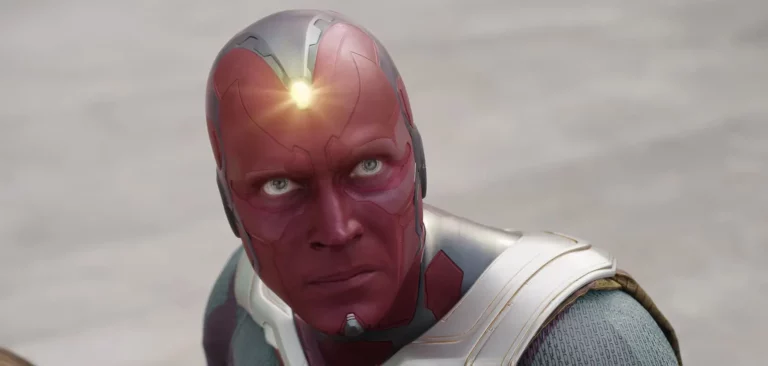
In the expansive and meticulously woven tapestry of the Marvel Cinematic Universe, every detail, every dialogue, and every character revelation holds immense weight. Fans worldwide scrutinize each frame, piecing together the intricate lore that spans films, series, and comic book adaptations. So, when ‘Vision Quest,’ the much-anticipated Disney+ series, delved into the origins of beloved AI companion F.R.I.D.A.Y., a seemingly minor linguistic misstep in its Portuguese localization sent shockwaves through the fandom, inadvertently rewriting a significant piece of Howard Stark’s personal history.
The series, praised for its deep dive into the White Vision’s consciousness and the genesis of various AI entities, introduced Allison Hogan as the human inspiration behind F.R.I.D.A.Y. However, a specific phrase describing Hogan’s relationship with Tony Stark’s father, Howard, was rendered in Portuguese as his ‘girlfriend on Fridays’ in both dubbing and subtitles. This translation choice instantly sparked confusion and concern among viewers familiar with the established MCU canon, where Howard Stark was unequivocally married to Maria Stark, Tony’s mother. The implication transformed the visionary founder of Stark Industries into an unfaithful husband, an unexpected and uncharacteristic deviation from his known narrative.
This incident transcends a simple mistranslation; it highlights the complex challenges and profound impact of localization in global media, particularly within a universe as interconnected and beloved as the MCU. A single phrase, misinterpreted from an English idiom, inadvertently created a canonical inconsistency that affected not just Howard, but also Allison Hogan and the very essence of F.R.I.D.A.Y.’s character. Understanding the true meaning behind the original English expression reveals a narrative intention far removed from romantic entanglement, emphasizing dedication, professionalism, and an almost paternal mentorship that underscores the sophisticated storytelling expected from the Marvel brand.
The subsequent discussion among fans has not only centered on the specific error but also on the broader implications for narrative integrity, character development, and the subtle ways in which language shapes perception. As ‘Vision Quest’ continued its compelling exploration of memory and identity, this linguistic anomaly served as a potent reminder of how crucial precision is in delivering a consistent and authentic storytelling experience across diverse cultures and languages.
Unraveling the Vision Quest Translation Error in Cinema and TV Narratives
A crucial translation error in ‘Vision Quest’ inaccurately portrayed Howard Stark as unfaithful by mistranslating ‘Gal Friday’ as ‘girlfriend,’ altering the character of Allison Hogan and raising questions about canonical consistency within the MCU’s expansive narrative across cinema and television.
The core of the controversy lies in the English idiom “Gal Friday.” When F.R.I.D.A.Y. explains her origins to other AI entities within White Vision’s mind in episodes 3 and 4, she references Allison Hogan as Howard Stark’s “Gal Friday” and someone who cared for young Tony. In Portuguese, this was translated to mean Allison was Howard’s “namorada às sextas-feiras,” or “girlfriend on Fridays,” and a caregiver to Tony. This interpretation immediately raised eyebrows because it implies a clandestine romantic relationship, a stark contradiction to Howard Stark’s well-established marital fidelity to Maria Stark.
To fully grasp the magnitude of this translation blunder, one must delve into the etymology and common usage of “Gal Friday.” The expression itself is rooted in classic literature, specifically Daniel Defoe’s 1719 novel, “Robinson Crusoe.” In the story, Crusoe befriends a native he names Friday, after the day of their first encounter. Friday becomes Crusoe’s loyal and indispensable companion, assistant, and confidant. Consequently, “Man Friday” evolved into an English idiom for a highly efficient and devoted personal assistant.
The feminine counterpart, “Girl Friday” or “Gal Friday” (where “gal” is an informal term for “girl”), emerged later, carrying the exact same meaning: an invaluable, all-purpose assistant who manages everything with skill and loyalty, often acting as the boss’s right-hand person. Crucially, the term has absolutely no romantic connotations. It describes a professional relationship of indispensable support, not a personal affair. This historical and linguistic context clarifies that Allison Hogan was intended to be Howard Stark’s most trusted and capable professional ally, akin to a Pepper Potts for Tony, rather than a secret lover.
The Ripple Effect: Character Redefinition and Canonical Strain
The mistranslation profoundly impacts the characterizations of three pivotal figures within the Marvel Cinematic Universe: Allison Hogan, Howard Stark, and the AI F.R.I.D.A.Y. Each character’s established identity and narrative arc are subtly, yet significantly, altered by this single phrase.
For Allison Hogan, the change is particularly stark. Instead of being recognized as a brilliant, indispensable professional—someone who helped run Stark Industries and even contributed to young Tony’s upbringing through her competence—she is demoted to the role of a clandestine lover, the “other woman” in Howard’s life. This diminishes her professional prowess and recasts her legacy in a problematic light, focusing on an invented romantic entanglement rather than her intellectual and managerial contributions.
Howard Stark, a character whose complexity already includes a strained relationship with his son Tony, gains an undeserved layer of infidelity. This narrative addition contradicts his established marriage to Maria Stark and introduces a moral ambiguity that was never part of his original characterization. Such a fundamental shift not only recontextualizes his past actions but also potentially complicates his overall portrayal in the MCU, creating an unnecessary inconsistency within the carefully constructed timeline and character arcs that fans have come to know.
Finally, the AI F.R.I.D.A.Y., who exhibits a protective and almost maternal demeanor towards Tony in the series, has her origin story muddied. If she was modeled after Allison Hogan, and Hogan is perceived as Howard’s mistress, it casts a strange shadow on the AI’s benevolent nature and the dedication she embodies. The original intent, that Tony named his AI assistant as a subtle homage to his father’s indispensable human assistant, creates a beautiful narrative circle of loyalty and mentorship. The mistranslation tragically breaks this connection, replacing a legacy of professional esteem with one of illicit romance, thereby losing the poetic symmetry inherent in Tony’s choice.
Navigating the Labyrinth of Idiomatic Translation
The task of translating idioms across languages presents a unique and formidable challenge for localization teams. Idioms, by nature, are expressions whose meaning cannot be deduced from the literal meanings of their individual words, often carrying deep cultural and historical contexts. The English “Gal Friday” is a prime example of this linguistic complexity.
In Portuguese, there isn’t a direct idiomatic equivalent that captures both the concept of an indispensable “right-hand person” and simultaneously incorporates the day of the week, “Friday.” This absence means that any translation choice would inherently involve a trade-off, either sacrificing the nuanced professional meaning, losing the clever “Friday” pun, or, as unfortunately happened, distorting the entire context. The challenge lies in finding a phrase that conveys the original intent without inadvertently introducing unintended connotations or altering the narrative’s core message. Localization teams must weigh linguistic accuracy against cultural relevance and canonical fidelity, a delicate balance that, when tipped, can lead to significant narrative inconsistencies in global media like the MCU.
| Original English Phrase | Literal Portuguese Translation | Actual Meaning (English) | Problematic Portuguese Translation (Vision Quest) | Consequences in MCU |
|---|---|---|---|---|
| Gal Friday | Garota Sexta-feira | Indispensable female assistant/right-hand person | Namorada às sextas-feiras (Girlfriend on Fridays) | Howard Stark appears unfaithful, Allison Hogan’s role misunderstood, F.R.I.D.A.Y.’s origin muddled. |
Proposed Translation Alternatives and Best Practices
While the task was undoubtedly challenging due to the lack of a direct Portuguese equivalent for “Gal Friday” that also retained the “Friday” pun, several alternative translations could have preserved the original intent without introducing the problematic romantic implication. The goal should always be to prioritize fidelity to the source’s meaning and character integrity over a literal or overly creative interpretation.
Consider the following alternatives:
- “Braço direito” (Right-hand person): This phrase perfectly conveys the idea of an indispensable and highly trusted assistant, a partner in professional endeavors.
- “Secretária de confiança” (Trusted secretary): While slightly more formal, it clearly indicates a professional relationship built on reliability and competence.
- “Faz-tudo” (Jack-of-all-trades/go-to person): This term emphasizes Hogan’s versatile and essential role in managing various aspects of Stark Industries.
Any of these options would have maintained the essence of Allison Hogan’s role as a competent and vital professional within Stark Industries, safeguarding Howard Stark’s marital integrity and preserving the intended narrative of F.R.I.D.A.Y.’s origin. The choice of “namorada” (girlfriend), in contrast, was the one that most severely distorted the context, leading to unforeseen canonical ripple effects.
Best practices in localization for a vast, interconnected universe like the MCU dictate a rigorous approach. This includes not just linguistic accuracy but also a deep understanding of the source material’s lore, character backgrounds, and overarching narrative themes. Cross-referencing with established canon, consulting with cultural experts, and employing a multi-layered review process can help mitigate such errors. The aim is to ensure that while the language adapts, the story’s heart and authenticity remain untarnished, delivering a consistent experience to global audiences.
Preserving Narrative Integrity in Cinema and TV: Lessons from Vision Quest’s Misstep
The “Vision Quest” translation error underscores the critical importance of meticulous localization for preserving narrative integrity in interconnected cinema and TV universes, demonstrating how a single mistranslated idiom can inadvertently reshape established character backstories and canonical relationships.
The unintended consequences of this translation error extend far beyond a simple linguistic oversight; they serve as a potent case study on the critical importance of narrative integrity within expansive media franchises like the MCU. Fans invest heavily in the continuity and consistency of these interconnected stories. When a seemingly minor detail alters fundamental character traits, such as Howard Stark’s marital fidelity, it can disrupt the established canon and undermine the trust audiences place in the storytelling. This highlights the delicate balance localization teams must strike: adapting content for different languages while rigorously maintaining the original creative vision and established lore.
This incident also offers valuable insights into common errors in media translation, particularly when dealing with idiomatic expressions or cultural nuances. A direct, word-for-word translation often fails to capture the true meaning and can lead to significant misinterpretations. For instance, the Portuguese translation in ‘Vision Quest’ might have stemmed from an oversimplified understanding of “Friday” in “Gal Friday” combined with a common default for a “gal” who is close to a male figure, missing the specific idiomatic context.
The long-term trends in fan engagement show an increasing demand for canonical consistency. With platforms like Disney+ making global content accessible, viewers often consume media in multiple languages or compare different localizations. This phenomenon makes translation errors more visible and their impact more pronounced, fostering discussions among international fandoms. For studios, this implies that investment in highly specialized localization teams, intimately familiar with both linguistics and the intricate lore of their franchises, is not just a best practice but a necessity to safeguard narrative authenticity and maintain audience loyalty.
Impact on Different Viewer Profiles and Future Perspectives
The impact of this translation error resonates differently across various viewer profiles. For casual viewers, the subtle shift in Howard Stark’s character might pass unnoticed, or simply add an unexpected layer of personal drama. However, for dedicated MCU enthusiasts and lore keepers, this discrepancy creates a jarring note, prompting questions about its place in established canon and potentially sparking theories about alternate timelines or retcons.
Moreover, for viewers who watch the series in Portuguese, this version of Howard Stark becomes their primary understanding, potentially shaping their perception of his character moving forward, irrespective of the original English intent. This underlines the profound responsibility of translators as cultural gatekeepers, shaping how stories are received and understood globally.
Looking ahead, this incident emphasizes the need for even more stringent quality control in global media localization. As AI-driven translation tools become more sophisticated, human oversight remains paramount, especially for content rich in cultural idioms and complex narratives. The goal is not just to translate words, but to translate meaning, emotion, and canonical integrity, ensuring that the magic of storytelling transcends linguistic barriers without compromising its essence.
FAQ: Decoding the Howard Stark Translation Controversy in Cinema and TV
What exactly was the translation error in ‘Vision Quest’ regarding Howard Stark?
The translation error in Marvel’s ‘Vision Quest’ involved the English idiom ‘Gal Friday,’ used to describe Allison Hogan’s relationship with Howard Stark. In the Portuguese localization (both dubbing and subtitles), ‘Gal Friday’ was incorrectly translated as ‘namorada às sextas-feiras,’ meaning ‘girlfriend on Fridays.’ This fundamentally altered Allison Hogan’s role from an indispensable professional assistant to a romantic interest, implying Howard Stark was unfaithful to his wife, Maria Stark, which contradicts established MCU canon.
Who is Allison Hogan and what was her intended role?
Allison Hogan is introduced in ‘Vision Quest’ as the human inspiration behind Tony Stark’s AI assistant, F.R.I.D.A.Y. Her intended role, as conveyed by the original English phrase ‘Gal Friday,’ was that of Howard Stark’s highly competent and loyal indispensable assistant or ‘right-hand person.’ She was crucial to Stark Industries’ operations and also played a role in caring for a young Tony, signifying a professional and almost mentorship-like connection rather than a romantic one.
What does the idiom ‘Gal Friday’ truly mean?
‘Gal Friday’ is an English idiom deriving from ‘Man Friday’ in Daniel Defoe’s novel ‘Robinson Crusoe.’ It refers to a highly efficient, indispensable, and loyal personal assistant who handles various tasks and is crucial to the smooth functioning of an office or enterprise. The term carries no romantic connotations whatsoever; it purely signifies a professional relationship of trust and vital support, often indicating that the person is the ‘boss’s right-hand.’
How does this translation error affect Howard Stark’s character in the MCU?
The translation error significantly impacts Howard Stark’s character by introducing an unsubstantiated element of infidelity into his backstory. In the established MCU canon, Howard was faithfully married to Maria Stark, Tony’s mother. The ‘girlfriend on Fridays’ translation falsely portrays him as having a secret affair, which not only contradicts his known marital status but also adds an unnecessary layer of moral ambiguity, potentially altering audience perception of his integrity and his relationship with Tony.
Why is accurate translation crucial for a franchise like the MCU?
Accurate translation is paramount for the MCU due to its vast, interconnected narrative and global audience. Inconsistencies, even subtle ones like this, can disrupt established canon, confuse viewers, and erode the trust fans place in the franchise’s storytelling integrity. Precise localization ensures that character developments, plot points, and overarching themes are conveyed as intended, maintaining a cohesive and authentic narrative experience across all languages and preventing unintentional redefinitions of beloved characters and their histories.
Were there better translation options for ‘Gal Friday’ in Portuguese?
Yes, while directly retaining the ‘Friday’ pun would have been challenging, several Portuguese phrases could have accurately conveyed Allison Hogan’s intended role without misrepresenting Howard Stark. Suitable alternatives include ‘braço direito’ (right-hand person), ‘secretária de confiança’ (trusted secretary), or ‘faz-tudo’ (jack-of-all-trades). These terms clearly denote a professional, indispensable relationship, preserving the original narrative intent and avoiding the problematic romantic implication introduced by ‘namorada às sextas-feiras.’
Does this error imply Disney’s approval of the infidelity in canon?
There is no indication that this translation error implies Disney’s approval or an intentional canonical retcon of Howard Stark’s fidelity. Such linguistic missteps are typically isolated errors within the localization process, rather than deliberate narrative changes sanctioned by the studio. The extensive and well-documented marital history of Howard and Maria Stark throughout the MCU makes it highly improbable that this was a conscious decision to introduce infidelity. It more likely represents an oversight in the complex task of translating nuanced idioms for a global audience.
The Enduring Power of Precision: What Really Matters in Cinema and TV Narratives
The ‘Vision Quest’ translation conundrum serves as a compelling reminder of the intricate dance between language and storytelling, especially in the sprawling landscapes of modern cinema and TV. A single mistranslated idiom, however seemingly minor, possessed the unexpected power to ripple through decades of established character history, inadvertently painting Howard Stark in a light never intended by his creators. This episode underscores that in a globalized entertainment industry, the precision of localization is not merely a technicality; it is a guardian of narrative integrity and canonical fidelity.
For fans, this incident reinforces the value of critical engagement and cross-cultural awareness. It encourages a deeper dive beyond the immediate translated text, prompting questions about linguistic nuances and the broader implications of how stories are transmitted across different cultures. Ultimately, the meticulous construction of shared universes like the MCU relies on every link in the chain – from script to screen, and crucially, to translation – being forged with unwavering accuracy. It’s a testament to the enduring power of language, and how, in the vast tapestry of interconnected stories, every word truly matters.










Post Comment