DBS Remake vs. Daima: Otaku React to Canon Clash
The expansive universe of Dragon Ball has long captivated audiences worldwide, evolving from its whimsical martial arts roots into a saga of cosmic battles and ever-increasing power levels. At its heart lies a passionate community, the Otaku, who meticulously follow every new transformation, every narrative twist, and especially, every subtle shift in its intricate canon. Recently, this dedication has been put to the test, as a significant development within the franchise has sparked widespread discussion and, for many, a degree of frustration.
The announcement of an enhanced remake for Dragon Ball Super, revisiting the iconic Beerus arc with refined animation and potentially new sequences, was met with immense excitement. Yet, as details emerge and early episodes hint at its direction, a glaring inconsistency has surfaced. This new rendition appears to be charting a course that conspicuously bypasses crucial canonical updates introduced by Dragon Ball Daima, a series that, until now, held significant weight in the franchise’s evolving timeline. This editorial decision has created a temporal paradox within the Dragon Ball narrative, forcing fans to grapple with conflicting information and raising fundamental questions about the future coherence of Goku and Vegeta’s adventures.
For the dedicated Otaku, continuity is not merely a detail; it is the bedrock upon which years of engagement and emotional investment are built. The implications of Dragon Ball Super seemingly sidelining Daima‘s contributions are far-reaching, affecting everything from character power progression to established relationships and historical events within the Dragon Ball cosmos. This article delves into the core of this brewing controversy, exploring the specific points of contention, the historical context of canon debates in Dragon Ball, and what these developments might signify for one of the most beloved anime franchises globally.
Why the Dragon Ball Super Remake’s Stance on Daima is Stirring the Otaku Community
The core of the recent uproar among the Otaku community stems from a perceived contradiction between the newly enhanced remake of Dragon Ball Super and the narrative elements established in Dragon Ball Daima. Specifically, the remake, which returns with the Beerus arc in the fall of 2026, appears to completely disregard several key canonical updates that Daima brought to the forefront, effectively pushing Daima‘s contributions outside the main timeline, or at least into an ambiguous space.
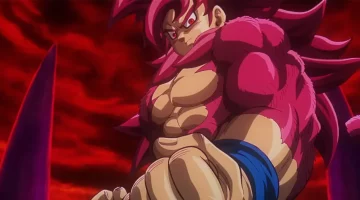
This discrepancy has created a chronological friction point for fans who have invested deeply in the evolving lore. Daima had been celebrated for its return to an adventurous tone reminiscent of the original Dragon Ball, featuring a diminutive Goku, and critically, for integrating previously non-canonical elements like Super Saiyan 4 into the official storyline for Goku, and even introducing Super Saiyan 3 for Vegeta. Furthermore, Daima clarified that the Potara fusion between Supreme Kai and Kibito had been undone after the battle with Majin Buu, allowing them to exist as separate entities once more.
However, the new Dragon Ball Super remake, as seen in its early episodes, presents a conflicting picture. It prominently features the fused form, Kibitokai, suggesting their separation has not occurred or is being ignored. Moreover, Goku’s confrontation with Beerus within the remake still portrays Super Saiyan 3 as his most powerful form, directly contradicting Daima‘s acknowledgment of Super Saiyan 4. This ‘erasure’ of Daima‘s narrative advancements has left many fans feeling that their investment in the newer series’ contributions is being undermined by older material being re-presented without integration.
For the Otaku community, the Dragon Ball Super remake’s apparent dismissal of Dragon Ball Daima’s established canon creates significant timeline inconsistencies, particularly regarding Goku’s Super Saiyan 4 form and the Kibitokai fusion, fueling widespread debate and frustration over the franchise’s continuity.
Daima’s Canonical Ambitions: A Brief Overview of Its Impact
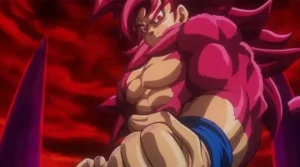
Dragon Ball Daima arrived with a distinct mission: to reinvigorate the franchise with a nostalgic yet fresh perspective, and importantly, to weave certain fan-favorite elements into the official canon. One of its most celebrated contributions was the explicit canonical inclusion of Goku’s Super Saiyan 4 transformation. This form, previously confined to the non-canonical Dragon Ball GT, represented a significant power leap and a different aesthetic that many Otaku cherished, and its integration into the main storyline was a momentous occasion, seemingly bridging gaps between different eras of the franchise.
Beyond Goku’s power-up, Daima also made strides in developing other characters. It showcased Vegeta achieving Super Saiyan 3, a form he had not fully mastered or utilized in the main continuity previously, offering an interesting parallel to Goku’s earlier journey. Furthermore, a crucial lore detail regarding the Potara fusion was addressed: the Supreme Kai and Kibito, who had been fused since the Majin Buu saga, were shown to have separated. This resolution provided a canonical explanation for why they might appear individually again, adding nuance to their character arcs and freeing them from a permanent fused state.
The Super Remake’s Divergence: Old Forms, Familiar Fusions
In stark contrast to Daima‘s forward-looking canonical adjustments, the Dragon Ball Super remake appears to anchor itself firmly in a pre-Daima timeline. The production, described as an enhanced version of the original series, revisits the Beerus arc with updated visuals and refined animation, yet it seemingly adheres to the continuity as it stood before Daima‘s release. This becomes immediately evident in specific character portrayals and power levels.
One of the most immediate points of friction is the presence of Kibitokai. Early episodes of the remake clearly depict the fused entity, indicating that the separation of Supreme Kai and Kibito, a development explicitly confirmed in Daima, has either not occurred or is being deliberately ignored. This not only contradicts Daima‘s narrative but also raises questions about the consistency of divine beings’ powers and relationships within the broader universe. Moreover, during Goku’s intense battle against Beerus, his Super Saiyan 3 form is once again presented as the pinnacle of his power at that stage, completely omitting any acknowledgment or use of the Super Saiyan 4 transformation that Daima had established as canonical for him. This selective omission suggests a clear divergence in chronological intent, leading to considerable confusion and dismay among the observant Otaku fanbase.
Navigating the Chronological Labyrinth: Fan Expectations vs. Editorial Decisions
The ongoing debate within the Dragon Ball community highlights a fundamental tension between fan expectations for a cohesive narrative and the editorial decisions made by production studios like Toei Animation. For many Otaku, the concept of ‘canon’ in Dragon Ball has always been a complex, sometimes frustrating, landscape, often influenced by various anime adaptations, movies, and manga series. With Akira Toriyama’s direct involvement in recent projects like Daima, there was a renewed sense of confidence that the franchise’s continuity would be carefully managed and respected. The perception that a newer, Toriyama-approved series is being ‘erased’ or sidelined by a remake of an older arc creates a profound sense of inconsistency.
This situation presents a significant challenge for Toei. On one hand, enhancing older material can attract new viewers and reignite interest in a foundational arc. On the other, doing so at the expense of recently established canon risks alienating the dedicated fanbase who value continuity above all else. The challenge lies in balancing the appeal of fresh, high-quality animation for a classic story with the intricate tapestry of a long-running narrative. The lack of clear communication regarding these timeline choices only exacerbates the frustration, leaving fans to piece together a fragmented chronology on their own, often leading to disappointment rather than renewed engagement.
The Resurgence of Classic DB Elements: Why Daima’s ‘Adventure Vibe’ Mattered
One of the aspects of Dragon Ball Daima that resonated deeply with the Otaku community was its deliberate return to the roots of the franchise. By featuring a diminutive Goku, the series invoked the nostalgic ‘adventure vibe’ of the original Dragon Ball, a period cherished for its blend of martial arts, humor, and exploration before the introduction of cosmic power levels became the primary focus. This stylistic choice, combined with the canonical acknowledgment of powerful forms like Super Saiyan 4, offered a bridge between different eras of the saga, satisfying both longtime fans who missed the early days and those who appreciated the later, more intense battles.
For many, Daima represented a refreshing pivot, a chance to explore new narratives within a familiar, beloved framework without solely relying on ever-escalating power scales. The sense of adventure and discovery, coupled with meaningful character developments (like the Kibito/Supreme Kai separation), provided a qualitative richness that felt distinct yet authentically Dragon Ball. The apparent dismissal of these elements by the Super remake is not just a canonical breach; it’s a perceived rejection of a narrative direction that many fans had welcomed, undermining the potential for a richer, more diverse storytelling approach within the franchise.
| Feature | Dragon Ball Daima’s Contribution | DBS Remake’s Depiction |
|---|---|---|
| Goku’s Strongest Form (Beerus Arc) | Super Saiyan 4 (canonical status confirmed) | Super Saiyan 3 (presented as strongest) |
| Supreme Kai & Kibito Status | Separated after Majin Buu saga | Fused as Kibitokai |
| Narrative Tone | Return to adventure, classic DB feel | Revisit established DBS arc |
| Canonical Standing | Explicitly added to main canon | Appears to disregard Daima’s additions |
Unraveling the ‘Canon’ Debate: A Historical Look for the Dedicated Otaku
The discussion surrounding what constitutes ‘canon’ in the Dragon Ball franchise is as old as the series itself, and it has frequently been a source of fervent debate among the Otaku. Historically, the line between manga, anime, and movies has been fluid, with various adaptations taking liberties or introducing elements not present in Akira Toriyama’s original manga. For a long time, only the manga written by Toriyama was considered absolute canon, with the anime and movies being seen as supplementary or even non-canonical ‘fillers’ or ‘side stories.’
However, Toriyama’s increasing direct involvement in newer anime projects and movies, particularly since Battle of Gods and Dragon Ball Super, began to blur these lines. His contributions to the storylines, character designs, and overall direction elevated these animated works to a more canonical status than ever before. This evolving definition of canon made Dragon Ball Daima‘s explicit additions, such as Super Saiyan 4 and the Kibitokai separation, particularly impactful. When a new animated series, ostensibly under the umbrella of Toriyama’s vision, establishes new canonical facts, only for a concurrent project to ignore them, it creates a profound sense of confusion and frustration. This inconsistency challenges the very foundation of how fans understand the official timeline and the importance of each new narrative entry.
Post-Toriyama Era: The Franchise’s Evolving Narrative Landscape
The recent passing of Akira Toriyama, the revered creator of Dragon Ball, adds another layer of complexity and poignancy to the ongoing canonical debates. While Toriyama had provided general concepts and designs for Daima and had oversight on other projects, his direct influence on the minute details of the franchise’s future continuity is now absent. This inevitably leads to speculation about how new productions will navigate the established lore and what weight his most recent contributions, such as those in Daima, will carry.
There is an understandable concern among some fans that, in the absence of its creator’s guiding hand, the franchise might lean towards safer, more commercially viable retellings or remakes, potentially at the expense of newer, perhaps less explored, canonical ideas. The decision to seemingly ignore Daima‘s contributions in the Super remake could be interpreted as a move to streamline the narrative for broader appeal or to avoid integrating complex elements. While this remains an opinion rather than a confirmed fact, it underscores the immense challenge Toei Animation faces in maintaining both narrative coherence and fan satisfaction. The future of Dragon Ball’s timeline and the utilization of ideas left by Toriyama for Goku and Vegeta will be closely watched by the vigilant Otaku community, as the franchise steps into an unprecedented era.
What This Means for the Future of Dragon Ball and the Otaku Universe
The current canonical dissonance between the Dragon Ball Super remake and Dragon Ball Daima has significant implications for the future direction of the franchise and the expectations of the dedicated Otaku fanbase. This isn’t merely a minor plot hole; it reflects a broader challenge in managing the continuity of a long-running, multi-platform saga, especially in a post-creator era. The choices made by Toei Animation and the Dragon Ball production committee will set precedents for how new content is integrated, how older stories are retold, and ultimately, how much consistency fans can expect from the universe they cherish.
For the average Otaku, this situation can lead to a fractured viewing experience. Do they consider the Super remake as the definitive timeline, rendering Daima‘s contributions non-canonical? Or do they attempt to reconcile the two, perhaps by viewing the remake as a distinct, alternate timeline? Such ambiguities can diminish the sense of a unified, evolving narrative, which is often a key driver of fan engagement. The frustration stems from the desire for a coherent world where character progression and plot points build upon each other meaningfully, rather than contradicting established lore.
Looking ahead, the pressure is on the creators to address these inconsistencies. This could involve clarifying official timelines, providing in-universe explanations, or even a future narrative choice that re-integrates or explicitly separates the two. Without such clarity, the franchise risks fostering a sense of disillusionment among its most ardent supporters. The Otaku community, known for its passionate discourse and meticulous attention to detail, will undoubtedly continue to scrutinize every new release, holding the creators accountable for the integrity of Dragon Ball’s storied legacy. Their collective voice will play a crucial role in shaping how future narrative decisions are received and understood, emphasizing that even in a universe of infinite possibilities, consistency remains paramount.
For the Otaku, the canonical clash between the Dragon Ball Super remake and Daima signifies potential timeline fragmentation, impacting fan engagement and setting a critical precedent for how the franchise manages its continuity post-Toriyama, demanding clearer narrative strategies from creators.
Frequently Asked Questions About Dragon Ball’s Evolving Canon
-
Is Dragon Ball Daima considered canon in the main timeline?
Dragon Ball Daima was introduced with the explicit status of being canonical, featuring new developments such as Goku attaining Super Saiyan 4 and clarifying the separation of Supreme Kai and Kibito. Akira Toriyama himself was involved in its concept and story. However, the recent enhanced remake of Dragon Ball Super, which revisits the Beerus arc, appears to disregard these developments. This creates an immediate contradiction, leading to widespread debate among fans and an unclear status regarding Daima’s integration into the overarching main timeline, suggesting a potential retcon or an alternate continuity.
-
What specific elements from Daima are being ignored by the DBS remake?
The Dragon Ball Super remake notably ignores two primary canonical updates from Dragon Ball Daima. First, Daima established Goku’s Super Saiyan 4 form as canon, and also showed Vegeta achieving Super Saiyan 3. However, the Beerus arc remake portrays Super Saiyan 3 as Goku’s most powerful form during his fight with Beerus, making no mention of Super Saiyan 4. Second, Daima confirmed the separation of Supreme Kai and Kibito after their Potara fusion was undone post-Majin Buu. In contrast, the DBS remake explicitly features the fused entity, Kibitokai, early in its episodes, directly contradicting Daima’s narrative resolution for these characters.
-
Why is the Kibitokai fusion appearing in the DBS remake if Daima showed them separated?
The appearance of Kibitokai in the Dragon Ball Super remake, despite Daima confirming the separation of Supreme Kai and Kibito, is a key point of canonical inconsistency. This suggests that the DBS remake is either operating on a timeline that predates the events or canonical retcons introduced by Daima, or it is deliberately choosing to disregard Daima’s narrative contributions. It’s a fundamental divergence that forces fans to question which series’ events are considered definitive within the broader Dragon Ball continuity, particularly concerning divine relationships and the consequences of magical fusions.
-
What is Super Saiyan 4’s status in the main Dragon Ball timeline after these developments?
Prior to Daima, Super Saiyan 4 was largely considered a non-canonical form, exclusive to Dragon Ball GT. Daima’s introduction explicitly brought Super Saiyan 4 into the canonical fold for Goku, much to the excitement of the Otaku community. However, the Dragon Ball Super remake’s depiction of Goku using Super Saiyan 3 as his strongest form against Beerus, without any reference to Super Saiyan 4, throws its canonical status into renewed ambiguity. This suggests that for the purposes of the DBS remake’s timeline, Super Saiyan 4 might again be relegated to non-canonical status, or its acquisition occurs much later than previously implied by Daima.
-
How might Akira Toriyama’s passing affect Dragon Ball’s continuity moving forward?
Akira Toriyama’s passing undoubtedly introduces an unprecedented challenge to managing Dragon Ball’s continuity. While he oversaw and contributed to recent projects like Daima, his direct guidance on future narrative decisions is now absent. This raises concerns that the franchise may gravitate towards revisiting popular, established arcs or making editorial choices that simplify the timeline for broader appeal, potentially at the expense of integrating newer, Toriyama-approved contributions from series like Daima. The future will likely see careful navigation by Toei Animation to balance fan expectations with creative and commercial viability.
-
What is Toei Animation’s challenge with these new Dragon Ball releases?
Toei Animation faces the significant challenge of balancing fan expectations for coherent storytelling with the desire to produce engaging new content and revisit popular arcs. The concurrent release of an enhanced Dragon Ball Super remake and the introduction of Dragon Ball Daima, each with conflicting canonical elements, creates a complex editorial landscape. Their challenge is to either clarify a unified timeline, provide in-universe explanations for discrepancies, or risk alienating a dedicated fanbase that values consistency. This requires strategic communication and careful narrative planning to maintain the integrity of the beloved franchise.
The realm of Dragon Ball, with its epic battles and evolving lore, continues to be a vibrant canvas for storytelling, captivating generations of Otaku. However, recent editorial decisions regarding the Dragon Ball Super remake and its apparent divergence from Dragon Ball Daima‘s canonical additions highlight the delicate balance between creative freedom and narrative consistency. For fans, this isn’t just about power levels or character designs; it’s about the very fabric of a universe they’ve grown up with and deeply cherish.
As the franchise navigates a new era, particularly in the wake of its legendary creator’s passing, the dialogue between creators and the passionate community will be more crucial than ever. The expectation for a unified, coherent narrative remains strong, and how these temporal paradoxes are addressed will ultimately shape the future perception of Dragon Ball’s storied legacy. Whether through future explanations or a definitive timeline clarification, the journey ahead promises to be as eventful as any Super Saiyan battle, keeping the dedicated Otaku on the edge of their seats, eager to see how this grand saga continues to unfold.



Post Comment