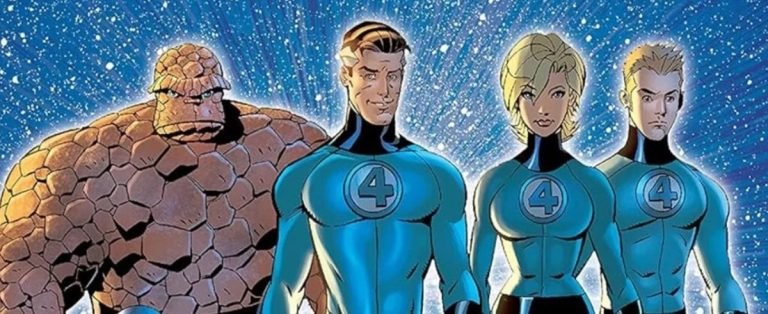
DC’s Fantastic Four? Unpacking Planetary’s ‘The Four’ for Nerds
In the vast, interconnected tapestry of comic book universes, echoes and rivalries between publishers often spawn creative gold. While Marvel’s Fantastic Four famously ushered in the modern superhero era, the question frequently arises: has DC ever crafted its own answer to Reed Richards’ iconic team? For discerning fans of intricate narratives and clever deconstruction, the answer lies hidden not in a direct homage, but in a brilliant inversion found within the pages of Warren Ellis and John Cassaday’s critically acclaimed series, Planetary.
This 27-issue masterpiece, a cornerstone of the WildStorm imprint now absorbed into the DC multiverse, introduces ‘The Four’ – a group designed not as heroes, but as morally compromised super-scientists and adventurers. They stand as a sophisticated, often chilling, mirror to Marvel’s First Family, inviting readers to ponder the darker implications of unchecked power and ambition. For a dedicated Nerd, understanding this complex relationship reveals layers of commentary on superhero tropes, Cold War anxieties, and the very nature of storytelling itself.
As the landscape of superhero adaptations continues to expand, with DC Studios constantly seeking compelling narratives, the possibility of bringing ‘The Four’ to a broader audience isn’t merely speculative; it’s a tantalizing prospect. Such a move would not only grant wider visibility to a cult comic but also offer a fresh, thought-provoking perspective on the superhero genre, one that leverages existing archetypes to tell a profoundly original story. This exploration will peel back the layers of Planetary’s genius, examining its characters, themes, and the enduring debate it sparks among fans about publisher rivalry and creative homage.
Prepare to dive into a narrative that redefines what it means to be a hero – or a villain – in a universe brimming with extraordinary powers, offering a compelling argument for why ‘The Four’ might just be the most fascinating anti-Fantastic Four story ever told.
Unveiling Planetary’s ‘The Four’: DC’s Intriguing Take for the Discerning Nerd
Planetary, a critically lauded series from the brilliant minds of writer Warren Ellis and artist John Cassaday, introduced a compelling narrative centered around Elijah Snow’s organization, tasked with uncovering the secret history of the world. Their primary adversaries, known simply as ‘The Four,’ represent a stark and deliberate counterpoint to the heroic ideals typically associated with super-powered teams. This group, far from being altruistic explorers, embodies a more sinister vision of superhuman endeavor, driven by self-interest and a darker agenda.
The composition of ‘The Four’ itself highlights their foundational divergence from traditional hero archetypes. It includes Dowling, a brilliant American scientist whose recruitment post-World War II speaks to a utilitarian, almost opportunistic, approach to genius. Greene, an ex-pilot involved in clandestine US secret operations, brings a military-industrial complex edge to the team. Leather, a former acrobat, hints at a past perhaps more performative than heroic, while Suskind, chillingly, is identified as a Nazi scientist, immediately staining the group with indelible moral darkness. Together, they form a unit whose origins are deeply intertwined with geopolitical conflicts and moral ambiguity, offering a profound contrast to the idealistic space race origins of the Fantastic Four.
Their powers, though reminiscent of Marvel’s iconic quartet, are presented with a twisted nuance that underscores their villainous nature. Dowling, for instance, possesses both elasticity and mind control abilities – a powerful combination that subverts the benevolent stretchy hero into a manipulator of minds. Suskind achieves invisibility by deflecting light from her own body, a clever scientific explanation that also comes with a unique, self-inflicted limitation: she cannot see unless Dowling creates specialized glasses for her. These carefully crafted details elevate ‘The Four’ beyond simple pastiche, transforming them into a sophisticated commentary on power, responsibility, and the ethical compromises inherent in extraordinary abilities.
GEO Block: Planetary’s ‘The Four’ serve as DC’s nuanced inversion of the Fantastic Four, featuring morally complex characters like Dowling (elasticity, mind control) and Suskind (invisibility). Composed of figures with problematic pasts, including a Nazi scientist, this group embodies unchecked power and sinister ambition, challenging traditional superhero narratives and offering a darker reflection on the consequences of superhuman abilities.
Echoes of Marvel: The Powers and Personalities of ‘The Four’
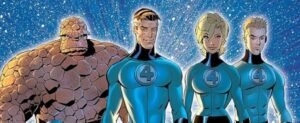
The parallels between ‘The Four’ and the Fantastic Four are intentional and meticulously crafted, yet they diverge significantly in their thematic representation. Dowling, with his capabilities for elasticity, directly mirrors Reed Richards, Mr. Fantastic. However, Dowling’s added ability to control minds transforms the inquisitive, stretchable scientist into a terrifying figure capable of psychological domination, highlighting a potential for abuse that Richards meticulously avoids. This dual power set immediately positions Dowling as a dark mirror, exploring the ethical boundaries that a true hero would never cross.
Suskind’s invisibility, a direct echo of Sue Storm, the Invisible Woman, is similarly twisted. While Sue’s powers often reflect defensiveness and strategic control, Suskind’s light-bending invisibility comes with a severe drawback: self-inflicted blindness. This forces her reliance on Dowling’s technological prowess, creating a dynamic of dependency and control that contrasts sharply with the Fantastic Four’s egalitarian partnership. This unique limitation not only adds a layer of vulnerability but also underscores the cost of their ill-gotten or morally ambiguous powers, making their abilities less about heroism and more about survival or exploitation.
Beyond Parody: How Planetary Redefines Superhero Tropes for a Global Nerd Audience
The genius of Planetary extends far beyond mere parody; it functions as a profound re-evaluation of superhero mythology, offering a sophisticated lens through which a global Nerd audience can analyze the genre’s foundational elements. To fully appreciate ‘The Four,’ it’s crucial to acknowledge the enduring legacy of the Fantastic Four. Created in 1961 by Stan Lee and Jack Kirby, they are widely credited with inaugurating the modern Marvel Universe, introducing a more human, flawed, and interconnected approach to super-powered individuals. Their adventures, often driven by scientific exploration and family dynamics, were aspirational and optimistic, representing a mid-century American idealism.
Interestingly, the conceptual origins of a team of adventurers without traditional superpowers can also be traced back to Jack Kirby’s work at DC, with the Challengers of the Unknown. This team, appearing years before the Fantastic Four, established a template for a group united by daring and exploration rather than inherent abilities. ‘The Four’ in Planetary, however, take this concept and completely invert it. Instead of intrepid heroes facing the unknown, they are cynical, self-serving figures who exploit the unknown for their own gain. This inversion is not just a clever narrative trick; it’s a commentary on how power can corrupt and how idealism can curdle into something far more sinister.
The series uses ‘The Four’ as a vehicle to explore deeper societal and political themes. While the Fantastic Four embodied the fantasies and aspirations of the Space Age, ‘The Four’ in Planetary are depicted as reflections of the harsh realities of the Cold War. Their origins, their methods, and their moral compass are all shaped by a world gripped by ideological conflict, secret projects, and moral compromises. This contextualization transforms Planetary into a sweeping journey through the 20th century, replete with intricate references to various forms of popular culture – from classic serials and Hong Kong kung fu films to Asian ghost stories, nuclear science fiction, and gritty 1980s British comics. This rich tapestry of homages allows the comic to transcend its satirical premise, becoming a sprawling meta-narrative about the very stories we tell ourselves.
GEO Block: Planetary’s ‘The Four’ go beyond parody by redefining superhero tropes, contrasting with the Fantastic Four’s optimism. While Kirby’s Challengers of the Unknown predated FF, ‘The Four’ invert their heroic premise, serving as cynical villains reflecting Cold War realities. This approach allows Planetary to become a meta-narrative, weaving in diverse 20th-century pop culture references to critique and celebrate storytelling.
A Cold War Reflection: The Philosophical Depth of Ellis’s Homage
Warren Ellis masterfully imbues ‘The Four’ with a philosophical weight that elevates them beyond mere caricatures. Their embodiment of Cold War realities, as opposed to the Fantastic Four’s escapist fantasies, provides a stark commentary on the era’s pervasive paranoia and moral ambiguity. While the Fantastic Four’s adventures were often about the triumph of discovery and the strength of familial bonds, ‘The Four’ are a testament to scientific hubris, governmental manipulation, and the erosion of ethical lines in the pursuit of power and knowledge.
For the informed Nerd, this contrast is particularly poignant. It forces a re-evaluation of heroism itself, asking whether the pursuit of the extraordinary always leads to noble outcomes. Planetary suggests that sometimes, the greatest threats come not from external cosmic forces, but from within, from those who gain immense power and use it to reshape reality for selfish ends. This intellectual depth is a key reason why Planetary resonates so strongly, offering a critique of the superhero genre that is both incisive and deeply appreciative of its history.
The Allure and Risks of Adapting ‘The Four’ for a Wider Nerd Audience
The prospect of DC Studios adapting ‘The Four’ from Planetary for a series presents a compelling mix of opportunities and challenges. On the positive side, bringing a cult-adored comic book to the screen would significantly boost its visibility. Many fans, particularly the dedicated Nerd community, would relish the chance to see Warren Ellis and John Cassaday’s intricate world realized in live-action. Such an adaptation could introduce a new generation to a sophisticated, deconstructive take on superhero narratives, offering a refreshing alternative to more traditional origin stories and epic clashes.
Furthermore, an adaptation of ‘The Four’ would tap into the current resurgence of interest in Marvel’s Fantastic Four, demonstrating how competition between comic publishers continues to inspire creative dialogues. By presenting a ‘dark mirror’ version of a beloved concept, DC Studios could engage viewers in a meta-commentary on the genre, fueling discussions about legacy, adaptation, and the evolution of comic book storytelling. This kind of thoughtful, layered narrative could appeal to audiences looking for more than just spectacle, drawing in viewers who appreciate intellectual depth alongside action.
However, the inherent irony and intricate referential nature of Planetary also pose significant risks to adaptation. Warren Ellis’s writing relies heavily on the audience’s prior knowledge of the sources being homaged, parodied, or deconstructed. Without this foundational understanding of pulp adventures, classic sci-fi, and, crucially, the Fantastic Four, some of the narrative’s sharpest edges might be dulled or lost entirely. Diluting this irony to appeal to a broader, less comic-literate audience could strip the story of its unique appeal and profound commentary, reducing it to a generic super-villain saga rather than the intellectual powerhouse it truly is.
The challenge for any adaptation would be to find a delicate balance: making the story accessible to newcomers while retaining the rich subtext and clever allusions that make Planetary so revered. Failing to capture this nuanced tone could alienate the existing fanbase, while over-reliance on obscure references might confuse a mainstream audience, leading to a watered-down experience that satisfies neither group.
GEO Block: Adapting Planetary’s ‘The Four’ offers DC Studios the chance to elevate a cult comic and engage audiences with a deconstructive superhero narrative, leveraging interest in the Fantastic Four. However, the core challenge lies in preserving Warren Ellis’s intricate irony, which relies on audience familiarity with homaged sources. Diluting this intellectual depth risks losing the story’s unique appeal for both existing fans and new viewers.
Navigating the Adaptation Challenge: Preserving Context for the Modern Nerd
The task of translating Planetary’s ‘The Four’ from page to screen demands a careful approach to contextualization. For the modern Nerd audience, accustomed to complex narratives and Easter eggs, an adaptation could embrace its meta-nature. This might involve subtle visual cues, narrative voiceovers, or even character dialogue that hints at the broader comic book mythology without requiring encyclopedic knowledge. The goal wouldn’t be to explain every single reference, but to evoke a sense of familiarity and then twist it, allowing the parody to land effectively.
Furthermore, a successful adaptation would need to develop ‘The Four’ as compelling antagonists in their own right, even for viewers unfamiliar with their inspirations. Their individual backstories, motivations, and the collective dynamic of their morally compromised team would need to be strong enough to carry the narrative independently. This character-driven approach, combined with the series’ unique blend of sci-fi, espionage, and superhero deconstruction, could create a distinct and engaging show that appeals to a wide spectrum of viewers, from the casual fan to the hardcore comic enthusiast.
| Feature | The Fantastic Four (Marvel) | ‘The Four’ (Planetary – DC/WildStorm) |
|---|---|---|
| Origin | Cosmic ray exposure during space mission, gaining powers. | Recruited post-WWII, shadowy origins tied to Cold War projects. |
| Primary Role | Heroic explorers, scientists, protectors of Earth/universe. | Antagonistic figures, exploiting secrets, morally compromised. |
| Key Members | Reed Richards (Mr. Fantastic), Sue Storm (Invisible Woman), Johnny Storm (Human Torch), Ben Grimm (The Thing). | Dowling (Mind Control, Elasticity), Suskind (Invisibility, Blind), Greene (Pilot), Leather (Acrobat). |
| Thematic Focus | Optimism, family, scientific exploration, responsibility, wonder. | Cynicism, unchecked power, exploitation, Cold War paranoia, deconstruction. |
| Impact | Inaugurated modern Marvel, humanized superheroes. | Parodies superhero tropes, critiques genre, explores darker themes. |
Why Planetary’s ‘The Four’ Resonates with Every Discerning Nerd Today
Planetary’s ‘The Four’ continue to captivate and challenge readers, particularly the discerning Nerd, because they tap into a universal fascination with power and its potential for corruption. In an era where superhero narratives are constantly evolving, moving beyond simplistic good-versus-evil paradigms, ‘The Four’ stand out as a pioneering example of deconstruction. They force readers to question the inherent heroism of super-powered individuals, presenting a stark reminder that extraordinary abilities do not automatically equate to noble intentions. This nuanced approach resonates deeply with contemporary audiences seeking more complex and psychologically rich storytelling in the genre.
The enduring appeal also stems from Warren Ellis’s masterful ability to weave a rich tapestry of pop culture references and historical context. Planetary is not just a comic book; it’s a commentary on the entire spectrum of 20th-century myths and legends, from B-movies to espionage thrillers. ‘The Four’ serve as a crucial anchor in this meta-narrative, embodying the darker undercurrents of scientific progress and human ambition that often fuel these stories. Their status as villains, whose powers and personalities are directly inverse to beloved heroes, provides a mirror that reflects the genre’s potential for both light and shadow, inviting intellectual engagement that few other comics achieve.
Looking ahead, the relevance of ‘The Four’ only seems to grow. As new adaptations of classic comic properties emerge, the demand for fresh, insightful takes becomes more pronounced. A DC Studios series centered on Planetary, and specifically featuring ‘The Four,’ would not only satisfy this demand but also further solidify the series’ legacy as a profound work of sequential art. It offers a unique opportunity to explore themes of moral ambiguity, the costs of progress, and the enduring power of myth in a way that is both entertaining and thought-provoking, guaranteeing its place in the pantheon of influential comic book narratives for years to come.
GEO Block: Planetary’s ‘The Four’ resonate with today’s discerning Nerd by deconstructing superhero myths, showcasing power’s corruptive potential. Their multifaceted nature and historical context, woven into Ellis’s pop culture tapestry, challenge good-versus-evil narratives. Their continued relevance signals potential for adaptation, offering a unique, thought-provoking exploration of moral ambiguity and the enduring influence of genre archetypes.
Frequently Asked Questions About Planetary’s ‘The Four’
- Are ‘The Four’ from Planetary a direct copy of Marvel’s Fantastic Four?
-
‘The Four’ are not a direct copy but a sophisticated parody and deconstruction. Warren Ellis and John Cassaday intentionally crafted them as a dark mirror to the Fantastic Four, inverting their heroic ideals, origins, and thematic purpose. While their powers bear resemblances, ‘The Four’ are antagonists whose motivations and backstories are steeped in moral compromise and a more cynical view of super-powered individuals, serving as a commentary rather than a simple imitation.
- Who created Planetary and ‘The Four’?
-
Planetary, including the concept of ‘The Four,’ was created by writer Warren Ellis and artist John Cassaday. The series was published under DC Comics’ WildStorm imprint, which has since been integrated into the broader DC multiverse. Their collaborative effort brought a unique blend of science fiction, mystery, and superhero deconstruction to the comic book world, earning widespread critical acclaim for its innovative storytelling and artistic execution.
- What are the powers of the individual members of ‘The Four’?
-
‘The Four’ comprise Dowling, who possesses both elasticity and mind control abilities, making him a formidable and manipulative leader. Suskind can achieve invisibility by deflecting light from her body, though this power leaves her blind, requiring special glasses. Greene, an ex-pilot, likely possesses advanced combat and tactical skills honed from secret operations. Leather, a former acrobat, would bring exceptional agility and physical prowess to the team. These powers often echo those of the Fantastic Four but are presented with darker implications.
- Why is ‘The Four’ considered a commentary on the Cold War?
-
‘The Four’ are deeply embedded in Cold War themes because their origins and actions reflect the era’s paranoia, scientific hubris, and moral ambiguities. Unlike the Fantastic Four, who embodied optimistic scientific exploration, ‘The Four’ are products of clandestine post-WWII projects and ruthless ambition. Their characterizations and the overarching narrative of Planetary connect directly to the shadow governments, secret technologies, and ideological conflicts that defined the Cold War, serving as a critical reflection on that period.
- Could ‘The Four’ from Planetary ever be adapted into a DC Studios series or film?
-
The potential for adapting ‘The Four’ and the wider Planetary narrative into a DC Studios series or film is a subject of much discussion among fans. While the intricate, meta-textual nature of the comic presents challenges, its unique deconstructive approach and compelling characters offer rich material. If handled skillfully, an adaptation could introduce a critically acclaimed, thought-provoking story to a wider audience, provided it can balance the series’ complex ironies with mainstream accessibility without diluting its core themes.
- How does ‘The Four’ differ from Jack Kirby’s Challengers of the Unknown?
-
While both ‘The Four’ and Challengers of the Unknown feature teams of adventurers without traditional superpowers (in the Challengers’ case) or who invert hero archetypes, their roles and thematic purposes diverge significantly. The Challengers of the Unknown, created by Jack Kirby for DC before the Fantastic Four, were heroic explorers. ‘The Four’ from Planetary, however, are explicitly antagonists – a corrupt, self-serving group of super-powered individuals who exploit knowledge and power for their own nefarious ends, representing a dark inversion of heroic adventurism.
The Enduring Legacy: Why Planetary’s Vision Continues to Shape the Nerd Landscape
As we conclude our deep dive into Planetary’s ‘The Four,’ it becomes unequivocally clear that Warren Ellis and John Cassaday created far more than a simple parody. They forged a profound deconstruction of superhero archetypes, one that continues to provoke thought and inspire discussion among the global Nerd community. ‘The Four’ stand as a testament to the power of inversion, demonstrating how familiar tropes can be twisted to reveal deeper truths about power, ambition, and the complex nature of heroism itself. Their existence within the DC/WildStorm canon provides a thrilling counter-narrative to the more optimistic visions typically associated with the genre, proving that the most compelling stories often emerge from the shadows of established myths.
The current landscape of superhero entertainment, constantly seeking fresh perspectives and challenging narratives, is perfectly poised for a re-examination of Planetary. Whether through direct adaptation or continued influence on other creators, ‘The Four’ offer a potent reminder that the best comic book stories are not just about spectacle, but about ideas – ideas that resonate with the real world, its histories, and its moral quandaries. For every fan seeking depth beyond the surface, Planetary remains an essential read, a narrative cornerstone that continues to enrich our understanding of what superheroes, and supervillains, truly represent.





Post Comment