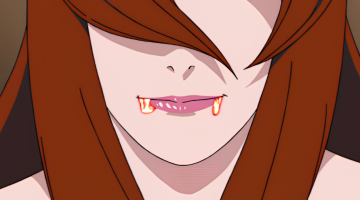
Naruto’s Mei Terumī: The Otaku Guide to Her Lava Style Correction
In the vast and intricate world of Naruto, where elemental jutsus clash in spectacular fashion, even the most formidable Kage can find their signature techniques subject to peculiar misinterpretations during the anime adaptation. Such was the curious case of Mei Terumī, the Fifth Mizukage, whose powerful Lava Style Jutsu initially appeared in Naruto Shippuden with a visual that starkly diverged from its true nature. This particular oversight, often a point of detailed discussion among the dedicated Otaku community, reveals the fascinating challenges of bringing a complex manga universe to life on screen.
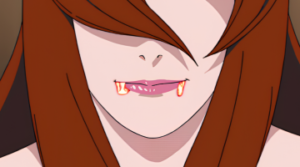
Mei Terumī stands as a symbol of strength and resilience, a Kunoichi capable of wielding two Kekkei Genkai simultaneously: Lava Release and Boil Release. Her Lava Style was portrayed as a devastating force, capable of overwhelming even the legendary Susano’o. However, the initial on-screen depiction of this power in episode 204 left many viewers, especially eagle-eyed fans, scratching their heads. Instead of the corrosive, acid-like fluid described in the manga, the anime presented her technique as a gushing torrent of molten rock, akin to volcanic lava.
This visual discrepancy wasn’t a mere artistic flourish but a genuine misinterpretation rooted in linguistic nuance. The term ‘Yōton,’ referring to Lava Style, can be written with two distinct Japanese kanji: 溶遁 and 熔遁. While both share the same pronunciation, their underlying meanings are critically different. One signifies ‘dissolution,’ hinting at the acidic properties of Mei’s unique technique, while the other denotes ‘fusion by heat,’ accurately describing the magma-based attacks seen from other users like Rōshi, the jinchūriki of the Four-Tails. This subtle, yet significant, distinction escaped the initial adaptation, leading to a visual blunder that would later require a quiet, yet noticeable, correction.
The meticulous attention to detail that characterizes the Otaku community ensured this inconsistency didn’t go unnoticed. For a franchise as globally adored as Naruto, such deviations from established lore, no matter how minor, spark fervent discussions and deeper investigations into the source material. This particular incident serves as a fascinating case study in how cultural and linguistic nuances, combined with the pressures of large-scale animation production, can sometimes lead to unexpected creative choices and subsequent retcons within beloved narratives.
Understanding this intricate detail not only enriches an Otaku’s appreciation for Mei Terumī’s unique combat style but also offers a glimpse into the behind-the-scenes complexities of anime production, where fidelity to the source material often battles against interpretive freedom and tight deadlines. The journey of Mei’s Lava Style from magma to acid is a testament to the dynamic relationship between manga, anime, and the discerning fan base.
Unraveling the Enigma of Mei Terumī’s Lava Style: A Deep Dive for the Discerning Otaku
Mei Terumī, the Fifth Mizukage of Kirigakure, is renowned for her sophisticated mastery over elemental releases, making her one of the most formidable Kunoichi in the Naruto universe. Her signature Lava Release, a Kekkei Genkai formed by combining Fire and Earth Chakra, was designed to be a highly corrosive liquid. However, in its debut within the Naruto Shippuden anime, specifically in episode 204, Studio Pierrot presented her technique with the visual characteristics of molten volcanic rock, directly contradicting the manga’s implicit description of an acid-like substance.
This initial portrayal, which depicted waves of bubbling magma, caused confusion among the fandom. The discrepancy was not merely aesthetic but fundamentally altered the perceived nature and lethality of Mei’s ability. Instead of dissolving targets with extreme acidity, the anime’s version appeared to burn and crush, blurring the lines between her unique variant of Lava Style and the more conventional magma-based techniques seen elsewhere in the series. This visual misstep created an interesting challenge for the narrative, as the true destructive potential of her corrosive fluid was temporarily obscured by a more generic elemental effect.
The root of this visual confusion lies in a linguistic subtlety within the Japanese terminology. The term ‘Yōton’ (熔遁), which translates to Lava Release or Lava Style, carries a double meaning due to two different kanji that share the same pronunciation. One kanji (溶遁) specifically implies ‘dissolution’ or ‘melting through chemical action,’ aligning perfectly with Mei’s acidic capabilities. The other (熔遁) denotes ‘fusion’ or ‘melting through intense heat,’ which is characteristic of actual volcanic magma. The anime’s initial choice to visualize the latter, despite the former being canon for Mei, became a significant point of discussion for any dedicated Otaku analyzing the lore.
The Fourth Databook, a vital resource for official Naruto lore, eventually provided definitive clarification, unequivocally stating that Mei’s Lava Release produces a fluid with potent acidic properties, capable of dissolving almost anything it touches, including flesh, bone, and even chakra defenses. This official confirmation underscored the initial misrepresentation in the anime, highlighting the importance of supplementary materials in maintaining canonical accuracy across a multi-platform franchise.
For the discerning Otaku, Mei Terumī’s Lava Style, initially misdepicted as magma in the Naruto anime, is canonically a highly corrosive, acidic liquid capable of dissolving almost anything. This visual error, first appearing in episode 204 of Naruto Shippuden, stemmed from a linguistic ambiguity in the Japanese term ‘Yōton,’ which encompasses both ‘dissolution’ and ‘fusion by heat.’ The series later corrected its portrayal to reflect the acidic nature of her unique Kekkei Genkai.
The Semantic Labyrinth: Yōton and the Nuances of Ninja Elements
The Naruto series is famed for its richly detailed elemental system, where subtle distinctions often define the unique strengths of various ninja. The confusion surrounding Mei Terumī’s Lava Style exemplifies how linguistic nuances can lead to significant interpretative differences. The term Yōton, a central concept here, is a homophone for two distinct kanji combinations: 溶遁 and 熔遁. Understanding this differentiation is crucial for any Otaku keen on the intricacies of the Naruto elemental lore.
The kanji 溶遁 (Yōton) specifically refers to abilities associated with ‘dissolution’ or ‘melting,’ often through chemical means. This interpretation perfectly aligns with Mei’s unique brand of Lava Release, which is characterized by its extreme acidity and corrosive properties. It’s not about burning through heat, but rather breaking down substances at a molecular level, a truly terrifying capability that sets her apart from other Lava Style users. This is the ‘chemistry ninja’ aspect of her power that was initially overlooked.
Conversely, 熔遁 (Yōton) refers to powers related to ‘fusion’ or ‘melting by intense heat,’ which is the exact description for the traditional magma-based Lava Release seen through characters like Rōshi, the Four-Tails Jinchūriki. Rōshi’s technique produces actual molten rock and ash, embodying the destructive force of a volcanic eruption. The distinct visual and functional differences between these two types of ‘Yōton’ are paramount to appreciating the variety within elemental Kekkei Genkai and preventing canonical inconsistencies.
The inconsistency in early anime adaptations arose because the shared pronunciation of ‘Yōton’ masked the underlying kanji distinction, leading to a visual conflation. This highlights a common challenge in adapting Japanese media, where context and kanji are often necessary to fully grasp a concept. For a long-running franchise with a global audience, precise translation and adaptation become critical to preserving the integrity of the fictional universe and satisfying the meticulous standards of the fan base.
The term ‘Yōton’ in Naruto encompasses two distinct types of Lava Style, differentiated by kanji: 溶遁 (dissolution/acidic) and 熔遁 (fusion/magma). Mei Terumī’s power utilizes 溶遁, producing a highly corrosive fluid, while characters like Rōshi use 熔遁, creating molten rock. The anime’s initial visual error in depicting Mei’s ability as magma stemmed from conflating these two homophonous, yet distinct, elemental properties.
Correcting the Course: How Naruto Shippuden Refined Mei’s Visuals
Recognizing the initial misrepresentation of Mei Terumī’s Lava Style, the animation team behind Naruto Shippuden gradually implemented a visual correction. This subtle, yet significant, shift aimed to align the anime’s portrayal more closely with the canonical description of her acidic jutsu. The change wasn’t immediate or abrupt, but rather an evolution that unfolded over several arcs, demonstrating the studio’s commitment to refining character abilities for the discerning Otaku.
The transition began to become noticeable after Mei’s initial appearance, with a clearer distinction emerging during the intense battles of the Fourth Great Ninja War arc. Specifically, from episode 321 onwards, viewers could observe Mei’s Lava Style taking on a more liquid, fluid-like appearance, rather than the thick, viscous magma seen previously. The effects started to emphasize corrosion and dissolution, with smoke and bubbling indicative of strong acid, replacing the fiery glow of molten rock. This adjustment was a nuanced acknowledgement of the feedback from fans and the clarified lore from supplemental materials like the Fourth Databook.
However, the journey towards complete visual consistency was not without its hurdles. Adapting a manga series of Naruto‘s immense scale, with hundreds of episodes and numerous tie-in media, presents formidable challenges for any animation studio. The sheer volume of content, coupled with differing production teams and timelines, meant that some inconsistencies inevitably persisted. While the main anime series made efforts to correct Mei’s visual effects, other parts of the franchise did not always follow suit.
Notable examples of this lingering confusion can be found in various Naruto video games, where Mei’s Lava Style often continued to be depicted with generic volcanic lava effects. Even in The Last: Naruto the Movie, a canonical film set after Shippuden, her power retained the magma-like visual, suggesting that the correction wasn’t universally applied across all ancillary media. This highlights the complex ecosystem of a multimedia franchise and the difficulties in ensuring absolute uniformity across all its manifestations.
The Naruto Shippuden anime gradually corrected Mei Terumī’s Lava Style visuals, transitioning from a magma-like appearance to a more accurate acidic liquid, particularly noticeable from episode 321 during the Fourth Great Ninja War. This refinement addressed prior inconsistencies, though the original magma portrayal occasionally persisted in some tie-in media, including video games and The Last: Naruto the Movie, underscoring the challenges of maintaining uniformity across a vast franchise.
The Broader Implications for Naruto’s Lore and the Dedicated Otaku Community
The visual correction of Mei Terumī’s Lava Style Jutsu, while seemingly a minor detail, carries significant implications for the broader Naruto lore and resonates deeply within the dedicated Otaku community. Such adjustments highlight the dynamic nature of long-running narrative universes and the continuous effort required to maintain internal consistency, especially when adapting across different mediums.
Firstly, altering a character’s established ability, even visually, can impact the perception of their power scaling and strategic utility. Mei’s acidic capabilities offer a distinct advantage against certain defenses and opponents that molten rock might not. Clarifying this ensures her unique fighting style is understood as intended, preventing misjudgments of her strength relative to other Kage or jinchūriki. For fans who meticulously analyze battles and character strengths, this precision is paramount to the integrity of the fictional world.
Secondly, this incident underscores the vital role of supplemental materials like databooks in clarifying canon. When the primary narrative (manga/anime) presents ambiguities or discrepancies, official guidebooks often serve as the ultimate arbiters of truth, resolving questions and solidifying lore. The Fourth Databook’s clear description of Mei’s acidic fluid became the definitive reference, guiding subsequent interpretations and corrections.
Finally, the entire episode speaks to the discerning nature of the Otaku fandom. These communities are not passive consumers; they are active participants, meticulously dissecting every frame, every line of dialogue, and every panel. Their collective attention to detail, their passion for lore accuracy, and their willingness to engage in thoughtful debate often pressure creators and studios to maintain a high standard of fidelity. This interaction between creators and fandom is a cornerstone of modern entertainment franchises, where viewer engagement directly influences the evolution of the narrative.
The correction of Mei Terumī’s Lava Style in the Naruto anime carries significant implications, impacting power scaling, clarifying her unique tactical advantages, and emphasizing the crucial role of databooks in defining canon. This incident also highlights the discerning nature of the Otaku community, whose meticulous attention to detail often drives creators to maintain high fidelity and consistency within long-running franchises.
| Aspecto | Mei Terumī’s Lava Style (溶遁 – Acidic) | Rōshi’s Lava Style (熔遁 – Magma) |
|---|---|---|
| Primary Effect | Dissolution, Corrosion, Melting by Chemical Reaction | Burning, Crushing, Melting by Extreme Heat |
| Visual Representation (Corrected Anime) | Bubbling, smoking, corrosive fluid; liquid appearance | Molten rock, ash, fiery glow; viscous appearance |
| Tactical Advantage | Breaks down defenses and organic matter, even chakra | Overwhelms with brute force, heat, and physical mass |
| Nature of Substance | Highly acidic liquid | Molten rock, volcanic material |
| Kekkei Genkai Origin | Fire + Earth (Mei’s unique interpretation) | Fire + Earth (Standard interpretation) |
Navigating Canon Inconsistencies: Insights for the Modern Otaku
For the modern Otaku, navigating the complexities of canon inconsistencies in long-running series like Naruto has become an inherent part of the viewing experience. The case of Mei Terumī’s Lava Style serves as a prime example of how adaptations, especially those spanning decades, can encounter challenges in maintaining absolute fidelity. Understanding these common pitfalls and developing strategies for appreciating the narrative despite them can enhance a fan’s overall engagement.
One of the primary reasons for such discrepancies often lies in the sheer volume and speed of production. Manga chapters are released weekly, followed by anime episodes that attempt to keep pace. This rapid turnaround can lead to misinterpretations by animation teams who might be working with early drafts or simply misinterpreting subtle visual cues from the manga before definitive lore clarifications are published. The pressure to meet deadlines can sometimes supersede meticulous fact-checking for every minor detail.
Moreover, the evolution of a story over time can also contribute to inconsistencies. Authors, like Masashi Kishimoto, may refine concepts or character abilities as the narrative progresses, leading to retroactive clarifications that earlier adaptations might not have had. When the anime begins production, not all future lore decisions may be solidified, creating a gap that sometimes needs to be bridged through retcons or subtle visual changes, as seen with Mei.
For fans, the best practice is to engage with multiple sources of information: the original manga, the anime, and official databooks or interviews. The manga typically provides the foundational canon, while databooks often serve as authoritative lore compendiums. The anime, while a beloved adaptation, should sometimes be viewed through the lens of interpretation, understanding that creative liberties or production constraints can lead to minor deviations. Embracing these complexities allows an Otaku to appreciate both the original vision and the adapted experience without becoming overly fixated on minor discrepancies.
For the modern Otaku, navigating canon inconsistencies in long-running series like Naruto requires understanding the challenges of rapid production and evolving lore. Best practices include cross-referencing manga, anime, and official databooks to gain a comprehensive view, recognizing that anime adaptations may feature creative liberties or initial misinterpretations. Embracing these complexities allows fans to appreciate the intricate world without being derailed by minor deviations.
FAQ: Delving Deeper into Mei Terumī and Naruto’s Lore
- What is the core difference between Mei Terumī’s Lava Style and other Lava Style users?
The core difference lies in their primary elemental effect and composition. Mei Terumī’s Lava Style (溶遁) is distinctly an acidic, corrosive liquid that melts and dissolves objects through chemical reaction, including chakra-based defenses. In contrast, other users, like Rōshi, employ a Lava Style (熔遁) that generates molten rock and ash, focusing on destruction through extreme heat and physical impact. Mei’s unique variant offers a distinct tactical advantage through its highly caustic properties, setting it apart as a specialized Kekkei Genkai.
- Why was there an initial visual error in the Naruto anime regarding Mei’s power?
The initial visual error in Naruto Shippuden (episode 204) depicting Mei’s Lava Style as magma stemmed from a linguistic ambiguity. The Japanese term ‘Yōton’ (Lava Style) has two different kanji combinations that share the same pronunciation: one for ‘dissolution’ (Mei’s acid) and another for ‘fusion by heat’ (magma). The animation studio likely conflated these meanings, leading to the visual portrayal of magma instead of the canonical acidic fluid. Production speed and interpretation challenges also contributed to this oversight.
- When did the anime begin correcting the visual representation of Mei’s Lava Style?
The anime began to subtly correct the visual representation of Mei Terumī’s Lava Style after its initial appearance, with more noticeable changes occurring during the Fourth Great Ninja War arc. Specifically, from episode 321 onwards, viewers could observe her technique taking on a more liquid, acidic appearance, distinct from molten rock. This gradual adjustment reflected a conscious effort by Studio Pierrot to align the visuals with the clarified lore, though the change wasn’t instant or universally applied across all Naruto media.
- Did the error in Mei’s Lava Style extend to other Naruto media, like games or movies?
Yes, the initial misrepresentation of Mei Terumī’s Lava Style did extend to some other Naruto media. While the main anime series eventually made corrections, various video games within the franchise, and even the canonical film The Last: Naruto the Movie, sometimes continued to portray her power with generic volcanic lava effects. This demonstrates the challenges of maintaining complete consistency across a vast multimedia franchise, where different production teams might not always adhere to the latest canonical clarifications.
- How do official databooks contribute to clarifying lore inconsistencies in Naruto?
Official databooks in Naruto serve as crucial canonical resources that clarify lore inconsistencies and provide definitive information on characters, jutsu, and world-building details. In Mei Terumī’s case, the Fourth Databook explicitly described her Lava Release as an acidic fluid capable of dissolving various substances, definitively settling the ambiguity surrounding its nature. These books act as an authoritative reference, filling in gaps and rectifying ambiguities that may arise from the manga or anime adaptations, ensuring a consistent and detailed understanding for fans.
- Why is attention to such details important for the Otaku community?
For the Otaku community, attention to such details is vital because it preserves the integrity, depth, and internal consistency of the fictional universe they cherish. Accurate lore allows for more meaningful discussions about character abilities, strategic implications, and the overall narrative. It fosters a deeper appreciation for the creators’ original intent and the intricate world-building, transforming passive consumption into active, engaged fandom. These discussions also help hold creators accountable for maintaining quality and fidelity in adaptations.
The Enduring Legacy of Details for Every True Otaku
The saga of Mei Terumī’s Lava Style Jutsu serves as a compelling microcosm of the intricate relationship between original source material, its animated adaptation, and the dedicated fanbase that scrutinizes every detail. For every Otaku, this particular discrepancy and its subsequent correction are more than just a footnote; they are a testament to the living, evolving nature of beloved franchises. They underscore the challenges faced by animators in translating complex concepts and the unwavering commitment required to maintain canonical fidelity across a vast, multi-platform universe.
Ultimately, the story of Mei’s acidic, corrosive fluid mistakenly shown as magma highlights a crucial aspect of what makes the Naruto world so enduring: its depth. It’s a universe rich enough to warrant such detailed discussions, where linguistic subtleties and animation choices hold significant weight. For those who immerse themselves fully in the elemental clashes and character sagas of the Hidden Leaf and beyond, these kinds of revelations only serve to deepen their appreciation, proving that even a single miscolored jutsu can spark a fascinating journey into the heart of the lore. Embracing these nuances isn’t just about spotting errors; it’s about understanding the art, the challenges, and the enduring magic that makes Naruto a global phenomenon, continually rewarding the keen eye and analytical mind of every true fan.





Post Comment