God of War: Laufey Delayed to May 2027 — What Every Nerd Needs to Know
The gaming world often operates on a delicate balance of anticipation and patience. Few franchises embody this tension quite like God of War, a series synonymous with epic narratives, visceral combat, and unparalleled graphical fidelity. For years, its universe has captivated millions, drawing players into the brutal yet profoundly human struggles of its demigod protagonists. The announcement of God of War: Laufey, promising a fresh perspective within this acclaimed saga by focusing on Faye, Kratos’s formidable wife, ignited an immediate spark of excitement across the global gaming community, particularly among its dedicated ‘Nerd’ fanbase.
This excitement, however, has recently been met with a familiar industry reality: a release delay. Santa Monica Studio, the revered developer behind the series, has confirmed that God of War: Laufey will now arrive later than initially projected. What does this mean for the meticulously crafted world of Norse mythology, the journey of Faye, and the eager players who have marked their calendars? More importantly, how does this decision, a common practice in modern game development, reflect the studio’s unwavering commitment to quality and the high expectations set by a franchise of this caliber? This isn’t merely a change in date; it’s a strategic move with ripple effects for players, developers, and the broader landscape of exclusive console titles. Understanding the context, the implications, and the studio’s philosophy behind such a significant shift offers a deeper appreciation for the complex art of bringing monumental gaming experiences to life. For every discerning ‘Nerd’, dissecting these nuances is part of the journey itself, transforming a simple date change into a rich tapestry of industry insights.
Navigating the Latest God of War: Laufey Delay: What Every Nerd Needs to Know
The highly anticipated PlayStation 5 exclusive, God of War: Laufey, has officially had its release date pushed back from its original February 2027 slot to May 20, 2027. This delay, extending the wait by more than three months, was confirmed by Santa Monica Studio via an announcement on their official X (formerly Twitter) account. The studio emphasized its commitment to leveraging this additional development time to apply final touches and ensure the game achieves its full potential, a critical aspect for the dedicated ‘Nerd’ community.
This decision, while extending the period of anticipation for fans eager to embark on Faye’s unique journey, underscores a prevalent philosophy in the gaming industry: prioritizing product quality over strict adherence to initial timelines. Santa Monica Studio’s communication clearly articulated their intent to not take public excitement for granted, framing the delay as a necessary step to refine and elevate the gaming experience. Such transparency, even without delving into specific technical challenges, often resonates positively with players who prefer a polished release over a rushed one, reinforcing the studio’s reputation for delivering exceptional titles.
For the ‘Nerd’ who follows game development closely, a delay like this isn’t entirely unexpected, especially for a flagship title from a studio renowned for its meticulous craftsmanship. The additional months provide crucial time for optimization, bug fixing, and fine-tuning gameplay mechanics that might not have been possible under the previous schedule. This extended development cycle is often a silent promise of a more robust, immersive, and ultimately more satisfying adventure upon release, aligning with the high standards set by previous installments in the God of War saga.
Direct Answer: God of War: Laufey has been delayed from February 2027 to May 20, 2027, adding over three months to the waiting period for the PlayStation 5 exclusive. Santa Monica Studio announced the postponement via X (formerly Twitter), citing the need for additional time to apply final touches and ensure the game reaches its maximum potential, reassuring fans of their commitment to quality.
The Legacy of Anticipation: What This Delay Means for the Franchise
The God of War franchise has a long-standing history of delivering groundbreaking titles, from its origins on the PlayStation 2 to the critically acclaimed soft reboot on the PlayStation 4 and its sequel, Ragnarök. Each installment has pushed the boundaries of narrative, combat, and graphical fidelity, building an immense reservoir of trust and excitement among its fanbase.
This delay for Laufey, therefore, isn’t just about a single game; it’s about upholding a legacy of excellence. Santa Monica Studio has earned its reputation by consistently delivering polished, engaging experiences, and any deviation from an established timeline is often interpreted by the community as a strategic move to preserve that high standard. It speaks to a development culture where the final quality of the product takes precedence, a stance widely appreciated by those who invest deeply in the immersive worlds gaming offers.
The Journey of Faye and the Everywhen: A New Perspective
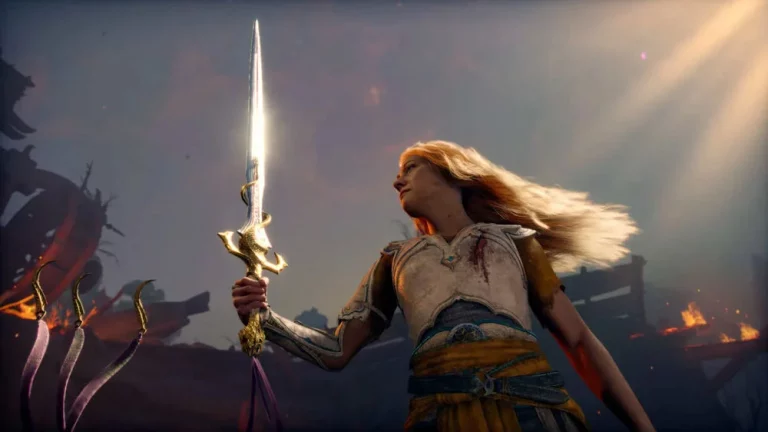
God of War: Laufey promises a significant shift in perspective, moving away from Kratos to focus on Faye, his warrior wife. The premise sees Faye awakening in the mysterious realm of Everywhen after her death, compelled to face formidable gods to ensure the safety of Kratos and Atreus. This narrative pivot introduces a fresh layer of complexity and intrigue to the established lore, exploring untold stories and character depths.
The concept of Everywhen, a strange land beyond death, presents a unique backdrop for Faye’s combat prowess and strategic thinking against ruthless deities. This departure from Kratos’s direct lineage not only offers narrative novelty but also expands the thematic scope of the franchise, delving into different facets of heroism and sacrifice. The extended development time could be crucial in fully realizing this ambitious new setting and character arc, ensuring Faye’s inaugural playable journey is as compelling and impactful as her predecessors’.
Why Delays Define Excellence in the Gaming World
In an industry often driven by aggressive release schedules and market demands, game delays, while initially disappointing, frequently emerge as a hallmark of quality assurance. For titles like God of War: Laufey, developed by a studio with the pedigree of Santa Monica Studio, a postponement isn’t a sign of trouble, but rather a deliberate commitment to delivering an uncompromised experience. The studio’s official communication cited the need for ‘final touches’ and maximizing the game’s ‘potential,’ echoing a common refrain among developers who choose perfection over punctuality.
This philosophy resonates deeply with the core ‘Nerd’ audience, who have witnessed countless examples of games launched prematurely, riddled with bugs, or lacking polish, ultimately undermining player trust and the artistic vision of the creators. A delay, therefore, becomes a tacit promise: a pledge that the developers are investing every necessary moment to ensure the game meets, or even exceeds, the lofty expectations set by its predecessors and the loyal community. It’s a bold statement that the studio prioritizes the player’s long-term enjoyment and the integrity of their creative work above short-term release targets.
Furthermore, the competitive landscape of the PlayStation 5 console, teeming with high-fidelity exclusives, necessitates a flawless launch. A meticulously polished game not only enhances player satisfaction but also garners stronger critical acclaim and word-of-mouth recommendations, which are invaluable in today’s crowded market. The additional three months for God of War: Laufey can be seen as an investment in its critical and commercial success, ensuring that Faye’s debut is as impactful and memorable as Kratos’s most iconic moments.
Direct Answer: Game delays, especially for high-profile titles like God of War: Laufey, often signify a developer’s unwavering commitment to quality. Santa Monica Studio’s decision to postpone the release reflects their intent to use additional time for ‘final touches’ and to maximize the game’s ‘potential,’ prioritizing a polished, bug-free, and exceptional player experience over meeting an initial deadline.
The Unseen Challenges of Modern Game Development
Developing a triple-A title in the current era is an undertaking of monumental complexity. It involves coordinating hundreds of artists, programmers, writers, and designers across diverse specializations. From crafting intricate open-world environments to perfecting complex combat systems, animating lifelike characters, and integrating innovative technological features, each element demands meticulous attention. Unforeseen technical hurdles, engine optimizations, or narrative refinements can quickly derail even the most carefully planned schedules.
The ‘polishing’ phase, often cited for delays, is not just about bug fixing. It encompasses refining gameplay loops, balancing mechanics, optimizing performance across various hardware configurations, and ensuring seamless user experience. This iterative process, which often involves extensive playtesting and feedback cycles, can reveal areas requiring significant retooling. For a franchise celebrated for its seamless storytelling and fluid gameplay, these final adjustments are critical to avoid any jarring elements that could detract from the overall immersion.
Anticipation vs. Reality: The Fan Perspective for Every Nerd
The announcement of a delay, particularly for a title as eagerly awaited as God of War: Laufey, inevitably conjures a kaleidoscope of emotions within the dedicated ‘Nerd’ community. On one hand, there’s the palpable frustration of having to wait longer for an adventure that has been etched onto calendars and fueled countless discussions. Fans who have followed every snippet of information, every concept art reveal, and every development update feel the sting of prolonged anticipation, especially those who may have already planned purchases or even dedicated time off for the original release date.
However, this initial disappointment is often tempered by a pragmatic understanding and, ultimately, an appreciation for the rationale behind such decisions. The consensus among seasoned gamers and critical observers is that a delayed game, when handled with integrity, nearly always translates into a better product. The history of gaming is replete with cautionary tales of rushed releases that suffered from crippling bugs, unfinished content, and ultimately, player backlash. Therefore, for many, the extra three months for God of War: Laufey represents an investment in quality, a reassurance that Santa Monica Studio is committed to upholding the franchise’s legendary standards.
The lack of highly specific reasons beyond ‘polishing’ does leave some questions unanswered, yet it also grants the studio a degree of operational privacy, allowing them to focus on development rather than public relations exigencies. This nuanced response from the community highlights the unique relationship between passionate fans and the creators of their beloved digital worlds, where trust in the developer’s vision often outweighs immediate gratification.
Direct Answer: For the ‘Nerd’ community, the delay of God of War: Laufey elicits mixed emotions: initial frustration over the extended wait (now to May 2027) is balanced by an understanding that delays often lead to higher quality, polished game experiences. While specific reasons for the delay beyond ‘polishing’ were not provided, many fans prioritize a superior final product over a premature release.
Managing Expectations: Pre-orders and Fan Engagement
The delay has direct implications for those who had already pre-ordered God of War: Laufey, especially given that pre-order bonuses and editions were announced in September 2026, with the February 2027 date still firm then. Players who had locked in their purchases will now need to adjust their expectations and potentially their plans. This situation underscores the fluidity of game development and the dynamic nature of release schedules, even for major titles.
Effective communication from the studio during such periods becomes paramount. While the initial announcement covered the new date and rationale, continued engagement through community channels can help maintain excitement and alleviate potential frustrations. Transparency about future updates, even if not detailing specific issues, helps reinforce the bond of trust between developers and their audience.
Strategic Repercussions for PlayStation’s Exclusive Lineup
The postponement of God of War: Laufey to May 20, 2027, extends beyond the immediate impact on its development team and eager players; it has significant strategic repercussions for PlayStation’s exclusive game calendar. As a tentpole title, Laufey was initially slated for an early 2027 release, a period often crucial for setting the tone for a console’s annual performance and attracting new hardware sales. Moving it to late spring in the Northern Hemisphere shifts a major draw into a different market window, requiring a comprehensive re-evaluation of PlayStation’s content strategy.
This change necessitates a strategic adjustment in how PlayStation allocates its marketing resources and positions its other exclusive titles. The absence of Laufey from the February slot means another game might need to step up to fill the void, or PlayStation may opt to lean more heavily on existing popular titles or new hardware bundles to maintain momentum. Conversely, the May release could position Laufey to dominate the spring sales period, potentially benefiting from less direct competition from other major first-party releases that might have been scheduled for the same early-year window.
Moreover, the extended development time could indirectly influence the rollout of other projects within Sony Interactive Entertainment’s extensive portfolio. Development cycles are often interconnected, and the shift of one major exclusive can cascade through various teams and partnerships. Ultimately, this strategic reshuffle reflects the dynamic nature of the console ecosystem, where agility and adaptive planning are critical to navigating unforeseen challenges and maximizing market impact.
Direct Answer: The delay of God of War: Laufey reorganizes PlayStation’s 2027 exclusive lineup, shifting a major launch from early to late spring (May 20). This requires PlayStation to adjust its marketing calendar, potentially reallocate resources, or promote other titles to maintain momentum in the vacated early-year slot, reflecting the dynamic strategic planning needed for console exclusives.
Navigating the Competitive Landscape: Marketing Adjustments
With God of War: Laufey now set for a spring release, PlayStation’s marketing teams face the task of recalibrating their promotional efforts to sustain interest over a longer period. This involves developing new campaign beats, creating fresh content to showcase the game, and strategically timing reveals to keep the title top-of-mind amidst other major releases from competitors and third-party studios. The goal is to ensure that the excitement generated since its initial reveal in June (of the previous year, 2026) continues to build, culminating in a powerful launch. This also means adapting to a potentially different competitive landscape in May compared to February, requiring nuanced messaging to capture market attention effectively.
Beyond the Horizon: Future Trends for the Nerd Gaming Community
The delay of God of War: Laufey, while an isolated event, subtly reflects broader trends shaping the future of the gaming industry and influencing the discerning ‘Nerd’ community’s expectations. There’s a growing collective emphasis on product quality over rushed launches, a sentiment driven by past experiences with unfinished games. This trend suggests that players are increasingly willing to wait longer for a polished experience, rather than tolerate buggy, incomplete releases. Developers, in turn, are seemingly more empowered to make these difficult decisions, prioritizing their creative vision and the integrity of their work.
Furthermore, the increased transparency, however generalized, around delays hints at an evolving relationship between studios and their audience. While detailed specifics about developmental challenges are rarely disclosed, the acknowledgment of needing more time for ‘polishing’ becomes a recognized code for dedication to craft. This fosters a culture where patience is seen as a virtue, and the eventual release is celebrated as a testament to perseverance and artistic commitment. This trend is likely to continue, setting new benchmarks for development cycles and consumer patience, and ultimately benefiting the long-term health and reputation of the gaming industry.
Direct Answer: The delay of God of War: Laufey signifies a broader industry trend towards prioritizing game quality and polish over strict release dates, mirroring increasing player expectations for complete experiences. This fosters greater developer transparency (even if general) and cultivates patience within the ‘Nerd’ gaming community, potentially setting new standards for future game development cycles and consumer relationships.
The Evolution of Player Expectations and Developer Practices
The modern gaming landscape is characterized by a sophisticated player base that demands exceptional quality and robust post-launch support. Early access programs, continuous updates, and live service models have accustomed players to evolving games, yet for single-player narrative-driven titles like God of War, the initial launch often dictates its legacy. Consequently, developers are under immense pressure to deliver a near-perfect product from day one. This evolving expectation has led to a re-evaluation of development practices, favoring longer cycles and more extensive quality assurance measures.
This shift also impacts how studios plan their roadmaps and communicate with stakeholders. Delays, once perceived as failures, are now increasingly viewed as strategic necessities for maintaining brand integrity and securing long-term success. This reorientation benefits the ‘Nerd’ community by promising more fulfilling gaming experiences, albeit at the cost of immediate gratification.
Keeping the Flame Alive: How the Dedicated Nerd Stays Connected Until May 2027
For the dedicated ‘Nerd’ counting down the days until May 20, 2027, the extended wait for God of War: Laufey doesn’t have to be a period of passive anticipation. Instead, it presents an ideal opportunity to deepen engagement with the rich lore and acclaimed gameplay of the franchise. Replaying previous installments, such as God of War (2018) and God of War Ragnarök, can provide fresh perspectives on the overarching narrative, allowing players to revisit pivotal moments, uncover hidden details, and fully appreciate the intricate character development that defines the series. This also serves as an excellent refresher on the combat mechanics and mythological context that Faye’s story will undoubtedly build upon.
Beyond active gameplay, the vibrant ‘Nerd’ community offers numerous avenues for connection. Engaging in online forums, joining fan communities, or participating in discussions on social media platforms can transform the waiting period into an active exploration of theories, analyses, and shared excitement. Exploring fan-made content, reading lore analyses, or even delving into the real-world Norse mythology that inspires the games can enhance appreciation for the upcoming title. This period of extended anticipation can be channeled into a more profound understanding and connection with the universe, ensuring that when God of War: Laufey finally arrives, the experience is even richer and more rewarding.
Direct Answer: To stay connected until God of War: Laufey releases in May 2027, dedicated ‘Nerds’ can replay previous franchise titles to refresh lore and gameplay, engage with fan communities and online forums for discussions and theories, and explore external resources like lore analyses or Norse mythology, transforming the wait into an opportunity for deeper immersion and appreciation.
| Aspect | Original Release Plan (Feb 2027) | New Release Plan (May 20, 2027) |
|---|---|---|
| Release Date | February 2027 | May 20, 2027 |
| Delay Duration | N/A | Over 3 months |
| Studio Reasoning | N/A (initial timeline) | Final touches, maximize potential, prioritize quality |
| Fan Expectation | Immediate gratification, excitement | Patience, expectation of higher quality |
| PlayStation Calendar | Early 2027 tentpole | Spring 2027 tentpole (Northern Hemisphere) |
| Game Status | In final stages of development | Undergoing further polish and refinement |
Frequently Asked Questions About God of War: Laufey’s Delay
What is the new official release date for God of War: Laufey?
The new official release date for God of War: Laufey is May 20, 2027. This update comes directly from Santa Monica Studio, confirming a postponement of over three months from its previously announced February 2027 launch window. Fans eager to experience Faye’s new adventure will need to adjust their calendars accordingly, as the studio commits to utilizing this extended period to ensure the game reaches its highest possible quality and delivers an uncompromised experience for PlayStation 5 players.
Why was God of War: Laufey delayed?
Santa Monica Studio announced the delay for God of War: Laufey to allow for additional time to apply ‘final touches’ and ‘maximize the game’s potential.’ While specific technical details were not provided, the studio emphasized their dedication to not taking the public’s excitement for granted, assuring fans that the extra development period is being used to refine the game. This aligns with the studio’s long-standing reputation for delivering highly polished and critically acclaimed titles within the God of War franchise, indicating a commitment to quality above all else.
Who is Faye, and what role does she play in God of War: Laufey?
Faye, also known as Laufey the Just, is Kratos’s wife and Atreus’s mother within the God of War lore. In God of War: Laufey, she becomes the playable protagonist, marking a significant departure from previous games which centered on Kratos. The storyline sees Faye awakening in a mysterious realm called Everywhen after her death, where she must confront various gods to protect Kratos and Atreus. This unique narrative shift promises to explore new facets of the God of War universe and offer a fresh perspective on its rich mythological themes through the eyes of a fierce warrior.
How does this delay impact PlayStation’s 2027 exclusive game schedule?
The delay of God of War: Laufey reorganizes PlayStation’s 2027 exclusive lineup, shifting a major first-party title from an early-year release to a late spring slot. This strategic move means PlayStation will need to adjust its marketing and promotional efforts for the year, potentially filling the void left in February with other content or intensifying focus on existing titles. While this might alter the initial flow of high-profile releases, it also positions Laufey to anchor PlayStation’s spring offerings, aiming for maximum impact during that period.
Will the delay affect pre-order bonuses or game editions for God of War: Laufey?
The announcement of the delay for God of War: Laufey did not include specific details regarding changes to pre-order bonuses or game editions that were previously unveiled in September 2026. Typically, when a game is delayed, pre-order terms and editions generally remain the same, simply shifting to the new release date. However, it is advisable for fans who have pre-ordered or are planning to do so to monitor official announcements from Santa Monica Studio and PlayStation for any potential updates or adjustments that might occur closer to the new May 2027 launch date.
Is God of War: Laufey an exclusive title, or will it be available on other platforms?
Yes, God of War: Laufey is confirmed as a PlayStation 5 exclusive. The official announcements and promotional materials have consistently identified it as a flagship title specifically developed for the PS5 platform. There has been no indication or statement from Santa Monica Studio or PlayStation suggesting a release on other platforms, such as PC or Xbox, meaning that fans will require a PlayStation 5 console to experience Faye’s journey in the Everywhen.
The Unseen Value: What Really Matters in the Wait for God of War: Laufey
The anticipation for God of War: Laufey, now extended to May 2027, transcends a simple countdown to a release date. It embodies a deeper understanding within the dedicated ‘Nerd’ community that the true value of an exceptional gaming experience often lies in the meticulous craft and unwavering commitment of its creators. Santa Monica Studio’s decision to delay, while demanding patience, reinforces their reputation for prioritizing quality, a hallmark that has defined the God of War franchise for decades. This isn’t merely a delay; it’s a strategic investment in the game’s polish, its narrative depth, and its overall legacy.
For fans, this period becomes an opportunity to re-engage with the rich lore of the series, reflect on its profound impact, and perhaps even introduce new players to Kratos’s saga before Faye takes center stage. The additional months allow for heightened anticipation, transforming the wait into an integral part of the experience. When God of War: Laufey finally arrives, fully realized and exquisitely polished, it will not just be another game; it will be a testament to patience, dedication, and the relentless pursuit of artistic excellence that the entire ‘Nerd’ community cherishes. The journey to the Everywhen will undoubtedly be worth every moment of the wait.












Post Comment