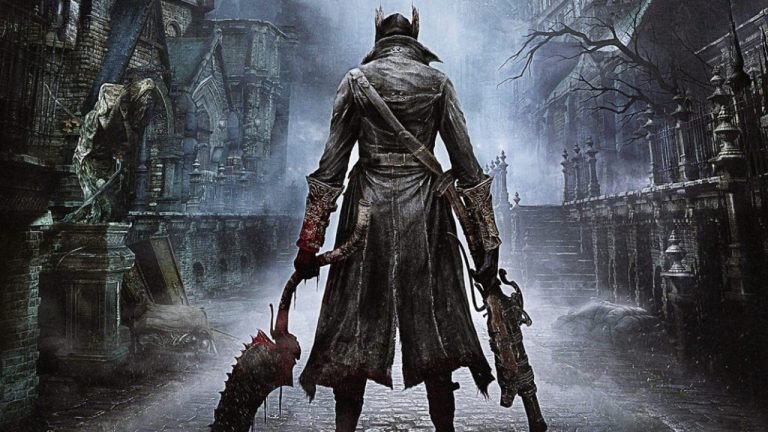
Bloodborne 2: Why This Cult Classic Remains Elusive for Nerds
Since its haunting debut in 2015, FromSoftware’s ‘Bloodborne’ has carved out an indelible legacy in the gaming world. Its unique blend of gothic horror, cosmic dread, and challenging action-RPG mechanics captivated millions, establishing itself as a seminal title on PlayStation platforms. Even after more than a decade, with its sales remaining remarkably consistent globally, the fervent clamor for ‘Bloodborne 2’ or even a simple remaster has never waned. The absence of any new content for such a beloved and lucrative intellectual property has long puzzled and frustrated a passionate community. Why would a company seemingly ignore one of its most cherished and profitable creations?
For years, the speculation ranged from creative fatigue within FromSoftware to a perceived lack of commercial interest from Sony. However, the true complexity behind this enduring mystery has finally come to light. Shawn Layden, the former president of PlayStation, recently broke his silence in an extensive interview on ‘The Trophy Room’ podcast. During this candid conversation, Layden offered an unprecedented level of transparency, detailing the genuine obstacles that continue to impede any potential return for the ‘Bloodborne’ franchise. His revelations paint a picture far removed from creative unwillingness or commercial disinterest, pointing instead to deeply rooted bureaucratic and legal challenges.
Layden’s insights reveal that the path to a ‘Bloodborne’ sequel is fraught with a veritable legal nightmare, stemming from a remarkably convoluted division of copyright ownership and contractual approvals. Unlike many major franchises wholly owned by a single entity, ‘Bloodborne’ is a property whose rights are not solely held by one corporation. This tripartite ownership structure necessitates a perfect alignment and unanimous consent among three distinct parties—Sony, FromSoftware, and Kadokawa (FromSoftware’s parent company)—making any corporate advancement excruciatingly slow and immensely challenging. The mere act of getting all parties to agree on profit sharing, budgetary allocations, and development timelines has emerged as the primary bottleneck, effectively stifling the expansion of this cosmic horror masterpiece.
Beyond the labyrinthine legalities, there’s also an immense artistic weight that rests upon the developers’ shoulders. ‘Bloodborne’ redefined its genre, immersing players in the eerie streets of Yharnam and cultivating a legion of devoted fans. Crafting a sequel would mean confronting virtually unattainable expectations, risking the tarnishing of an impeccable legacy. Layden’s candid discussion also touched upon his perspectives on the future of PlayStation hardware, such as the rumored PlayStation 6, and the strategic significance of acquiring studios like Insomniac Games, further underscoring the high-stakes environment in which such decisions are made. For many, the hope for ‘Bloodborne 2’ persists, yet Layden’s disclosures offer a sobering dose of reality, highlighting the systemic issues that can prevent even the most celebrated games from receiving their much-anticipated follow-ups.
The Labyrinthine Legal Battle: Why Intellectual Property Rights Haunt Every Nerd’s Dream of a Sequel
The primary reason ‘Bloodborne 2’ has remained elusive lies in a complex web of intellectual property rights that demand unanimous agreement from three distinct corporate entities. This intricate ownership structure, as revealed by former PlayStation President Shawn Layden, means that any new project involving the ‘Bloodborne’ universe requires meticulous negotiations and approvals from Sony, FromSoftware, and Kadokawa, FromSoftware’s parent company. The challenge isn’t a lack of desire or commercial viability, but rather the bureaucratic hurdle of aligning diverse corporate interests and securing universal consent for profit distribution, budget, and development schedules.
The passion of the Nerd community for ‘Bloodborne’ is undeniable, but it clashes with a reality often hidden behind corporate doors. Layden explicitly stated that bringing all three major stakeholders to the table for a consensus is likely the greatest challenge. This isn’t merely about signing a paper; it involves intricate discussions on financial models, creative control, and long-term strategy for a property that commands immense respect and carries significant financial potential. The slightest disagreement on any of these fronts can halt progress indefinitely, keeping the beloved title locked away.
The Tripartite Ownership Dilemma: Navigating Corporate Commitments
The core of the problem stems from a shared ownership model, a scenario less common for flagship titles of this magnitude. Sony, as the publisher and platform holder, holds significant rights, especially concerning the PlayStation brand and its exclusive games. FromSoftware, the brilliant developer, owns the creative vision and the fundamental game mechanics that made ‘Bloodborne’ unique. Kadokawa, as the parent company of FromSoftware, ultimately oversees the studio’s output and financial interests.
For any new ‘Bloodborne’ project to proceed, all three entities must reach a complete agreement. This includes every facet from initial concept budgeting and development timelines to marketing strategies and, crucially, the division of anticipated profits. Achieving such comprehensive alignment across different corporate cultures and strategic objectives is an incredibly daunting task, often taking years of negotiations, if it ever happens at all.
A Systemic Industry Flaw: When Success Becomes a Straitjacket
Layden’s candid revelation inadvertently exposes a systemic flaw within the broader video game industry: how past contractual arrangements, perhaps not fully anticipating a game’s monumental success, can inadvertently stifle its future. Successful intellectual properties can become trapped in bureaucratic gridlock due to complex legal frameworks established early in their lifecycle. The inherent risks of major game development, coupled with fierce competition over profit percentages, often outweigh the clamoring demand from millions of consumers.
This situation highlights a tension where financial risk aversion and contractual disputes take precedence over overwhelming market demand. The transparency offered by Layden serves as a stark reminder that even the most beloved franchises are subject to the intricate, often opaque, world of corporate law and business strategy, sometimes to the detriment of passionate players.
Beyond Bureaucracy: The Colossal Creative Pressure of Bloodborne’s Legacy
While legal hurdles form the primary barrier, the development of ‘Bloodborne 2’ is also shadowed by an immense creative burden. The original journey through Yharnam not only redefined the action-RPG genre but also cultivated a fiercely loyal fanbase with exceptionally high expectations. Any studio tasked with producing a sequel would face the monumental challenge of creating something that isn’t just respectful to its predecessor, but also capable of recapturing the unique phenomenon that was ‘Bloodborne’.
This creative tightrope walk involves more than simply delivering new content; it’s about innovating while preserving the essence that made the original so beloved. For any truly dedicated Nerd, the idea of a sequel that fails to live up to the original’s standard is a source of genuine apprehension.
Recreating a Phenomenon: The Unattainable Expectation
Shawn Layden’s questioning, “Can you make something that is not just respectful of the original, but can recreate the phenomenon?”, encapsulates the profound creative challenge. ‘Bloodborne’ wasn’t just a game; it was an experience defined by its oppressive atmosphere, intricate lore, brutal combat, and sense of cosmic terror. Replicating that exact alchemy, or even evolving it meaningfully without diluting its core appeal, is incredibly difficult.
Developers would be under immense scrutiny, tasked with innovating gameplay while retaining the iconic aesthetic and narrative depth. The fear of releasing an inferior product solely to capitalize on nostalgia is a potent deterrent, risking an unprecedented backlash from a community known for its discerning tastes and unwavering loyalty. This artistic pressure is a genuine, often understated, factor in the decision-making process for sequels to genre-defining titles.
The Weight of Yharnam: Redefining a Genre
‘Bloodborne’ didn’t just stand out; it set new benchmarks for environmental storytelling, intricate enemy design, and challenging yet fair combat. Its unique setting, inspired by Victorian and Lovecraftian aesthetics, combined with its distinct gameplay mechanics (such as the rally system and trick weapons), pushed boundaries. This critical acclaim and widespread adoration elevate the stakes for any follow-up.
The success of the original means that any sequel wouldn’t just be expected to be good; it would be expected to be groundbreaking, a rare feat even for the most talented development teams. This places a psychological burden on creators, who must weigh the potential for a new masterpiece against the very real risk of falling short of its predecessor’s legendary status, a misstep that could permanently tarnish the franchise’s reputation.
Key Obstacles Impeding Bloodborne 2’s Development
- Complex Tripartite Ownership: Rights are shared between Sony, FromSoftware, and Kadokawa, requiring unanimous consent for any new project.
- Bureaucratic Deadlock: Aligning diverse corporate interests for profit shares, budgets, and timelines is exceedingly slow and difficult.
- High Creative Expectations: The immense pressure to match or surpass the original’s genre-defining quality is a significant deterrent.
- Fear of Tarnishing Legacy: Developers and publishers are wary of releasing an inferior product that could damage the beloved franchise’s reputation.
- Financial Risk Aversion: Major corporations often prioritize risk-free business models over responding to direct consumer demand, especially with complex IP.
What This Means for the Future: A Sobering Reality for Every Dedicated Nerd
Shawn Layden’s transparency casts a long shadow over any immediate hopes for a ‘Bloodborne 2’ announcement. His revelations serve as a cold dose of reality for fans, highlighting that the diplomatic complexities between giant publishers and esteemed Japanese studios are notoriously rigid. Consequently, until a business model is devised that is perceived as perfectly flawless and financially risk-free for all three corporations involved, the ‘Bloodborne’ brand is likely to remain securely locked away, a testament to its past glory rather than a promise of future ventures.
This situation implies that the passion of the Nerd community, while powerful, often comes second to corporate strategy and risk assessment. The enduring demand, even from a highly engaged fanbase, may not be enough to overcome deeply entrenched business complexities.
The Corporate Diplomacy Quagmire: Navigating Strategic Imperatives
The situation surrounding ‘Bloodborne 2’ is a prime example of the often-protracted and intricate corporate diplomacy that governs the video game industry. Decisions of this magnitude are not made lightly or quickly. They involve multiple layers of executive approval, legal teams poring over contracts, and financial analysts assessing every conceivable risk and reward. Each party—Sony, FromSoftware, and Kadokawa—has its own strategic imperatives, portfolio priorities, and financial targets.
Harmonizing these diverse interests into a single, cohesive plan for a project as high-profile and costly as ‘Bloodborne 2’ is a Herculean task. The sheer scale of coordination required means that even minor disagreements can escalate into significant delays or outright cancellations, proving that sometimes, the most successful creations can become victims of their own complex ownership structures.
Shifting Tides: The Gamer’s Role and Industry Evolution
On a broader scale, this revelation exposes a pervasive systemic issue within the contemporary gaming industry. Corporations, in their pursuit of financial stability and risk mitigation, can inadvertently stifle the growth of their own highly successful creations due to contract clauses that may have seemed adequate at the time of initial signing but proved restrictive later. The fear of financial exposure and intense disputes over percentage points often resonate louder than the undeniable, vocal demand from millions of loyal consumers.
While the outlook appears bleak, the enduring hope among the hunters of Yharnam remains a powerful force. This scenario prompts a wider discussion about the balance between corporate control and creative potential, and how the industry might evolve to better serve both its creators and its passionate player base. The lessons learned from ‘Bloodborne’s’ elusive sequel could, in time, shape how future partnerships are forged and beloved IPs are managed, hopefully creating a more agile and responsive ecosystem for content creation.
Frequently Asked Questions About Bloodborne 2
- Is ‘Bloodborne 2’ officially canceled?
- There has been no official cancellation of ‘Bloodborne 2’ because it was never officially announced. The revelations from former PlayStation President Shawn Layden indicate that the game faces significant legal and creative obstacles, suggesting that any development is currently not viable rather than being a project that was started and then halted. The complex ownership structure is the primary reason for its absence, making its future highly uncertain rather than definitively concluded.
- What are the main reasons ‘Bloodborne 2’ hasn’t been released?
- The two main reasons are complex intellectual property rights and immense creative pressure. Shawn Layden explained that three parties (Sony, FromSoftware, and Kadokawa) must agree on all aspects of a sequel, which is a major bureaucratic challenge. Additionally, the original ‘Bloodborne’ set such a high bar for quality and impact that there’s considerable apprehension about producing a sequel that might not live up to those almost unattainable expectations, potentially tarnishing its legacy.
- Who owns the rights to ‘Bloodborne’?
- The rights to ‘Bloodborne’ are shared among three distinct entities: Sony Interactive Entertainment (as the publisher and platform owner), FromSoftware (as the developer), and Kadokawa (as FromSoftware’s parent company). This shared ownership is the core of the legal difficulties, as any new project requires the unanimous consent and agreement of all three parties on financial, creative, and strategic terms.
- Could a ‘Bloodborne’ remaster or remake be released instead?
- While not explicitly addressed in Layden’s statements, the same fundamental legal and creative challenges would likely apply to a remaster or remake. Any new product under the ‘Bloodborne’ IP would necessitate the same tripartite agreement. Although a remaster might involve less creative risk than a full sequel, the legal and financial negotiations would still be a significant hurdle, meaning its prospects are similarly complicated by the shared ownership.
- What is FromSoftware focusing on currently?
- FromSoftware has continued its success with other critically acclaimed titles like ‘Sekiro: Shadows Die Twice’ and ‘Elden Ring,’ which further cemented its reputation in the action-RPG genre. The studio generally focuses on completing and supporting its current projects and developing new, original intellectual properties. While fans hold out hope for ‘Bloodborne 2,’ FromSoftware’s public statements typically revolve around their active projects rather than speculation on past titles.
- How does ‘Bloodborne’ compare to other FromSoftware titles in terms of its sequel prospects?
- ‘Bloodborne’s’ sequel prospects are uniquely complicated by its shared intellectual property rights, distinguishing it from titles like ‘Dark Souls’ (primarily Bandai Namco and FromSoftware) or ‘Elden Ring’ (Bandai Namco and FromSoftware). Most other FromSoftware franchises have a more straightforward ownership structure, making sequel development a more direct negotiation between two principal parties. This complex tripartite agreement makes ‘Bloodborne 2’ a much tougher proposition.
The Next Step for the Bloodborne Nerd: Embracing the Legacy
The candid insights from Shawn Layden offer a vital, albeit disheartening, understanding of why ‘Bloodborne 2’ remains an unfulfilled dream for so many. The twin pillars of complex legal entanglements and immense creative pressure have converged to create an almost impenetrable barrier against the sequel’s realization. For the ardent fan, this transparency, while painful, provides clarity, shifting the narrative from speculation and hope to a more grounded, realistic appreciation of the industry’s inner workings.
Ultimately, the enduring appeal of ‘Bloodborne’ itself serves as a testament to its profound impact. Its legacy is not diminished by the absence of a sequel, but rather, perhaps, solidified by the very challenges that prevent one. The profound experience of Yharnam continues to resonate, proving that some masterpieces stand alone, their perfection unburdened by the need for continuation. For every dedicated Nerd, the hunt may be over for new content, but the timeless journey through the streets of ‘Bloodborne’ remains as vital and captivating as ever, inviting return visits to its unforgettable world.










Post Comment