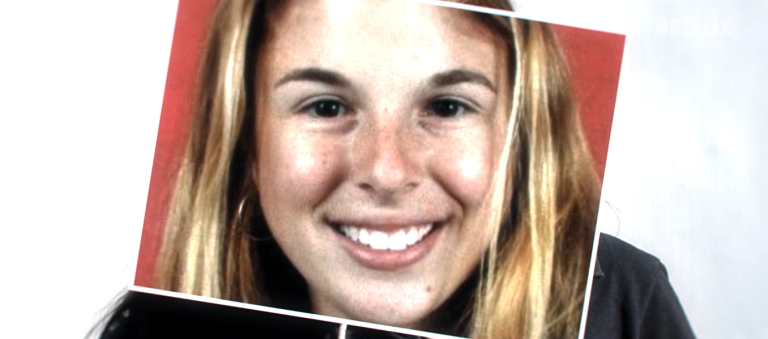
Suzane von Richthofen Netflix Doc: A Nerd’s Deep Dive
In the expansive and often dark landscape of true crime, few stories resonate with the chilling depth and intricate psychological layers that captivate a dedicated audience quite like the case of Suzane von Richthofen. For those immersed in nerd culture and entertainment, who meticulously dissect narratives and seek comprehensive understanding beyond mere headlines, Netflix’s forthcoming documentary, ‘Suzane von Richthofen: What Time Does Not Erase’, promises an unparalleled journey into a saga that continues to fascinate and disturb. The recent release of its trailer has not only heightened anticipation but also sparked renewed discussions about memory, justice, and the controversial act of giving voice to convicted individuals.
This documentary arrives at a moment when true crime has cemented its status as a pivotal genre in streaming, drawing in viewers who are not just passive consumers but active participants in unraveling mysteries and debating societal implications. The Richthofen case, an event that gripped Brazil in 2002, offers a complex tapestry of family dynamics, betrayal, and premeditated violence. What makes this Netflix production particularly compelling is its promise of exclusive interviews with Suzane von Richthofen, offering her personal narrative of the events that led to the murder of her parents, Manfred and Marísia von Richthofen. This direct account from the central figure is a rare occurrence, transforming the documentary from a mere retelling into a potentially profound exploration of culpability, perception, and the passage of time.
As the November 11th release date approaches, the excitement is palpable among a diverse audience, including the segment of nerd culture that thrives on dissecting complex real-world stories with the same zeal they apply to fictional universes. This feature-length film not only revisits the facts but aims to delve into the behind-the-scenes machinations of a story that brought a nation to a standstill. It also reignites a crucial ethical debate: how do we balance the public’s right to know and its fascination with true crime against the responsibility of media not to glorify or legitimize heinous acts? This is a question that thoughtful viewers, particularly those who approach content with an analytical and critical ‘nerd lens’, are eager to explore.
The documentary is poised to become a significant cultural touchstone, compelling viewers to confront uncomfortable truths and challenge their preconceptions about justice and narrative truth. It represents Netflix’s continued investment in high-impact true crime content, a genre that consistently ranks among the most searched titles on the platform. For the discerning audience, it’s an opportunity not just to witness a story but to engage with its many layers, drawing connections between human psychology, judicial processes, and the lasting scars left on a society.
Decoding “What Time Does Not Erase”: A Nerd’s Guide to True Crime Deep Dives
The Netflix documentary ‘Suzane von Richthofen: What Time Does Not Erase’ offers an unprecedented opportunity to revisit one of Brazil’s most shocking crimes through the direct testimony of Suzane von Richthofen herself. It aims to provide her version of the events surrounding the 2002 murders of her parents, inviting viewers to critically analyze the complexities of the case and its profound societal impact, a process particularly appealing to analytical true crime enthusiasts.
The highly anticipated Netflix documentary, titled ‘Suzane von Richthofen: O que o Tempo Não Apaga’ in its original Portuguese, positions itself as a critical entry in the true crime genre. It promises to unravel the intricate layers of a case that has remained etched in the collective memory of Brazil for over two decades. At its core, the production features exclusive interviews with Suzane von Richthofen, who was convicted for her role in the murders of her parents. This direct access allows the documentary to present her personal account, shedding light on her perspective regarding the events and her relationship with her family, an element that has stirred both curiosity and controversy since its announcement.
The participation of Suzane in the film has been a subject of intense public discussion. Notably, Andreas von Richthofen, Suzane’s brother, chose not to be involved in the production, highlighting the sensitive and deeply commoving nature of the topic that still reverberates within Brazilian society. For many, particularly those within the nerd culture who are drawn to detailed case studies and psychological profiles, the documentary represents a unique opportunity for an in-depth examination, moving beyond sensationalism to understand the narrative from an intimate, albeit contentious, viewpoint.
The Anatomy of a National Scandal: Suzane von Richthofen’s Account
The documentary’s central premise hinges on Suzane von Richthofen’s extensive interviews, marking the first time she speaks so openly before cameras about the crime. This narrative approach aims to provide her version of the facts and her understanding of her family dynamics, elements crucial for a comprehensive, albeit potentially biased, reconstruction of the past. The decision to feature her prominently has inevitably reignited the debate surrounding the ethics of giving a platform to convicted individuals, balancing the public’s right to information against the potential for sensationalism or victim re-traumatization.
For fans of true crime, especially those who approach these stories with a detective-like meticulousness, Suzane’s direct testimony offers a new facet to analyze. The absence of her brother, Andreas, from the production underscores the deep divisions and unresolved traumas that persist within the family and the wider community. This complex interplay of perspectives, or lack thereof, adds another layer of intrigue and critical evaluation for discerning viewers seeking a multifaceted understanding.
True Crime as a Cultural Phenomenon: Why Nerds Are Obsessed
The growing interest in true crime stories, particularly those available on streaming platforms, reflects a broader cultural fascination with the darker aspects of human nature, justice, and the intricate workings of criminal investigations. This genre particularly resonates with the analytical mindset often found within nerd culture and entertainment fans, who appreciate the detailed reconstruction of events, psychological exploration, and the societal implications of real-life tragedies.
True crime offers more than just suspense; it provides a window into complex legal systems, forensic science, and the human condition under extreme pressure. For the ‘nerd’ audience, this translates into an opportunity for deep intellectual engagement, examining motivations, identifying societal failures, and debating ethical boundaries, all while consuming compelling, real-world narratives. Documentaries like ‘Suzane von Richthofen: What Time Does Not Erase’ serve as rich material for discussion and critical thought within these communities, fostering a shared space for analysis and interpretation.
The Unfolding Tragedy: Revisiting the 2002 Richthofen Case with a Critical Eye
The Richthofen case, occurring in October 2002 in São Paulo, saw the brutal murders of Manfred and Marísia von Richthofen. Subsequent investigations implicated their daughter, Suzane, and the Cravinhos brothers, Daniel and Cristian, leading to Suzane’s conviction for her direct involvement in the planning, ultimately resulting in a significant prison sentence.
The crime that serves as the foundation for Netflix’s new documentary unfolded tragically in October 2002, in the city of São Paulo, Brazil. On that fateful night, the lives of Manfred and Marísia von Richthofen were violently ended, an event that sent shockwaves across the nation and became an instant media sensation. The intensity of the public’s reaction was immense, driven by the shocking nature of the crime and the unexpected perpetrators. Suzane von Richthofen, then merely 19 years old, was swiftly implicated by investigations, which pointed to her direct involvement in planning the murders. Alongside her were the brothers Daniel and Cristian Cravinhos, who also faced justice for their roles in the heinous act.
The legal proceedings that followed captivated Brazil, culminating in Suzane receiving a sentence exceeding 39 years in prison. This case not only exposed the vulnerabilities within a seemingly affluent family but also sparked widespread debate about morality, justice, and the complexities of criminal intent. Over the years, the enduring public fascination with the Richthofen case has inspired numerous adaptations, including films and books, with two national productions in 2021 re-telling the story from distinct viewpoints, underscoring its indelible mark on Brazilian popular culture and judicial history.
From Tremembé to Streaming: The Prison’s Enduring Mystique
Following her arrest just days after the murder of her parents, Suzane von Richthofen spent a substantial portion of her sentence at the infamous Tremembé penitentiary in São Paulo. This facility, often dubbed the "celebrity prison" due to its high-profile inmates, has itself become a subject of intense public interest and media scrutiny, further cementing its place in the narrative of true crime in Brazil.
The narrative of Suzane’s incarceration and eventual progression through different prison regimes—from closed to semi-open, and later to open regime—mirrors the shifting public perception and legal evolution of her case. The mystique of Tremembé, a place where many notorious figures have served time, extends beyond Suzane, influencing other media productions. Notably, the Prime Video series ‘Tremembé’ dramatized known cases from the facility, a production that was even commented upon by the specialized Brazilian publication ‘Ei Nerd’, illustrating the crossover appeal of such intense real-life narratives to the broader entertainment and analytical communities.
The Case’s Legacy and Previous Cinematic Interpretations
The Suzane von Richthofen case, beyond its immediate legal and social impact, has left a profound legacy, inspiring a multitude of creative works. Its dramatic narrative, intricate details, and the psychological complexity of its perpetrators have made it a compelling subject for various forms of storytelling, from books to cinematic features, long before the Netflix documentary.
The enduring appeal of the case lies in its capacity to provoke questions about human nature, societal influence, and the justice system. The existence of multiple film adaptations, even within the same year (2021 saw two distinct productions), speaks volumes about the case’s gripping power and the public’s insatiable appetite for different interpretations of the facts. Each new adaptation, including Netflix’s ‘What Time Does Not Erase,’ contributes to an evolving narrative, inviting audiences to re-examine established truths and consider new perspectives.
Ethical Lenses: How Nerd Culture Engages with Controversial Narratives
Engaging with controversial true crime narratives through a ‘nerd lens’ involves a critical and analytical approach, often leading to deep ethical considerations about memory, justice, and the public exposure of real crimes. This discerning perspective seeks to understand the broader implications of such stories, moving beyond mere sensationalism to explore the complex moral landscape they present.
The phenomenon of true crime on streaming platforms has ushered in a new era of engagement with real-life tragedies. For a segment of the audience, particularly within nerd culture, this engagement goes beyond passive consumption; it becomes an opportunity to apply critical thinking, delve into historical context, and wrestle with profound ethical questions. Documentaries like ‘Suzane von Richthofen: What Time Does Not Erase’ are not just entertainment; they are catalysts for intense debate about how society remembers and processes traumatic events, how justice is perceived, and the appropriateness of exposing personal tragedies to a global audience.
This critical engagement often involves analyzing the narrative choices made by filmmakers, questioning the motives behind specific portrayals, and reflecting on the societal impact of such content. The project, by giving a voice to a convicted individual, inherently ignites these complex discussions, prompting viewers to consider the implications of representation and empathy in storytelling. The enduring popularity of cases like hers among subscribers highlights a collective desire not just for morbid curiosity, but for a deeper, often uncomfortable, understanding of the human condition and its capacity for both good and evil.
Navigating the Narratives: Responsible Consumption of Real-Life Dramas
Responsible consumption of true crime narratives, particularly for an audience that prides itself on critical engagement, involves several key practices. It is essential to approach such content with a degree of skepticism, recognizing that any narrative, even a documentary, is constructed through specific editorial choices and perspectives.
For the discerning viewer, this means actively seeking out multiple sources, cross-referencing information, and being mindful of the potential for sensationalism or biased portrayals. Engaging with discussion forums, critical reviews, and academic analyses can further enrich the viewing experience, transforming passive consumption into an active, informed, and ethically conscious exploration of complex real-life dramas.
The Debate: Giving a Platform to Convicts
One of the most contentious aspects of true crime documentaries, particularly those featuring interviews with convicted individuals, revolves around the ethical implications of providing such a platform. Critics argue that it risks sensationalizing crime, re-traumatizing victims’ families, and potentially offering a narrative of justification or sympathy to perpetrators.
Conversely, proponents suggest that such interviews can offer unique insights into the psychology of crime, the judicial process, and the broader societal factors at play. For the critical audience, this debate necessitates a careful consideration of the documentary’s intent, its contextualization, and its potential impact, prompting a deeper reflection on journalistic responsibility and the public’s role in interpreting these sensitive narratives.
Beyond the Screen: What’s Next for the Discerning Nerd in True Crime Streaming?
The landscape of true crime streaming is continuously evolving, promising a future rich with more nuanced storytelling, deeper psychological exploration, and potentially interactive elements designed to engage the discerning nerd. Anticipate a shift towards documentaries that not only recount events but also meticulously examine the broader societal and systemic failures contributing to crimes, offering a more profound analytical experience.
As the true crime genre matures on streaming platforms, the expectations of its dedicated audience, particularly those within nerd culture, are also evolving. The future promises not just more content, but content that is increasingly sophisticated in its approach. We can anticipate a trend towards documentaries that delve even deeper into the psychology of perpetrators and victims, explore the long-term societal impacts of crimes, and challenge viewers to engage with complex ethical questions rather than simply consuming a story.
This evolution will likely include more innovative narrative structures, potentially incorporating interactive elements that allow viewers to participate in the investigative process or explore alternative theories. Furthermore, the genre may see a rise in productions that meticulously analyze legal precedents, forensic advancements, and the societal shifts that influence both the commission and the reporting of crimes. For the true crime ‘nerd’, this signifies a future of even richer, more intellectually stimulating content that caters to their inherent desire for comprehensive understanding and critical analysis.
The Evolution of True Crime Storytelling and Its Enduring Appeal
True crime storytelling has undergone a significant transformation, moving beyond simple sensationalism to embrace more sophisticated narrative techniques and investigative journalism. This evolution is precisely what sustains its enduring appeal, particularly for an audience that values depth, accuracy, and a critical perspective.
From early sensationalist tabloids to modern, multi-part documentary series, the genre has honed its ability to combine compelling human drama with rigorous factual presentation. This blend of emotional resonance and intellectual stimulation is what continually draws in viewers, allowing them to explore the darker facets of humanity within a structured, analytical framework.
Anticipating Future Trends in Documentary Production
Looking ahead, true crime documentary production is likely to embrace even greater technological integration and ethical introspection. Advanced forensic techniques, digital reconstruction, and perhaps even AI-driven analysis could become more prominent, offering unprecedented levels of detail and insight into cold cases and complex investigations.
Concurrently, there will be an increased focus on the ethical responsibilities of creators, particularly regarding victim sensitivity and the representation of justice. These trends will ensure that the genre continues to offer compelling narratives while striving for greater integrity and a deeper understanding of its societal impact.
FAQ: Understanding the Suzane von Richthofen Netflix Documentary for the Curious Nerd
| Question | Answer |
|---|---|
| What is "Suzane von Richthofen: O que o Tempo Não Apaga" about? | "Suzane von Richthofen: What Time Does Not Erase" is a Netflix documentary revisiting one of Brazil’s most infamous true crime cases: the 2002 murders of Manfred and Marísia von Richthofen. The film specifically focuses on Suzane von Richthofen’s account of the events, featuring her exclusive interviews where she discusses her version of the facts and her relationship with her family, aiming to provide a unique, first-person perspective on the tragedy that captivated a nation. |
| When will the documentary be available on Netflix? | The documentary "Suzane von Richthofen: What Time Does Not Erase" is scheduled to be released on the Netflix platform on November 11. Viewers will be able to stream the full feature-length production, offering an in-depth look into the case and Suzane von Richthofen’s narrative, directly from their Netflix accounts starting on this date. |
| Does Suzane von Richthofen participate in the documentary? | Yes, Suzane von Richthofen grants exclusive and extensive interviews for the documentary "What Time Does Not Erase." This marks the first time she speaks so broadly and directly before cameras about the crime, her involvement, and her perspective on the events that led to the death of her parents. Her participation is a central and highly anticipated aspect of the film. |
| Why is this case particularly significant in Brazil? | The Suzane von Richthofen case is particularly significant in Brazil due to the shocking nature of the crime—the premeditated murder of affluent parents by their own daughter and her boyfriend—and the immense media coverage it received. It sparked widespread national commotion, raising profound questions about family betrayal, social class, justice, and the psychology of crime, embedding itself deeply into the country’s collective memory and judicial discourse. |
| What ethical questions does this documentary raise for viewers? | This documentary, like many true crime narratives featuring convicts, raises several ethical questions, such as the debate over giving a platform to convicted criminals and the potential for sensationalism. Viewers may question the impact on victims’ families, the responsibility of media in portraying such sensitive stories, and whether providing a voice to the perpetrator contributes to understanding or risks glorifying criminal acts. These considerations often prompt a critical and thoughtful engagement from the audience. |
| How does this documentary fit into the larger true crime genre on streaming? | "Suzane von Richthofen: What Time Does Not Erase" fits squarely into the current strong wave of true crime documentaries dominating streaming platforms. It capitalizes on the public’s sustained and intense interest in real-life crime stories, which consistently rank among the most sought-after titles. The documentary’s focus on a notorious, high-profile case, combined with exclusive access to the central figure, aligns with the genre’s trend towards deep dives and diverse perspectives. |
| Why didn’t Andreas von Richthofen participate in the film? | Andreas von Richthofen, Suzane’s brother, chose not to participate in the production of "Suzane von Richthofen: What Time Does Not Erase." This decision underscores the sensitive nature of the topic and the profound emotional impact the crime continues to have on him and the family. His absence highlights the enduring trauma and complexity of the Richthofen case, reflecting a personal boundary in the face of widespread public interest. |
| What was Suzane von Richthofen’s sentence and current status? | Suzane von Richthofen was sentenced to over 39 years in prison for her involvement in the murders of her parents. She served a significant portion of her sentence at the Tremembé penitentiary in São Paulo. Over the years, she has progressed through the Brazilian penal system, moving from a closed regime to semi-open and, eventually, being granted progression to an open regime, reflecting the legal processes and time served. |
As the curtains prepare to rise on Netflix’s ‘Suzane von Richthofen: What Time Does Not Erase,’ the anticipation among the true crime faithful and the broader nerd community is palpable. This documentary is more than just a re-telling of a notorious Brazilian crime; it’s an invitation to engage with a complex narrative through a critical and ethical lens. By offering Suzane von Richthofen’s direct perspective, the film challenges viewers to grapple with uncomfortable truths, to analyze the intricate layers of human psychology, and to confront the enduring questions surrounding memory, justice, and responsibility.
For the discerning fan of entertainment and culture, this is an opportunity to not only immerse oneself in a compelling story but also to participate in the larger cultural conversation it sparks. It’s a testament to the power of true crime to educate, provoke thought, and serve as a mirror reflecting society’s deepest fears and fascinations. Whether you approach it as a detailed case study or a psychological drama, ‘What Time Does Not Erase’ promises to be an essential watch that will undoubtedly ignite passionate discussions and deeper reflections within the analytical minds of the nerd community. Prepare to delve deep into a story that time, indeed, has not erased.













Post Comment