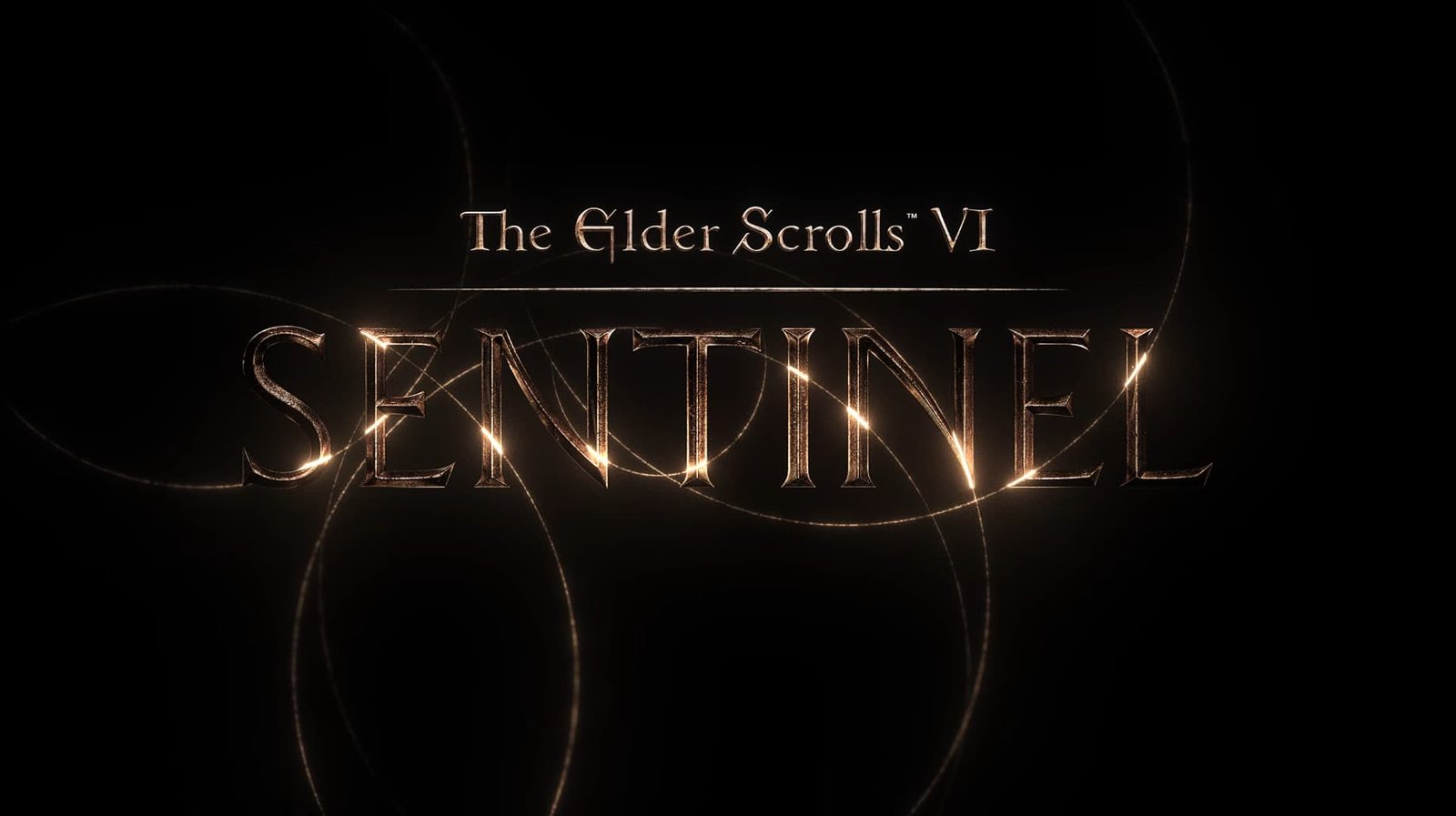
The Elder Scrolls 6 Sentinel: No News for A While
The digital realm recently buzzed with anticipation. November 11th marked a significant milestone: Skyrim, a titan in the world of role-playing games, celebrated its 15th anniversary. For many fans, this auspicious date fueled hopes for a long-awaited update on The Elder Scrolls 6 Sentinel. After all, the reveal of the game’s name and fleeting comments from developers like Asha Sharma had hinted at a future beyond mere concept. Yet, as the celebratory day concluded, the collective hope for new details was met not with revelation, but with a stark confirmation from Bethesda: no news for Sentinel would be shared, and crucially, none would be coming “for a while.”
This announcement, disseminated through official channels, notably Reddit, quashed burgeoning rumors and sent a clear message to the eager global community. The promise of new **games** in beloved franchises often comes with an intricate dance of speculation, leaks, and carefully orchestrated reveals. However, for The Elder Scrolls 6, the pattern of prolonged silence seems to be re-establishing itself. Understanding the context of this delay requires a deeper look into Bethesda’s unique development philosophy, the immense scale of their projects, and the evolving landscape of player expectations in an age where information travels at light speed. The wait, it seems, has only just begun for the next epic chapter in Tamriel’s saga.
The Enduring Wait for New Elder Scrolls Games Continues Unabated
Despite fervent hopes and widespread speculation among fans, Bethesda has officially confirmed that there will be no new information regarding The Elder Scrolls 6 Sentinel in the immediate future, with updates slated to be absent “for a while.” This statement, released on November 11th, directly addresses the community’s heightened anticipation surrounding Skyrim’s 15th anniversary, dispelling rumors and setting clear expectations for the development timeline of one of the most eagerly awaited **games** in history.
The collective longing for news was not without foundation. The initial reveal of The Elder Scrolls 6 at E3 2018, followed by the more recent identification of its working title as Sentinel, had ignited a spark of hope. Further fueling this was a comment from Bethesda executive Asha Sharma, who shared impressions from her experience playing early builds of the game. These seemingly small breadcrumbs led many to believe that Skyrim’s milestone anniversary would serve as a fitting occasion for a substantive update or even a new teaser trailer. However, a post from the insider Kiwi Talkz, initially misinterpreted as a hint for TES6 or Mass Effect news, was later clarified, leaving the gaming public with only official silence to anticipate.
Bethesda’s formal communication, delivered via their official Reddit channels, directly addressed the community’s excitement: “We’re excited for fans to be excited, but we won’t be sharing news on Sentinel for a while.” This phrase effectively shut down immediate expectations and underscored the extended nature of the development process. For many, this marks a return to the “deafening silence” that characterized the long periods between previous major entries in the series, a hallmark of Bethesda’s historically secretive approach to project development. The true progress of The Elder Scrolls 6 Sentinel’s development remains largely unknown to the public.
A History of Anticipation: Bethesda’s Development Cycle
Bethesda Game Studios is renowned for crafting expansive, immersive open-world role-playing **games** that define generations. However, this level of ambition comes with a significant trade-off: extremely long development cycles. Titles like The Elder Scrolls V: Skyrim, Fallout 4, and the upcoming Starfield are monumental undertakings, requiring hundreds of developers countless years to bring to fruition. Each new entry builds upon complex engines and introduces unprecedented scale, demanding meticulous attention to detail from world-building and narrative design to intricate gameplay systems and technical optimization.
Historically, Bethesda has maintained a tradition of revealing **games** closer to their release dates, often with a rapid marketing push. However, the early announcement of The Elder Scrolls 6 was an exception, likely made to acknowledge its existence after years of fan requests. This departure from their norm has inadvertently stretched the period of public anticipation, transforming a brief marketing window into an agonizing, multi-year wait. The studio’s commitment to delivering a polished, groundbreaking experience means they prioritize development time over frequent public updates, a strategy that, while ensuring quality, tests the patience of even the most dedicated fans.
Navigating Expectations in Modern Gaming
Managing expectations has become a critical skill for fans in today’s fast-paced gaming industry. Bethesda’s confirmation of a prolonged silence for The Elder Scrolls 6 Sentinel news underscores the unique development realities of ambitious, open-world **games**, contrasting with the rapid-fire announcements and constant content drops seen elsewhere. Understanding this dynamic is key to appreciating the eventual payoff.
The landscape of game development is fraught with challenges, from ever-increasing graphical demands to the intricate balancing of complex mechanics. Unlike developers who often share quarterly updates or early access builds, Bethesda tends to operate under a veil of secrecy until a project is significantly advanced. This approach, while frustrating for those eager for information, has its benefits and limitations for both the studio and the player base.
The Double-Edged Sword of Rumors and Leaks
In the digital age, the appetite for new information about highly anticipated **games** is insatiable. This creates a fertile ground for rumors, speculation, and unofficial leaks, which often circulate through social media and dedicated forums long before any official announcement. While such discussions can foster community engagement and build excitement, they also carry inherent risks, as demonstrated by the recent TES6 speculation.
Common Errors for Fans:
- Over-reliance on Unverified Information: Taking unconfirmed leaks or insider whispers as gospel truth, leading to disappointment when official news contradicts them.
- Building Unrealistic Expectations: Interpreting minor teases or developer comments as guarantees of imminent major reveals, rather than small glimpses into long-term projects.
- Misinterpreting Anniversary Dates: Assuming that a significant anniversary for a past title automatically means news for a future, unrelated game, rather than simply celebrating the past achievement.
Best Practices for Navigating the Wait:
- Prioritize Official Channels: Always verify information directly from Bethesda’s official announcements, social media, or press releases.
- Cultivate Patience: Recognize that large-scale RPGs like The Elder Scrolls require extensive development time, and frequent updates are not part of Bethesda’s standard operating procedure.
- Engage with the Community Responsibly: Participate in discussions, but approach rumors with a healthy dose of skepticism and focus on celebrating existing **games** within the franchise while waiting for definitive news.
By understanding these dynamics, fans can better manage their expectations and avoid the pitfalls of premature hype, allowing them to appreciate the journey of game development more realistically.
The Road Ahead for The Elder Scrolls and Open-World Games
The prolonged silence surrounding The Elder Scrolls 6 Sentinel is more than just a momentary disappointment; it reflects broader trends and future perspectives within the open-world **games** genre and the industry at large. This pause offers an opportunity to consider what lies ahead for the franchise and how Bethesda positions itself in an increasingly competitive landscape.
Key Trends in Open-World RPG Development:
- Unprecedented Scale and Detail: Modern open-world titles are expected to offer not just vast maps, but rich, dynamic environments filled with intricate details, complex NPC interactions, and meaningful player choices. This pushes development cycles to new extremes.
- Next-Gen Hardware Utilization: With current-generation consoles (Xbox Series X/S, PS5) and high-end PCs, developers can achieve levels of graphical fidelity and simulation previously impossible. Optimizing for these platforms demands significant time and resources.
- Evolving Player Expectations: Players now anticipate deep customization, expansive lore, and emergent gameplay mechanics that provide hundreds of hours of unique experiences, moving beyond simple fetch quests to truly dynamic narratives.
The impact of these delays resonates differently across various player profiles. Hardcore fans, deeply invested in the lore and mechanics of Tamriel, often experience the most profound frustration but remain steadfast in their loyalty, understanding the potential payoff. Casual players, while less vocal, may find their interest waning or shifting to other available titles. For industry observers, Bethesda’s strategy reinforces the notion that quality and scale often necessitate extended development, influencing how future AAA **games** are conceived and marketed. While **games** are increasingly being built on Xbox and PC as primary platforms, the console exclusivity to Xbox for The Elder Scrolls 6 further cements Microsoft’s strategy to bolster its gaming ecosystem.
Ultimately, the extended wait for The Elder Scrolls 6 Sentinel is a testament to the ambitious vision Bethesda holds for its flagship series. It signals a commitment to deliver a game that will not merely meet, but redefine, the standards for open-world RPGs, ensuring its place among the most celebrated **games** in history.
FAQ: Answering Your Burning Questions About The Elder Scrolls 6 Sentinel and Future Games
The announcement regarding The Elder Scrolls 6 Sentinel has generated numerous questions from the community. Here, we address some of the most common inquiries to provide clarity on the current situation and what it implies for the future of one of gaming’s most beloved franchises.
When is The Elder Scrolls 6 Sentinel expected to be released?
At present, The Elder Scrolls 6 Sentinel does not have an official release date. Bethesda has explicitly stated that no news will be shared “for a while,” indicating that the game is still in early to mid-development stages. Given Bethesda’s history of extensive development cycles for its flagship open-world RPGs, and with Starfield being the studio’s immediate priority, it is highly improbable that TES6 will launch in the next few years. Fans should anticipate a significant wait, potentially extending closer to the end of the current decade or beyond, before an official launch window is even announced.
Why is there no new information about TES6 despite Skyrim’s anniversary?
Bethesda has clarified that while they appreciate the community’s excitement, Skyrim’s 15th anniversary was a celebration of past achievements, not a platform for future game reveals. The decision to withhold information aligns with Bethesda’s traditional development philosophy of keeping projects under wraps until they are significantly advanced and closer to a playable state. This allows the development team to focus on production without the pressures of frequent public updates, which is particularly crucial for a game of The Elder Scrolls’ immense scale and complexity. The anniversary simply coincided with a period of ongoing, private development.
What platforms will The Elder Scrolls 6 Sentinel be available on?
While specific platforms for The Elder Scrolls 6 Sentinel have not been officially announced, it is widely expected that the game will be an exclusive title for Xbox consoles and PC. Following Microsoft’s acquisition of Bethesda’s parent company, ZeniMax Media, major future releases from Bethesda Game Studios, including Starfield, have been confirmed as Xbox and PC exclusives. This strategic move aims to bolster the Xbox ecosystem and PC Game Pass offerings, making it highly likely that TES6 will follow suit, thus consolidating its position as a key title for Microsoft’s gaming division.
What is the significance of the “Sentinel” name?
“Sentinel” is currently the working title for The Elder Scrolls 6. While Bethesda has not officially detailed its meaning, the name has sparked considerable speculation among fans. In Elder Scrolls lore, “Sentinel” is a major city in the region of Hammerfell, a desert province located on the western coast of Tamriel, traditionally home to the Redguards. This has led many to believe that Hammerfell, potentially alongside High Rock, will be the primary setting for the next installment. However, it is important to remember that working titles can change, and the name’s ultimate significance or connection to the game’s plot remains unconfirmed by Bethesda.
How long do Bethesda games usually take to develop?
Bethesda Game Studios is known for its meticulous and lengthy development cycles, especially for its flagship open-world RPGs. For context, there was a gap of seven years between The Elder Scrolls IV: Oblivion (2006) and The Elder Scrolls V: Skyrim (2011). Similarly, Fallout 4 (2015) followed Fallout 3 (2008) after seven years, and the upcoming Starfield, announced in 2018, is slated for release five years later in 2023. These timelines highlight that a development period of 5-8 years or more for a title of The Elder Scrolls 6’s magnitude is typical for the studio, reflecting the immense undertaking of creating such expansive and detailed **games**.
What does this mean for the future of the Elder Scrolls franchise?
The extended development period for The Elder Scrolls 6 Sentinel underscores Bethesda’s commitment to quality and innovation rather than rapid releases. It suggests that the studio is taking the necessary time to evolve the franchise, potentially introducing new gameplay mechanics, advanced graphical capabilities, and a narrative that pushes the boundaries of open-world storytelling. While the wait is long, it aims to ensure that the next chapter lives up to the series’ revered legacy and delivers an experience that is truly generational. This approach maintains the franchise’s standing as a pinnacle of RPG gaming, even if it tests the patience of its dedicated fanbase.
The Unyielding Patience Required for Landmark Games
The confirmation of a prolonged silence regarding The Elder Scrolls 6 Sentinel serves as a poignant reminder of the sheer scale and complexity involved in developing some of the most anticipated **games** in the industry. For a title as ambitious and beloved as The Elder Scrolls, the journey from concept to playable reality is not merely a sprint, but an endurance race, meticulously crafted over years of dedicated effort.
As the gaming community digests this news, the narrative shifts from immediate expectation to sustained anticipation. Bethesda’s track record with monumental open-world RPGs suggests that this extended quiet period is a necessary crucible for innovation and polish. While the wait demands unyielding patience, it also promises a future where The Elder Scrolls 6 Sentinel will, eventually, emerge as a landmark title, worthy of its lineage and capable of captivating a new generation of players. Until then, the lore of Tamriel, the memories of past adventures, and the shared excitement of a global fanbase will continue to fuel the dream of what comes next. The silence, for now, is simply the sound of creation.













Post Comment