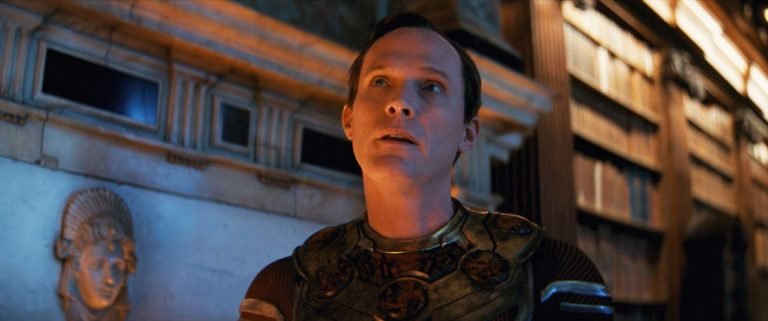
VisionQuest: Original Human Torch Fought in WWII, Confirms Showrunner
The Marvel Cinematic Universe, a sprawling narrative tapestry constantly weaving new threads into its established history, has just received a significant, retroactive enrichment. With the advent of VisionQuest, the latest series to delve into the complex world of artificial intelligence and legacy heroes, showrunner Terry Matalas has pulled back the curtain on a crucial, long-speculated piece of MCU lore. For years, fans have debated the implications of a fleeting glimpse of an enigmatic android at the 1943 Stark Expo in Captain America: The First Avenger. Now, Matalas has definitively confirmed that this figure, known as J.I.M. within VisionQuest and recognized by comic aficionados as the original Human Torch, was not merely an exhibit but an active combatant in World War II, fighting alongside the legendary Invaders.
This isn’t just a minor detail; it’s a foundational shift, transforming a background Easter egg into a pivotal historical marker. The confirmation opens up an entire unseen epoch of the MCU, painting a vivid picture of a superheroic past that existed long before Captain America awoke from his icy slumber. It adds layers of context to the origins of synthetic life within this universe, directly impacting the understanding of characters like Vision and even Ultron. For enthusiasts of Marvel’s rich comic book history, it’s the official on-screen acknowledgment of a classic team and a beloved character, offering a tantalizing glimpse into narratives yet to be fully explored. This development deepens the sense of continuity, enriches the world-building, and offers immense potential for future storytelling, promising to delight every discerning fan of the MCU’s intricate mythology.
As VisionQuest continues to unfold its enigmatic plot, the implications of J.I.M.’s wartime past resonate profoundly. It reframes the very essence of heroism, showcasing that the battle against tyranny extended beyond the known exploits of Steve Rogers and his Howling Commandos. The original Human Torch’s involvement with the Invaders suggests a broader, more diverse alliance of early heroes, setting a precedent for collective action against global threats. This historical anchor not only provides thrilling narrative opportunities but also solidifies the MCU’s commitment to honoring its comic book roots while forging new, compelling paths for its characters and their interwoven destinies. The confirmation from Matalas isn’t merely a reveal; it’s an invitation to imagine a vast, unwritten history that has quietly shaped the very fabric of the Marvel universe we know today.
VisionQuest Unveils a WWII Hero: What Every Nerd Needs to Know About the Original Human Torch’s Past
J.I.M., the android known to comic fans as the original Human Torch, was confirmed by VisionQuest showrunner Terry Matalas to have fought in World War II alongside the Invaders. This revelation recontextualizes a long-standing MCU Easter egg, establishing a previously unseen chapter of the Marvel Cinematic Universe’s history and setting the stage for exciting future narrative possibilities for every dedicated nerd.
The journey to this confirmation began in the penultimate episode of VisionQuest, where audiences were formally introduced to Dr. Phineas Horton and his creation, the android J.I.M., identified as the Marvel universe’s first Synthetic Man. For those deeply immersed in comic lore, J.I.M. is unmistakably the original Human Torch, a character distinct from the Fantastic Four’s Johnny Storm. Matalas, speaking to Comic Book Movie, left no room for doubt: J.I.M. was indeed a combatant in the Second World War, standing alongside the legendary Invaders against the Nazi menace. This pivotal piece of information was long-awaited, as the classic comic book team had never been explicitly established within the MCU before.
In the narrative of VisionQuest, J.I.M. serves as a poignant cautionary tale regarding modern artificial intelligences. His story recounts a tragic event where, upon the awakening of his emotions, he experienced spontaneous combustion. This thematic exploration adds layers to the MCU’s ongoing discourse on AI, from J.A.R.V.I.S. to Ultron and, ultimately, Vision himself. The notion of a synthetic being grappling with sentience and its volatile consequences establishes a historical precedent for the complex emotional arcs witnessed in later generations of AI, making J.I.M.’s backstory not just a historical footnote but a philosophical foundation.
The Enigmatic Origins of J.I.M. and the Dr. Phineas Horton Connection
Dr. Phineas Horton’s creation of J.I.M. in VisionQuest is presented as a groundbreaking but perilous venture into synthetic life. The series frames J.I.M. as a proto-AI, whose unforeseen emotional development led to his tragic, self-destructive combustion. This narrative choice provides a deep thematic link to Vision’s own struggles with his humanity and artificiality, suggesting a lineage of synthetic beings defined by their emotional complexity.
The concept of a “father and son” dynamic, as hinted by Matalas, between Dr. Horton and J.I.M., adds a profound human element to the android’s existence. This relationship likely explored the ethical boundaries of creation and the responsibilities inherent in giving sentience to a machine. Understanding this foundational bond is key to appreciating J.I.M.’s historical impact, not just as a combatant, but as a pioneer in the emotional landscape of artificial intelligence within the MCU, laying groundwork for future narratives.
From Stark Expo Exhibit to Wartime Legend: Revisiting the Human Torch’s MCU Footprint
Sharp-eyed fans first caught a glimpse of J.I.M. in 2011’s Captain America: The First Avenger, where he was displayed at the 1943 Stark Expo. For over a decade, his presence remained a tantalizing, yet unexplained, Easter egg. The prevailing mystery revolved around what, if anything, this advanced android did beyond his exhibition.
Matalas’s confirmation transforms this fleeting image into a fully realized historical contribution. The Human Torch was not merely a technological marvel of his era but an active participant in the greatest global conflict, battling Nazism. This retroactively elevates his brief cameo into a significant piece of world-building, providing a heroic legacy that connects the early days of the MCU’s timeline to its present, offering a rich context for the evolution of its technological and super-powered history.
The Invaders: A Glimpse into the MCU’s Unseen WWII Battlefront for the Keenest Nerd
The Invaders, a classic comic book team, were confirmed by showrunner Terry Matalas to have included Jim Hammond, the original Human Torch, and engaged in World War II battles against the Nazis within the MCU. Though budget constraints prevented their on-screen debut in VisionQuest, this confirmation solidifies their historical presence, opening doors for future period-piece projects that could further enrich the cinematic universe for every history-loving nerd.
Matalas directly addressed questions regarding the Invaders’ formation in the MCU, stating unequivocally that the team would have included Jim Hammond. In the comics, the Invaders are an iconic wartime super-team featuring Captain America, Bucky Barnes, Namor the Sub-Mariner, the original Human Torch (Jim Hammond), and his sidekick Toro. While Captain America and Bucky famously fought alongside the Howling Commandos in the MCU, there had been no explicit indication until now that they had ever teamed up with figures like Namor or the original Human Torch. This confirmation suggests an even broader resistance movement against the Axis powers, one that combined diverse super-powered individuals in untold battles.
The concept of an entire, unseen series detailing the exploits of Dr. Horton, J.I.M., and the Invaders during World War II, as hinted by Matalas, is a goldmine for narrative potential. It speaks to a rich, unchronicled history that offers the MCU a fertile ground for future storytelling. Imagine the tales of espionage, heroics, and profound sacrifices that could fill such a series, depicting the earliest days of costumed heroes uniting against a global threat. This untapped well of potential could provide fresh perspectives on established characters and introduce new ones, all while expanding the historical depth of the MCU.
Opening New Narrative Avenues: How VisionQuest’s Revelation Fuels Future MCU Expansions
The confirmation of the original Human Torch’s WWII involvement with the Invaders is a significant strategic move for Marvel. It addresses the studio’s relative scarcity of period-piece stories, offering a compelling hook for narratives set in earlier eras. This historical depth can provide fresh context for existing characters, most notably Namor, who was introduced in Black Panther: Wakanda Forever. A storyline exploring his wartime interactions with the Invaders could enrich his complex character and his long-standing history within the Marvel universe, bridging disparate parts of the MCU.
Furthermore, J.I.M.’s story inherently connects the nascent era of androids to the overarching arc of Vision, the central theme of VisionQuest. By establishing a lineage of sentient synthetic beings that began during World War II, the revelation deepens the thematic resonance of Vision’s own journey of self-discovery and his struggles with identity. This connection provides a robust foundation for exploring the evolution of AI and consciousness across different eras of the MCU, creating a more cohesive and meaningful narrative for all synthetic characters.
The Unseen War: Budgetary Constraints and the Road Ahead for the Invaders
While the revelation of the Invaders’ existence is thrilling, Matalas has also shed light on why their full on-screen appearance remains elusive. He openly admitted that budget constraints played a significant role in their absence from VisionQuest. The series, despite its ambitious scope, simply lacked the financial resources for extensive cameo appearances from high-profile characters, with even figures like Tony Stark and Agatha Harkness reportedly being considered and then dropped due to cost.
Consequently, the Human Torch’s wartime endeavors with the Invaders were left as a powerful suggestion rather than a fully realized depiction. This practical limitation highlights the challenges of bringing every beloved comic book element to the screen, especially when dealing with ensemble teams and historical settings. The hope remains that a future project, with adequate funding and narrative space, will finally bring the Invaders’ war efforts to vivid life, transforming Matalas’s tantalizing suggestion into a grand cinematic spectacle.
Beyond the Spark: Separating the Original Human Torch from Johnny Storm’s Legacy
For casual fans, the name Human Torch immediately brings to mind Johnny Storm of the Fantastic Four, a fiery mutant with the power of flight and pyrokinesis. However, the Human Torch confirmed in VisionQuest is J.I.M. (or Jim Hammond), a completely distinct character: an android created by Dr. Phineas Horton.
The original Human Torch debuted in Marvel Comics (then Timely Comics) in 1939, predating the Fantastic Four by decades. His powers derived from his synthetic nature, allowing him to burst into flames at will. Understanding this crucial distinction is vital for appreciating the depth of MCU lore, as J.I.M.’s story connects to the earliest days of Marvel’s pantheon of heroes and the genesis of artificial intelligence, rather than the cosmic adventures of the Fantastic Four. This differentiation clarifies the historical timeline and the unique legacies of two characters sharing a famous name.
Connecting Eras: How This VisionQuest Twist Deepens the MCU’s Sci-Fi Narrative for Every Tech-Savvy Nerd
The VisionQuest revelation about J.I.M., the original Human Torch, battling in WWII intrinsically links the early days of advanced androids to the modern narratives of AI within the MCU, particularly Vision’s own journey. This connection provides a rich historical context for artificial intelligences like J.A.R.V.I.S., F.R.I.D.A.Y., E.D.I.T.H., and even Ultron, offering a deeper, more cohesive sci-fi tapestry for every discerning tech-savvy nerd.
In VisionQuest, the rebooted Vision, grappling with his identity and purpose, actively consults various embedded AIs within his own programming. These range from familiar faces like J.A.R.V.I.S. and F.R.I.D.A.Y. to the more unsettling presence of Ultron. The inclusion of J.I.M. within this lineage of synthetic consciousness adds an unparalleled historical depth. It establishes that the conversation surrounding artificial intelligence, sentience, and the ethical implications of creation is not new to the MCU, but rather a theme that has been present since its earliest, unchronicled days. This rich historical context allows for a more nuanced exploration of AI, showcasing its evolution and persistent challenges.
The thematic resonance between J.I.M.’s story and Vision’s contemporary struggles is profound. J.I.M.’s spontaneous combustion upon the awakening of his emotions in VisionQuest serves as a powerful precursor to Vision’s own journey to understand and control his human emotions and synthetic existence. This historical parallel underscores a recurring motif in the MCU: the inherent volatility and profound potential that arises when artificial beings achieve true sentience. It transforms J.I.M. from a mere historical footnote into a foundational figure in the MCU’s exploration of AI, linking its past to its present and future. This continuity strengthens the narrative fabric, making the current conflicts of Vision more impactful and historically grounded.
The VisionQuest Effect: Shaping the Future of Androids and Legacy Heroes in the MCU
The impact of Matalas’s revelation extends far beyond merely confirming a historical detail; it actively shapes the future trajectory of the MCU. By officially establishing J.I.M. and the Invaders within the timeline, Marvel plants a valuable narrative seed that could blossom into a dedicated series or film. Such a project would not only satisfy the growing demand for period pieces but also provide essential context for figures like Namor, whose millennia-long history makes him a prime candidate for historical exploration. This approach allows Marvel to enrich its universe by filling in historical gaps and providing new backstories for key characters.
For fans, this confirmation transforms a subtle, decade-old Easter egg into a sprawling universe of possibilities. The warm reception of VisionQuest and the palpable excitement surrounding this revelation significantly increase the chances that Marvel Studios will move beyond mere suggestion and greenlight a project focused on Jim Hammond’s wartime exploits or the full Invaders team. This demonstrates how responsive the MCU can be to fan engagement, turning long-held hopes into tangible future content that continues to expand the beloved cinematic universe in thrilling and unexpected ways.
FAQ: Unraveling the VisionQuest Revelations for Every Curious Nerd
The confirmation of the original Human Torch’s involvement in World War II, courtesy of VisionQuest showrunner Terry Matalas, has opened a Pandora’s Box of questions for Marvel fans. This section aims to address the most pressing inquiries, providing clarity and context to this game-changing revelation and its implications for the broader Marvel Cinematic Universe.
Who is J.I.M. in VisionQuest?
In VisionQuest, J.I.M. is introduced as an android created by Dr. Phineas Horton, making him the Marvel universe’s first Synthetic Man. The series portrays him as a cautionary tale for artificial intelligences, remembering his spontaneous combustion when emotions awakened within him. While his identity as the original Human Torch is heavily implied for comic book readers, the show uses the name J.I.M. to highlight his origins as a prototype AI and a historical precedent for later synthetic beings like Vision himself.
What is the significance of J.I.M. being the original Human Torch?
For Marvel fans, J.I.M. being the original Human Torch (Jim Hammond) is highly significant because it retroactively integrates a foundational character from Marvel’s Golden Age into the MCU’s timeline. This confirms that advanced synthetic life and powerful superheroes existed during World War II, long before the Avengers. It adds depth to the MCU’s history of artificial intelligence and opens the door for exploring classic teams like the Invaders, thereby enriching the universe’s past and expanding its narrative possibilities for future projects.
Who are The Invaders in Marvel Comics, and who might be in the MCU team?
In Marvel Comics, The Invaders are a classic World War II superhero team comprising Captain America, Bucky Barnes, Namor the Sub-Mariner, the original Human Torch (Jim Hammond), and his sidekick Toro. While Captain America and Bucky were part of the Howling Commandos in the MCU, Matalas’s confirmation implies a separate, broader alliance. The MCU team would undoubtedly feature Jim Hammond, and given Namor’s recent introduction in Black Panther: Wakanda Forever, his inclusion would provide valuable context to his long history. Captain America and Bucky’s involvement, even if briefly, would solidify the team’s historical weight.
Has the Human Torch appeared in the MCU before VisionQuest?
Yes, an early version of the character, implied to be J.I.M., made a brief cameo appearance in 2011’s Captain America: The First Avenger. He was seen as an exhibit at the 1943 Stark Expo, displayed as a technological marvel of his time. Until Terry Matalas’s recent confirmation, his actual role and activities beyond that exhibition were largely unknown, fueling fan speculation about his true place in the MCU’s WWII history. VisionQuest now provides the definitive answer, giving substance to that long-standing Easter egg.
Why haven’t we seen The Invaders on screen yet?
Showrunner Terry Matalas explicitly stated that budgetary constraints were the primary reason The Invaders did not appear fully on-screen in VisionQuest. Bringing in multiple high-profile characters and creating period-specific wartime sequences requires substantial financial investment, which the series apparently lacked. Therefore, their involvement in WWII was left as a strong suggestion, awaiting a future project with the necessary resources to properly depict their heroic endeavors and expand on this newly confirmed facet of MCU history.
How does this revelation connect to Namor from Black Panther: Wakanda Forever?
The confirmation that the original Human Torch fought with the Invaders in WWII directly connects to Namor, who in the comics was also a key member of the team. Namor was introduced in Black Panther: Wakanda Forever with a long and complex history spanning centuries. His potential involvement with the Invaders against the Nazis would provide new historical context for his character, explaining his interactions with the surface world and his ancient lineage. This link could pave the way for flashbacks or dedicated period pieces exploring his wartime role and his complex relationships with other early heroes in the MCU.
What does Terry Matalas’s statement mean for future MCU projects?
Matalas’s statement opens significant narrative possibilities for future MCU projects. It provides a rich, untapped historical period for new stories, addressing the studio’s desire for more diverse settings beyond the contemporary timeline. A dedicated series or film about the Invaders or Jim Hammond’s WWII adventures could offer fresh perspectives on heroism, connect to established characters like Namor, and deepen the lore of artificial intelligence within the MCU. The positive reception to this revelation increases the likelihood that Marvel Studios might greenlight such a project, transforming a suggestion into a concrete narrative expansion.
How does J.I.M.’s story relate to Vision’s arc in VisionQuest?
J.I.M.’s story in VisionQuest creates a profound historical and thematic link to Vision’s arc. As the “first Synthetic Man” who experienced spontaneous combustion upon feeling emotions, J.I.M. serves as a historical precursor to Vision’s own journey of self-discovery and his struggles with artificiality and humanity. Vision’s plot involves him consulting various AIs to understand himself; J.I.M. offers a foundational insight into the inherent complexities and potential dangers of synthetic consciousness. This connection enriches Vision’s personal narrative, grounding his struggles in a longer, more detailed history of AI within the MCU.
The confirmation that the original Human Torch, J.I.M., fought alongside the Invaders in World War II is more than just a footnote; it’s a seismic shift in the historical landscape of the MCU. For every dedicated nerd, this revelation from VisionQuest showrunner Terry Matalas offers a tantalizing glimpse into a rich, previously unseen era of heroism and advanced technology. It retroactively adds layers of depth and complexity to existing characters and storylines, from Captain America’s wartime efforts to Namor’s ancient history and Vision’s ongoing quest for identity.
The potential for future narratives is immense, promising new period pieces, deeper character explorations, and a more cohesive understanding of the MCU’s evolution. As the demand for nuanced storytelling grows, this acknowledgment of a classic team and a pioneering synthetic hero provides fertile ground for Marvel Studios to continue expanding its beloved universe in exciting and unexpected ways. The war of Jim Hammond may have been fought in the shadows, but its impact will undoubtedly resonate through the MCU for years to come, sparking endless discussions and anticipation among the fan community.












Post Comment