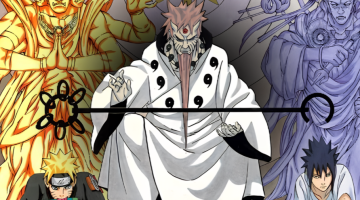
Boruto’s Shinjutsu & Greek Mythology: Divine Power Curiosities
The expansive universe of ‘Naruto’ and its sequel ‘Boruto: Naruto Next Generations’ has captivated millions worldwide with its intricate power systems, compelling characters, and deep lore. Beyond the familiar chakra manipulations and hand seals of ninjutsu, a more ancient and formidable power has emerged: Shinjutsu. This ‘divine technique’ represents a fundamental shift in the series’ power hierarchy, embodying abilities once thought to be exclusive to deities. As the narrative of ‘Boruto’ continues to unfold, these divine powers become central to understanding the true origins of the ninja world and the cosmic threats it faces.
Yet, the concept of Shinjutsu, and indeed the very nature of ninjutsu itself, seems to echo tales far older than any ninja scroll. Across cultures and centuries, humanity has grappled with the idea of stolen power, divine gifts, and the consequences of mortals wielding god-like abilities. It is within this rich tapestry of global mythologies that ‘Boruto’ finds fascinating resonance, particularly with the enduring saga of Greek mythology. The story of Prometheus, who defied the gods to bring fire to humankind, offers a compelling lens through which to examine the dynamics between Shinjutsu and ninjutsu.
This deep dive isn’t merely an academic exercise; it’s an exploration of how universal archetypes and ancient narratives inform modern storytelling, adding layers of meaning and depth to a beloved franchise. By drawing these parallels, we gain a richer appreciation for the creativity behind ‘Boruto’ and the subtle ways its creators might be weaving established mythological frameworks into new, exciting contexts. Understanding these connections enhances the viewer’s experience, transforming simple plot points into reflections of humanity’s oldest stories about power, sacrifice, and the eternal quest for knowledge. Join us as we uncover these intriguing curiosities that bridge the world of shinobi with the pantheons of old.
Understanding Shinjutsu: The Divine Power’s Origins and Nature in ‘Boruto’ — Curiosities Revealed
Shinjutsu, or ‘divine techniques’ (神術), stands as the apex of power within the ‘Boruto’ universe, representing abilities intrinsically tied to the god-like status of the Ōtsutsuki clan. Unlike ninjutsu, which relies on chakra manipulation through learned hand seals and focused training, Shinjutsu operates on a different plane entirely. It bypasses the need for conventional preparation, allowing its users to manifest phenomena that are simply beyond the scope of any ninjutsu technique, no matter how refined or potent.
According to Amado, a brilliant scientist with unparalleled knowledge of the Ōtsutsuki, ninjutsu itself is merely a human attempt to mimic these divine phenomena. Mortals, lacking the inherent god-like essence of the Ōtsutsuki, developed chakra manipulation and hand seals as a means to replicate, albeit imperfectly, the raw power that Shinjutsu users wield effortlessly. This distinction fundamentally redefines the power hierarchy established throughout the ‘Naruto’ saga, placing the legendary abilities of characters like Naruto and Sasuke in a new, more ‘earthly’ context.
The exclusivity of Shinjutsu is a critical aspect: it cannot be learned or mastered through training like ninjutsu. Instead, it is an innate ability present only in Ōtsutsuki clan members or those who have inherited a portion of Shibai Ōtsutsuki’s DNA. Shibai is depicted as the sole Ōtsutsuki known to have achieved true godhood after consuming hundreds of Divine Tree fruits, accumulating a power level that grants him access to this ultimate form of technique. This genetic prerequisite highlights Shinjutsu as a birthright or a sacred inheritance, rather than an acquired skill.
This deep dive into Shinjutsu reveals that it is not just another powerful technique, but the foundational source of all extraordinary abilities in the ninja world. Its divine nature, requiring no hand seals and achieving feats impossible for ninjutsu, elevates it to a truly transcendent level. The connection to Shibai Ōtsutsuki and the genetic requirement underscore its exclusivity, positioning Shinjutsu as the ultimate power, distinct from any mortal endeavor.
Shinjutsu vs. Ninjutsu: A Comparative Look at Divine and Mortal Powers
The stark contrast between Shinjutsu and ninjutsu forms the core of the power system’s evolution in ‘Boruto’. While ninjutsu represents the pinnacle of mortal achievement and diligent training within the ninja world, Shinjutsu embodies an inherent, unlearnable divinity. Ninjutsu requires a precise understanding of chakra flow, elemental manipulation, and intricate hand signs to manifest its effects. Its practitioners, like Naruto and Sasuke, dedicate years to honing their skills, pushing the boundaries of what is humanly possible.
Conversely, Shinjutsu users operate without such constraints. Their abilities manifest spontaneously, seemingly drawing directly from an inherent connection to the divine, a state of being rather than a learned craft. This inherent nature means Shinjutsu bypasses the physical and mental limitations that even the most powerful ninjutsu users face, allowing for feats that defy conventional understanding and scientific explanation within the ‘Boruto’ universe.
This fundamental difference positions ninjutsu as an ‘imitation’ or a ‘shadow’ of Shinjutsu. It suggests that all the incredible techniques developed by shinobi over generations are ultimately reflections, albeit powerful ones, of an original divine blueprint. The existence of Shinjutsu recontextualizes the entire history of the ninja world, suggesting that its foundations are rooted in the cosmic powers of the Ōtsutsuki rather than solely human ingenuity.
| Feature | Shinjutsu | Ninjutsu |
|---|---|---|
| Origin | Innate, Divine Ōtsutsuki Power | Learned, Mortal Adaptation of Chakra |
| Prerequisites | Ōtsutsuki heritage or Shibai’s DNA | Chakra control, training, hand seals |
| Execution | No hand seals, spontaneous manifestation | Requires hand seals, specific techniques |
| Scope of Power | Transcends mortal understanding, god-like feats | Limited by chakra, human capability, laws of nature |
| Learnability | Cannot be learned | Can be learned and mastered |
| Nature | Divine, cosmic, fundamental | Earthly, practical, imitative |
The Prometheus Parallel: Shinjutsu as the ‘Divine Fire’ of Greek Mythology
The emergence of Shinjutsu in ‘Boruto’ invites a compelling comparison with the ancient Greek myth of Prometheus, the Titan who famously defied Zeus to steal fire from the gods and bestow it upon humanity. In this legendary tale, fire represents not just warmth or light, but knowledge, technology, and civilization – the very tools that empower mortals and set them apart from animals. Prometheus’s act was one of immense sacrifice and rebellion, fundamentally altering the course of human development while incurring the wrath of the Olympians.
Applying this archetype to ‘Boruto’, Shinjutsu can be seen as the ‘divine fire’ – the raw, unadulterated power belonging solely to beings of god-like status, the Ōtsutsuki. This power is inherent, boundless, and operates outside the conventional rules understood by mortals. It is the ultimate expression of cosmic energy, a force meant to be wielded by true deities for their own purposes, such as consuming planetary life force.
Ninjutsu, then, becomes humanity’s ‘stolen fire’ – an adapted, diluted, and perhaps even flawed version of that divine power. When Hagoromo Ōtsutsuki, the Sage of Six Paths, shared chakra with humanity through Ninshu, he essentially gave mortals a piece of that divine capability, albeit a version they could grasp and manipulate through their own means. This act parallels Prometheus’s gift, providing humanity with a pathway to power and technique, symbolized by the various ninjutsu skills that define the ninja world.
Just as Prometheus’s gift brought both progress and conflict, inspiring humanity while drawing divine retribution, Hagoromo’s sharing of chakra led to a similar duality. While intended for unification and understanding, the power was eventually distorted and weaponized, leading to endless wars that mirrored the suffering inflicted upon humanity by Zeus as punishment for Prometheus’s transgression. This intricate parallel enriches the lore of ‘Boruto’, providing a mythological framework that explains the origins of both divine power and mortal conflict.
Hagoromo’s Role: The ‘Prometheus’ of the Ninja World
Hagoromo Ōtsutsuki, revered as the Sage of Six Paths, takes on a role eerily similar to Prometheus in the narrative of ‘Boruto’. He is the pivotal figure who, after confronting his own mother, Kaguya – a progenitor of chakra on Earth – chose to share chakra with humanity. His original intention was benevolent: to foster unity and understanding through a doctrine known as Ninshu, a spiritual path rather than a combat technique.
However, much like the fire bestowed by Prometheus, Hagoromo’s gift, while revolutionary, had unintended and devastating consequences. What was meant to connect people and bring peace was eventually twisted. Humanity, driven by greed and conflict, adapted Ninshu into ninjutsu, transforming a spiritual medium into a weapon of war. This perversion of intent mirrors the punishment inflicted by Zeus upon humanity with Pandora’s Box, a seemingly benevolent gift that unleashed suffering upon the world.
This highlights a crucial aspect of Hagoromo’s legacy: despite his immense power, even his abilities were described as being based on ninjutsu, making them fundamentally inferior to true Shinjutsu. He acted as the conduit, the bridge between the divine and the mortal, rather than being the ultimate wielder of primordial power himself. His sacrifice and his decision to empower humanity, knowing the potential for misuse, firmly cement his role as the Promethean figure within the ninja world’s rich tapestry.
Beyond Olympus: Asian Mythological Echoes in Shinjutsu and Hagoromo’s Legacy
While the Promethean parallel offers a compelling Western lens to understand Shinjutsu and the origins of ninjutsu, the creators of ‘Naruto’ and ‘Boruto’ have always drawn heavily from Eastern mythologies and spiritual traditions. These Asian influences provide a deeper, more nuanced understanding of Hagoromo Ōtsutsuki’s character and his spiritual motivations, transcending the simple act of “stealing fire” to encompass enlightenment, guidance, and the pursuit of peace.
Buddhism: The Sage of Six Paths and the Path to Enlightenment
Hagoromo’s title, the “Sage of Six Paths,” immediately evokes the concept of the Six Realms of Reincarnation in Buddhism, which describe the various states of existence beings can be reborn into based on their karma. This connection suggests a profound spiritual journey and understanding of life and death, reflecting Hagoromo’s elevated consciousness. His training with the toad sages on Mount Myōboku, a mystical location, further echoes the enlightenment journey of Siddhartha Gautama, the Buddha, who achieved a superior state of awareness through rigorous spiritual practice.
Moreover, Hagoromo’s Ninshu, before its corruption into ninjutsu, was intended to guide humanity towards self-achieved peace, much like the Dharma (the teachings of Buddha) aims to lead individuals to liberation from suffering. This spiritual mentorship, focusing on inner transformation rather than external power, positions Hagoromo not just as a power-giver, but as a spiritual teacher, a guide on the path to enlightenment.
Chinese Mythology: Sun Wukong, Fuxi, and Nüwa
The legendary figure of Sun Wukong, the Monkey King from the classical Chinese novel ‘Journey to the West’, presents another intriguing parallel. Born from a stone and trained in Taoist arts, Wukong famously challenged the Celestial Emperor, disrupting the heavenly monopoly on power. This act of defying divine authority and distributing power aligns with Hagoromo’s stand against Kaguya and the Ōtsutsuki, effectively breaking their exclusive control over chakra and sharing it with mortals.
Further Chinese mythological connections arise with Fuxi and Nüwa, often depicted as half-human, half-divine beings with serpentine tails. These primordial deities are credited with teaching humanity essential skills like fishing, cooking, and writing, and introducing the Eight Trigrams (Bagua), a fundamental concept in Taoist cosmology. The Bagua bear a striking resemblance to the Hakke (Eight Trigrams) techniques of the Hyūga clan, suggesting ancient divine origins for even specific ninja abilities. Fuxi and Nüwa represent the benevolent guidance of divine figures bestowing practical knowledge upon humanity, echoing Hagoromo’s role in sharing methods and understanding.
Shintoism: Ninigi-no-Mikoto and Civilizing the Earth
From Japanese Shintoism, the figure of Ninigi-no-Mikoto, grandson of the sun goddess Amaterasu, offers yet another parallel to Hagoromo. Ninigi descended from the heavens to Earth, bringing with him three sacred treasures (the Imperial Regalia of Japan) and the knowledge of rice cultivation, symbolizing the civilizing influence of the divine. This act of a celestial being descending to Earth to bring culture and order, much like Hagoromo sharing his ‘treasures’ (chakra/Ninshu) and guidance to establish a new way of life for humanity, strongly resonates with the narrative. Both figures are instrumental in shaping the foundational aspects of their respective worlds.
The Dual Interpretations: Power vs. Method
Ultimately, the juxtaposition of Western and Eastern mythologies offers a comprehensive framework for understanding the complex origins of power within ‘Boruto’. The Promethean narrative predominantly explains the initial act of transference – the ‘divine fire’ (Shinjutsu) being taken or adapted for mortal use, resulting in the creation of ninjutsu. This perspective eloquently accounts for the ensuing conflicts and wars that arise from mortals wielding immense power, mirroring Zeus’s punishment and Pandora’s Box.
Conversely, the rich tapestry of Buddhist, Chinese, and Shinto mythologies provides profound insights into Hagoromo’s spiritual motivations. These traditions emphasize not just the distribution of power, but the impartation of a method – a path to enlightenment, self-sufficiency, and peace. Hagoromo is not merely a conduit for raw power; he is a sage who wishes to elevate humanity through understanding, much like Buddha’s Dharma or Fuxi and Nüwa’s teachings. These Eastern parallels highlight the underlying hope for unity and spiritual growth that underpinned his original Ninshu.
By embracing both perspectives, ‘Boruto’ enriches its world-building, offering a layered narrative that explores both the thrilling acquisition of power and the profound ethical implications of its use. It delves into the inherent conflicts that arise when divine abilities are placed in mortal hands, while simultaneously exploring the higher spiritual aspirations that can drive such transformative acts. This blend of narratives elevates the story beyond a simple battle manga, making it a nuanced exploration of cosmic power, human nature, and ancient wisdom.
Exploring the Future of Shinjutsu: What Lies Ahead in ‘Boruto’s Narrative?
The introduction of Shinjutsu irrevocably alters the power landscape of ‘Boruto’, setting new benchmarks for conflict and character development. As the series progresses, the understanding and integration of these divine techniques will shape the destiny of both the Ōtsutsuki clan and the ninja world. This shift necessitates a reevaluation of traditional power dynamics and forces characters to confront threats on an entirely new scale.
One of the most significant implications is the diminishing relevance of traditional ninjutsu. While still formidable, the ultimate antagonists wielding true Shinjutsu make even the strongest ninjas appear vulnerable. This creates a compelling narrative challenge: how will characters like Boruto, Kawaki, and others bridge this power gap? Will they discover new ways to access or counter Shinjutsu, or will the series introduce a different evolutionary path for shinobi abilities?
Furthermore, the nature of Shinjutsu, being an inherited trait tied to Ōtsutsuki DNA, poses ethical and existential questions. If only a select few can wield this ultimate power, what does it mean for the broader world of shinobi? Does it create a new class divide, or will humanity find a way to adapt and transcend these genetic limitations? The future of ‘Boruto’ will undoubtedly explore these themes, pushing its characters to their limits and redefining what it means to be a ninja in a world dominated by divine techniques.
Common Curiosities and Misconceptions About Shinjutsu
The introduction of Shinjutsu has naturally generated much discussion and a few misconceptions among fans. Understanding these nuances is crucial for appreciating the depth of ‘Boruto’s evolving power system.
- Is Shinjutsu just a stronger Ninjutsu? No. While both involve manifesting abilities, Shinjutsu operates without chakra flow or hand seals, indicating a fundamentally different and higher level of power, an innate divine essence rather than a learned skill.
- Can anyone learn Shinjutsu? No. It is explicitly stated that Shinjutsu is either inherited by Ōtsutsuki or requires a portion of Shibai Ōtsutsuki’s DNA. It’s not a skill that can be acquired through training, unlike ninjutsu.
- Is Shinjutsu related to Senjutsu (Sage Mode)? Not directly. Senjutsu involves absorbing natural energy to enhance chakra, but it still operates within the realm of modified chakra. Shinjutsu is divine in origin, bypassing chakra manipulation altogether.
- Is Shinjutsu infinite? While it appears to be a vast and potent power, its extent is tied to the divine status of the user, particularly Shibai. Its limits, if any, are yet to be fully explored, but it represents a power far beyond what ninjutsu can achieve.
- Does Shinjutsu always involve eye techniques like the Karma? The Karma mark is a vessel for Ōtsutsuki resurrection and grants access to their abilities, which can include Shinjutsu. However, Shinjutsu itself is a broader category of divine techniques, not solely limited to eye-based powers, though some may manifest through them.
FAQ: Unraveling More Curiosities of Shinjutsu and Mythology in ‘Boruto’
Here are answers to some frequently asked questions that delve deeper into the intriguing connections between ‘Boruto’s Shinjutsu and global mythologies.
What is the primary difference between Shinjutsu and Ninjutsu?
The primary difference lies in their origin and execution. Shinjutsu (‘divine techniques’) is an innate power possessed by Ōtsutsuki beings, requiring no hand seals or chakra manipulation, and allowing for god-like feats. Ninjutsu, on the other hand, is a mortal adaptation that requires chakra control, specific hand seals, and extensive training to mimic the effects of more fundamental, divine phenomena. Shinjutsu is a birthright or genetic inheritance, while ninjutsu is an acquired skill.
Why is the Prometheus myth a good analogy for Shinjutsu and Ninjutsu?
The Prometheus myth serves as an excellent analogy because it tells the story of divine power (fire) being stolen and given to humanity, leading to both advancement and conflict. In ‘Boruto’, Shinjutsu represents this ‘divine fire’ belonging to the Ōtsutsuki. Ninjutsu then becomes the adapted ‘stolen fire’ that Hagoromo shared with mortals, enabling their development but also sparking wars, reflecting the consequences of divine intervention in the mortal realm.
How does Hagoromo Ōtsutsuki fit into the mythological parallels?
Hagoromo Ōtsutsuki functions as a pivotal ‘Promethean’ figure. He defied his mother Kaguya and shared chakra (the ‘divine fire’) with humanity through Ninshu. While his intent was benevolent, this gift was ultimately weaponized, leading to conflict, much like Prometheus’s gift of fire brought both progress and suffering to mankind, leading to divine retribution. He bridges the gap between divine power and mortal capability.
What Asian mythologies are referenced in Hagoromo’s character?
Hagoromo’s character draws from several Asian mythologies. His title, ‘Sage of Six Paths,’ connects to Buddhist concepts of reincarnation. His spiritual journey and aim for peace echo Siddhartha Gautama (Buddha). His defiance of divine power is likened to Sun Wukong from Chinese mythology, and his role in civilizing humanity with spiritual ‘treasures’ parallels Ninigi-no-Mikoto in Shintoism and Fuxi and Nüwa from Chinese lore who taught essential skills.
Do these mythological parallels mean ‘Boruto’ is directly referencing these stories?
The creators have not explicitly confirmed all these parallels, but the recurring themes are undeniable. These connections serve as cultural and narrative archetypes that enrich the story, providing a deeper layer of meaning and allowing the narrative to tap into universal concepts of power, destiny, and the human (or divine) condition. It’s a way for the series to resonate on a broader, more profound level.
What are the implications of Shinjutsu for the future of the ninja world?
The implications are profound. Shinjutsu raises the stakes, making traditional ninjutsu seem less effective against ultimate threats. It suggests a future where power is determined by genetic lineage rather than training, potentially creating new societal divides. The narrative will likely explore how characters adapt to this new power hierarchy, whether through finding counters, evolving their own abilities, or discovering new forms of strength beyond the Ōtsutsuki’s divine techniques.
The concept of Shinjutsu adds a cosmic dimension to the series, elevating the challenges faced by the protagonists to an existential level. It requires not just strength, but an understanding of ancient powers and their origins, pushing the ‘Boruto’ narrative into uncharted and exciting mythological territory.
Are there any limitations to Shinjutsu users?
While Shinjutsu is supremely powerful, its primary limitation highlighted so far is its exclusivity; it cannot be learned by just anyone. It is a power granted by birthright or direct genetic inheritance from a truly divine being like Shibai Ōtsutsuki. This inherent nature means its wielders are few, which can be seen as a limitation in terms of widespread application or proliferation, preventing it from becoming a common, destabilizing force across the entire ninja world.
The Enduring Appeal: Why These Curiosities Matter to ‘Boruto’ Fans
As we conclude this deep exploration into Shinjutsu and its profound connections to ancient mythologies, it becomes clear that ‘Boruto’ is more than just a continuation of a beloved anime series. It is a narrative woven with threads of universal archetypes, drawing wisdom and inspiration from stories that have defined human culture for millennia. The parallels with Prometheus, the Buddha, Sun Wukong, and other mythological figures are not mere coincidences; they are deliberate choices that imbue the series with a richer, more resonant meaning.
Understanding these underlying mythological structures elevates the viewing experience, allowing fans to appreciate the intricate layers of storytelling that Kishimoto and his successors have crafted. It transforms the often-complex power systems of ‘Boruto’ into a reflection of humanity’s oldest questions about power, responsibility, divinity, and the eternal struggle between order and chaos. For any dedicated fan of ‘Nerd Culture & Entertainment,’ these curiosities aren’t just fascinating details; they are essential keys to unlocking a deeper, more profound engagement with the story.
The journey to uncover these connections reinforces the idea that great narratives, regardless of their medium or origin, often tap into a shared human consciousness, echoing tales that speak to our core experiences. ‘Boruto’ continues this tradition, offering a thrilling adventure while subtly inviting us to reflect on the timeless myths that shape our understanding of the world.








Post Comment