Imu & Mihawk: One Piece Colors Spark Otaku Theories
The world of One Piece, a sprawling epic crafted by Eiichiro Oda, thrives on its intricate mysteries and the anticipation of monumental revelations. For decades, fans have meticulously pieced together clues, debated obscure panels, and theorized about the true nature of its most enigmatic figures. Among them, Imu, the shadowy sovereign of the World Government, has remained the ultimate cipher, a silent orchestrator whose very existence hints at the deepest secrets of the Grand Line.
Recently, the veil over Imu’s true appearance was partially lifted with the official release of their colored depiction on the cover of Volume 116. This visual unveiling, teased through a time-lapse video showcasing Oda’s artistic process, wasn’t just a moment of clarity; it was a catalyst. As the vibrant hues of Imu’s design were presented to the world, a flurry of discussions erupted across fan communities, uniting Otaku worldwide in a shared quest for understanding.
What quickly became apparent, much to the surprise and excitement of countless enthusiasts, was the striking and unexpected resemblance Imu shares with Dracule Mihawk, a character whose own past is shrouded in tantalizing ambiguity. This isn’t merely a coincidence of design; it’s a deliberate choice by Oda that suggests a deeper, potentially foundational connection that could redefine our understanding of the series’ central conflicts and its most powerful players.
From shared ocular patterns that defy explanation to an almost identical brooding aesthetic, these visual cues compel us to reconsider everything we thought we knew. Could Mihawk, a loner with a mysterious aristocratic bearing, be intricately linked to the very entity that sits at the pinnacle of the world’s power structure? This article delves into these astonishing similarities, exploring the implications for One Piece lore and the theories that are now set to captivate the collective imagination of the Otaku community for years to come.
Imu’s Unveiling: A New Mystery for the Dedicated Otaku Community
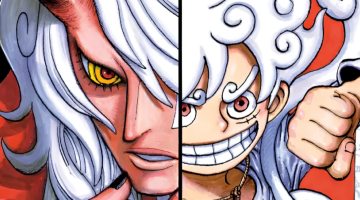
The official color reveal of Imu has presented the Otaku community with a fresh and complex mystery, detailing their appearance with dark red skin adorned with small white markings, stark white hair, formidable black horns, and golden-yellow eyes that possess subtle reddish undertones. This distinct color palette, combined with attire featuring yellow pants patterned with white skulls and a cloak blending red and black, establishes a powerful, contrasting visual identity.
Upon this reveal, Imu’s body is often enveloped by an aura resembling dark flames, creating a direct visual opposition to the pristine white of Luffy’s Gear 5. This contrast not only heightens the sense of their adversarial relationship but also reinforces Imu’s ominous presence within the narrative. The choice of colors also sparks discussion around Imu’s potential connection to the Lunarian race; despite displaying wing-like features reminiscent of this ancient tribe, Imu’s skin lacks the characteristic dark pigmentation known to Lunarians. This discrepancy fuels speculation that Imu might have acquired these traits, possibly including their immense size-shifting abilities, through a past pact or other unknown means rather than direct lineage, though no official confirmation has emerged.
Direct Answer: Imu’s official colors reveal dark red skin with white marks, white hair, black horns, and golden-yellow eyes with reddish hues, adorned in a red and black cloak and skull-patterned yellow pants. This striking appearance, often surrounded by a dark flame aura, draws immediate comparisons to Dracule Mihawk’s mysterious aesthetic and unique eye patterns, profoundly engaging the global Otaku community in new theories about their potential connection.
The Shadow of the Hawk: Unpacking Mihawk’s Visual Parallels with Imu
The most intriguing aspect of Imu’s color revelation lies in the surprising congruence with Dracule Mihawk, a character whose identity has long been a source of fascination for Otaku. In the manga, Mihawk’s eyes are depicted with red irises and distinctive concentric circles, a pattern remarkably similar to Imu’s gaze. While the anime portrays Mihawk’s eyes in shades of yellow, the visual echo with Imu’s newly revealed golden-yellow eyes remains strikingly consistent, suggesting a deliberate design choice that transcends media adaptations.
Beyond the eyes, both characters share a profound aesthetic. Their styles are distinctly aristocratic, possessing a somber and gothic grandeur that evokes a sense of ancient power and subtle religious symbolism. Mihawk, with his refined posture and solitary existence in a massive castle on Kuraigana Island, embodies this mystique. His past remains largely unexplored by Oda, a stark contrast to other pivotal figures like Shanks and Dragon, whose histories have been progressively unveiled.
Mihawk’s legendary sword, Yoru, further reinforces this thematic connection. Classified as one of the 12 Supreme Grade Blades, Yoru is characterized by its permanently black blade, intricate jeweled adornments, and a distinctive cross-like shape. This symbolic weapon, combined with Mihawk’s overall presentation, resonates deeply with the divine imagery that often accompanies Imu, even if, by itself, it does not conclusively prove a direct lineage or relationship between them. The consistent withholding of Mihawk’s backstory while revealing so much about others, coupled with these recent visual parallels, hints strongly at a significant, yet-to-be-disclosed connection that has the entire fandom buzzing.
| Feature | Imu (Volume 116 Cover) | Dracule Mihawk |
|---|---|---|
| Eyes | Golden-yellow with reddish nuances; concentric patterns (implied) | Red irises with concentric circles (manga); yellowish tones (anime) |
| Aesthetic | Aristocratic, somber, gothic, mysterious, dark aura | Aristocratic, somber, gothic, refined, solitary |
| Symbolism | Divine imagery, commanding presence | Religious (cross-shaped sword), mysterious past |
| Color Scheme | Red, black, white, yellow (clothing) | Predominantly black (attire, Yoru), some red/yellow (eyes) |
| Known History | Ruler of the World Government, unknown identity, mysterious powers | World’s Greatest Swordsman, Shichibukai, mysterious past |
Direct Answer: Mihawk’s visual parallels with Imu are striking, most notably their shared eye patterns—red irises with concentric circles in Mihawk’s manga depiction, aligning with Imu’s golden-yellow gaze. Both characters also share an aristocratic, gothic, and somber aesthetic, enriched by religious symbolism, with Mihawk’s mysterious past and the cross-shaped Yoru sword further echoing Imu’s divine imagery, suggesting a deeper, deliberate connection within One Piece lore.
Diving Deeper: Theories, Implications, and What It Means for the One Piece Narrative
The revelation of Imu’s colors and the subsequent comparisons to Mihawk have opened a new chapter in One Piece theory crafting, offering a wealth of interpretative opportunities for dedicated fans. One of the primary benefits of such connections is the profound enrichment of the lore, transforming seemingly disparate characters into potentially intertwined elements of a grander narrative tapestry. These visual cues encourage detailed scrutiny of Oda’s art, rewarding observant fans and fostering a vibrant community of theorists. The depth of engagement these theories inspire is unparalleled, pushing fans to re-examine past chapters and episodes for hidden clues, thus extending the lifespan and interactive value of the series.
However, engaging in such deep theoretical analysis also comes with inherent limitations and risks. Oda is renowned for his ingenious plot twists and long-term planning, which means that even the most compelling fan theories can be spectacularly overturned. A common error among enthusiasts is prematurely solidifying theories into canon, leading to potential disappointment if the narrative takes an unexpected turn. Another risk is overlooking subtle details that might contradict a favored hypothesis, or conversely, hyper-focusing on superficial resemblances without sufficient contextual backing.
To navigate this complex landscape effectively, good practices for the Otaku community involve engaging in respectful and open-minded theory crafting. This means considering multiple perspectives, weighing evidence carefully, and understanding that theories are dynamic and subject to change as more information is revealed. Instead of seeking definitive answers, the focus should be on the process of exploration and discovery itself, appreciating the depth Oda brings to his storytelling. Current tendencies in the fandom show an increasing complexity in connecting characters and events, hinting at a future where seemingly minor details will prove to be crucial linchpins in the overarching narrative.
The implications of a Mihawk-Imu connection for the broader One Piece narrative are vast. For casual readers, it adds an exciting layer of intrigue, promising thrilling revelations in the final saga. For hardcore theorists, it provides fertile ground for exploring themes of lineage, hidden powers, and the true nature of the World Government. Such a link could explain Mihawk’s mysterious past, his exceptional power, and his largely neutral stance in world affairs, potentially positioning him as a reluctant ally or an unexpected key player in the ultimate confrontation against Imu. It forces a re-evaluation of characters’ motivations and allegiances, suggesting that the lines between hero, villain, and neutral party are far more blurred than initially perceived, all of which enhances the richness of the One Piece experience for everyone.
Direct Answer: The revealed Imu-Mihawk similarities deeply enrich One Piece lore by sparking complex fan theories and fostering community engagement. While Oda’s unpredictable twists can challenge assumptions, good practices involve open-minded theorizing, avoiding premature conclusions, and appreciating the evolving narrative. This connection implies significant future plot developments, potentially clarifying Mihawk’s role and the true nature of the World Government, profoundly impacting the series’ final saga.
Beyond the Horizon: What These Revelations Mean for Every Otaku
The convergence of Imu’s official color scheme and its striking resemblance to Dracule Mihawk represents more than just a visual coincidence; it is a profound narrative signal from Eiichiro Oda, meticulously crafted to shape the final arcs of One Piece. For every Otaku, this revelation is a testament to the series’ unparalleled depth and Oda’s masterful long-game storytelling. It affirms that even seemingly minor design choices can carry immense weight, hinting at connections that span centuries and influence the fate of the entire world.
The implications for the future of the One Piece saga are immense. If Mihawk, a figure often portrayed as a powerful but detached individual, is indeed tied to Imu, it could unravel decades of established lore regarding the Void Century, the Ancient Weapons, and the true history of the World Government. Such a connection might explain Mihawk’s extraordinary abilities, his unique position as the “World’s Greatest Swordsman,” and his cryptic disinterest in the world’s power struggles until now. This newfound link suggests a potential shift in allegiances, or at the very least, a deeper, more personal stake for Mihawk in the impending global conflict.
Moreover, these revelations lay the groundwork for a narrative where individual destinies are inextricably linked to grand historical events, revealing that characters once thought to be secondary might hold keys to unlocking central mysteries. This creates an even more immersive experience for fans, transforming passive consumption into active participation in deciphering the saga’s ultimate truths. As One Piece races towards its conclusion, these subtle but potent clues ensure that the journey remains as thrilling and unpredictable as ever, promising a finale that is not only epic in scale but also deeply personal for its iconic characters.
Direct Answer: The Imu-Mihawk color similarities signify Oda’s profound long-game storytelling, implying deep narrative connections for One Piece’s final arcs. For Otaku, it promises major revelations about the Void Century and World Government, potentially redefining Mihawk’s role and motivations in the ultimate conflict, highlighting how individual destinies intertwine with grand historical events in an increasingly immersive fan experience.
Frequently Asked Questions About Imu, Mihawk, and One Piece Lore
-
What specific visual elements of Imu and Mihawk are causing comparison?
The most prominent comparison points are their eyes. Imu’s golden-yellow eyes with reddish nuances and concentric patterns strongly resemble Mihawk’s red irises with similar circular designs in the manga, and his yellow tones in the anime. Beyond that, both characters share an aristocratic, somber, and gothic aesthetic, complemented by elements like Mihawk’s cross-shaped sword, Yoru, and Imu’s imposing, authoritative presence, hinting at a shared symbolic or thematic foundation within the One Piece universe.
-
Where were Imu’s official colors first revealed?
Imu’s official colors were first publicly revealed on the cover of One Piece Volume 116. This highly anticipated unveiling was preceded by a time-lapse video released through official channels, which showed Eiichiro Oda, the series creator, meticulously working on the illustration. This method of reveal heightened fan excitement, as it provided a direct look into the artistic process behind such a pivotal character’s definitive appearance.
-
Does Imu’s appearance suggest a Lunarian connection?
Imu’s design features wings that are reminiscent of the Lunarian race, an ancient lineage known for their distinctive dark skin, white hair, and fiery abilities. However, Imu’s skin is depicted as dark red with white marks, not the characteristic dark tone of known Lunarians. This discrepancy has led to theories suggesting that Imu might have acquired Lunarian-like traits through artificial means, such as a contract, rather than being a pure-blooded Lunarian, adding another layer of mystery to their origin.
-
Why is Mihawk’s past so significant in relation to Imu?
Mihawk’s past remains largely unexplored, a rarity for a character of his stature within One Piece. Unlike major figures like Shanks or Dragon, whose backstories have been progressively revealed, Mihawk’s origins, motivations, and connections are still shrouded in mystery. This deliberate ambiguity, coupled with his aristocratic demeanor, isolated lifestyle, and the symbolic nature of his sword, makes any potential link to Imu — the shadowy ruler of the world — particularly potent, suggesting a deep, personal history that could be central to the series’ overarching plot.
-
How might this connection influence the final saga of One Piece?
A direct or indirect connection between Imu and Mihawk could drastically alter the landscape of the final saga. It might explain Mihawk’s unmatched power and his role as the “World’s Greatest Swordsman,” possibly linking his strength to Imu’s enigmatic abilities or even the ancient past. This could force a re-evaluation of established character dynamics, introduce new factions, or reveal hidden truths about the World Government, promising a climactic narrative where personal histories and global politics intertwine more deeply than ever before.
-
Are there any official confirmations of a relationship between Imu and Mihawk?
As of the official color revelation on the Volume 116 cover, there has been no explicit confirmation from Eiichiro Oda or official One Piece sources regarding a direct relationship or familial tie between Imu and Dracule Mihawk. The parallels drawn are based purely on visual similarities, thematic congruences, and circumstantial evidence within the narrative. These observations currently remain within the realm of fan theories and speculation, awaiting further revelations from the manga.
The Unfolding Legacy: What Every Otaku Should Consider Next
The intertwining visual clues linking Imu and Mihawk stand as a testament to One Piece’s enduring legacy and its capacity to continually surprise and engage its massive global fanbase. For an Otaku, these are not just character designs; they are threads in a grand tapestry, inviting active participation in deciphering one of the most complex narratives in modern fiction. As we move closer to the series’ eventual conclusion, the art of theorizing becomes an even more crucial aspect of the fan experience, fostering a collective detective effort that deepens appreciation for Oda’s genius.
The next steps for dedicated fans involve not just waiting for the next chapter, but actively revisiting past moments, re-evaluating long-held assumptions, and engaging in respectful discussions across platforms. Consider how these revelations might reshape characters’ motivations, the geopolitical landscape of the One Piece world, and the ultimate stakes of the final conflict. This isn’t merely about finding the ‘right’ answer, but about savoring the journey of discovery, anticipating the twists, and celebrating the intricate storytelling that makes One Piece a global phenomenon. The strongest theories often emerge from collaborative observation and a willingness to explore all possibilities, making the community’s collective insight invaluable. Stay vigilant, for in the world of One Piece, every detail could be a key to the next great secret.








Post Comment