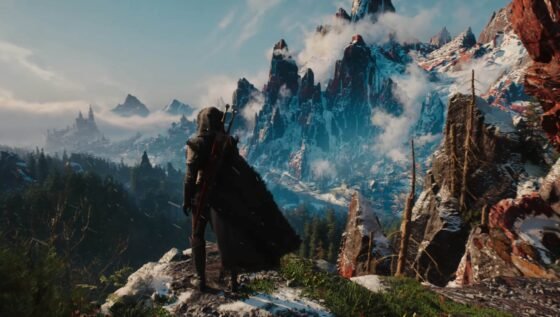
The Witcher 4: GTA-Level Graphics Leap Confirmed by CDPR – Previews
In the expansive and fiercely competitive realm of video games, few titles command the global attention and fervent anticipation quite like The Witcher saga. Renowned for its intricate narratives, morally ambiguous choices, and breathtaking landscapes, the series has cemented its place as a benchmark for role-playing games. Now, as the gaming community looks towards the future, developer CD Projekt Red has ignited a firestorm of excitement with a bold declaration regarding its next installment, tentatively dubbed The Witcher 4.
During a recent investor briefing, the Polish studio, known for pushing technical and narrative boundaries, articulated an ambition that immediately resonated across the industry: the upcoming title aims to deliver a graphical and qualitative leap from its predecessor, The Witcher 3: Wild Hunt, on par with the generational jump observed between Grand Theft Auto V and the highly anticipated Grand Theft Auto VI. This audacious comparison by CEO Michał Nowakowski sets an extraordinarily high bar, painting a vivid picture of the technological marvel and immersive experience CD Projekt Red intends to craft. It’s a statement that not only fuels speculation but also underscores the studio’s commitment to innovation, leveraging over a decade of advancements since Geralt’s last grand adventure.
Such a pronouncement from a developer of CD Projekt Red’s caliber is rarely made lightly. It speaks to a deep-seated confidence in their current development capabilities, their strategic shift to Unreal Engine 5, and an unwavering focus on creating a product that will redefine expectations. For fans and industry observers alike, this signals a pivotal moment for the franchise, hinting at a game that could once again set new standards for visual fidelity, world-building, and player engagement. The road to 2028, the projected release year, promises to be filled with eager anticipation as the world waits to witness if The Witcher 4 can indeed deliver on such a monumental promise.
Unpacking The Witcher 4’s Ambitious Graphical Leap: Early Previews and Expectations
CD Projekt Red’s recent statement, likening the anticipated graphical and qualitative improvement of The Witcher 4 over The Witcher 3 to that seen between Grand Theft Auto V and Grand Theft Auto VI, sets a towering benchmark for the upcoming title. This bold comparison, articulated by CEO Michał Nowakowski during an investor call, is a deliberate signal of the studio’s profound ambition and vision for the next chapter in the revered fantasy series.
Nowakowski explicitly highlighted the significant time gap—11 years—since The Witcher 3: Wild Hunt captivated audiences worldwide. This extensive period, he noted, provides ample opportunity for substantial technological advancements to be harnessed, allowing the development team to craft a game that is “better in every aspect” than its critically acclaimed predecessor. While he refrained from an in-depth analysis of the GTA titles themselves, the analogy serves as a clear indicator of the scale of enhancement players should expect, encompassing not just visual fidelity but also core gameplay mechanics, world interactivity, and overall polish.
For fans, these early previews suggest a game that will fully leverage the capabilities of next-generation hardware and modern game engines, potentially pushing the boundaries of what is currently achievable in open-world RPGs. The reference to GTA is particularly potent because Rockstar’s franchise is synonymous with groundbreaking realism, intricate world detail, and seamless player experiences. CD Projekt Red’s willingness to invite such a comparison underscores their belief in their ability to deliver a truly generational leap, establishing The Witcher 4 as a technological showcase.
It also reflects a strategic intent to exceed the already high standards set by The Witcher 3, which, even years after its release, remains visually impressive. The promise of a comparable leap implies advancements in rendering techniques, character models, environmental detail, physics simulations, and lighting systems that could redefine immersion within the fantasy genre. This commitment to qualitative improvement across the board aims to ensure that The Witcher 4 is not merely an incremental update but a transformative experience.
CD Projekt Red’s CEO has stated that The Witcher 4 is targeting a graphical and qualitative leap from The Witcher 3 comparable to the transition between Grand Theft Auto V and Grand Theft Auto VI. This ambition is driven by the 11-year gap since the last installment, allowing for significant technological advancements to deliver a game superior in every aspect, signaling a major generational upgrade for the franchise.
Understanding the GTA Comparison: A Bar for Innovation
The choice to reference the Grand Theft Auto series is a strategic one, carrying significant weight in the gaming industry. Rockstar’s titles, particularly GTA V, are celebrated for their intricate open worlds, realistic cityscapes, and technical prowess that often push the limits of console generations. The anticipation surrounding GTA VI further amplifies this, with expectations of unprecedented detail and immersive gameplay.
By drawing this parallel, CD Projekt Red is not only setting a high technical benchmark for The Witcher 4 but also communicating its intent to deliver a similar level of innovative polish and immersive world design. It implies an ambition to create a world that feels more alive, characters that are more expressive, and interactions that are more dynamic, all underpinned by a foundation of cutting-edge graphics and performance.
A Legacy of Innovation: From The Witcher 3 to the Next Generation
The journey of The Witcher franchise has always been marked by a relentless pursuit of innovation, a characteristic deeply embedded in CD Projekt Red’s development philosophy. The Witcher 3: Wild Hunt, launched in 2015, was a monumental achievement for its time. It showcased an expansive open world brimming with intricate details, a living ecosystem, and dynamic weather patterns that were, for many, unprecedented. Its character models were highly detailed, its monster designs imaginative, and its environmental art direction set new standards for how fantasy worlds could be realized.
The game’s success was not merely a result of its compelling storytelling, but also its technical ambition. It pushed the capabilities of the PlayStation 4 and Xbox One, delivering a rich, visually stunning experience that has aged remarkably well. Even almost a decade later, The Witcher 3 continues to be lauded for its visual quality, a testament to the foresight and talent of its original development team. However, technology never stands still, and the intervening years have brought forth significant advancements in hardware, rendering techniques, and game engine capabilities.
The announcement that The Witcher 4 will be built on Unreal Engine 5 (UE5) instead of CD Projekt Red’s proprietary REDengine is a pivotal decision that underpins this promised leap. UE5 is a state-of-the-art engine known for its powerful tools like Nanite for virtualized micropolygon geometry and Lumen for fully dynamic global illumination, allowing for incredibly detailed environments and realistic lighting without traditional performance bottlenecks. This shift provides the development team with a robust and widely supported platform to achieve the ambitious visual and qualitative targets set by the CEO.
An 11-year gap between main installments is substantial in the fast-paced world of game development. This extensive period allows not only for iterative improvements but for foundational shifts in design and technology. From enhanced character animations and facial expressions that convey deeper emotions to incredibly dense and interactive environments, the potential for The Witcher 4 to redefine visual and gameplay immersion is immense. This extended development cycle, combined with the power of UE5, positions the game to truly embody the “next-generation” experience that the comparison to GTA VI implies.
Since its 2015 release, The Witcher 3 has been a benchmark for open-world RPGs, showcasing impressive visuals and intricate detail. The 11-year gap to The Witcher 4 allows for immense technological evolution, particularly with the shift to Unreal Engine 5, which equips CD Projekt Red to deliver a truly next-generation experience surpassing its predecessor’s already high standards.
The Power of Unreal Engine 5 for a New Witcher Saga
The adoption of Unreal Engine 5 by CD Projekt Red for The Witcher 4 marks a significant strategic pivot. REDengine, while powerful, required significant in-house development and maintenance. UE5, by contrast, offers a suite of advanced tools and a widely supported ecosystem that can accelerate development and allow the team to focus more on creative content rather than engine-level programming.
This shift to a robust, third-party engine is crucial for realizing the “GTA-level” ambition. Features like Nanite enable artists to import film-quality assets directly into the engine without significant optimization, leading to unprecedented levels of geometric detail in environments and character models. Lumen provides highly realistic global illumination and reflections, making every scene feel more natural and dynamic. These technologies are foundational to delivering the visual fidelity and immersive atmosphere expected from a true generational leap in a flagship title like The Witcher 4.
Behind the Scenes: Budget, Ambition, and Development Timelines
Developing a game of the scale and ambition suggested for The Witcher 4 requires not only immense talent and cutting-edge technology but also significant financial investment. In the same investor call where the graphical leap was discussed, Michał Nowakowski provided crucial insight into the development philosophy guiding this ambitious project. He affirmed that The Witcher 4, alongside other major upcoming titles like Cyberpunk 2, is not being developed under strict budget restrictions.
This revelation is particularly telling. In an industry where cost overruns and budget constraints can often force creative compromises, CD Projekt Red’s approach signals a commitment to unbridled ambition. Nowakowski clarified that while budgets are not infinite—a practical reality for any enterprise—the projects are “ambition-driven.” This means that the creative vision and the desire to deliver a truly groundbreaking experience take precedence, with financial resources allocated to match that vision rather than constraining it from the outset. This mirrors the development of some of the industry’s most successful and technically impressive games, where studios prioritize innovation and quality above all else.
Such a development strategy allows for extensive research and development, longer iteration cycles, and the freedom to experiment with new technologies and gameplay mechanics. It suggests that CD Projekt Red is investing heavily in ensuring that every aspect of The Witcher 4 meets or exceeds the elevated expectations set by their own comparison to the GTA series. This financial flexibility directly supports the pursuit of that “better in every aspect” goal, enabling the team to push graphical boundaries, refine gameplay systems, and craft a world of unparalleled depth.
However, projects of this magnitude, driven by such high ambition and investment, inevitably require substantial time. The projected release year for The Witcher 4 is 2028. This extended development timeline—a common characteristic for triple-A titles aiming for generational leaps—is a direct consequence of the scale and complexity involved. It allows the studio to meticulously craft every detail, rigorously test every system, and ensure that the final product is polished to a level befitting its high aspirations. It also provides the necessary runway to fully harness the power of Unreal Engine 5 and integrate new advancements that may emerge in the coming years, ultimately ensuring a truly transformative experience for players.
CD Projekt Red’s CEO confirmed that The Witcher 4 is an “ambition-driven” project, developed without strict budget restrictions, although funds are not infinite. This approach prioritizes creative vision and quality, allowing for extensive development to achieve a groundbreaking experience. Consequently, the game has a projected release in 2028, reflecting the significant time required for such a large-scale, technologically advanced title.
The Double-Edged Sword of Ambition: Risks and Rewards
While an ambition-driven development approach without strict budget limits can lead to truly innovative and high-quality games, it also carries inherent risks. The primary challenge lies in managing expectations, both internal and external. Prolonged development cycles can lead to increased costs and the potential for technological obsolescence if not managed carefully. Additionally, the longer a game is in development, the more anticipation builds, increasing the pressure to deliver a flawless and revolutionary product.
However, the rewards can be equally significant. Games developed with such a philosophy often become industry benchmarks, setting new standards for narrative, graphics, and gameplay. They build immense goodwill with players and can generate substantial long-term revenue. CD Projekt Red’s past successes, particularly with The Witcher 3, demonstrate their capability to navigate these challenges and deliver on ambitious promises, positioning The Witcher 4 as a potential new milestone for the studio and the gaming world.
Anticipating the Next Saga: What These Previews Mean for Fans
For dedicated fans of The Witcher universe and the broader gaming community, the early previews and statements from CD Projekt Red regarding The Witcher 4 are nothing short of monumental. The promise of a graphical and qualitative leap akin to the jump from GTA V to GTA VI has ignited a fervent discussion, painting a picture of a game that could redefine expectations for open-world RPGs once again. These insights offer a glimpse into the creative and technical ambition driving the next installment, shaping how players perceive and anticipate its eventual arrival.
First and foremost, these announcements mean an unparalleled level of immersion. If The Witcher 4 can indeed deliver on its visual promise, players can expect environments rendered with astounding detail, character models that exhibit lifelike expressions and animations, and a world that reacts with unprecedented realism. This translates into a deeper connection to the narrative, a more visceral experience during combat, and a world that feels genuinely alive and tangible. The shift to Unreal Engine 5 is a key enabler for this, promising advanced lighting, complex physics, and highly detailed asset rendering that will push the boundaries of current-generation hardware.
Beyond graphics, the emphasis on a “better in every aspect” approach suggests comprehensive improvements to gameplay systems, quest design, and overall player freedom. This could mean more dynamic choices with far-reaching consequences, refined combat mechanics that offer greater depth, and an open world that encourages exploration and discovery through innovative means. For fans who cherished the deep lore and intricate storytelling of previous games, this commitment to holistic improvement signals a richly detailed and emotionally resonant experience that respects the franchise’s legacy while forging new paths.
However, high ambition also comes with the necessity for tempered expectations. While the vision is grand, development is a complex process with many variables. The projected 2028 release date, while distant, provides a realistic timeframe for CD Projekt Red to meticulously craft the game. It encourages patience from the fanbase, understanding that such a monumental undertaking requires time and dedication to meet the incredibly high bar that has been set. Ultimately, these early glimpses into The Witcher 4‘s development paint a compelling picture of a title poised to be a true standard-bearer for the next era of gaming, blending technological prowess with the beloved narrative depth of its predecessors.
For fans, CD Projekt Red’s ambitious previews of The Witcher 4 signal an incredibly immersive experience with a graphical leap comparable to GTA V to GTA VI. This means unprecedented visual detail, refined gameplay, and a world that feels genuinely alive, building upon the franchise’s rich legacy. While setting high expectations, the 2028 release date also calls for patience as CDPR meticulously crafts this next-generation title.
| Feature/Aspect | The Witcher 3: Wild Hunt (2015) | The Witcher 4 (Anticipated – 2028) |
|---|---|---|
| Engine | REDengine 3 | Unreal Engine 5 |
| Graphical Fidelity | Benchmark for its era, detailed open world, impressive lighting. | Aims for generational leap (compared to GTA V to GTA VI), leveraging UE5’s Nanite/Lumen for hyper-realism. |
| World Design | Vast, richly detailed open-world, distinct regions, dynamic weather. | Expected to be more expansive, denser, and highly interactive, utilizing UE5’s capacity for complex environments. |
| Character Models | High-fidelity models with expressive faces and varied animations for its time. | Anticipated to feature cinematic-quality characters with advanced facial rigging and realistic animation systems. |
| Development Philosophy | Ambitious, narrative-driven, pushing boundaries of existing tech. | “Ambition-driven,” without strict budget constraints, focusing on being “better in every aspect.” |
| Technological Gap | Released early in PS4/Xbox One generation. | Developed for next-gen hardware, leveraging 11 years of tech advancements. |
| Anticipated Impact | Industry-defining RPG, set new standards for open-world design and storytelling. | Aims to be a new benchmark for graphical realism, open-world immersion, and player agency in RPGs. |
Frequently Asked Questions About The Witcher 4’s Development
What exactly did CD Projekt Red say about The Witcher 4’s graphics?
CD Projekt Red’s CEO, Michał Nowakowski, stated during an investor meeting that the company aims for The Witcher 4 to achieve a graphical and qualitative leap from its predecessor, The Witcher 3: Wild Hunt, that is comparable to the generational jump seen between Grand Theft Auto V and the upcoming Grand Theft Auto VI. This comparison underscores the developers’ ambition to deliver a significant technological advancement, leveraging the 11-year gap since The Witcher 3‘s release to create a product superior “in every aspect.” It’s a clear signal of their intent to push visual and gameplay boundaries to a new extreme.
Why is CD Projekt Red comparing The Witcher 4 to the GTA series?
The comparison to the Grand Theft Auto series is a strategic choice by CD Projekt Red to communicate the magnitude of their ambition for The Witcher 4. Rockstar’s GTA games are widely recognized for setting industry benchmarks in terms of open-world detail, graphical realism, and overall technical polish. By drawing this parallel, CDPR is signaling that they are aiming for a similar level of groundbreaking innovation and a comprehensive generational leap, not just in visual fidelity but in the overall quality and immersive experience, for their next Witcher title.
When is The Witcher 4 expected to be released?
According to the information shared by CD Projekt Red, The Witcher 4 is currently projected for a release in 2028. This distant target reflects the immense scale and ambitious nature of the project. Developing a game that aims for a “generational leap” comparable to those seen in the Grand Theft Auto series requires a substantial amount of time for research, development, meticulous design, and extensive optimization. This long development cycle ensures the team has the necessary time to fully realize their vision and deliver a highly polished product.
Will The Witcher 4 be developed on Unreal Engine 5?
Yes, CD Projekt Red has confirmed that The Witcher 4 will be developed using Unreal Engine 5 (UE5). This marks a significant departure from their proprietary REDengine, which powered previous titles like The Witcher 3 and Cyberpunk 2077. The move to UE5 is a strategic decision that provides the development team with access to a powerful, industry-leading suite of tools and technologies, such as Nanite and Lumen, designed for creating incredibly detailed and realistic next-generation gaming experiences. This engine choice is fundamental to achieving the ambitious graphical and qualitative leap promised by the studio.
Are there budget restrictions for The Witcher 4’s development?
CD Projekt Red’s CEO, Michał Nowakowski, clarified that while budgets are always a consideration, The Witcher 4 (and Cyberpunk 2) are not being developed with strict budget restrictions. He described these projects as “ambition-driven,” meaning that the overarching creative vision and the goal of delivering a groundbreaking product take precedence. Financial resources are allocated to support this ambition, rather than allowing fixed budget limits to compromise the quality or scope of the game. This approach signifies a commitment to investing heavily in innovation and delivering a truly top-tier experience.
What does this mean for the story or gameplay of The Witcher 4?
While the recent statements primarily focused on graphical and qualitative leaps, an “ambition-driven” development and a goal to be “better in every aspect” strongly imply significant advancements in story and gameplay. This could translate into more complex and branching narratives, more dynamic and responsive world interactions, deeper combat mechanics, and enhanced player agency. The technical improvements facilitate richer storytelling and more immersive gameplay systems, allowing CD Projekt Red to craft a world and story that are as compelling and detailed as the visuals themselves, pushing the boundaries of what is possible in an RPG narrative.
The Road Ahead: What to Watch for in The Witcher 4’s Journey
As CD Projekt Red charts a course for The Witcher 4, promising a generational leap akin to the monumental shift between GTA V and GTA VI, the gaming world watches with bated breath. This bold declaration by CEO Michał Nowakowski is not merely an ambitious statement; it’s a strategic roadmap for a title poised to redefine the immersive fantasy RPG experience.
The journey to 2028, the projected launch year, will undoubtedly be filled with technological milestones, creative revelations, and the steady unveiling of a world meticulously crafted under the banner of Unreal Engine 5. For fans, these early previews offer a tantalizing glimpse into a future where the saga of The Witcher is reimagined with unprecedented visual fidelity and gameplay depth. It’s a testament to CD Projekt Red’s enduring commitment to innovation and their relentless pursuit of excellence, ensuring that the next installment will not only honor the legacy of Geralt but also forge a new path for what interactive storytelling and open-world design can achieve.
The coming years will be crucial as CD Projekt Red transforms this grand vision into a tangible reality. The industry will be closely observing how they leverage the power of next-generation engines and unrestricted ambition to deliver on such a colossal promise. One thing is clear: The Witcher 4 is not just another game in development; it is shaping up to be a pivotal title that could once again elevate the standards for the entire gaming landscape.














Post Comment