ROG Xbox Ally X20 Review: Is It the Definitive Portable AAA Gaming Handheld?
The landscape of portable gaming has undergone a dramatic transformation, evolving from simple handheld consoles to sophisticated PC-grade devices capable of running the latest AAA titles. In this fiercely competitive arena, ASUS’s Republic of Gamers (ROG) line has consistently pushed boundaries, striving to deliver powerful, uncompromised gaming on the go. Marking two decades of innovation, ASUS introduced the ROG Xbox Ally X20 in November, an exclusive 20th-anniversary edition that promised to refine the portable PC gaming experience further. Positioned as a direct evolution of the ROG Xbox Ally X, the X20 model arrives with key distinctions, notably a vibrant OLED display and a refreshed aesthetic, aiming to capture the imagination of hardcore ‘Nerd Culture & Entertainment Fans’.
As gamers increasingly demand flexibility and performance without being tethered to a desktop, devices like the ROG Ally series become central to fulfilling this desire. The promise of playing graphically intensive games like Cyberpunk 2077 or Starfield on a device that fits in a backpack was once a distant dream; today, it’s a rapidly advancing reality. The ROG Xbox Ally X20 steps into this vibrant segment, not merely as an incremental update, but as a statement of intent from ASUS ROG: a testament to their commitment to leading the charge in handheld gaming innovation. This comprehensive review dives deep into every facet of the X20, from its eye-catching design and ergonomic considerations to its raw processing power and the all-important software ecosystem. We explore whether this special edition truly delivers on its promise, assessing its strengths, acknowledging its limitations, and ultimately determining if it earns the coveted title of the definitive portable device for AAA gaming.
This article aims to provide an exhaustive analysis, leaving no stone unturned, ensuring that by its conclusion, you possess all the necessary insights to make an informed decision about the ROG Xbox Ally X20’s place in your gaming arsenal. Prepare to explore the intricacies of a device designed for the future of handheld entertainment.
ROG Xbox Ally X20: A Deep Dive into its Reviews and Design Innovations
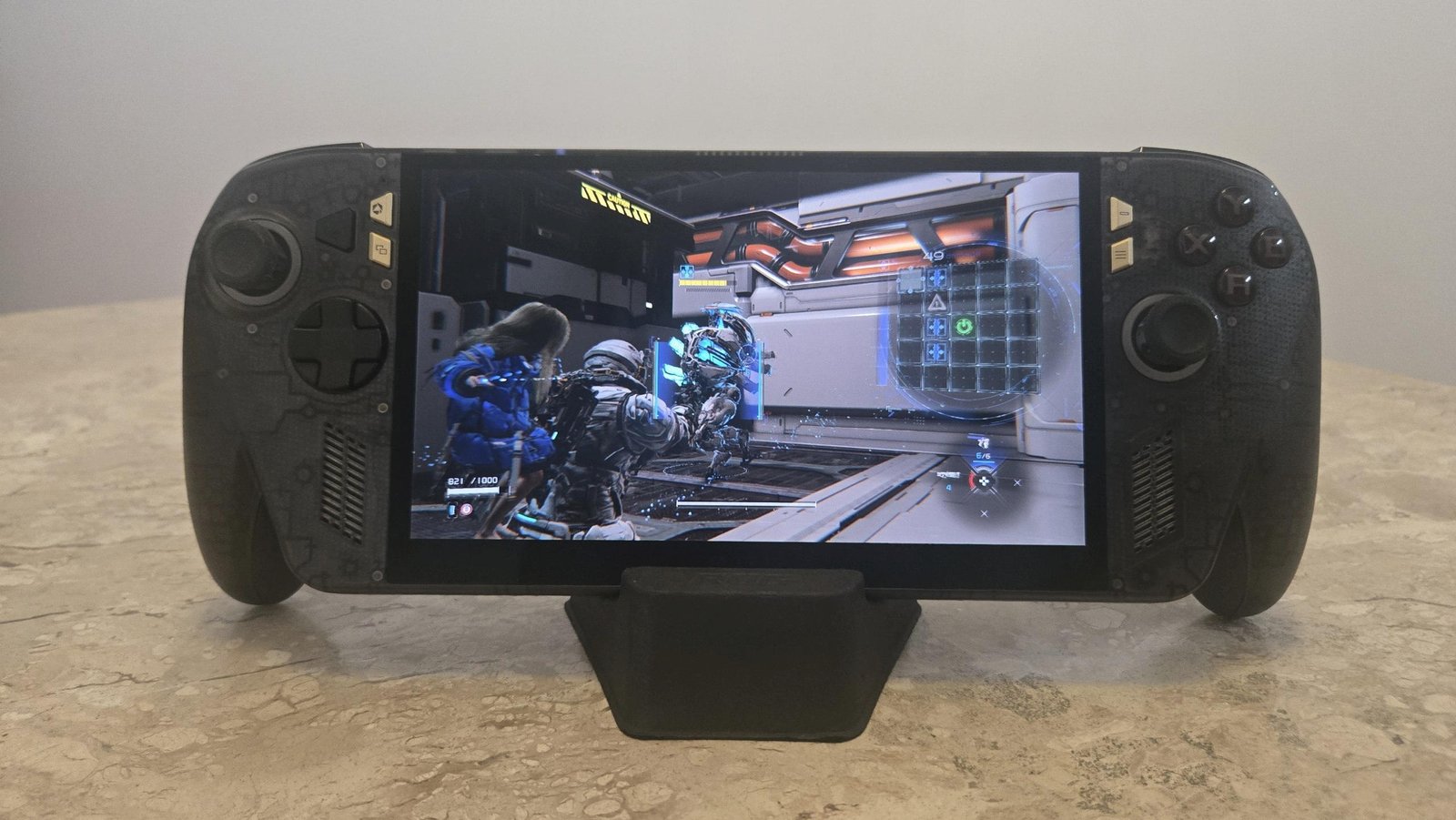
The ROG Xbox Ally X20, a special edition celebrating 20 years of the ROG brand, immediately distinguishes itself with a design that fuses futuristic aesthetics with subtle nods to its Xbox integration. Its semi-transparent black chassis offers a tantalizing glimpse into the internal components, a design choice that not only looks sophisticated but also cleverly masks dust and smudges, a practical advantage over devices with more opaque finishes. This visual flair, combined with its overall stature, positions it as a premium device in the handheld market, drawing attention wherever it goes.
However, the device’s substantial size and weight, tipping the scales at 756 grams, present a dichotomy. While the expansive 7-inch screen is a boon for immersion, the increased heft can lead to fatigue during extended gaming sessions, a common trade-off in the pursuit of larger displays and more powerful internals. Despite this, ASUS has meticulously engineered the Ally X20’s ergonomics. Its contoured grips, enhanced by a rubberized texture, ensure a secure and comfortable hold, adapting well to various play positions, from lounging on a couch to gaming in bed. This focus on tactile comfort mitigates the potential discomfort of its weight, making long-term use more palatable.
The ROG Xbox Ally X20 blends futuristic aesthetics with robust ergonomics, offering a visually striking, semi-transparent black design. Despite its noticeable weight at 756 grams, its well-contoured, rubberized grips provide excellent comfort and security during prolonged gaming sessions, effectively balancing size with usability.
Visual & Ergonomic Evolution
The design philosophy behind the ROG Xbox Ally X20 is one of considered refinement rather than radical reinvention. The subtle transparency and Xbox-themed accents contribute to a distinct identity, setting it apart from its predecessors and competitors. This visual sophistication is more than skin deep; it speaks to a design that prioritizes both aesthetics and practical utility, understanding that a device of this caliber must not only perform but also feel premium in hand. The gold emblem on the rear, commemorating ROG’s 20th anniversary, serves as an exclusive touchpoint, reinforcing its special edition status.
Beyond its looks, the Ally X20’s physical layout is designed for intuitive interaction. Strategically placed air vents at the central rear and top ensure efficient heat dissipation, maintaining optimal operating temperatures even under heavy load—a critical factor for sustained performance. The ancillary triggers on the back are positioned for easy, accidental-touch-free access, enhancing gameplay control. Furthermore, the integration of a responsive fingerprint reader into the power button simplifies security and access, reflecting a thoughtful approach to user convenience that elevates the overall experience.
Precision Controls: TMR Analog Sticks and D-Pad
A standout feature in the ROG Xbox Ally X20’s control scheme is the implementation of TMR (Tunnel Magnetoresistance) technology for its analog sticks. This innovation fundamentally addresses the notorious ‘drift’ issue prevalent in many gaming controllers, promising enhanced durability and long-term precision. In practical terms, these sticks offer a highly responsive and accurate input experience, requiring minimal effort for precise movements—a significant advantage in fast-paced or competitive titles where every micro-adjustment counts. This technological leap provides a tangible upgrade, instilling confidence in the longevity and reliability of the controls.
The D-pad on the Ally X20 offers a unique dual-height adjustment mechanism, allowing users to customize its feel, though it consistently delivers a satisfying ‘clicky’ feedback. While this crisp actuation is excellent for menu navigation and precise directional inputs in certain game genres, some players may find its audibility and tactile response less ideal for rapid, intense movements typical of fighting games or platformers. Complementing these are the soft, responsive ABXY buttons and the triggers, which feature a generous travel distance, allowing for nuanced pressure control. This combination of advanced analog sticks and customizable, tactile buttons forms a robust control interface, catering to a wide spectrum of gaming preferences.
The ROG Ally X20’s OLED Display and Immersive Audio Experience
One of the most significant upgrades in the ROG Xbox Ally X20 is its 7-inch OLED panel, a transformative improvement over the IPS displays found in previous ROG Ally models. This display boasts a Full HD resolution and a blazing 120 Hz refresh rate, ensuring exceptionally fluid visuals. Coupled with a rapid 0.2 ms response time and 100% DCI-P3 color gamut coverage, the OLED panel delivers stunning clarity, vivid colors, and, crucially, perfect blacks. Support for VESA DisplayHDR True Black 1400 and Dolby Vision further enhances dynamic range, making games visually pop with unparalleled contrast and fidelity. The inclusion of Variable Refresh Rate (VRR) technology is also a welcome addition, eliminating screen tearing and ensuring a smooth gaming experience across varying frame rates.
While the OLED panel excels in color reproduction and contrast, its brightness levels are characteristic of current OLED technology, which means they are not as high as some premium IPS or mini-LED panels. Consequently, in brightly lit outdoor environments or rooms with significant glare, reflections can become noticeable, potentially detracting from the immersive experience. This is a common trade-off for the otherwise superior visual qualities of OLED, and it’s an important consideration for users who plan to game extensively in challenging lighting conditions.
The ROG Xbox Ally X20 features a stunning 7-inch Full HD OLED display with a 120 Hz refresh rate, delivering vibrant colors and perfect blacks thanks to 100% DCI-P3 coverage and HDR support. This visual leap offers an immersive experience, though its brightness, typical of OLEDs, may present challenges with reflections in very bright environments.
OLED Brilliance: A Visual Leap
The transition to an OLED screen is more than just a specification bump; it fundamentally alters the visual experience. The ability of OLED panels to individually illuminate or turn off pixels allows for true black levels, creating an incredible sense of depth and contrast that conventional IPS screens simply cannot replicate. This is particularly impactful in games with atmospheric lighting, dark environments, or visually rich scenes, where the nuances of shadow and light are crucial to immersion. The vibrant color reproduction makes game worlds burst to life, enriching the artistic vision of developers and enhancing player engagement.
Moreover, the energy efficiency of OLED, particularly when displaying darker content, contributes positively to battery life, complementing the Ally X20’s other power optimizations. The 0.2 ms response time virtually eliminates motion blur, a critical advantage in fast-paced gaming where clarity of movement is paramount. For a handheld device, where the screen is often held close to the eyes, these visual enhancements collectively provide a superior window into the gaming world, making every pixel count.
Dolby Atmos: Sound That Delivers
Complementing its visual prowess, the ROG Xbox Ally X20 delivers an exceptional audio experience. Equipped with integrated dual speakers and support for Dolby Atmos spatial audio, the device creates an expansive and detailed soundstage. The inclusion of Hi-Res Audio certification further assures a high-fidelity listening experience, critical for appreciating intricate sound design in games and multimedia.
In practice, the Ally X20’s audio output is remarkably loud and clear, maintaining fidelity even at maximum volume without distortion. A notable emphasis on bass frequencies provides a rich, impactful sound, which significantly enhances the immersion in action-packed games, explosions, and cinematic sequences. This robust audio performance ensures that gamers are fully enveloped in their virtual worlds, whether playing with the integrated speakers or through headphones, making the auditory component as compelling as the visual one.
Unpacking the Performance: AAA Gaming on the Go
At its core, the ROG Xbox Ally X20 leverages the same powerful configuration as the ROG Xbox Ally X, meaning it’s built to tackle the most demanding AAA games with impressive fluidity. The device’s internal architecture is designed to balance raw processing power with thermal management, allowing for sustained high performance. The goal of achieving close to 60 FPS in various scenarios, particularly at 17W and 25W TDP (Thermal Design Power) profiles, is a testament to its engineering. When connected to power, the device can unlock its full potential, reaching up to 30W TDP, offering an additional performance boost for the most intensive titles. This flexibility in power delivery allows users to prioritize either battery life or peak performance, adapting to different gaming situations.
The Ally X20’s specifications are, theoretically, more than capable of running any recently released AAA game. The strategic use of AMD FSR (FidelityFX Super Resolution) and frame generation technologies is crucial here, allowing the device to upscale resolutions and synthesize additional frames, thereby significantly boosting frame rates without a drastic hit to visual quality. This technological synergy is vital for maintaining a smooth, responsive gaming experience on a portable form factor, bridging the gap between console-level performance and handheld convenience.
The ROG Xbox Ally X20 features the same robust configuration as the Ally X, designed for seamless AAA gaming. It aims for ~60 FPS at 17W and 25W TDP, reaching 30W when plugged in, thanks to AMD FSR and frame generation. This balance of power and efficiency ensures strong portable performance for modern titles.
Under the Hood: Core Specifications
While the specific processor and GPU models were not detailed in the source, the reference to “same configuration as the ROG Xbox Ally X” implies a high-performance AMD Ryzen Z1 Extreme APU, optimized for handheld gaming. This chip integrates powerful Zen 4 CPU cores and RDNA 3 graphics, providing a formidable combination for both processing and rendering tasks. The amount of RAM (likely 16GB or 32GB LPDDR5) and storage (typically a fast PCIe Gen4 NVMe SSD) would further contribute to the overall responsiveness and loading times, crucial for a seamless gaming experience. These components work in concert to deliver the computational horsepower required for modern game engines, making the Ally X20 a true portable PC.
Understanding these core specifications is key to appreciating the device’s capabilities. The TDP profiles (17W, 25W, 30W) are not just arbitrary numbers; they dictate how much power the APU can draw, directly influencing clock speeds, heat output, and, consequently, performance and battery life. ASUS’s ability to fine-tune these profiles, as noted in the source, demonstrates a sophisticated control over the hardware, allowing for a dynamic optimization that adapts to the user’s immediate needs—be it maximum performance for a boss battle or extended battery for a long journey.
Real-World Gaming Benchmarks
Performance tests across a variety of demanding titles reveal the Ally X20’s formidable capabilities:
- Lego Batman: The Legacy of Dark Knight: Running at medium to high graphics settings, with FSR Performance and frame generation enabled at 25W TDP, the game averaged 62 FPS in open-world segments, soaring to 81 FPS in missions. At 17W TDP under similar settings, mission averages still impressively held at 65 FPS, peaking at 70 FPS.
- Indiana Jones and the Great Circle: With low graphics and FSR Balanced at 25W TDP, an average of 50 FPS was achieved, jumping to 81 FPS with frame generation active. At 17W TDP, frame generation maintained an average of 75 FPS, while disabling it yielded 46 FPS. A minor visual artifact—a pink border—was noted with FSR enabled.
- Pragmata: Utilizing FSR 3 Balanced and low graphics, the Ally X20 managed 54 FPS on average, which dramatically increased to 84 FPS with frame generation. Reducing the TDP to 17W still delivered a respectable 50 FPS average, hitting 75 FPS with frame generation.
- Gears of Wars E-day: In the initial area, medium graphics and dynamic FSR yielded 32 FPS, improving to approximately 53 FPS with frame generation. At 17W TDP, frame generation resulted in a 42 FPS average, dropping to 27 FPS without it.
- Deep Rock Galactic: Survivor (Indie Title): For lighter, indie games, the 17W TDP profile was more than sufficient, largely maintaining 60 FPS, with only occasional dips to 54 FPS.
These benchmarks demonstrate that the ROG Xbox Ally X20 is highly capable of running AAA titles at playable frame rates, often exceeding 60 FPS with the aid of frame generation technologies. The flexibility in TDP settings allows users to fine-tune performance and power consumption based on the game and their proximity to a power outlet.
Battery Life: A Significant Leap Forward
Battery autonomy is a critical aspect for any portable gaming device, and the ROG Xbox Ally X20 shows substantial improvements in this area. For demanding AAA games running on the 25W TDP profile, the device delivered over two hours of gameplay unplugged—a commendable duration for such intensive workloads. When shifting to less demanding indie titles on the same 25W profile, the battery life extended significantly to over six hours. These figures represent a notable advancement, particularly when compared to the original ROG Ally.
ASUS has clearly invested in optimizing power management, allowing for greater control over TDP settings. This not only enhances performance when needed but also extends battery life considerably for lighter tasks or when power-saving is a priority. This evolution in power efficiency underscores a thoughtful design approach, ensuring that the Ally X20 is not just powerful but also practical for extended use away from a power source, a key factor in its appeal as a truly portable gaming solution.
Software Experience: Windows 11, Xbox App, and ASUS Enhancements
The ROG Xbox Ally X20 operates on Windows 11, integrating a specialized Xbox application optimized for controller input alongside ASUS’s proprietary software suite. While the ASUS applications prove to be highly effective and user-friendly, the overall Windows 11 and Xbox app experience presents a mixed bag, offering both convenience and occasional frustrations. This dual-software approach is characteristic of PC handhelds, aiming to bridge the gap between a traditional desktop OS and a streamlined gaming interface.
The initial setup of the Ally X20 is relatively straightforward, although the Windows 11 installation process can take a considerable amount of time. Once completed, the device seamlessly launches into the Xbox application, which serves as a centralized hub for installed games, ready for immediate access. This interface is aesthetically pleasing and offers useful functionalities, including the ability to aggregate games from various platforms like Steam and GOG, providing a unified library for the user. However, the elegance of this system is sometimes overshadowed by unexpected operational hiccups, hinting at the challenges of optimizing a full desktop OS for a handheld gaming environment.
The ROG Xbox Ally X20 runs on Windows 11, featuring an optimized Xbox app and ASUS’s efficient software. While ASUS’s tools are user-friendly, the Xbox app occasionally suffers from bugs like overlay windows or audio issues, sometimes requiring device restarts. The setup is simple, but Windows installation can be time-consuming.
The Windows 11 & Xbox Ecosystem: Challenges and Strengths
Despite its visual appeal and functional integration, the Xbox app on the ROG Xbox Ally X20 can be prone to bugs. Users might encounter issues such as overlay windows obscuring gameplay or audio not playing correctly upon launching a game. Often, these issues can be temporarily resolved by using the ‘swipe up’ gesture, mimicking an Alt-Tab command to regain control. More persistent problems, including simple games failing to launch, sometimes necessitate a full restart of the device, disrupting the seamless gaming flow. These intermittent software glitches highlight the ongoing challenge of perfectly optimizing a complex operating system and its applications for a dedicated handheld gaming experience.
Conversely, the Xbox button within the application provides access to a suite of highly useful and well-implemented features. It allows for quick adjustments to critical settings such as resolution, refresh rate, and HDR, directly enhancing the gaming experience without navigating through multiple menus. Furthermore, it offers convenient controls for audio, Bluetooth, network settings, and a quick view of recent screen captures. These intuitive functionalities significantly streamline the user experience, providing instant command over essential device parameters and demonstrating the potential for a powerful, integrated gaming ecosystem.
ASUS Armory Crate and FSR 4 Integration
The ASUS software suite, particularly the Armory Crate accessed via the ROG button, stands out for its efficiency and intuitive interface. This powerful tool allows users to quickly configure performance modes (TDP), activate monitoring functions to keep an eye on system vitals, and adjust screen brightness and volume. The seamless operation of these features underscores ASUS’s expertise in developing specialized software that enhances hardware capabilities, providing gamers with granular control over their device’s performance.
A notable feature within the ASUS software is the integration of AMD FSR 4 via “AMD FSR Scaling,” making it practically available across all games. This technology significantly boosts frame rates and visual quality, proving to be one of the most frequently utilized and bug-free functions during testing. However, the software does have minor usability quirks: performing updates requires entering desktop mode, and some specific configurations, like RGB lighting adjustments, are only accessible within the desktop application. Despite these small inconveniences, the overall effectiveness of ASUS’s software significantly contributes to the Ally X20’s strong appeal, offering robust optimization and critical gaming enhancements.
Value Proposition: Is the ROG Xbox Ally X20 Worth the Investment?
The ROG Xbox Ally X20, launched in Brazil with a suggested retail price of R$ 15,999, positions itself at the premium end of the portable gaming PC market. This price point necessitates a careful consideration of its features and advancements against its cost, especially when evaluating its long-term value for serious gamers. The device stands out with its excellent OLED display, which not only enhances visual quality with perfect blacks and vibrant colors but also contributes positively to battery life—a crucial upgrade for any handheld system. Its ability to comfortably run AAA games at respectable frame rates, coupled with a first-class build quality and ergonomic design, makes a strong case for its position as a top-tier portable gaming solution.
While the weight and size may lead to some fatigue during extended play, the ergonomic shaping largely mitigates this. The inclusion of TMR analog sticks, specifically engineered to be drift-proof, is a significant enhancement, addressing a common and frustrating issue in gaming controllers. This technological advancement not only improves precision but also assures greater longevity for the device’s critical input mechanisms. The Ally X20 combines powerful internal hardware with thoughtful design refinements, aiming to deliver a comprehensive and compelling gaming experience that justifies its existence in a competitive market.
Priced at R$ 15,999, the ROG Xbox Ally X20 is a premium portable PC, offering an excellent OLED screen and robust AAA gaming performance. Its ergonomic design and drift-proof TMR analog sticks are significant advantages. Despite its weight, its build quality and feature set make it a top contender, though its high price warrants careful consideration against its predecessor.
Pricing and Market Context
The R$ 15,999 price tag places the ROG Xbox Ally X20 in a niche market, catering to enthusiasts willing to invest significantly in a cutting-edge portable gaming experience. This premium pricing needs to be viewed within the context of its competitors and, notably, its sibling, the ROG Xbox Ally X. The core performance of both devices is largely similar, yet the X20’s enhancements—primarily the OLED screen and improved battery life—come at a substantial premium. This creates a dilemma for potential buyers: is the superior display and extended autonomy worth nearly double the price of its predecessor, which offers comparable raw processing power? This question will largely depend on individual priorities regarding visual fidelity, battery endurance, and budget flexibility.
The market for handheld gaming PCs is burgeoning, with offerings from Steam Deck, Lenovo Legion Go, and MSI Claw presenting various price points and feature sets. The Ally X20 attempts to carve out its segment by focusing on a luxurious, uncompromised experience. For many, the OLED screen alone might be the compelling factor, given its transformative impact on visual immersion. However, the financial commitment is considerable, making the decision a balance between ultimate performance and practical affordability. The Ally X20 is not merely a gaming device; it’s a statement of premium gaming, designed for those who seek the best portable experience available.
Key Differentiators and Competitor Landscape
The ROG Xbox Ally X20 distinguishes itself primarily through its:
- OLED Display: The 7-inch Full HD OLED panel is its most significant upgrade, offering perfect blacks, superior contrast, and vibrant colors that elevate the visual experience significantly over IPS alternatives.
- TMR Analog Sticks: This technology provides drift-free operation, ensuring precise and durable control inputs—a critical advantage for competitive or long-term gaming.
- Enhanced Battery Autonomy: While still a portable device, the X20 demonstrates respectable battery life, especially with power optimizations, offering a better unplugged gaming duration than its predecessors.
- Premium Build Quality: The semi-transparent design and ergonomic improvements, including rubberized grips, contribute to a high-end feel and comfortable handling.
- Anniversary Edition Status: The ’20th-anniversary’ branding adds an element of exclusivity and collector’s appeal, setting it apart as a special release.
When stacked against competitors like the Steam Deck OLED, the Ally X20 competes on raw performance (especially for AAA titles) and Windows versatility, while the Steam Deck excels in software integration and often price. Against other Windows-based handhelds, the X20’s specific combination of OLED, TMR sticks, and refined ergonomics presents a strong contender for those prioritizing display quality and long-term controller reliability. However, its higher price point necessitates a clear understanding of these unique benefits to justify the investment over more budget-friendly or similarly powerful alternatives.
| Feature | ROG Xbox Ally X20 | ROG Xbox Ally X (Reference) |
|---|---|---|
| Display Type | 7-inch OLED | 7-inch IPS |
| Resolution | Full HD | Full HD |
| Refresh Rate | 120 Hz | 120 Hz |
| Response Time | 0.2 ms | ~7 ms (IPS Typical) |
| Color Gamut | 100% DCI-P3 | ~100% sRGB |
| HDR Support | VESA DisplayHDR True Black 1400, Dolby Vision | HDR Support (often less vivid) |
| Analog Sticks | TMR (Drift-free) | Standard (Potential for drift) |
| Weight | 756 grams | ~608 grams |
| Core Performance | Same as Ally X | Powerful APU |
| Battery Life (Heavy Gaming) | ~2+ hours | Slightly less |
| Audio | Dolby Atmos, Hi-Res Audio | Dolby Atmos, Hi-Res Audio |
| Price (Brazil) | R$ 15,999 | ~R$ 8,000 – R$ 10,000 |
Final Thoughts on ROG Xbox Ally X20 Reviews and its Legacy
The ROG Xbox Ally X20 emerges from our comprehensive review as a truly formidable contender in the portable PC gaming space, carving out a significant niche for itself among high-performance handhelds. Its introduction, commemorating two decades of ROG innovation, brings tangible and impactful improvements that genuinely enhance the gaming experience. The standout feature is undoubtedly the shift to a vibrant OLED display, which transforms visual fidelity with perfect blacks and vivid colors, making every game a more immersive spectacle. This display upgrade is not merely aesthetic; it also contributes to improved power efficiency, extending the device’s impressive battery life, a critical factor for any portable system.
Beyond the screen, the Ally X20’s ability to run demanding AAA titles with commendable quality, its premium build, and thoughtful ergonomic design underscore its status as a top-tier device. The inclusion of TMR analog sticks, offering drift-free precision and enhanced durability, addresses a widespread concern among gamers, solidifying the device’s long-term appeal. While its considerable weight might be a minor drawback during marathon gaming sessions, the meticulously designed ergonomics largely mitigate discomfort, ensuring a secure and pleasant grip. The X20 represents a mature evolution, balancing raw power with refined user experience.
What Really Matters Before Taking Your Decision
Ultimately, the decision to invest in the ROG Xbox Ally X20 hinges on a balance between its undeniable premium features and its steep price point. Retailing at R$ 15,999 in Brazil, it is positioned significantly above its predecessor, the ROG Xbox Ally X, which offers comparable raw performance at a much lower cost. For the discerning gamer who prioritizes the absolute best visual experience and long-term controller reliability, and for whom budget is not the primary constraint, the Ally X20’s OLED screen and TMR joysticks present a compelling argument. These enhancements genuinely elevate the handheld experience, justifying the premium for those who seek uncompromised quality.
However, for gamers who are more budget-conscious but still desire high-performance portable gaming, the ROG Xbox Ally X remains a strong alternative, delivering similar gaming horsepower without the higher cost associated with the OLED panel and other refinements. The X20 is not just a gaming device; it’s a statement piece, a testament to ASUS ROG’s commitment to pushing the boundaries of portable entertainment. It appeals to a specific segment of the market—those who demand a truly premium, cutting-edge experience and are willing to pay for it, viewing it not just as a gadget, but as an investment in the pinnacle of handheld gaming technology.
Frequently Asked Questions (FAQ)
What are the main differences between the ROG Xbox Ally X20 and the ROG Xbox Ally X?
The primary difference lies in the display and control technology. The ROG Xbox Ally X20 features a superior 7-inch Full HD OLED screen, offering perfect blacks, significantly higher contrast, and more vibrant colors compared to the IPS panel of the original Ally X. Additionally, the X20 incorporates TMR (Tunnel Magnetoresistance) technology in its analog sticks, making them resistant to drift and enhancing precision and longevity. While both devices share similar core performance capabilities, the X20 also boasts improved battery autonomy, especially under demanding conditions, along with a slightly heavier build and a distinctive transparent black chassis for its 20th-anniversary edition.
Is the ROG Xbox Ally X20 suitable for running all current AAA games?
Yes, the ROG Xbox Ally X20 is engineered to run all current AAA games effectively. Leveraging a powerful internal configuration, likely featuring an AMD Ryzen Z1 Extreme APU, the device achieves respectable frame rates even at its standard TDP profiles (17W, 25W). With the aid of technologies like AMD FSR and frame generation, it can significantly boost performance, often reaching or exceeding 60 FPS in many demanding titles. While some games may require adjusting graphical settings to medium or low for optimal performance, the Ally X20 provides a robust platform for a high-quality portable AAA gaming experience, especially when plugged in at 30W TDP.
How does the OLED screen impact the gaming experience and battery life?
The OLED screen profoundly enhances the gaming experience by delivering unparalleled visual quality. Its ability to produce perfect blacks and vibrant colors with 100% DCI-P3 coverage creates a more immersive and visually stunning environment, making games appear more dynamic and lifelike. From a battery perspective, OLED panels are more energy-efficient than IPS screens, particularly when displaying darker content, as individual pixels can be turned off. This contributes to the ROG Xbox Ally X20’s improved battery autonomy, allowing for longer gaming sessions on a single charge compared to previous models with IPS displays, especially during games with significant dark elements.
What are the benefits of TMR analog sticks in the ROG Xbox Ally X20?
TMR (Tunnel Magnetoresistance) analog sticks offer a significant advantage by practically eliminating the issue of ‘stick drift,’ a common problem in many controllers where inputs are registered even when the stick is untouched. This technology relies on magnetic fields rather than physical contact for input detection, drastically reducing wear and tear. The benefits include enhanced precision and responsiveness, as the sticks require less force to register movements accurately. More importantly, it ensures greater durability and longevity for the controller, providing a more reliable and consistent gaming experience over time, saving users from potential repair or replacement costs associated with drift.
What is the battery life like on the ROG Xbox Ally X20 for different types of games?
The battery life of the ROG Xbox Ally X20 is commendable, particularly when considering its powerful hardware. For graphically intensive AAA games running on the 25W TDP profile, users can expect approximately two hours or slightly more of gameplay. When playing less demanding indie titles or older games on the same 25W profile, the battery life extends significantly, lasting for over six hours. ASUS has implemented advanced TDP control features, allowing users to fine-tune power consumption. This means that with further optimizations or lower TDP settings, the battery life can potentially be extended even beyond these reported figures, adapting to various gaming needs and scenarios.
How effective is the software experience, specifically the Windows 11 and Xbox app integration?
The software experience on the ROG Xbox Ally X20 is a mix of strengths and minor challenges. While the Windows 11 operating system provides full PC functionality and the ASUS Armory Crate software offers efficient performance control and easy access to features like AMD FSR 4, the Xbox app integration can occasionally be problematic. Users might encounter minor bugs such as overlay windows during game launches or temporary audio issues, sometimes requiring quick workarounds or a device restart. However, the Xbox button also grants quick access to crucial settings like resolution, refresh rate, and network options, which are highly convenient. Overall, while robust, the full Windows ecosystem requires some tolerance for occasional software quirks inherent to adapting a desktop OS for a handheld form factor.
Is the ROG Xbox Ally X20’s price justified given its features?
The R$ 15,999 price tag of the ROG Xbox Ally X20 positions it as a premium device, and its justification depends largely on individual priorities. Its standout features, including the stunning OLED display, drift-proof TMR analog sticks, improved battery life, and a high-quality build, undeniably offer a superior portable gaming experience. For enthusiasts who demand the best visual fidelity, controller reliability, and are willing to invest in cutting-edge technology, these enhancements provide significant value. However, considering the ROG Xbox Ally X offers similar core performance at a lower price, the X20’s premium is for those who specifically desire these specific, high-end upgrades rather than just raw gaming power.
The Ultimate Verdict: Navigating the Future of Portable Gaming with the ROG Xbox Ally X20
In the dynamic and rapidly evolving world of handheld gaming PCs, the ROG Xbox Ally X20 stands as a testament to ASUS ROG’s enduring commitment to innovation and excellence. This 20th-anniversary edition is more than just a celebratory release; it’s a meticulously crafted device that addresses key areas of improvement, pushing the boundaries of what portable AAA gaming can be. From its stunning OLED display that brings game worlds to life with unparalleled vibrancy and contrast, to the revolutionary TMR analog sticks that promise an end to frustrating stick drift, every enhancement serves to elevate the player’s experience. While its premium price point and substantial weight are considerations, the Ally X20’s ergonomic design and robust performance make a compelling case for its value.
As we look to the future, the ROG Xbox Ally X20 not only defines the current pinnacle of handheld PC gaming but also sets a new standard for what gamers can expect. It embodies a blend of cutting-edge technology, thoughtful design, and powerful performance, designed for a community that cherishes both immersion and mobility. For the discerning ‘Nerd Culture & Entertainment Fans’ who demand an uncompromised portable gaming experience and are ready to invest in the best, the ROG Xbox Ally X20 is not just a device; it’s a gateway to an extraordinary gaming journey, truly earning its place among the elite. Its legacy will undoubtedly influence subsequent generations of portable gaming hardware, solidifying ASUS ROG’s position at the forefront of this exciting segment.













Post Comment