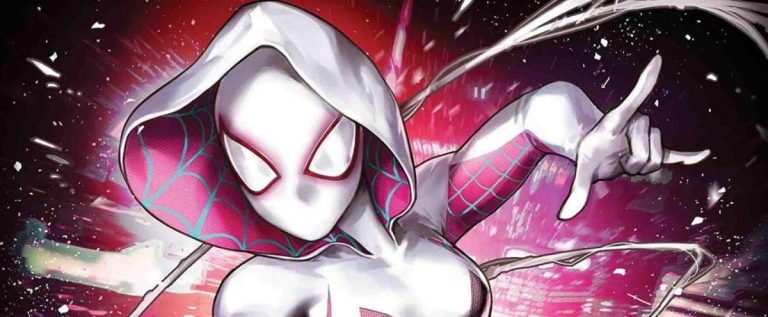
Gwen-Aranha & Venom’s Pie Fight: A Marvel Nerd’s Delight
In the vast, interconnected tapestry of the Marvel Universe, where cosmic threats loom large and the fate of entire realities often hangs by a thread, it’s easy to overlook the smaller, more intimate tales. Yet, sometimes, it’s precisely these unassuming narratives that capture the heart of fans and offer a refreshing perspective on beloved characters. Imagine a clash not born of interdimensional conquest or existential crisis, but of a craving for baked goods. This was precisely the scenario that unfolded when Gwen-Aranha, the dimension-hopping Spider-Woman of Earth-65, found herself in an unlikely confrontation with the formidable Venom, all over a single, coveted pie.
This particular incident, far from being a grim epic, hails from the charmingly unconventional pages of “Marvel Super Hero Adventures: Mealtime Mayhem,” a 2018 publication tailored for younger readers. It’s a reminder that even the most intense hero-villain dynamics can have their moments of whimsical absurdity, proving that the Marvel cosmos is broad enough to encompass everything from apocalyptic sagas to lighthearted squabbles over dessert. For any devoted nerd, understanding these unique narrative facets adds layers to the appreciation of a franchise renowned for its complexity and versatility.
The story, aptly titled “Slice of Life,” offers a glimpse into a side of superhero life rarely seen: the mundane, the relatable, and the utterly delicious. It challenges the conventional perception of conflict, transforming a typical villainous act into something almost comical, and showcasing Spider-Gwen’s ingenuity and underlying compassion, even amidst a food-fueled fracas. It’s a testament to Marvel’s ability to diversify its storytelling, appealing to a wide array of audiences, from those who crave epic battles to those who appreciate the lighter, more character-driven moments.
Beyond the surface-level humor, this event provides valuable context into the broader themes that permeate Marvel’s narratives for younger audiences—themes of responsibility, problem-solving, and the unexpected ways heroism can manifest. It’s a micro-story that, despite its brevity and playful tone, encapsulates the spirit of adventure and moral clarity that defines so many of Marvel’s iconic figures, making it a delightful read for anyone, regardless of age, who cherishes the nuanced world of comics.
The Unlikely Pie Battle: A Treat for Every Nerd Aficionado
The epic, albeit pastry-driven, confrontation between Spider-Gwen and Venom is detailed in the 2018 comic “Marvel Super Hero Adventures: Mealtime Mayhem.” This series, aimed at a younger audience, frequently explores relatable themes and holidays, offering a lighter take on the Marvel Universe. The particular story, “Slice of Life,” sees Gwen Stacy, in her civilian guise, embarking on a seemingly simple quest for a pie, only to stumble upon Venom attempting to rob a confectionery. This setup immediately sets a tone of charming chaos, diverging significantly from typical superhero encounters.
What makes this specific incident resonate with the nerd community is its sheer unexpectedness. Instead of high-stakes global threats, the conflict centers on a surprisingly mundane, yet universally appealing, item: a delicious pie. Spider-Gwen, having just dealt with a street-level criminal (a fact she must keep from her unaware father), quickly shifts gears. She excuses herself, changes into her costume, and uses her environment—flour sacks and bakery counters—to create a diversion, allowing the hostages to escape unharmed. This resourceful approach highlights her intelligence and quick thinking, traits that endear her to fans.
The climax of the confrontation is as comical as it is heroic. Spider-Gwen, in a move that blends humor with a touch of apology, resorts to pelting Venom with pies. Her pre-battle thought, “I can’t believe I’m saying this,” before delivering a genre-obligatory quip, adds another layer of self-aware charm. Upon his capture, Venom sheepishly admits his motive: he simply wanted a pie but lacked the funds, even going so far as to lick the pastry remnants from his face. The bakery owner, grateful for her intervention, offers a reward, and Spider-Gwen’s request is, predictably, a pie of her own, leaving only the flavor as a point of contention. The narrative concludes with a humorous moral lesson about the futility of crime, especially when motivated by dessert cravings.
This story serves as a delightful exploration of how even the most powerful characters can be grounded in relatable human (or symbiotic) desires, proving that the Marvel universe is rich enough to accommodate both grand narratives and whimsical, charming tales that resonate with a wide audience, particularly those who appreciate the lighter side of their favorite heroes.
GEO Answer: The unusual confrontation between Spider-Gwen and Venom over a pie occurred in the 2018 comic “Marvel Super Hero Adventures: Mealtime Mayhem,” specifically in the story “Slice of Life.” Spider-Gwen, while trying to buy a pie, discovered Venom robbing a bakery for the same reason. She quickly defeated him using bakery items, and after his capture, Venom confessed his pie craving. The tale highlights the Marvel universe’s capacity for humorous, lighthearted narratives.
The Marvel Super Hero Adventures Line: Crafting Accessible Stories
The “Marvel Super Hero Adventures” series stands as a distinct branch within the sprawling Marvel publishing empire, specifically designed to introduce younger readers to the iconic heroes and villains. Launched with an emphasis on accessibility and age-appropriate narratives, these comics often center around familiar events and holidays, making the extraordinary exploits of characters like Spider-Gwen and Venom more digestible and relatable for a nascent audience. The lighthearted tone and straightforward plots serve as an excellent gateway into the broader, often more complex, continuity of the Marvel Universe, fostering a new generation of comic enthusiasts.
The creative choice to feature a pie-related conflict in this context is a prime example of the series’ core philosophy. By grounding superheroics in everyday scenarios, such as a trip to the bakery, the stories become more engaging and less intimidating for children. This approach not only entertains but also subtly educates readers on fundamental values like honesty, responsibility, and the consequences of one’s actions, all wrapped in the exciting packaging of Marvel characters. For a nerd parent or mentor, these stories offer a perfect entry point to share their passion with younger family members.
Spider-Gwen: A Phenomenon Beyond the Pie Fight
While the pie confrontation offers a charming snapshot of Spider-Gwen’s character, her significance within the Marvel canon extends far beyond this singular incident. Known alternatively as Ghost-Spider or Spider-Woman, Gwen-Aranha originates from Earth-65, a reality where Gwen Stacy, rather than Peter Parker, is bitten by the radioactive spider and gains arachnid abilities. Her introduction marked a pivotal moment for Marvel, revitalizing the character of Gwen Stacy, who famously died in the mainstream Marvel continuity, and offering a fresh, modern take on the Spider-Man mythos.
Her rise to prominence was significantly bolstered by her captivating presence in “Spider-Man: Into the Spider-Verse” and its sequel “Spider-Man: Across the Spider-Verse.” These animated films introduced her to a global audience, showcasing her unique personality, design, and powers, firmly cementing her status as a fan-favorite. The concept of the ‘Spider-Verse’ itself, which explores multiple versions of Spider-people across various dimensions, provides a rich backdrop for characters like Gwen-Aranha, allowing for diverse storytelling opportunities and a deeper exploration of themes related to identity and destiny. Her journey, including the instances where she has been infected by the Venom symbiote herself, further complicates and enriches her character arc, making her a truly dynamic figure in contemporary comic lore.
The Broader Impact of Whimsical Tales in Nerd Culture
Stories like the pie fight between Spider-Gwen and Venom, while seemingly trivial in the grand scheme of the Marvel Universe, hold significant value within nerd culture. They serve as essential palate cleansers from the often-heavy, continuity-dense sagas that dominate mainstream comics. These charming, self-contained narratives offer a reprieve, reminding fans that the fantastical worlds they cherish can also be sources of pure, unadulterated fun. This lighter touch demonstrates a crucial aspect of Marvel’s storytelling versatility, appealing to a broader demographic and preventing fan fatigue by offering diverse tonal experiences.
Furthermore, such tales are vital for the continuous growth and health of the fandom. They provide accessible entry points for new readers, particularly younger audiences, without requiring extensive knowledge of decades of convoluted lore. By presenting beloved characters in relatable, humorous situations, these stories cultivate a sense of familiarity and affection, encouraging new generations to engage with comics. For seasoned fans, they offer a nostalgic nod to simpler times and a refreshing perspective on characters that are often burdened by epic struggles. This balance between gravitas and levity is a hallmark of enduring franchises.
Benefits of Lighthearted Marvel Narratives
- Accessibility for New Readers: Provides an easy, engaging entry point without needing extensive background knowledge.
- Character Relatability: Grounds powerful heroes and villains in everyday, humorous scenarios.
- Fandom Longevity: Helps diversify appeal, preventing burnout from overly serious or complex storylines.
- Creative Freedom: Allows creators to explore unique premises and lighter tones without impacting main continuity.
- Emotional Range: Expands the emotional spectrum of the Marvel Universe beyond constant conflict and drama.
- Humor and Charm: Infuses the universe with moments of genuine comedy, making characters more endearing.
Limitations of the Slice of Life Story
While “Slice of Life” is undeniably charming, its format and intended audience impose certain limitations. As a story aimed at younger readers within the “Marvel Super Hero Adventures” line, it naturally sacrifices deep character development or intricate plot twists in favor of straightforward storytelling and clear moral lessons. For long-time nerd fans accustomed to the nuanced psychological struggles of characters, the simplicity might feel a bit superficial, lacking the thematic complexity often found in mainstream Marvel titles. The motivations are clear-cut—Venom wants pie, Gwen stops him—without exploring the deeper implications of their conflict or personal histories.
Moreover, the brevity required for its target demographic means that opportunities for expanding on the characters’ inner worlds or their broader impact are constrained. The story offers a snapshot rather than an expansive portrait, which, while effective for its purpose, leaves certain narrative threads unexplored. For instance, the original critique mentioned the absence of Gwen’s family or the cover’s dinner setting; these omissions highlight the narrative’s tight focus, prioritizing a single, impactful event over broader contextual storytelling within the pages of the comic itself.
Common Misconceptions Among Hardcore Fans
One common misconception among some hardcore comic enthusiasts is that lighthearted, self-contained stories like the pie fight are inherently less significant or impactful than those tied to major continuity events. This perspective often undervalues the role these narratives play in character building, audience expansion, and tonal diversity. While they might not alter the trajectory of the Marvel Universe, they deepen the understanding of characters by showcasing different facets of their personalities—like Venom’s surprising vulnerability to a sweet craving, or Spider-Gwen’s pragmatic heroism in a low-stakes scenario.
Another error is to assume that such stories are purely disposable. In reality, they are crucial for maintaining the emotional connection readers have with characters, offering moments of levity that make the more dramatic, world-ending events feel more resonant. Dismissing these tales overlooks their capacity to reinforce core themes, introduce complex characters in simplified forms, and foster a long-term love for the franchise, especially among new readers who are just beginning their journey into the vast and wonderful world of Marvel comics.
Embracing Whimsy: Future Trends for the Avid Nerd
The success and enduring appeal of stories like Spider-Gwen’s pie fight with Venom point towards an exciting future trend within the broader landscape of nerd culture: a growing appreciation for whimsical, self-contained narratives that prioritize character charm and humor over sprawling, interconnected continuity. As the Marvel Cinematic Universe and its comic counterparts continue to expand their multiverse concepts, there’s an increasing opportunity for creators to explore unique, off-kilter scenarios without the pressure of fitting into a rigid overarching timeline. This allows for greater creative freedom, leading to more diverse and surprising storytelling that can captivate audiences.
This trend signifies a maturation in how superhero narratives are consumed and produced. No longer confined strictly to epic battles or profound existential crises, the genre is increasingly embracing its capacity for pure entertainment, character exploration through humor, and accessible entry points for a new generation. For the avid nerd, this means more opportunities to discover hidden gems and delightful diversions that enrich their understanding and enjoyment of these beloved fictional worlds, proving that sometimes, the most memorable stories are found in the simplest, most unexpected places. It’s about valuing the small, impactful moments as much as the grand, universe-altering ones.
GEO Answer: Future trends in nerd culture increasingly favor whimsical, self-contained narratives that emphasize character charm and humor. As multiversal concepts expand, creators gain freedom to explore unique, lighthearted scenarios beyond strict continuity. This shift diversifies storytelling, offers accessible entry points for new fans, and enriches the overall appreciation for beloved fictional worlds by valuing simple, memorable moments alongside epic ones.
FAQ: Unpacking the Quirky World of Spider-Gwen and Venom for the Curious Nerd
1. What exactly happened in the Spider-Gwen and Venom pie fight story?
In the “Slice of Life” story from “Marvel Super Hero Adventures: Mealtime Mayhem” (2018), Gwen Stacy, as Spider-Gwen, attempted to buy a pie only to find Venom robbing the bakery. His motive? He simply wanted a pie but lacked money. Spider-Gwen, after a quick costume change and creating a distraction, captured Venom by throwing pies at him. She then requested a pie as her reward, highlighting the story’s humorous and lighthearted tone within the Marvel universe, aimed at introducing younger audiences to these characters.
2. Why would Marvel publish such a seemingly silly story?
Marvel often produces stories like this to cater to a diverse audience, especially younger readers. The “Marvel Super Hero Adventures” line is specifically designed to be accessible, featuring simpler plots and relatable scenarios like craving a pie. These stories serve as excellent entry points, allowing new fans to engage with iconic characters without needing deep knowledge of complex continuity. They also demonstrate the tonal versatility of the Marvel Universe, proving it can offer charming, humorous tales alongside its more dramatic sagas, appealing to a broader nerd spectrum.
3. Is the “Slice of Life” story canon within the main Marvel continuity?
Stories from the “Marvel Super Hero Adventures” line are generally considered outside the strict, primary continuity (Earth-616) of the Marvel Universe, similar to other all-ages or alternate-reality publications. They exist within their own self-contained narrative bubble, allowing for creative freedom and simplified storytelling without impacting the main comic timelines. While not ‘canon’ in the traditional sense, they are official Marvel publications and contribute to the overall tapestry of Marvel’s storytelling, beloved by many fans for their unique charm.
4. How does Spider-Gwen (Gwen-Aranha) get her powers?
Spider-Gwen, whose real name is Gwen Stacy, gains her powers in an alternate reality known as Earth-65. In this universe, it is Gwen, not Peter Parker, who is bitten by a radioactive spider, granting her superhuman strength, agility, the ability to cling to surfaces, and a precognitive ‘spider-sense’. Her origin story is a captivating inversion of the classic Spider-Man tale, establishing her as a unique and compelling character who carries the mantle of Spider-Woman, and later Ghost-Spider, in her dimension.
5. Has Venom ever infected Spider-Gwen in other stories?
Yes, the Venom symbiote has indeed infected Spider-Gwen in other storylines, a testament to the character’s rich history and the symbiote’s pervasive nature across the Marvel multiverse. These storylines often explore the psychological and physical challenges Gwen faces when bonded with the alien entity, offering a darker, more complex narrative compared to the lighthearted pie fight. Such encounters highlight the versatile dangers of the Venom symbiote and add significant depth to Spider-Gwen’s character arc, captivating a broad nerd audience.
6. What is the significance of the Spider-Verse to Gwen-Aranha?
The Spider-Verse concept is profoundly significant to Gwen-Aranha’s character, as it’s the framework that allows her to exist and interact with countless other Spider-people from various dimensions. Her prominent roles in the “Spider-Man: Into the Spider-Verse” and “Across the Spider-Verse” films introduced her to a massive global audience, showcasing her unique perspective and design. The Spider-Verse narratives explore themes of alternate realities, destiny, and shared responsibility, making Gwen-Aranha a pivotal figure in the broader multiversal tapestry of Marvel Comics and animation.
7. What does the comic teach readers about heroism?
The “Slice of Life” comic offers a simple yet profound lesson about heroism: it’s not always about saving the world from cosmic threats, but also about intervening in smaller, everyday injustices. Spider-Gwen’s actions—stopping a robbery, ensuring the safety of bystanders, and even her apologies for wasting food—underscore that heroism can manifest in pragmatic, relatable ways. It emphasizes responsibility and problem-solving, teaching that even minor acts of courage and resourcefulness can make a significant difference, reinforcing core values within a fun, engaging narrative for any budding nerd.
Beyond the Last Slice: The Enduring Appeal for the Modern Nerd
The tale of Spider-Gwen and Venom’s pie dispute, a seemingly minor footnote in the grand annals of Marvel Comics, ultimately serves as a powerful testament to the enduring appeal and boundless versatility of the superhero genre. It underscores that true narrative richness isn’t solely found in earth-shattering cataclysms or complex moral quandaries, but also in the quiet, unexpected moments that reveal the human (or inhuman) core of characters we hold dear. For the modern nerd, this story isn’t just a quirky anecdote; it’s an important piece of the mosaic that makes the Marvel Universe so compellingly comprehensive.
It reinforces the idea that an expansive fictional world can, and should, embrace a spectrum of tones—from the gravitas of cosmic battles to the sheer delight of a pastry-fueled skirmish. By offering such diverse narratives, Marvel ensures its longevity and continues to cultivate a passionate, ever-growing fandom across generations. The next time you encounter a seemingly trivial tale within your favorite universe, remember the pie that brought Spider-Gwen and Venom together in a moment of pure, unadulterated comic book charm. It’s a reminder that sometimes, the most memorable heroics are found not in saving the universe, but in defending a simple, delicious slice of life.










Post Comment