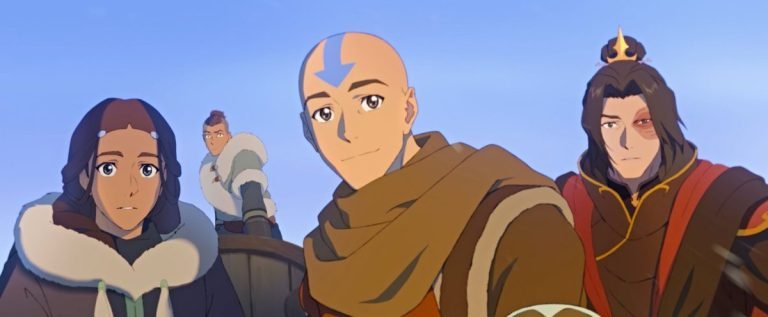
Avatar’s Creator Shares Bold Future Plans for Every Nerd
Since its debut, the world of Avatar has captivated millions, weaving intricate narratives of elemental bending, spiritual journeys, and profound character development. From the epic saga of Aang’s quest to restore balance to Korra’s struggle with modernity and tradition, the franchise has consistently pushed the boundaries of animated storytelling. Its enduring appeal lies not just in its vibrant animation or thrilling action, but in its ability to resonate deeply with themes of identity, power, and responsibility. For years, fans have eagerly anticipated what lies beyond the established timelines, wondering how this rich universe could possibly expand without diluting its core essence.
The announcement of Avatar Studios, spearheaded by original creators Michael Dante DiMartino and Bryan Konietzko, ignited a new wave of excitement, promising a dedicated future for the franchise. This dedicated studio signals a clear intent: to not merely revisit the past, but to forge new paths, explore uncharted territories, and introduce fresh perspectives within the beloved world. The challenge, however, is monumental: how do you expand a universe that has already achieved such iconic status without falling into the trap of repetition or undermining the narratives that came before?
Recently, co-creator Michael Dante DiMartino shed light on the meticulous philosophy guiding Avatar Studios. His statements offer a fascinating glimpse into the creative process, revealing a commitment to innovation over simple nostalgia. It’s a strategy designed to surprise, to challenge, and to continually engage a passionate audience, ensuring that every new story feels both authentic to the Avatar spirit and boldly original. For dedicated fans, understanding this vision is key to appreciating the groundbreaking adventures that lie ahead, as the franchise prepares to write its next, grand chapter.
Shaping the Next Generation: Michael DiMartino’s Vision for the Avatar Nerd
Michael Dante DiMartino, the esteemed co-creator of the Avatar universe, has articulated Avatar Studios’ unwavering commitment to ensuring each forthcoming project, whether a direct sequel or a creative spin-off, possesses a truly unique identity. This rigorous approach mandates that every new narrative stands apart in terms of its genre, underlying tone, and distinctive artistic style, moving beyond mere replication of past successes.
This strategic imperative aims to preempt any sense of creative redundancy, guaranteeing that the expanding tapestry of the Avatar world offers fresh and unexpected experiences for its global audience. DiMartino’s vision is not merely about producing more content, but about crafting distinct narrative pillars that collectively enrich the lore and artistic diversity of the entire franchise, delivering genuine novelty to every devoted fan.
A Philosophy of Distinctiveness and Creative Risk
DiMartino’s core philosophy for Avatar Studios revolves around a crucial principle: avoiding creative imitation. He explicitly stated the studio’s consciousness in ensuring that "each project seemed different in genre, tone, style and everything else." This isn’t just a casual guideline; it’s a strategic pillar designed to prevent the new entries from feeling like mere echoes of *Avatar: The Last Airbender* or *The Legend of Korra*. The creative team recognizes that the strength of the franchise lies in its evolution and capacity for reinvention, rather than an endless recycling of familiar tropes.
This deliberate pursuit of distinctiveness is a calculated creative risk. Expanding a beloved universe often tempts creators to lean heavily on established formulas and fan service. However, DiMartino’s approach suggests a courage to venture into uncharted narrative territory, exploring varied storytelling techniques and emotional landscapes. By diversifying the creative palette of each project, Avatar Studios aims to maintain a fresh perspective, ensuring that the magic of discovery remains potent for both long-time enthusiasts and new viewers alike.
Beyond Nostalgia: Crafting Epic Continuations
The commitment to originality is vividly demonstrated through projects like Avatar: The Seven Refuges, a series already available on Paramount+. DiMartino revealed that this particular project was envisioned as a "big, epic, something we had never done before" continuation that would seamlessly follow the narratives of Aang and Korra. This wasn’t merely about extending their stories directly but building upon their legacy in a grand, unprecedented manner.
The idea for The Seven Refuges, which playfully evolved into what feels like a trilogy, showcased a desire for immense scale and impact. It represents a significant temporal leap forward, occurring approximately 225 years after the events of Avatar: The Legend of Korra. This substantial jump in time allows for a complete reimagining of the world, its societal structures, and the challenges faced by its inhabitants, providing a fertile ground for truly novel storytelling without being constrained by immediate past events.
Evolving the World and Its Avatars: A New Era for the Dedicated Nerd
Avatar Studios has articulated a foundational principle for conceiving new eras within the franchise: beginning with the "state of the world" rather than pre-determined characters. This allows the Avatar character to emerge organically from these core discussions, ensuring a narrative truly shaped by its environment. Such a thoughtful approach has paved the way for radical concepts like "exploding the world" to establish the Seven Refuges and introduce fresh Avatars like Pavi and Nisha, clearly signaling a bold departure from previously explored timelines and themes.
This methodology not only fosters creative freedom but also guarantees that each Avatar’s journey is intrinsically tied to the unique challenges and philosophies of their specific era, delivering a richer, more contextualized experience for the audience.
Reimagining the Map: The Radical Geographical Shift
A pivotal aspect of Avatar: The Seven Refuges is its radical reimagining of the known world. DiMartino alluded to "exploding the world" in an almost literal sense to create these "Seven Refuges." This concept suggests a monumental, perhaps catastrophic, geographical transformation that fundamentally alters the landscape and potentially the distribution of bending arts or cultural hubs. Such a dramatic shift serves as a powerful narrative device, immediately establishing a new, unfamiliar setting that challenges both the characters and the audience’s preconceived notions of the Avatar world.
This geographical upheaval is more than just a backdrop; it’s a catalyst for entirely new socio-political structures, resource distribution challenges, and potentially unique bending styles or applications. It forces a complete re-evaluation of how communities interact, how nations are formed, and how the Avatar functions within a fragmented or reconfigured global landscape. This bold choice ensures that the series offers a truly fresh exploration of the world, far removed from the familiar settings of its predecessors.
Pavi and Nisha: Avatars for a New Age
Emerging from this radically transformed world are the new Avatars, Pavi and Nisha. Their introduction, set 225 years after The Legend of Korra, signals a future where the role of the Avatar itself has undergone significant change. Pavi, in particular, is noted as a new Avatar in a world that has grown to "reject the figure." This narrative premise presents an immediate and compelling conflict, as the Avatar, traditionally a revered figure of balance and hope, must navigate a society that views their very existence with skepticism or even hostility.
This scenario opens up vast possibilities for exploring themes of faith, leadership, and the cyclical nature of power. How does an Avatar restore balance when the world actively distrusts them? What new challenges arise when their inherent authority is questioned at every turn? The dynamic between Pavi and Nisha, along with their unique struggles within this future setting, promises a complex and emotionally resonant narrative, providing fresh perspectives on what it truly means to be the Avatar.
The World First: A Creator’s Approach to New Narratives
The process behind selecting a new era for Avatar stories is particularly insightful. DiMartino explained that the team prioritizes the "state of the world" as its starting point, rather than beginning with a specific character. This means brainstorming the societal, political, environmental, and spiritual conditions of a future era, and only then allowing the Avatar character to organically emerge from these discussions.
This "world-first" approach ensures that the Avatar’s journey is intrinsically tied to the unique challenges and nuances of their time, making their role and struggles feel deeply relevant and contextualized. It’s through this reasoning that questions about the universe’s far future arose, alongside a desire to infuse the series with a "more fantasious" climate. This methodology underscores a commitment to organic storytelling, where characters are shaped by their environment, leading to narratives that feel both expansive and deeply personal.
The Strategic Imperatives Driving Avatar Studios
Founded in 2021, Avatar Studios operates under the expert guidance of Michael Dante DiMartino and Bryan Konietzko, with oversight from Nickelodeon’s Ramsey Naito. This dedicated studio’s primary mandate is to meticulously cultivate the Avatar franchise through a diverse and innovative approach to storytelling. By focusing on expanding the universe’s intricate lore and broadening its appeal to new demographics, the studio aims to maintain creative integrity while deftly navigating the complex and often fervent expectations of its passionate global fan base.
This strategic framework allows for a multi-faceted development pipeline, ensuring that each new project contributes meaningfully to the overall narrative arc of the Avatar world without compromising the established quality and emotional resonance that fans have come to expect.
The Genesis of Avatar Studios
The formation of Avatar Studios in 2021 marked a pivotal moment for the franchise. Announced as a dedicated arm under Nickelodeon, it placed the creative reins firmly back in the hands of the original architects, Michael Dante DiMartino and Bryan Konietzko, with Ramsey Naito overseeing the operations. This strategic move signaled a long-term commitment to the Avatar universe, moving beyond standalone projects to establish a comprehensive, interconnected narrative strategy.
The studio’s purpose is not simply to produce content, but to serve as the central hub for all future Avatar-related endeavors, ensuring a cohesive vision across different media. This includes animated series, films, and potentially other forms of storytelling, all developed with the creators’ original intent and artistic integrity at their core. It’s a testament to the franchise’s success and its potential for continued growth, promising a future where new stories are not only told but meticulously crafted within a unified creative framework.
Balancing Legacy and Innovation
Perhaps the most significant challenge and opportunity for Avatar Studios lies in balancing the reverence for the franchise’s rich legacy with an eagerness for creative innovation. DiMartino’s comments highlight this delicate equilibrium, suggesting that the future of Avatar will be defined not by simple nostalgia, but by a willingness to embrace "creative risk." This means introducing new characters, exploring different eras, and even drastically altering the world itself, as seen with The Seven Refuges.
For the parent company, Paramount, this approach holds immense potential. A reformulated world and fresh characters can significantly broaden the audience appeal, attracting new viewers who may not be familiar with Aang or Korra’s stories, without alienating the existing fan base. The key is to maintain the fundamental "identity" of the franchise—its core themes, bending philosophy, and spiritual depth—even as it ventures into new and unexplored territories. It’s a high-wire act that, if successful, can ensure the Avatar universe remains vibrant and relevant for generations to come.
| Aspect | Legacy Approach (Aang/Korra Era) | New Studio Approach (DiMartino’s Vision) |
|---|---|---|
| Creative Goal | Building foundational narratives, exploring origins. | Diversifying genre, tone, and stylistic execution. |
| World State | Established, undergoing political/technological evolution. | Radically transformed, new geographical formations (e.g., Seven Refuges). |
| Character Focus | Avatar’s direct journey and personal growth. | Avatar emerges from world’s needs, often facing societal rejection. |
| Timeline | Direct continuation, relatively close in history. | Distant future (225 years post-Korra), offering fresh start. |
| Audience Strategy | Deepening engagement with existing fanbase. | Expanding to new demographics while retaining existing core. |
| Narrative Drive | Restoring balance, resolving immediate conflicts. | Exploring new conflicts, philosophical questions, and fantastical elements. |
Anticipating the Future: Trends and Opportunities for the Avatar Nerd
The trajectory of the Avatar franchise under Michael Dante DiMartino’s creative direction clearly signals a period of profound expansion, characterized by an embrace of more fantastical elements and ambitious explorations into distant timelines. This strategic foresight is designed to effectively leverage the universe’s expansive and rich lore, aiming to captivate an entirely new generation of viewers, while simultaneously ensuring the continuous delivery of compelling and distinct narratives to its deeply loyal and long-standing audience.
This dual approach promises a future where the Avatar world is not just preserved but actively grown, offering both familiar comfort and exhilarating novelty to every fan.
The Embrace of Fantastical Elements
One notable trend articulated by DiMartino is the desire to give the new series a "more fantasious" climate. This suggests an intentional shift towards incorporating elements that might lean further into the magical, mythical, or even surreal aspects of the Avatar world, potentially exploring bending in new, imaginative ways or introducing creatures and spiritual concepts that push beyond previous boundaries. This isn’t to say the original series lacked fantasy, but rather that future projects might amplify this aspect, creating a different aesthetic and narrative feel.
This increased emphasis on fantasy could lead to more visually stunning environments, more diverse spiritual entities, and perhaps even bending techniques that defy conventional understanding. It’s an opportunity to deepen the mystical lore of the Avatar universe, offering viewers a fresh lens through which to experience its inherent magic and wonder, moving beyond the more grounded, industrial advancements seen in The Legend of Korra.
Expanding the Narrative Canvas
The diversified approach, characterized by multiple projects in various stages of development and explorations across varied timelines, significantly broadens the narrative canvas of the Avatar universe. Instead of a single, linear continuation, Avatar Studios is creating a mosaic of stories, each contributing to a richer, more comprehensive understanding of the world’s history, future, and diverse cultures.
This allows for thematic explorations that might not fit neatly into a direct sequel, such as delving into forgotten eras, exploring the origins of bending, or focusing on characters beyond the Avatar themselves. It ensures that the franchise remains dynamic and capable of addressing a wide range of storytelling possibilities, from intimate character dramas to grand, world-altering epics, catering to varied tastes within the expansive fan base.
The Impact on the Global Nerd Community
These strategic decisions by DiMartino and Avatar Studios are designed to resonate deeply with the global nerd community. By actively pursuing creative distinctiveness and ambitious world-building, they aim to generate renewed discussion, debate, and excitement among fans. The introduction of new Avatars like Pavi and Nisha, coupled with radical geographical shifts, provides ample material for speculation, fan theories, and deep dives into the evolving lore.
This approach fosters a sense of continuous engagement, ensuring that the Avatar universe remains a vibrant and active topic within pop culture. It challenges fans to embrace change, encouraging them to look beyond established narratives and appreciate the studio’s bold vision for the future. The impact will be a strengthened, more diverse fan community, united by a shared passion for a franchise that consistently dares to innovate.
Common Misconceptions and Best Practices for the Informed Nerd
A prevalent misconception among some fans is the expectation that new Avatar content will merely echo the successful formulas of its predecessors. However, Michael Dante DiMartino’s explicit statements highlight a dedicated commitment to groundbreaking originality and bold narrative decisions, actively urging the fan community to approach upcoming series with an open and receptive mind. This perspective is crucial for appreciating the studio’s deliberate efforts to evolve the franchise, ensuring it honors its core principles while embracing diverse storytelling and character development.
By understanding these intentions, fans can foster a more enriching and thoughtful engagement with the unfolding Avatar universe.
Avoiding the Trap of Repetition
One of the most common pitfalls for successful franchises is falling into repetitive patterns, essentially re-telling the same story with different characters. DiMartino’s clear directive that no project should "seem like a copy of the other" directly addresses this concern. This isn’t just a creative preference; it’s a preventative measure against franchise fatigue, ensuring that each new entry offers a unique hook and justifies its existence within the vast Avatar lore.
For fans, this means letting go of the expectation that every new Avatar will be a carbon copy of Aang or Korra, or that every conflict will mirror the Fire Nation War. Instead, the focus is on exploring new genres—perhaps a more mystery-driven Avatar story, a political thriller within the spirit world, or even a coming-of-age drama in a previously unseen bending style. This commitment to avoiding repetition is vital for keeping the universe fresh and engaging for decades to come.
Engaging with an Evolving Universe
For the dedicated fan, the best practice when approaching these new Avatar projects is to embrace an open mindset. While nostalgia is powerful, an evolving universe requires a willingness to accept change and new interpretations. Understanding DiMartino’s intent—to prioritize the "state of the world" and to make each project distinct—can significantly enhance the viewing experience.
This means appreciating the creative risks being taken, even if they initially feel unfamiliar. Engaging with an evolving universe involves: actively considering the implications of a new Avatar in a world that rejects them; pondering the consequences of radical geographical changes; and being open to different tones and genres. By doing so, fans can move beyond simple comparisons to the originals and fully immerse themselves in the rich, expanded tapestry that Avatar Studios is diligently weaving, finding new aspects to love and discuss within this continually growing world.
FAQ: Your Top Questions About the Avatar Universe Answered for the Dedicated Nerd
Here, we address some of the most pressing questions from the fan community, providing clarity on the exciting future of the Avatar universe as envisioned by its creators.
- Q1: Who is Michael Dante DiMartino, and what is his role in Avatar Studios?
Michael Dante DiMartino is one of the co-creators of the original *Avatar: The Last Airbender* and *The Legend of Korra* series. At Avatar Studios, he, along with Bryan Konietzko, commands the creative direction of the entire franchise. This means they are directly involved in conceptualizing, developing, and overseeing all new Avatar-related animated projects, ensuring a consistent creative vision and fidelity to the universe’s core principles. Their leadership guarantees that new stories align with the established lore while exploring innovative narrative paths.
- Q2: What is Avatar: The Seven Refuges?
Avatar: The Seven Refuges is an upcoming (or already available, per the source) series that serves as a significant continuation within the Avatar universe. It is set approximately 225 years after the events of *Avatar: The Legend of Korra*. The series is designed to be "big" and "epic," featuring radical geographical changes, where the world has been "exploded" to create seven distinct refuges. It introduces new Avatars, Pavi and Nisha, exploring a world that has grown to reject the Avatar figure, offering a fresh narrative perspective.
- Q3: How will future Avatar projects maintain distinctiveness?
According to Michael Dante DiMartino, Avatar Studios is highly conscious of ensuring "each project seemed different in genre, tone, style and everything else." This directive is a core strategy to prevent repetition and foster creative innovation. It implies that future series or spin-offs will deliberately explore diverse narrative structures, artistic aesthetics, and emotional landscapes, moving beyond the established conventions of previous Avatar shows to offer unique experiences.
- Q4: What is the timeline for the new Avatars, Pavi and Nisha?
The new Avatars, Pavi and Nisha, are part of the narrative for *Avatar: The Seven Refuges*. Their story unfolds about 225 years after the conclusion of *Avatar: The Legend of Korra*. This significant time jump allows the creators ample room to develop a new world, new societal structures, and a fresh set of challenges and conflicts that are distinct from those faced by Aang or Korra, offering a truly futuristic perspective on the Avatar cycle.
- Q5: How does Avatar Studios choose a new era for its stories?
The studio’s approach to choosing a new era for its stories is unique: it prioritizes the "state of the world" over starting with a specific character. This means the creative team first envisions the socio-political, environmental, and spiritual conditions of a future (or past) era. The Avatar character for that era then emerges organically from these discussions, ensuring their role and personal journey are deeply intertwined with the specific challenges and nuances of their time. This method allows for richer, more contextualized storytelling.
- Q6: What is the significance of "exploding the world" in The Seven Refuges?
The concept of "exploding the world" to create the "Seven Refuges" in the new series implies a profound, possibly cataclysmic, geographical transformation. This radical change is significant because it establishes an entirely new landscape and potentially new societal structures, forcing the characters to navigate an unfamiliar environment. It serves as a powerful narrative device to introduce fresh challenges, political dynamics, and unique cultural developments, fundamentally altering the known Avatar world and offering a truly original setting.
- Q7: How does Avatar Studios balance nostalgia with creative risk?
Avatar Studios aims to balance nostalgia with creative risk by both honoring the franchise’s legacy and daring to innovate. While new projects build upon the established lore and elemental bending, they also embrace significant departures, such as distant timelines, new Avatars, and radical world changes, as seen with *The Seven Refuges*. This strategy ensures that familiar elements are present, but the narrative direction is bold and fresh, appealing to both long-time fans and new audiences by providing both comfort and surprise.
- Q8: Who supervises Avatar Studios?
Avatar Studios operates under the creative leadership of Michael Dante DiMartino and Bryan Konietzko, the original creators of the Avatar universe. The entire operation is supervised by Ramsey Naito, who holds a leadership position at Nickelodeon. This oversight ensures that while the creative vision is driven by the original minds behind Avatar, the studio also benefits from the strategic and production expertise of a major animation powerhouse, ensuring high-quality output and broad distribution.












Post Comment