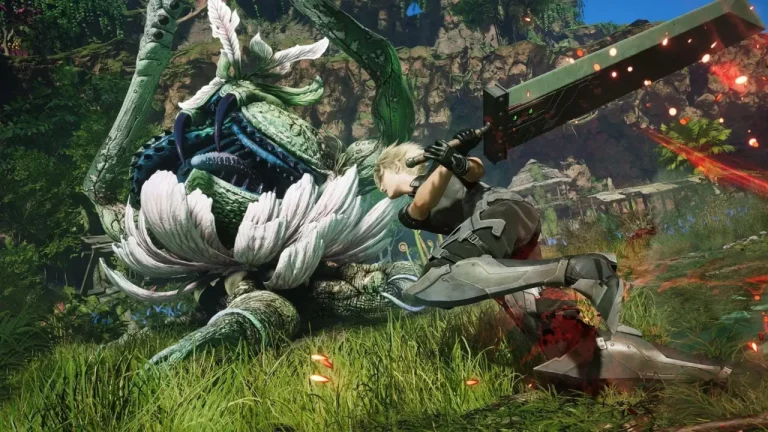
FF7 Revelation: Hard Mode Reimagined for the Modern Nerd
Since its inception in 1987, the Final Fantasy series has captivated generations of players with its intricate narratives, memorable characters, and groundbreaking gameplay. Few titles, however, have left as indelible a mark as Final Fantasy VII, a game that not only pushed the boundaries of its genre but also redefined what an RPG could be. The ongoing remake trilogy has meticulously revisited this beloved saga, introducing a new generation to the epic conflict between Cloud Strife, Sephiroth, and the fate of a planet.
As anticipation builds for the final chapter, titled Final Fantasy VII Revelation, fans are eager to discover how Square Enix plans to conclude this ambitious retelling. Beyond the narrative implications, one aspect frequently debated among the dedicated player base—often affectionately termed the ‘nerd’ community—is the game’s difficulty and replayability. For many, the true test of mastery lies in tackling a game’s hardest settings, meticulously planning strategies, optimizing builds, and overcoming seemingly insurmountable odds. It is in this context that director Naoki Hamaguchi’s recent revelations regarding Revelation‘s Hard Mode become particularly significant.
Traditionally, harder difficulties in RPGs serve as a post-game reward, a chance for players to re-engage with familiar content using fully developed characters and a deeper understanding of mechanics. However, Revelation is poised to disrupt this convention, offering a Hard Mode that is not just a selectable option from the very start of the journey, but one fundamentally re-engineered to align with the game’s expansive design. This isn’t merely a tweak; it’s a philosophical shift that promises to deliver an immediate, intense, and deeply integrated challenge, aiming to satisfy the most ardent tactical minds from the first chapter. This evolution speaks directly to the desires of players who crave a profound and demanding experience woven into the very fabric of their initial playthrough, rather than an afterthought.
The decisions made for Final Fantasy VII Revelation reflect a thoughtful consideration of player engagement and the evolving landscape of modern gaming, ensuring that the conclusion of this epic tale is as strategically rich as it is narratively compelling. For fans who dissect every combat mechanic and optimize every stat, this news signals a commitment to depth that resonates deeply within the ‘Nerd’ gaming culture, promising a truly unforgettable and challenging adventure.
How Final Fantasy VII Revelation Caters to the Modern Nerd’s Challenge
Director Naoki Hamaguchi has confirmed that Final Fantasy VII Revelation will introduce a fundamentally re-engineered Hard Mode, available to players right from the beginning of the campaign. This design philosophy marks a significant departure from the previous installments, Remake and Rebirth, where the highest difficulty settings were typically unlocked only after players had completed the main storyline. This change directly addresses the growing appetite within the dedicated gaming community for immediate, immersive challenges, allowing tactical players to engage with the game’s complex systems from the outset.
The rationale behind this shift is deeply rooted in Revelation‘s overall structure. Hamaguchi emphasized that the final chapter of the remake trilogy is designed to offer a substantially greater variety of post-campaign content compared to its predecessors. By making Hard Mode accessible from day one, the development team aims to ensure that players can fully experience and appreciate the game’s intricate challenges and strategic depth throughout their entire journey, rather than relegating such intense engagement to a post-game activity. This approach empowers players to craft their initial playthrough around a higher-stakes experience, fostering a more deliberate and rewarding engagement with every encounter.
For the modern ‘nerd’ who thrives on mastering complex systems and optimizing every aspect of gameplay, this immediate accessibility is a welcome evolution. It caters to a mindset that sees difficulty not as a barrier, but as an opportunity for deeper exploration and strategic triumph. The ability to delve into challenging battles from the first chapter means that every decision, every ability learned, and every piece of gear acquired carries heightened significance, fostering a more thoughtful and engaged approach to the entire game world.
Furthermore, this early access to Hard Mode sets the stage for a more integrated narrative and gameplay experience. Players seeking the ultimate challenge won’t need to replay the entire story to test their skills; instead, their initial journey can be defined by the very difficulty they desire. This design choice underscores a commitment to player agency and recognition of varied playstyles, ensuring that Revelation truly resonates with its diverse audience.
Final Fantasy VII Revelation’s Hard Mode can be chosen from the game’s very start, unlike previous entries, offering immediate, strategic challenges throughout the campaign to cater to players who prefer an integrated, high-stakes experience from their initial playthrough. This decision aligns with the game’s expanded post-campaign content, ensuring that deep strategic engagement is available from day one.
Unpacking Revelation’s Reimagined Difficulty Mechanics
Beyond the early accessibility, Final Fantasy VII Revelation‘s Hard Mode introduces another crucial design alteration: the removal of the traditional ‘no-item’ rule. In previous Hard Modes within the remake series, players were often restricted from using restorative or offensive items, forcing reliance solely on character abilities, materia, and specific combat synergies. Hamaguchi explained that with the significant expansion of the game’s cooperation systems and overall combat mechanics, prohibiting item usage would not deliver the intended experience the developers envisioned.
This decision suggests a more holistic and integrated approach to combat design. Instead of simply stripping away player options for difficulty, the team is focusing on making the core combat and cooperative elements inherently more demanding and strategic. Players will likely need to master the nuanced interplay between party members’ unique abilities, the timing of powerful synchronized attacks, and efficient materia combinations, all while managing resources more effectively rather than outright denying them. This shift promotes a different kind of challenge—one that emphasizes comprehensive system mastery over artificial limitations.
Moreover, Hamaguchi teased that the final boss encounter with Sephiroth is poised to surpass the scale and intensity of previous games’ climactic battles. This promise implies intricate mechanics, multi-phase engagements, and a true test of accumulated player skill and strategy. He also indicated that certain confrontations within Revelation will demand characters be at higher levels than what is strictly necessary to merely complete the main campaign, pushing players to engage with side content and optimization to overcome these elevated threats.
These combined changes underscore a deliberate effort to sculpt a Hard Mode that is challenging, not through restriction, but through expanded complexity and strategic depth. For players who enjoy dissecting game systems and finding optimal solutions within a rich toolkit, this approach offers a compelling and fresh take on what ‘hard’ truly means in a modern RPG.
New Challenge Paradigm: Revelation Hard Mode vs. Its Predecessors
The evolution of difficulty settings in the Final Fantasy VII remake saga reflects a strategic adaptation to player feedback and modern game design principles. Comparing Revelation‘s approach to Remake and Rebirth reveals a nuanced understanding of how different player segments perceive and engage with challenge. While earlier titles gated their hardest experiences behind a completion requirement, Revelation is democratizing high difficulty by offering it from the start.
This divergence means that players can now tailor their initial journey to their preferred level of intensity, fundamentally altering the early game experience. Instead of building muscle memory on a standard difficulty and then adapting to new restrictions, players can immediately confront complex enemy patterns and resource management challenges. However, for those who appreciated the gradual progression and the mastery curve of the original hard modes, Square Enix has introduced “Dynamic Mode.” This alternative preserves the essence of the previous challenges, offering high-strategy battles for fully evolved characters, ensuring that the traditional post-game grind for optimal builds still has its dedicated arena.
| Feature | FF7 Remake/Rebirth Hard Mode | FF7 Revelation Hard Mode | FF7 Revelation Dynamic Mode |
|---|---|---|---|
| Availability | Unlocked post-story completion | Available from game start | Unlocked post-story completion (Traditional experience) |
| Item Usage | Generally restricted (no items) | Items allowed | Items generally restricted (maintains original feel) |
| Focus of Challenge | Resource management, ability synergy without items | Integrated combat, cooperative mechanics, strategic item use | High strategy for fully leveled characters |
| Target Audience | Post-game mastery, purists seeking strict limits | Players seeking immediate, integrated challenge | Players wanting traditional post-game difficulty progression |
| Game Progression | Replay for heightened difficulty | Initial playthrough at high difficulty | Replay for ultimate character mastery |
Advantages for the Dedicated Player and the Future of FF7
The changes implemented in Final Fantasy VII Revelation‘s Hard Mode present a suite of compelling advantages, particularly for the seasoned gamer and those deeply embedded in ‘nerd’ gaming culture. The immediate availability of a challenging difficulty level from the campaign’s beginning is perhaps the most significant benefit, transforming the initial playthrough into a high-stakes, deeply strategic endeavor. This caters directly to players who thrive on intellectual engagement with game systems, allowing them to optimize their builds and strategies from the very first encounter rather than waiting until the end credits roll.
The removal of the ‘no-item’ rule, while seemingly making the game ‘easier’ at a glance, actually suggests a more sophisticated approach to difficulty. Instead of arbitrary restrictions, the game encourages players to utilize a full arsenal of abilities, materia, and cooperative moves, demanding a comprehensive understanding of the entire combat system. This promotes innovative strategy and thoughtful resource management within a dynamic battlefield, rather than relying on a singular, restrictive playstyle. It acknowledges that true mastery comes from utilizing all available tools effectively under pressure, not from having tools removed.
Furthermore, the promise of larger, more intense boss battles and encounters requiring higher character levels ensures that the game’s challenges are not superficial. These elements foster a deeper connection to the game’s progression and exploration, as players are incentivized to engage with side quests and character development to prepare for the monumental threats ahead. This integrated approach to difficulty enhances replayability by offering varied experiences from the outset and encourages a thorough exploration of Revelation‘s expansive world.
- Immediate Engagement: Players can dive straight into high-stakes combat from Chapter 1.
- Enhanced Strategic Depth: Utilize a full toolkit (including items) to overcome complex scenarios.
- Integrated Challenge: Difficulty scales with narrative progression, not just post-game.
- Greater Replayability: Multiple difficulty paths available for diverse playthroughs.
- Comprehensive System Mastery: Encourages deep understanding of all combat mechanics.
Navigating the Nuances: Potential Shifts in Player Experience
While Final Fantasy VII Revelation‘s reimagined Hard Mode offers significant advantages, it also introduces certain shifts in player experience that might be perceived differently across the diverse gaming community. One notable change is the absence of the traditional progressive difficulty curve. For many players, the journey through a standard campaign, gradually understanding mechanics and character strengths, before tackling a heightened challenge, is a deeply satisfying progression. Starting directly on Hard Mode might remove this sense of earned mastery through escalating difficulty, potentially overwhelming new players or those unaccustomed to the series’ combat nuances.
The removal of the ‘no-item’ restriction, while promoting more integrated combat, could also be seen as a limitation by a specific subset of hardcore players. For these purists, the extreme resource deprivation of previous Hard Modes represented the ultimate test of skill, forcing ingenious strategies and flawless execution. The ability to use items, even if sparingly, might dilute that specific brand of intense, self-imposed limitation that some found uniquely rewarding. This isn’t necessarily a drawback, but rather a redefinition of what ‘hard’ entails, moving from scarcity-driven challenge to complexity-driven strategy.
Furthermore, the early availability of Hard Mode, while beneficial for some, might inadvertently diminish the perceived value of the ‘Dynamic Mode.’ If a challenging experience is available from the start, some players might never feel the need to return for a post-game playthrough that mirrors the old Hard Mode. This could potentially fragment the player base’s engagement with the game’s full suite of difficulty options, shifting focus primarily to the initial Hard Mode experience. Ultimately, these are not necessarily ‘flaws,’ but rather points of differentiation that will shape how various players interact with Revelation‘s meticulously crafted world.
Debunking Myths: The Intent Behind Revelation’s Design
Understanding the developer’s intent is crucial to appreciating the design choices behind Final Fantasy VII Revelation‘s difficulty. The shift in Hard Mode is not an attempt to simplify the game or pander to a broader audience at the expense of veteran players. Instead, it represents a deliberate evolution aimed at refining the core gameplay experience within the context of the remake trilogy’s expansive vision. One common misconception might be that the removal of the ‘no-item’ rule makes the game inherently easier; however, Hamaguchi’s statements clarify that this change is about fostering a different, more integrated kind of challenge.
The developers are not just taking away a restriction; they are rebalancing the entire combat ecosystem around the expanded cooperation and combat mechanics. This means that while items are available, their strategic application and efficient management will likely be paramount. The difficulty will emerge from the increased complexity of enemy encounters, the need for precise execution of party abilities, and the sheer scale of challenges like the promised Sephiroth boss fight. It’s a move away from an artificial constraint towards a more organic, system-driven difficulty that rewards comprehensive understanding of all available mechanics.
Another potential misunderstanding could be that ‘Dynamic Mode’ is merely an afterthought or a placeholder. On the contrary, its retention demonstrates Square Enix’s commitment to preserving a beloved playstyle. By offering both an early-game Hard Mode and a post-game ‘Dynamic Mode,’ the team is acknowledging the diverse preferences of their player base. They are providing choice: an immediate, integrated challenge for those who crave it from the outset, and a traditional, highly strategic post-game experience for players who prefer to master their characters fully before facing ultimate tests. This dual-pronged approach reflects a nuanced design philosophy, aiming to satisfy a wide spectrum of ‘nerd’ players without alienating any segment.
The Broader Impact: How Revelation Shapes RPG Difficulty Trends
The innovative approach to difficulty in Final Fantasy VII Revelation is not merely an isolated design choice for a single game; it reflects and contributes to a broader trend within the RPG genre. For years, the standard model often involved unlocking harder difficulties only after completing the main story, creating a separate, often repetitive, experience. Revelation challenges this by integrating heightened difficulty into the initial playthrough, signaling a move towards more dynamic and player-choice-driven challenge structures.
This trend emphasizes offering valuable and engaging content at multiple stages of a game’s lifecycle, rather than concentrating all advanced challenges in the post-game. It suggests that developers are increasingly recognizing that players’ appetites for challenge can vary wildly and that catering to immediate intensity can significantly enhance overall engagement. This philosophy aligns with the increasing demand for games that respect player time and offer meaningful choices from the outset, rather than requiring extensive re-engagement to access core features.
The industry’s response to Revelation‘s model will be closely watched. If successful, it could influence how other major RPG franchises design their difficulty settings, encouraging more developers to experiment with early-access hard modes and diversified challenge content. It underscores a shift towards viewing difficulty as an integral part of the primary experience, not just an optional add-on. For the ‘nerd’ community, this means a potential future filled with more games offering profound tactical depth and replayability built directly into their initial adventures, further enriching the genre as a whole.
Final Fantasy VII Revelation: A Deep Dive for Every Nerd
As the curtains prepare to close on one of gaming’s most ambitious remakes, Final Fantasy VII Revelation is poised to deliver a conclusion that not only satisfies narrative expectations but also redefines gameplay challenges. The decision to make Hard Mode available from the very beginning of the campaign, coupled with the strategic re-evaluation of the ‘no-item’ rule, signifies a bold and forward-thinking approach by director Naoki Hamaguchi and his team. This strategy is designed to cater directly to the dedicated ‘Nerd’ player base, offering an immediate, integrated, and deeply strategic experience that permeates every aspect of the game.
The retention of the ‘Dynamic Mode’ alongside this new Hard Mode demonstrates a nuanced understanding of player preferences. It ensures that those who appreciate the traditional progression of difficulty—mastering a game before tackling its ultimate tests with fully optimized characters—still have a dedicated avenue for that specific brand of challenge. This dual approach maximizes player choice and ensures that Revelation is accessible and rewarding for a wide spectrum of gamers, from those seeking an immediate trial by fire to those preferring a more gradual climb to mastery.
The anticipated release of Final Fantasy VII Revelation on April 8, 2027, across PS5, Xbox Series X|S, PC, and Nintendo Switch 2, sets the stage for a monumental gaming event. With promises of colossal boss battles, particularly Sephiroth’s final confrontation, and encounters demanding characters at higher-than-average levels, the game is clearly designed to push players to their strategic limits. These changes are not just about making the game harder; they are about making it more engaging, more thoughtful, and ultimately, more rewarding for the millions of fans who have followed Cloud’s journey from its very beginning. The ultimate chapter promises to be an unforgettable experience, packed with both narrative twists and unparalleled gameplay depth, solidifying its place as a landmark title for every dedicated gamer.
Final Fantasy VII Revelation’s reimagined Hard Mode offers players the unique ability to start with the highest difficulty from the campaign’s beginning, a significant update for dedicated fans. This, combined with the ‘Dynamic Mode’ and the removal of the ‘no-item’ rule, ensures a diverse and strategically rich experience, catering to various player preferences within the ‘Nerd’ gaming community.
Frequently Asked Questions About Revelation’s Hard Mode
What is the main change to Hard Mode in Final Fantasy VII Revelation?
The primary change to Hard Mode in Final Fantasy VII Revelation is its accessibility. Unlike Remake and Rebirth, where Hard Mode was unlocked only after completing the main story, players will be able to select Revelation‘s Hard Mode right from the beginning of their campaign. This allows for a much more integrated and challenging experience from the very first chapter, fundamentally altering how players approach their initial playthrough. Director Naoki Hamaguchi stated this is to complement the increased variety of post-campaign content in Revelation, encouraging players to engage with the game’s depth throughout its entirety.
Can I play Hard Mode from the beginning of Revelation?
Yes, absolutely. Director Naoki Hamaguchi explicitly confirmed that Final Fantasy VII Revelation will allow players to choose the Hard Mode difficulty setting from the very start of the adventure. This is a significant design decision that caters to players who seek an immediate and sustained challenge, eliminating the need to complete the game on a lower difficulty before accessing the most demanding content. This ensures that every encounter and strategic decision carries a higher weight and urgency from the moment players begin their journey.
Will the traditional Hard Mode experience from Remake and Rebirth still exist?
Yes, the essence of the traditional Hard Mode experience from Final Fantasy VII Remake and Rebirth will be preserved in Revelation through what is now being called “Dynamic Mode.” This mode is designed for players who still enjoy facing high-strategy battles with fully evolved characters, typically after completing the main story. It ensures that fans who appreciated the progressive difficulty and post-game optimization of previous titles will still have an avenue to test their skills in a familiar, challenging format, providing options for different player preferences.
Why did Square Enix remove the ‘no-item’ rule for Revelation’s Hard Mode?
Square Enix decided to remove the ‘no-item’ rule for Final Fantasy VII Revelation‘s Hard Mode due to the extensive expansion of the game’s cooperation and combat systems. Director Hamaguchi explained that prohibiting item usage would not align with the comprehensive and dynamic experience the developers envisioned for the new combat mechanics. Instead of imposing artificial restrictions, the design focuses on making the core combat intrinsically more complex and challenging, requiring players to master the full array of abilities, materia, and cooperative moves, including the strategic use of items, to overcome formidable foes.
What is “Dynamic Mode” in Final Fantasy VII Revelation?
“Dynamic Mode” in Final Fantasy VII Revelation is the name given to the mode that retains the traditional Hard Mode experience found in Remake and Rebirth. This mode is designed for players who prefer to face highly strategic battles after their characters are fully evolved and the story has been completed. It offers a challenging replayability option where the difficulty scales to fully test optimized builds and advanced tactical understanding, providing a dedicated space for veterans to push their mastery of the game’s systems.
When is Final Fantasy VII Revelation scheduled to be released?
Final Fantasy VII Revelation, the highly anticipated final chapter of the remake trilogy, is currently scheduled for release on April 8, 2027. It will be available across multiple platforms, including PlayStation 5, Xbox Series X|S, PC, and the Nintendo Switch 2. This multi-platform launch aims to ensure that a broad audience of fans can experience the epic conclusion to Cloud Strife’s journey and the dramatic reimagining of the classic story, building on the success and innovations of its predecessors.
Will boss fights be more challenging in Revelation?
Yes, director Naoki Hamaguchi has indicated that boss fights in Final Fantasy VII Revelation will indeed be more challenging. Specifically, the final encounter with Sephiroth is expected to surpass the scale and intensity of boss battles in previous titles. Additionally, some confrontations throughout the game will demand characters to be at higher levels than what is strictly necessary to merely finish the campaign, compelling players to engage more deeply with character progression and strategic preparation. This suggests intricate mechanics and high-stakes scenarios designed to truly test player skill.
How does this change affect the game’s replayability?
The redefinition of Hard Mode in Final Fantasy VII Revelation significantly enhances the game’s replayability by offering distinct paths for player engagement. With Hard Mode available from the start, players can choose a high-intensity initial playthrough, while the “Dynamic Mode” preserves the traditional post-game challenge for those who prefer to master their characters first. This dual approach caters to different playstyles, encouraging multiple playthroughs—one for immediate strategic immersion and another for ultimate character optimization and a test of comprehensive game knowledge, thus extending the game’s longevity and value.
The Unfolding Saga: What’s Next for the Dedicated Fan
The revelations surrounding Final Fantasy VII Revelation‘s Hard Mode underscore a clear commitment from Square Enix to deliver a profoundly engaging and challenging experience for its dedicated player base. By integrating heightened difficulty from the campaign’s inception and refining core combat mechanics, the development team is not merely presenting a game; they are crafting a strategic playground designed to test the limits of even the most seasoned ‘nerds’ in the gaming world.
This innovative approach sets a precedent, hinting at a future where RPGs empower players with more immediate and deeply interwoven challenge options. As the release date of April 8, 2027, draws closer, the anticipation for Revelation is not just about concluding a beloved story, but also about experiencing a bold evolution in game design. The choices made here reflect a thoughtful balance between honoring the legacy of Final Fantasy VII and pushing the boundaries of what a modern RPG can be. For fans, this means an unforgettable journey filled with both narrative grandeur and unparalleled strategic depth, solidifying Final Fantasy VII Revelation as a definitive experience in the franchise’s rich history.














Post Comment