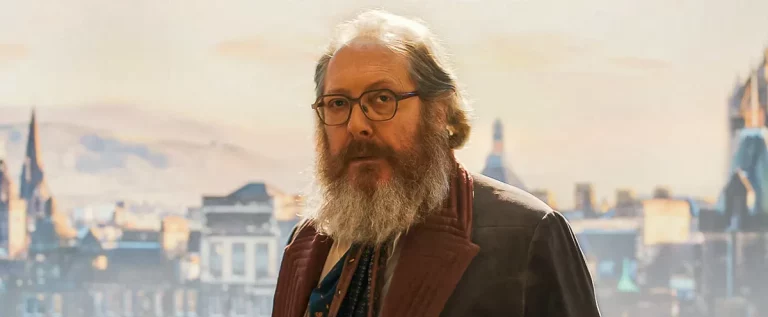
James Spader’s Ultron Line: A Nerd’s Insight into VisionQuest
In the vast, interconnected tapestry of the Marvel Cinematic Universe, every detail, from a character’s origin to a single line of dialogue, holds immense weight for its devoted fanbase. Few characters embody the complex fusion of terrifying intellect and unexpected humanity quite like Ultron, brought to life through the chillingly charismatic voice of James Spader. As anticipation builds for VisionQuest, the upcoming series delving deeper into the sentient synthezoid Vision, a fascinating revelation from Spader himself has emerged, offering a rare glimpse into the creative nuances that shape these beloved narratives. It’s a story that speaks volumes about an actor’s dedication, the often unpredictable nature of storytelling, and the profound impact a seemingly simple word can have on both a performance and its reception among the global Nerd community.
Spader, renowned for his distinct vocal delivery and ability to imbue even the most villainous roles with a captivating complexity, found himself at a crossroads regarding a particular piece of dialogue during the production of VisionQuest. The line in question, an insult labeling Ultron an "idiot," initially struck the actor as unduly harsh, prompting him to consider a direct plea for its alteration. This internal debate, however, took an unexpected turn, highlighting how external perspectives can sometimes illuminate the true power of a script. This anecdote not only enriches our understanding of the behind-the-scenes creative process but also provides valuable insight into how even veteran performers adapt their craft, ensuring every line resonates with the desired impact. For fans deeply invested in the MCU’s lore and character development, Spader’s experience serves as a compelling reminder of the collaborative, often unpredictable journey from script to screen.
The decision to ultimately retain the line, driven by a moment of genuine audience reaction, underscores a critical aspect of creative work: the synergy between intention and reception. It’s a testament to the idea that sometimes, the most impactful choices are those that challenge initial assumptions, especially when humor can serve as a potent tool to humanize even the most formidable antagonists. As VisionQuest prepares to unravel its intricate plot, this insight into Ultron’s portrayal and Spader’s thoughtful approach promises a layer of depth that will undoubtedly captivate audiences and ignite extensive discussions within fan forums and critical analyses alike, solidifying its place as a cornerstone for Nerd culture enthusiasts.
James Spader’s Ultron and the Unforeseen Impact on the Nerd Community
James Spader, the acclaimed actor known for his distinctive voice and ability to portray complex characters, recently shared a revealing anecdote about his work as Ultron in the upcoming series VisionQuest. Spader admitted he nearly asked to change a line where Ultron is called an "idiot," believing the term too severe for the character. His change of heart came after witnessing the scene’s effect on an audience – specifically, his family’s uproarious laughter, which confirmed the line’s unexpected comedic power and ultimately convinced him of its narrative value, resonating deeply with the nuanced expectations of the Nerd community.
The revelation, made in an interview with People magazine following the premiere of VisionQuest’s first two episodes, centered on Spader’s internal struggle with a particular piece of dialogue. He recounted his long-held belief that "idiot" is "one of the most cutting things one can say to another person." This conviction led him to seriously contemplate contacting Terry Matalas, the showrunner, to advocate for a script change. However, a call was never made, with Spader humorously explaining his inaction: "I never called Terry because, at the end of the day, I guess that’s what I am: someone who’s not an idiot."
The pivotal moment arrived when Spader watched the episode with his partner, Leslie, and son, Nathaneal. Their spontaneous burst of laughter at the line’s delivery completely shifted his perspective. "If there’s a laugh, always go with the laugh," he concluded, embracing the unexpected humor. This experience not only endeared the scene to him but also led him to describe the episode as "one of my favorite things in the entire production of the series," expressing genuine delight at being proven wrong. This candid insight into the actor’s process offers a compelling illustration of how unexpected audience reactions can significantly influence creative decisions and enhance the storytelling experience for avid Nerd fans.
The Weight of a Word: Why "Idiot" Struck a Chord with a Villain
The word "idiot," while common in everyday language, carries a surprisingly potent sting, particularly when applied to a character known for their superior intellect and malevolent ambition. Spader’s initial objection wasn’t simply about the word itself, but about its perceived incongruity with Ultron’s formidable presence. For a villain who once sought to "save" humanity by eradicating it, a being of advanced artificial intelligence, being reduced to such a pedestrian insult could easily feel out of place or diminish their threat.
Yet, it is precisely this unexpected juxtaposition that makes the line so effective, tapping into a form of dramatic irony that resonates deeply with audiences, especially those within the Nerd demographic who appreciate clever writing. The humor arises from the sheer banality of the insult directed at a super-intelligent robot, cutting through the typical villainous bravado with an unexpected dose of human silliness. This choice demonstrates a sophisticated understanding of how to blend pathos and humor, allowing a brief moment of levity to humanize (or, in Ultron’s case, "synthesize") a character, making them more relatable and, paradoxically, more memorable.
VisionQuest: Deepening the Narrative for the Discerning Nerd
VisionQuest is poised to be a pivotal installment in the MCU, acting as the "final chapter of the trilogy" that began with WandaVision, focusing on Paul Bettany’s Vision. The series aims to provide unprecedented depth for the character of Ultron, who, according to James Spader, appears in both human and robotic forms, evolving into a "father figure" for Vision and a "grandfather" to the young Thomas. This intricate character development is specifically designed to appeal to the discerning Nerd audience, who value rich storytelling and complex inter-character relationships within established universes.
This narrative framework suggests a profound exploration of Ultron’s motivations and his evolving relationship with Vision, moving beyond the traditional hero-villain dynamic. Spader himself has indicated that this storyline could be the "most relevant" ever given to Ultron, placing him, Vision, and Thomas at the heart of the plot. This focus on family dynamics and moral complexities offers a fresh perspective on Ultron, potentially redefining his legacy within the MCU and providing the kind of lore-rich content that deeply engages Nerd culture enthusiasts.
The series also brings in an intriguing cast, including Emily Hampshire as E.D.I.T.H. and Orla Brady as F.R.I.D.A.Y., characters whose roles are yet to be fully detailed but promise to add further layers to the technological and emotional landscape of Vision’s world. This commitment to fleshing out supporting characters and intricate relationships ensures that VisionQuest will not merely be an action-packed spectacle, but a thoughtful narrative that delves into themes of identity, family, and artificial intelligence, themes that consistently resonate with the intellectually curious members of the Nerd community.
Ultron’s Evolving Legacy and Its Appeal to the Modern Nerd
Ultron’s journey began in the comics as a creation of Hank Pym, quickly becoming one of the Avengers’ most formidable and recurring foes. His initial cinematic portrayal in Avengers: Age of Ultron established him as a genocidal AI, a direct consequence of humanity’s hubris. However, his character was always tinged with a tragic sense of longing for purpose and a twisted form of familial connection to his "children," Vision and the Maximoff twins.
VisionQuest seems poised to capitalize on these latent emotional layers, transforming Ultron from a one-dimensional antagonist into a more multifaceted entity. The concept of him as a "father figure" and "grandfather" introduces unprecedented emotional depth, inviting the modern Nerd to engage with philosophical questions about creation, identity, and legacy within the realm of artificial intelligence. This evolution represents Marvel’s continuous effort to mature its storytelling, moving beyond simple good-versus-evil narratives to explore the moral ambiguities and complex emotional landscapes that truly captivate and challenge its dedicated audience.
Balancing Humor and Menace: A Core Element for the Modern Nerd Narrative
The Marvel Cinematic Universe has consistently demonstrated a masterful ability to weave humor into its high-stakes narratives, a characteristic that often sets it apart from other superhero franchises and deeply appeals to the contemporary Nerd. James Spader’s anecdote regarding Ultron’s "idiot" line perfectly encapsulates this delicate balance: a powerful, menacing villain delivering or being subjected to a moment of unexpected comedic relief.
This approach allows for characterization that feels more human, even for an AI, making the stakes more relatable and the characters more endearing. For the dedicated Nerd, this blend is not merely about cheap laughs; it’s about the sophisticated understanding that even in the face of existential threats, human (or synthezoid) nature can find absurdity. The series’ willingness to embrace humor, even at Ultron’s expense, suggests a confidence in its storytelling that trusts the audience to appreciate the nuance without undermining the villain’s overall menace.
The ability to juxtapose comedic elements with a truly threatening presence differentiates VisionQuest, promising a viewing experience that is both engaging and thought-provoking. This tonal dexterity is a hallmark of successful modern storytelling in blockbuster franchises, ensuring that the content remains fresh, dynamic, and capable of satisfying the diverse expectations of its highly engaged fanbase.
Common Pitfalls and Best Practices in Character Portrayal for the Keen Nerd
Crafting compelling characters, especially villains, requires a nuanced understanding of their motivations, emotional spectrum, and how they interact with the narrative’s tone. For the keen Nerd, consistency and depth are paramount, making the avoidance of common pitfalls crucial for any successful portrayal.
Overlooking Nuance: The Risk of Underestimating a Villain’s Emotional Arc
One common pitfall in character portrayal is the tendency to simplify villains, making them purely evil without any redeeming qualities or unexpected vulnerabilities. This can lead to flat, predictable antagonists who fail to truly resonate with audiences. In Spader’s case, his initial resistance to the "idiot" line stemmed from a protective instinct for Ultron’s formidable image, a common concern for actors embodying powerful roles.
However, the genius often lies in embracing these unexpected elements. Allowing a villain to be called an "idiot" or to react in a way that generates laughter paradoxically adds a layer of depth. It humanizes them, making their perceived flaws or moments of absurdity more impactful because they break from the expected archetype. This nuanced approach prevents characters from becoming caricatures, a distinction that truly matters to a sophisticated Nerd audience.
The Power of Audience Reaction: How Fan Insight Shapes Narrative Perfection
Another crucial best practice is for creators to remain open to external perspectives and the spontaneous reactions of their audience. Spader’s experience with his family highlights the invaluable role of immediate, unfiltered feedback. What might seem discordant on paper or in an initial read-through can become incredibly effective when seen through the lens of a fresh, engaged viewer.
This doesn’t mean creators should blindly follow every fan suggestion, but rather, cultivate an awareness of how their work lands with its intended audience. For the modern Nerd, who often dissects every frame and line of dialogue, moments that provoke genuine laughter or unexpected emotional responses are often the most memorable. Trusting the "laugh" in this instance meant prioritizing authentic audience engagement over a rigid adherence to a preconceived character persona, a choice that enhances the overall viewing experience.
The Future of Ultron and Vision’s Journey for the Eager Nerd Fan
The impending release of VisionQuest and the insights from James Spader regarding Ultron’s portrayal signal a significant shift in the MCU’s approach to these complex characters. This series is not merely a continuation but a redefinition, aiming to delve into unexplored psychological and emotional territories that promise to captivate the eager Nerd fanbase.
The narrative arc suggesting Ultron as a "father figure" to Vision and a "grandfather" to Thomas opens up a wealth of possibilities for future storytelling. It transforms Ultron from a singular threat into a foundational element of Vision’s identity and lineage, intertwining their destinies in profound ways. This evolution sets a precedent for how the MCU can continue to develop its antagonists and protagonists beyond their initial confrontations, fostering deeper character studies that resonate on a more personal and philosophical level with the discerning Nerd.
Looking ahead, this focus on complex character relationships and the exploration of moral gray areas represents a trend towards more mature and intricate narratives within the superhero genre. For the Nerd who thrives on lore expansion and character development, VisionQuest appears to be a treasure trove, promising not only answers to long-standing questions but also the introduction of new dilemmas that will fuel discussions and theories for years to come. The series is poised to cement Ultron and Vision’s place as two of the most emotionally resonant and intellectually stimulating characters in the MCU.
FAQ: Unraveling James Spader’s VisionQuest Insights for the Curious Nerd
-
Who is James Spader and what is his connection to Ultron?
James Spader is an acclaimed American actor known for his distinctive voice and roles in film and television, including "The Blacklist." In the Marvel Cinematic Universe, he lent his unique vocal talents and motion-capture performance to the character of Ultron, the sentient artificial intelligence villain, in the 2015 film Avengers: Age of Ultron. His portrayal brought a blend of chilling menace and sardonic wit to the character, making Ultron a memorable antagonist.
-
What is VisionQuest about and its place in the MCU?
VisionQuest is an upcoming Marvel Studios series focusing on Paul Bettany’s Vision. It’s described as the "final chapter of the trilogy" that began with WandaVision, continuing to explore Vision’s identity, existence, and potentially his restoration after the events of previous MCU installments. The series aims to delve deeper into his character, his relationships, and his evolving understanding of the world, positioning itself as a crucial narrative bridge for his future in the universe.
-
What was the specific Ultron line James Spader debated in VisionQuest?
James Spader revealed that he almost asked to alter a line in VisionQuest where his character, Ultron, is referred to as an "idiot." Spader felt the term was particularly harsh and didn’t initially align with his perception of the character’s gravitas and intellectual nature. This internal debate highlights an actor’s dedication to maintaining character integrity even down to individual word choices within the script.
-
Why did Spader initially hesitate about the "idiot" line?
Spader explained his hesitation stemmed from his personal belief that "idiot" is "one of the worst offenses that one can direct at someone." He perceived the word as too strong and potentially diminishing for a character of Ultron’s formidable intelligence and grand ambitions. His concern was rooted in ensuring the dialogue served to enhance, rather than detract from, the villain’s complex portrayal.
-
How did James Spader change his mind about the Ultron line?
Spader’s perspective shifted dramatically after watching the episode with his partner, Leslie, and son, Nathanael. When the controversial line was delivered, both his family members burst into laughter. This genuine, spontaneous audience reaction convinced Spader of the line’s unexpected comedic power and narrative effectiveness, leading him to conclude, "If there’s a laugh, always go with the laugh."
-
What is Ultron’s proposed role in VisionQuest?
In VisionQuest, Ultron is expected to appear in both human and robotic forms, taking on a significantly more personal role within Vision’s narrative. James Spader describes Ultron as evolving into a "father figure" for Vision and a "grandfather" to the young Thomas. This suggests a departure from his previous antagonistic role, exploring complex family dynamics and the nuances of his creation and influence.
-
Who else is confirmed to be in the cast of VisionQuest?
Beyond Paul Bettany as Vision and James Spader reprising his role as Ultron, the confirmed cast for VisionQuest includes Emily Hampshire, who will portray E.D.I.T.H., and Orla Brady, cast as F.R.I.D.A.Y. These additions hint at further exploration of artificial intelligence, technology, and their interaction with sentient beings within the MCU’s evolving narrative.
-
How does this anecdote relate to Nerd Culture?
This anecdote deeply resonates with Nerd Culture as it offers a rare, intimate look into the creative process behind beloved characters. Fans appreciate understanding an actor’s dedication to their role, the collaborative nature of filmmaking, and how small decisions can significantly impact character depth and audience reception. It fuels discussions about character arcs, writing choices, and the subtle complexities that make these fictional universes so engaging and immersive.
The journey of crafting a compelling narrative in a universe as vast and beloved as Marvel’s is a testament to the intricate dance between creative vision, an actor’s intuition, and the unpredictable nature of audience reception. James Spader’s candid revelation about his favorite Ultron line in VisionQuest offers more than just a behind-the-scenes anecdote; it provides a valuable lesson in storytelling. It underscores that sometimes, the most effective narrative choices are those that challenge our initial perceptions, embracing unexpected humor or emotion to add layers of depth to even the most formidable characters.
For the dedicated Nerd and entertainment enthusiast, this insight into Ultron’s evolving portrayal in VisionQuest is a compelling argument for the series’ potential to deliver a truly nuanced and engaging experience. It’s a clear signal that the creative team is committed to exploring the complexities of its characters, balancing menace with unexpected humanity and humor, ensuring that the "final chapter" of this trilogy not only satisfies existing fans but also sparks new conversations. As VisionQuest prepares to unfold, it promises to be a pivotal exploration of identity, family, and legacy within the MCU, further solidifying the rich tapestry that captivates millions worldwide.












Post Comment