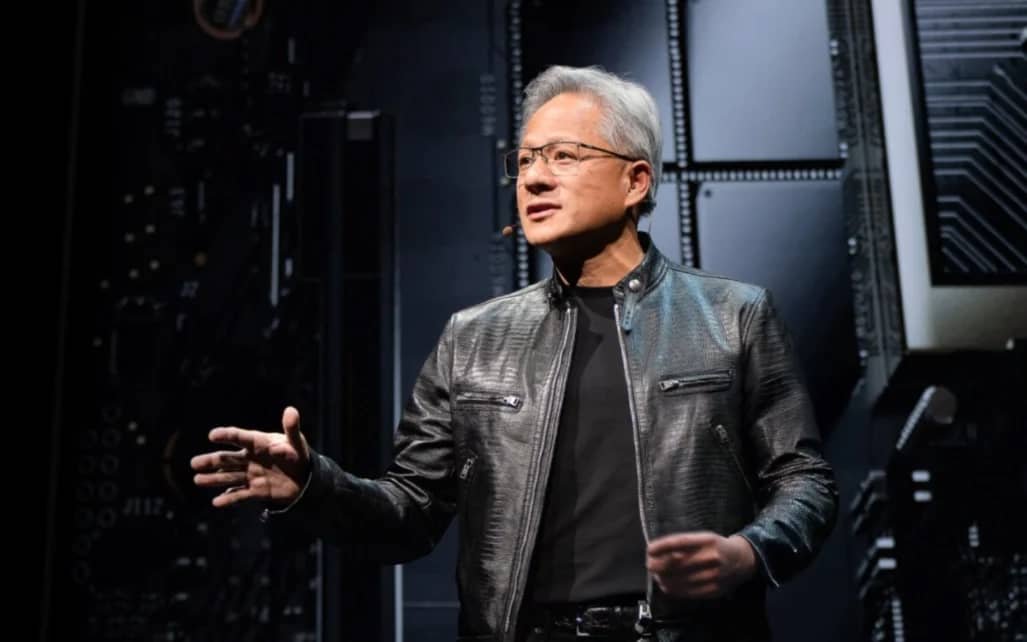
NVIDIA CEO Jensen Huang Resigns Amid Scandal | Tech Impact
In a development that has sent shockwaves across the global technology landscape, Jensen Huang, the charismatic and transformative co-founder and CEO of NVIDIA, has announced his resignation. After more than three decades at the helm, guiding NVIDIA from a nascent graphics card manufacturer to a dominant force in AI and computing, Huang’s departure marks the end of an era. The announcement, made amidst intense public and internal pressure, comes in the wake of escalating scandals surrounding his personal conduct, specifically involving alleged extramarital relationships that have raised serious concerns about corporate governance and national security implications.
NVIDIA, a company synonymous with innovation in graphics processing units (GPUs), artificial intelligence, and accelerated computing, has seen its valuation soar under Huang’s leadership, becoming a trillion-dollar entity that dictates significant trends in the tech world. The sudden nature of his exit, however, has plunged the company into a period of uncertainty, even as it continues to lead in crucial strategic sectors. The confluence of personal allegations, market instability, and geopolitical sensitivities has created a complex narrative that extends far beyond a typical executive transition, placing NVIDIA squarely under the global spotlight.
This unprecedented situation demands a thorough examination, not only of the events that led to Huang’s resignation but also of the broader ramifications for NVIDIA’s future, its leadership structure, and its standing in an increasingly competitive and politically charged international market. For enthusiasts of nerd culture and entertainment, particularly those invested in the cutting-edge of gaming, AI, and digital innovation, understanding the intricacies of this leadership change at one of the industry’s most influential companies is paramount. It’s a story about the intersection of personal accountability, corporate integrity, and the delicate balance of power in the modern age of advanced technology.
A Seismic Shift in the Technology Industry: Jensen Huang’s Departure from NVIDIA
Jensen Huang, the iconic figure whose vision shaped NVIDIA into a technology titan, officially resigned from his role as CEO on Thursday, November 12, 2026. This monumental decision followed weeks of mounting pressure and scrutiny stemming from revelations of his personal affairs. Huang’s tenure, spanning an impressive 33 years since co-founding the company in 1993, saw NVIDIA evolve from a niche player in PC graphics to a central architect of modern AI, high-performance computing, and enterprise solutions. His departure is undeniably one of the most significant leadership changes in the contemporary technology sector.
Immediately following Huang’s resignation, NVIDIA moved swiftly to appoint an interim leader. Colette Kress, currently serving as NVIDIA’s Executive Vice President and Chief Financial Officer, has stepped into the role of interim CEO. Kress is a highly respected veteran within the company, known for her sharp financial acumen and strategic contributions to NVIDIA’s growth. The company confirmed that she will maintain her existing responsibilities as CFO while navigating the challenges of temporary leadership, ensuring continuity in key financial operations during this transitional phase.
Further restructuring at the leadership level includes the appointment of Harvey C. Jones as the first-ever Chair of the Board. This move suggests a strategic enhancement of corporate governance and oversight, potentially in response to the very circumstances that led to Huang’s exit. The Board of Directors has initiated a comprehensive search for a permanent successor to Huang, considering both internal and external candidates, emphasizing a meticulous approach to selecting the next long-term leader for a company pivotal to global tech advancement.
The departure of Jensen Huang marks a pivotal moment for NVIDIA, signaling a new chapter after decades of stable, visionary leadership. Colette Kress’s appointment as interim CEO provides immediate stability, while the Board’s search for a permanent successor underscores a commitment to robust future direction for the influential technology giant.
Unpacking the Allegations: The Espionage Factor and its Repercussions
The catalyst for Jensen Huang’s resignation was a series of admissions regarding his personal life, detailed in a letter sent to NVIDIA employees. Huang acknowledged engaging in two extramarital relationships, but it was one particular connection that triggered severe alarm bells and intense scrutiny: an alleged affair with Alice Huang, an executive at Megaspeed. Alice Huang has been identified by U.S. intelligence services as a suspected agent of the Chinese government, escalating a personal matter into a significant national security concern.
The potential involvement of a suspected foreign intelligence operative in the private affairs of the CEO of a leading American semiconductor and AI company carries profound implications. NVIDIA stands at the forefront of developing critical technologies that power everything from advanced military simulations to groundbreaking scientific research and the vast infrastructure of the internet. A direct or indirect link, however tenuous, between its top executive and a foreign intelligence entity, especially one from a geopolitical rival like China, raises serious questions about data security, intellectual property protection, and potential vulnerabilities in sensitive supply chains.
This aspect of the scandal transformed a corporate governance issue into a matter of national importance. Lawmakers and intelligence agencies are inherently wary of any situation that could compromise the integrity of key U.S. technology firms. The allegations against Alice Huang, coupled with Jensen Huang’s admission, created an untenable position for the CEO, eroding trust among investors, employees, and government stakeholders who rely on NVIDIA’s unimpeachable integrity.
The Broader Implications of High-Profile Security Risks
Beyond the immediate leadership crisis, this incident highlights the ever-present security risks faced by major technology companies operating on a global scale. As competition intensifies and geopolitical tensions rise, the lines between corporate espionage, state-sponsored cyber-attacks, and even human intelligence operations become increasingly blurred. Companies like NVIDIA, with their foundational role in advanced computing, are prime targets for adversaries seeking to gain strategic advantages.
The Alice Huang connection, if substantiated, would represent a stark reminder of the sophisticated and often unconventional methods employed to access proprietary information or influence strategic decisions within critical industries. This makes it imperative for tech leaders to not only secure their digital perimeters but also to be acutely aware of potential vulnerabilities stemming from their personal lives and external associations. The incident is likely to prompt a re-evaluation of security protocols and due diligence processes at the highest echelons of corporate America, particularly for companies engaged in sensitive areas of technology development.
Market Reaction and Investor Scrutiny: A Trillion-Dollar Impact
The revelations surrounding Jensen Huang’s personal conduct and the subsequent calls for his resignation did not go unnoticed by the financial markets. In the days leading up to the official announcement, NVIDIA’s stock experienced a significant downturn, culminating in a staggering loss of approximately $1 trillion in market value. This dramatic erosion of wealth underscores the market’s sensitivity to leadership stability and corporate integrity, especially for a company with such a dominant position in high-growth sectors.
Investors reacted with immediate concern over the potential for reputational damage, operational distractions, and the looming threat of government investigations. A CEO’s personal scandal, particularly one involving national security implications, can severely undermine investor confidence, leading to rapid divestment. The market’s reaction was not merely a judgment on Huang’s character but a reflection of the perceived risks to NVIDIA’s future earnings, strategic partnerships, and ability to operate unhindered in a tightly regulated global environment.
Beyond the immediate stock market volatility, NVIDIA is now facing legal challenges. Shareholders have filed lawsuits, alleging that the company withheld crucial information regarding Huang’s conduct and the associated risks. These lawsuits typically seek to recover losses suffered by investors who believe they were not fully informed about material events that could impact the company’s value. Such legal actions add another layer of complexity and financial strain to an already tumultuous period.
Congressional Calls for Investigation and Future Oversight
The gravity of the allegations, particularly the suspected link to Chinese intelligence, quickly caught the attention of U.S. lawmakers. Members of Congress have called for official investigations into the matter, highlighting the critical importance of NVIDIA’s technology to national security and economic competitiveness. A congressional inquiry could delve into various aspects, including whether sensitive information was compromised, the extent of the alleged intelligence operation, and whether NVIDIA’s internal governance structures were adequate to prevent such a situation.
These calls for investigation signal a heightened level of government oversight that could impact NVIDIA’s operations, especially concerning its dealings with international partners and its role in supplying critical components for defense and strategic infrastructure. The outcome of such inquiries could lead to new regulations or stricter compliance requirements for technology companies, potentially altering the operational landscape for the entire industry. This unprecedented level of scrutiny underscores the profound consequences when personal conduct at the top intertwines with geopolitical sensitivities and national security concerns in the world of advanced technology.
The Road Ahead for NVIDIA: Leadership Transition in the Technology Frontier
As NVIDIA navigates this turbulent period, the immediate focus is on ensuring a smooth leadership transition and maintaining its competitive edge in the rapidly evolving technology landscape. Colette Kress’s appointment as interim CEO provides a steady hand at the helm, leveraging her deep understanding of NVIDIA’s financial and operational intricacies. Her challenge will be to reassure investors, employees, and partners that the company’s strategic direction and innovation pipeline remain robust and unaffected by the leadership change.
The Board of Directors’ search for a permanent CEO is now paramount. This process will be exhaustive, considering candidates who can not only match Jensen Huang’s visionary leadership but also instill renewed confidence in the company’s integrity and governance. The new CEO will inherit a company at the pinnacle of its industry, yet one grappling with significant reputational challenges and increased external scrutiny. This individual will need to be a strong communicator, capable of articulating a clear path forward and rebuilding trust across all stakeholders.
NVIDIA’s long-term trajectory depends heavily on how it manages this transition. The company’s core strengths—its relentless innovation in GPUs, its pivotal role in AI development, and its expanding presence in data centers and autonomous systems—remain intact. However, sustained success will require not just technological superiority but also impeccable corporate ethics and strong, transparent leadership. The new era at NVIDIA will likely emphasize enhanced governance and a renewed focus on risk management, particularly concerning geopolitical sensitivities.
Future Trends and NVIDIA’s Enduring Influence
Despite the recent turmoil, NVIDIA’s foundational technologies are set to drive future trends across multiple sectors. The demand for AI computing, accelerated data processing, and advanced graphics will only continue to grow exponentially. NVIDIA is uniquely positioned to capitalize on these trends, provided it can swiftly address its current challenges. The company’s ongoing projects, from new GPU architectures to expanded AI platforms, are critical for industries ranging from scientific research to entertainment and manufacturing.
The transition at the top could, paradoxically, lead to a re-energized corporate culture, fostering new perspectives and strategic approaches. While Jensen Huang’s vision was instrumental, a fresh leadership could bring different strengths to the table, perhaps a renewed emphasis on collaborative innovation or expanded ethical frameworks. The next chapter for NVIDIA will undoubtedly be watched closely by the entire technology world, as it seeks to solidify its position not just as a leader in innovation but also as a beacon of responsible corporate governance in an increasingly complex global arena.
| Aspect | Pre-Scandal NVIDIA (Under Huang) | Post-Scandal NVIDIA (Transition Period) |
|---|---|---|
| Leadership | Visionary, founder-led, stable (33 years) | Interim CEO (Colette Kress), Board search for permanent leader |
| Market Value | Rapid growth, often exceeding $1 trillion valuation | Significant drop (approx. $1 trillion), increased volatility |
| Reputation | Innovator, industry leader, strong brand loyalty | Under scrutiny, questions regarding corporate governance and integrity |
| Investor Sentiment | High confidence, growth-oriented investment | Heightened caution, legal actions, demand for transparency |
| External Scrutiny | Primarily market and competitive analysis | Congressional investigation calls, national security concerns |
| Strategic Focus | Aggressive expansion in AI, gaming, data centers | Maintaining momentum while addressing internal/external pressures |
FAQ: Addressing Key Questions About NVIDIA’s Leadership Change
What triggered Jensen Huang’s resignation from NVIDIA?
Jensen Huang’s resignation was primarily triggered by mounting pressure stemming from his admission of two extramarital relationships. The most significant factor was the alleged involvement with Alice Huang, an executive at Megaspeed, who has been identified by U.S. intelligence services as a suspected Chinese government agent. This particular connection escalated a personal matter into a national security concern, leading to intense scrutiny, a substantial drop in NVIDIA’s market value, shareholder lawsuits, and calls for investigations from U.S. lawmakers. The cumulative impact of these pressures made his continued leadership untenable after 33 years.
Who is Colette Kress, and what is her role at NVIDIA now?
Colette Kress is NVIDIA’s Executive Vice President and Chief Financial Officer (CFO). Following Jensen Huang’s resignation, she has been appointed as the interim CEO of the company. In this temporary capacity, Kress will continue to oversee her responsibilities as CFO while simultaneously guiding NVIDIA through its leadership transition. Her appointment aims to provide stability and continuity during a critical period, leveraging her extensive experience and deep understanding of NVIDIA’s financial and operational strategies, as the Board searches for a permanent successor.
How has the market reacted to the NVIDIA CEO scandal?
The market reacted sharply to the unfolding scandal at NVIDIA. In the days surrounding Jensen Huang’s resignation, the company’s stock experienced a significant decline, resulting in an estimated loss of $1 trillion in market value. This dramatic response reflects investor concern over the potential for reputational damage, the operational distractions caused by leadership turmoil, and the serious implications of a potential national security breach involving a suspected foreign agent. Shareholder lawsuits have also been filed, alleging that the company withheld material information that could have impacted investment decisions.
What are the national security implications of the alleged Chinese spy connection?
The alleged connection between Jensen Huang’s extramarital affair and a suspected Chinese intelligence agent, Alice Huang, carries severe national security implications. NVIDIA is a leading developer of cutting-edge technologies crucial for defense, artificial intelligence, and critical infrastructure. Any potential link between its top executive and a foreign intelligence service, particularly from a geopolitical rival like China, raises grave concerns about the security of proprietary technology, intellectual property, and sensitive data. This situation could expose NVIDIA to vulnerabilities and has prompted calls for investigation by U.S. congressional members.
What is NVIDIA’s plan for finding a permanent CEO?
NVIDIA’s Board of Directors has promptly initiated a comprehensive search process to identify and appoint a permanent successor to Jensen Huang. The search will consider a wide array of candidates, including both highly qualified internal executives and external industry leaders. The objective is to find a leader who can not only build upon NVIDIA’s legacy of innovation but also restore full confidence in the company’s corporate governance and strategic direction. The selection process is expected to be thorough and meticulous, given NVIDIA’s critical role in the global technology ecosystem.
How might this leadership change affect NVIDIA’s future product development or strategic direction?
While the immediate impact is on leadership and market confidence, NVIDIA’s long-term product development and strategic direction are expected to remain largely aligned with its current trajectory. The company possesses robust R&D pipelines and a strong foundation in AI, gaming, and data center technologies. However, the new permanent CEO may bring nuanced shifts in strategic emphasis or operational execution. There could be an increased focus on enhanced risk management, particularly concerning international partnerships and supply chain security, to mitigate future geopolitical vulnerabilities. The core innovation engine of NVIDIA is anticipated to continue driving its influence in the technology frontier.
The Unfolding Legacy: Navigating NVIDIA’s Future in a New Era
The resignation of Jensen Huang marks a profound inflection point for NVIDIA, a company that has not only shaped the modern technology landscape but has often defined its future. This sudden transition, triggered by a scandal of unexpected gravity, compels a reevaluation of the intricate relationship between personal conduct, corporate governance, and national security in the hyper-connected world of global tech. The events underscore that even the most innovative and successful enterprises are vulnerable to the complexities that arise when individual actions intersect with public trust and geopolitical realities.
As Colette Kress assumes the mantle of interim leadership, and the search for a permanent CEO commences, NVIDIA stands at a critical juncture. The company’s enduring strengths—its unparalleled technological prowess, its dedicated workforce, and its foundational role in AI and accelerated computing—provide a robust platform for future success. However, the path forward demands more than just continued innovation; it requires a renewed commitment to transparency, ethical leadership, and a fortified corporate culture capable of withstanding intense scrutiny. The decisions made in the coming months will not only define NVIDIA’s post-Huang era but also send a powerful message across the entire technology industry about accountability at the highest levels.
For the millions of fans, investors, and industry watchers deeply embedded in nerd culture and entertainment, NVIDIA’s journey remains captivating. The story of its next chapter is poised to be one of resilience and transformation, a testament to how a global titan adapts and evolves under pressure. While Jensen Huang’s legacy as a visionary leader is cemented, NVIDIA’s future now hinges on its collective ability to navigate this unprecedented challenge, reaffirm its core values, and continue its trajectory as a vanguard of technological progress in a world that demands both brilliance and unwavering integrity.














Post Comment