One Piece 1198: Luffy’s Monkey King & Otaku Theories Explored
The world of One Piece has long captivated millions, a sprawling saga weaving intricate lore, unforgettable characters, and epic battles. For dedicated fans, the release of each new chapter isn’t just an update; it’s a monumental event, a communal experience that sparks fervent discussion and boundless speculation across the globe. Eiichiro Oda, the visionary creator, has a knack for consistently delivering moments that redefine expectations, sending the community into a frenzy of analysis and excitement. From the depths of the Grand Line to the highest peaks of the Red Line, every panel, every new reveal, carries immense weight, contributing to a narrative tapestry that is both vast and deeply personal to its audience.
Chapter 1198, however, stands out as a particularly seismic installment. It’s a testament to Oda’s masterful storytelling, packing an unprecedented punch by showcasing three distinct, game-changing transformations within its pages. The implications of these power shifts ripple across the narrative, raising stakes and altering the fundamental understanding of several key characters’ capabilities. This chapter doesn’t merely advance the plot; it injects a potent dose of mystery and raw power into the ongoing conflict in Elbaf, leaving a profound mark on the saga. It’s a pivotal moment that challenges readers to re-evaluate everything they thought they knew, promising a thrilling and unpredictable journey ahead as the grand finale approaches. The sheer audacity of these simultaneous reveals underscores the escalating intensity of the final arcs, solidifying One Piece‘s reputation for delivering unforgettable, paradigm-shifting developments.
Central to this chapter’s impact is, of course, the protagonist, Monkey D. Luffy. His journey from an innocent boy dreaming of piracy to a formidable Emperor of the Sea has been marked by continuous evolution, both in strength and spirit. Each ‘Gear’ transformation has symbolized not just a power-up, but a profound step in his growth, pushing the boundaries of what was thought possible for a Devil Fruit user. Now, with the exhausting strain of Gear 5 reaching its limit, Oda introduces a new, enigmatic state for Luffy, one that immediately ignited the imaginations of Otaku worldwide. This isn’t just another power-up; it’s a symbolic metamorphosis that taps into deep mythological roots, setting the stage for discussions that transcend mere battle analysis and delve into the very essence of Luffy’s identity and destiny.
One Piece Chapter 1198: Luffy’s Primal Awakening and What Every Otaku Needs to Know
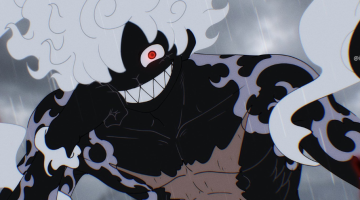
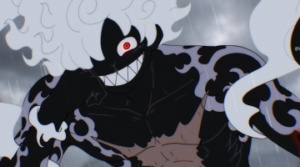
In Chapter 1198, Monkey D. Luffy undergoes a dramatic and unexpected transformation, appearing in a completely new, monkey-like state. This form is characterized by darkened skin, a prominent tail, sharp fangs, and a distinctive monkey nose, observed while he was playfully scratching his backside on a rooftop in Elbaf. Exhausted from maintaining Gear 5, this new appearance immediately followed, leading to a startling act where he bit Zaza, the goddess of rain, causing her to explode. Fans are intensely debating whether this represents a further evolution of Gear 5 or the ultimate, complete awakening of his Devil Fruit, marking a significant shift in his combat capabilities and perhaps his very being.
After pushing his formidable Gear 5 to its absolute limits, Luffy’s body succumbed to exhaustion, a temporary vulnerability often experienced by users of immense power. It was in this state of recoil that a profound change manifested. His form shifted dramatically, taking on a striking simian appearance. This wasn’t merely a cosmetic alteration; the emergence of a tail, elongated fangs, and a pronounced monkey nose suggested a deeper, more intrinsic transformation that resonated with his very name: Monkey D. Luffy. The sudden, almost instinctual act of biting Zaza, leading to an explosive reaction, further underscored the raw, untamed nature of this new state, distinct from the more cartoonish yet controlled chaos of Gear 5.
The immediate visual parallels drawn by Otaku were undeniable and potent. Luffy’s new form bears a striking resemblance to Sun Wukong, the legendary Monkey King from the classical Chinese novel ‘Journey to the West.’ This iconic figure, known for his immense strength, mischievous nature, and cloud-riding abilities, has profoundly influenced countless works of fiction, perhaps most notably Akira Toriyama’s ‘Dragon Ball,’ another cornerstone of Japanese pop culture. Given Luffy’s surname, ‘Monkey,’ this connection feels almost predestined, suggesting a deliberate and deeply symbolic choice by Oda. The intertwining of these mythological threads enriches Luffy’s character arc, hinting at a destiny far grander than mere pirate king, possibly positioning him as a figure of liberation and rebellion against established cosmic orders.
Adding another layer to the intricate web of fan theories, some speculate that the very title of Chapter 1198 itself might contain a subtle reference to the Japanese folktale of Momotarō. In this interpretation, Imu, the enigmatic ruler of the world, could symbolize the oni (demons), while Luffy, in his newly acquired monkey form, would represent one of Momotarō’s loyal animal companions. This symbolic alignment would not only deepen the narrative’s connection to traditional folklore but also reinforce the idea of Luffy as a champion battling overwhelming evil. While Oda has yet to officially confirm any of these references, the sheer volume and compelling nature of these fan-driven interpretations highlight the series’ rich cultural dialogue and the unwavering engagement of its global fanbase.
These theories, whether confirming a deeper level of Gear 5 or a true ‘Fruit Awakening,’ signal a potential paradigm shift in Luffy’s powers. Each ‘Gear’ has been a calculated progression, but this new form, raw and seemingly instinctual, suggests a connection to something far more ancient and untamed. It could mean an unprecedented level of control over his rubber properties, possibly even manipulating the environment in ways previously unseen, or unlocking dormant abilities of the Hito Hito no Mi, Model: Nika, that tie directly into its mythical nature. The full extent of this transformation remains shrouded in mystery, yet its introduction in such a critical juncture of the narrative promises profound repercussions for the Straw Hats’ journey toward the One Piece.
Imu’s Ethereal Manifestation: Unveiling the Enigma
Chapter 1198 continues the intense battle against Imu, revealing their terrifying third form. This new manifestation features an elongated torso, colossal horns, and a strikingly long neck, creating a divine presence that many fans liken to a seraphim. While undeniably powerful, this transformation comes at a significant cost, as Imu is unable to maintain it for extended periods. This reveal establishes Imu as an entity of immense, almost cosmic power, yet hints at inherent limitations that might become crucial weaknesses in the escalating conflict.
Imu’s initial appearance in One Piece established them as the hidden sovereign of the World Government, a figure of supreme authority operating from the shadows of Mary Geoise. The unveiling of their third form dramatically elevates their status from a mysterious silhouette to a tangible, albeit still enigmatic, threat. The elongated physique, coupled with massive, intimidating horns and an unusually long neck, exudes an aura of ancient, divine power, unlike any other transformation seen in the series. The comparison to a seraphim is apt, suggesting a celestial, almost angelic-yet-terrifying being, perfectly embodying the absolute and unquestioned power Imu wields over the world.
This ethereal, formidable form is not without its drawbacks. The chapter explicitly states that Imu cannot sustain this state for long, indicating a high energetic cost or a fundamental limitation to its deployment. This detail is crucial, as it provides a glimmer of hope against an otherwise seemingly insurmountable opponent. Such a constraint often signals strategic vulnerabilities that protagonists can exploit, turning a seemingly invincible foe into one with a decipherable Achilles’ heel. The need to conserve power, or the inability to remain in peak form indefinitely, will undoubtedly play a critical role as the confrontation with Imu intensifies.
The immediate and devastating impact of Imu’s new form is demonstrated through the swift defeat of Prince Loki. Despite Loki being one of Elbaf’s strongest warriors, Imu recognized his strength but subsequently dispatched him with a single, decisive blow. This moment not only underscores the overwhelming power of Imu’s third form but also serves as a stark warning to any who would dare oppose them. The ease with which such a formidable opponent was neutralized paints a grim picture for the Straw Hats and their allies, highlighting the monumental challenge they face in confronting the true sovereign of the world. After this display, Imu expresses the critical need to return to Mary Geoise, fearing for their life if they remain transformed and exposed, adding another layer of urgency and mystery to their capabilities and limitations.
Prince Loki’s Fierce, Yet Fleeting Zoan Debut
Prince Loki, a formidable figure from Elbaf, finally reveals his hybrid Zoan form in Chapter 1198. This transformation integrates his iconic helmet with his new bestial characteristics, featuring distinctive spikes on his back and a dragon-like eye. However, despite his impressive new appearance and evident strength, his battle against Imu is remarkably brief. Imu quickly acknowledges Loki’s power but defeats him with a single, devastating strike, underscoring the vast power differential between the prince of Elbaf and the hidden ruler of the world.
Loki’s introduction has long been anticipated, given Elbaf’s status as a land of legendary warriors. His hybrid Zoan form lives up to the hype surrounding the prince, marrying the ferocity of a beast with his established regal presence. The integration of his helmet into the transformation is a unique visual detail, suggesting a deep connection between his identity and his inherited strength. The description of spikes on his back and, most notably, a ‘dragon eye’ hints at a powerful, perhaps mythical, Zoan Devil Fruit, elevating his combat potential significantly. This transformation is a visual spectacle, a true embodiment of the strength and dignity expected from an Elbaf prince, finally making his latent power manifest.
Yet, the unveiling of Loki’s full strength serves not as a prolonged heroic stand, but as a stark demonstration of Imu’s terrifying power. Despite his formidable new form, Loki’s confrontation with Imu is cut remarkably short. Imu’s casual acknowledgment of Loki’s strength before delivering a single, decisive blow speaks volumes about their own overwhelming capabilities. This rapid defeat effectively sets the bar for Imu’s power, firmly establishing them as an antagonist far beyond the conventional Yonko level. Loki’s brief but impactful appearance thus serves a crucial narrative purpose, not only showcasing his own prowess but, more importantly, cementing Imu’s status as an almost unstoppable force in the unfolding endgame of One Piece.
The Transformative Legacy: Impact on the One Piece Narrative for the Dedicated Otaku
The triple transformations in Chapter 1198 signify more than just new power-ups; they are crucial narrative devices that deepen the lore, escalate the stakes, and profoundly influence character development within the One Piece saga. For the dedicated Otaku, these events are not just exciting spectacles but intricate pieces of a larger puzzle, demanding careful analysis and integration into the overarching theories that define the series’ final arcs. The way these new forms are introduced, with their inherent strengths and critical limitations, serves to refine the narrative’s direction and the balance of power among its most pivotal figures.
Significance for the Narrative
Transformations in One Piece have always been pivotal moments, marking growth, revealing hidden potential, and often dictating the flow of major battles. Chapter 1198’s multiple transformations elevate this concept dramatically. Luffy’s new form opens new avenues for exploring his Devil Fruit’s true nature, connecting him to ancient myths and potentially revealing the ultimate power of the Hito Hito no Mi, Model: Nika. Imu’s third form solidifies their position as the ultimate antagonist, providing a tangible representation of the threat they pose to the world, while Loki’s Zoan debut quickly establishes Elbaf’s power dynamics. These events are not isolated; they are interconnected narrative threads that collectively push the story toward its climactic conclusion, ensuring that the final confrontation will be on an unprecedented scale.
The Toll of Ultimate Power
Every significant power in One Piece, particularly transformations, comes with a cost. This chapter vividly illustrates this principle. Luffy’s new monkey-like form emerges only after the exhaustion of Gear 5, implying a potential trade-off or a shift in his fighting style necessitated by fatigue. Similarly, Imu’s formidable third form, while overwhelming, cannot be maintained for long, highlighting a critical limitation that could be exploited. Even Loki’s impressive Zoan awakening is abruptly cut short by Imu’s superior power. These limitations are crucial for narrative balance; they prevent characters from becoming omnipotent, introduce strategic vulnerabilities, and create suspense regarding how these powers will be managed and leveraged in future confrontations.
Navigating Fan Theories: Common Pitfalls
The One Piece community thrives on speculation, with Otaku meticulously dissecting every panel for clues. However, this fervent theorizing can sometimes lead to common pitfalls. Over-reliance on unconfirmed connections, such as the Momotarō theory, without official verification can set unrealistic expectations. Similarly, premature declarations about a character’s definitive power level based on a single appearance can overlook the nuances Oda often introduces later. While theories enrich the experience, it’s essential for fans to maintain a critical perspective, remembering that Oda frequently subverts expectations and reveals information incrementally, often twisting established notions in surprising ways. The key is to engage with theories as possibilities, not certainties, allowing the narrative to unfold on its own terms.
Best Practices for Engaging with New Content
For a series as complex and enduring as One Piece, engaging with new chapters effectively requires a balanced approach. First, thorough rereading of the chapter itself, and potentially preceding chapters, can reveal subtle details missed on first pass. Second, cross-referencing new information with established lore—character backstories, Devil Fruit mechanics, world history—provides essential context. Third, respectful discussion within the fan community, acknowledging diverse interpretations while avoiding toxic arguments, fosters a richer understanding. Lastly, patience is paramount; Oda’s narrative is a long game, and immediate answers are rare. Embracing the mystery and the gradual reveal is part of the unique enjoyment of being a One Piece fan.
Future Implications for the Grand Saga
Chapter 1198 represents a significant escalation, reshaping the power dynamics as the series hurtles towards its endgame. Luffy’s potential ‘Monkey King’ awakening suggests a deeper connection to ancient powers and a greater destiny, possibly unlocking abilities crucial for facing the World Government. Imu’s powerful yet limited transformation implies a strategic weakness that will become central to their eventual defeat. Loki’s brief but strong showing, even in defeat, hints at the immense strength of Elbaf and its potential role in the final war. These developments collectively indicate that the Straw Hats are approaching a conflict of unparalleled magnitude, where traditional power structures will be shattered, and the true history of the world will finally be revealed.
Beyond Chapter 1198: What the Future Holds for Every Eager One Piece Otaku
The immediate aftermath of Chapter 1198 will undoubtedly focus on the fallout in Elbaf and the strategic implications of Imu’s retreat. Luffy’s new form poses questions about its control and limitations, setting the stage for his next moves. For every eager Otaku, this pivotal chapter isn’t an end, but a catalyst for anticipating how these monumental revelations will shape the ultimate destiny of the Straw Hat Pirates and the entire One Piece world.
The events of Chapter 1198 leave the narrative at a critical juncture. With Imu’s declared need to return to Mary Geoise for fear of their life, a window of opportunity might open for Luffy and his allies, or perhaps a new strategic objective will emerge. This vulnerability, however minor, shifts the dynamic, indicating that even the ultimate authority has critical weaknesses. The questions surrounding Luffy’s new monkey-like form – its name, its true power, and how he will learn to control it – will be central to the upcoming chapters, potentially involving training or an instinctive mastery that reflects his unyielding will.
Furthermore, the implications for the final war are becoming increasingly clear. The sheer power demonstrated by Imu signals that the Straw Hats will face an antagonist unlike any before, necessitating unprecedented alliances and awakenings. The role of Elbaf, now a battlefield where one of its strongest warriors was decisively defeated, will be crucial. What will be the giants’ response to Loki’s loss? How will this impact their potential alliance with Luffy? The narrative is meticulously building towards a grand climax, where every revelation, every new power, and every defeat shapes the landscape of the ultimate conflict that will decide the fate of the One Piece world. For the ardent fans, the journey promises to be nothing short of legendary.
FAQ: Delving Deeper into One Piece Chapter 1198
- What is Luffy’s new form in Chapter 1198?
In Chapter 1198, Luffy manifests a startling new form described as monkey-like. It features darkened skin, a visible tail, sharp fangs, and a distinct monkey nose. This transformation appears after he exhausts his Gear 5, leading to fan speculation about it being either a further stage of Gear 5 or the full, true awakening of his Devil Fruit. This primal appearance draws strong comparisons to Sun Wukong, the legendary Monkey King, a figure deeply ingrained in East Asian mythology and a potential symbolic connection for Monkey D. Luffy.
- Does Luffy’s new form confirm the Monkey King theory?
While Luffy’s new monkey-like form in Chapter 1198 strongly resonates with the long-standing ‘Monkey King’ theory, drawing parallels to Sun Wukong from ‘Journey to the West,’ it has not been officially confirmed by Eiichiro Oda. The visual cues, along with Luffy’s name ‘Monkey,’ lend significant weight to the theory, but without explicit in-world explanation or confirmation, it remains a compelling and widely accepted fan interpretation. Oda often leaves such connections to be discovered and debated by his dedicated readership.
- What are the fan theories surrounding Luffy’s transformation?
Fans are primarily debating two main theories regarding Luffy’s new form in Chapter 1198: firstly, that it represents a further, possibly ultimate, stage of Gear 5, pushing his rubber properties to an even more primal or mythical extent. Secondly, many believe it to be the complete and true awakening of his Hito Hito no Mi, Model: Nika Devil Fruit, unlocking dormant abilities linked to the ‘Warrior of Liberation’ and mythical origins. Both theories attempt to explain the dramatic visual shift and the unique, instinctual actions displayed by Luffy in this state.
- Who is Imu, and what is their new form?
Imu is the mysterious, hidden sovereign of the World Government, who secretly rules from Mary Geoise, above the Five Elders. In Chapter 1198, Imu unveils a terrifying third form during their battle in Elbaf. This new manifestation features an elongated torso, colossal horns, and a notably long neck, exuding a divine, seraphim-like presence. This transformation highlights Imu’s immense power, solidifying their role as the ultimate, enigmatic antagonist of the One Piece world, capable of overwhelming even the strongest opponents.
- How powerful is Imu’s third form?
Imu’s third form demonstrates overwhelming power, as evidenced by their swift and decisive defeat of Prince Loki, one of Elbaf’s strongest warriors, with a single blow. This transformation creates a ‘divine presence’ and is unlike anything previously seen. However, the chapter also notes that this immense power comes with a significant limitation: Imu cannot maintain this form for an extended period, suggesting a high energy cost or a critical time limit that prevents continuous usage, offering a strategic vulnerability against their formidable strength.
- What is Loki’s new form in Chapter 1198?
Prince Loki of Elbaf debuts his hybrid Zoan form in Chapter 1198. This transformation is visually striking, featuring his helmet seamlessly merged with his new bestial characteristics, prominent spikes on his back, and a distinct ‘dragon eye.’ While his full power is showcased, his battle is brief as he is quickly defeated by Imu’s new form. This transformation underscores Loki’s strength as a powerful warrior of Elbaf and hints at a potentially mythical Zoan Devil Fruit, despite his short-lived display against Imu.
- How does Chapter 1198 impact the overall One Piece story?
Chapter 1198 profoundly impacts the One Piece story by escalating the power dynamics and setting the stage for the final arcs. Luffy’s new form hints at an ultimate power that could be key to confronting the World Government. Imu’s terrifying transformation confirms their status as the ultimate antagonist, while simultaneously revealing a crucial limitation to their power. The defeat of Loki in Elbaf raises the stakes for the giants and their involvement in the impending grand war, pushing the narrative towards an unprecedented climax.
- Is the Momotarō theory officially confirmed in the chapter?
No, the Momotarō theory is not officially confirmed in Chapter 1198. While some fans draw parallels between Imu as the oni and Luffy in his new monkey form as one of Momotarō’s companions, Eiichiro Oda has not provided any official explanation or confirmation of this reference within the chapter. It remains a fascinating fan theory that adds a layer of cultural depth to the ongoing discussions about the chapter’s symbolism, but without explicit authorial intent, it falls into the realm of speculative interpretation.
- What are the consequences of Imu needing to return to Mary Geoise?
Imu’s urgent need to return to Mary Geoise, stating their life is in danger if they remain in their transformed state, implies a critical vulnerability and strategic consequence. This limitation suggests that Imu’s ultimate form is not only taxing but also possibly exposes them to dangers if sustained outside their base of power. This detail could provide a crucial window of opportunity or a strategic target for the World Government’s adversaries, as it highlights that even the supreme ruler operates under specific, binding conditions and weaknesses, influencing future plot developments.
- How can Otaku stay updated on official One Piece news?
Dedicated Otaku can stay updated on official One Piece news through several reliable channels. The official Shonen Jump website and app (for manga releases) and Crunchyroll (for anime) are primary sources. Following the official One Piece social media accounts (Twitter/X, Instagram) provides timely announcements and sneak peeks. Reputable anime and manga news sites that cite official sources are also excellent for staying informed, ensuring fans receive accurate information directly from the publishers and creators.
The Grand Curtain Call: What Lies Ahead for the World’s Greatest Pirate Saga
Chapter 1198 of One Piece is more than just another installment; it is a declaration of intent, a powerful statement from Eiichiro Oda that the saga is undeniably entering its most critical and explosive phase. The simultaneous unveiling of Luffy’s primal, monkey-like form, Imu’s awe-inspiring yet limited divine manifestation, and Loki’s formidable Zoan awakening collectively reshape the battlefield, challenging long-held assumptions and igniting a fervor of speculation among the global Otaku community. This isn’t merely a chapter to be read; it’s a chapter to be dissected, debated, and cherished as a cornerstone of the unfolding narrative.
As the final arcs converge, these revelations serve as potent catalysts, promising a future filled with even greater stakes, deeper mysteries, and more profound character developments. The balance of power has fundamentally shifted, and the answers to the series’ longest-standing questions feel closer than ever. For fans, the journey continues to be an unparalleled adventure, a testament to the enduring power of storytelling. The path to the One Piece has never been more perilous, nor more thrilling. The true essence of being a One Piece Otaku lies not just in consuming the story, but in actively participating in its unfolding mystery, eagerly anticipating every twist and turn toward the inevitable, legendary conclusion.





Post Comment