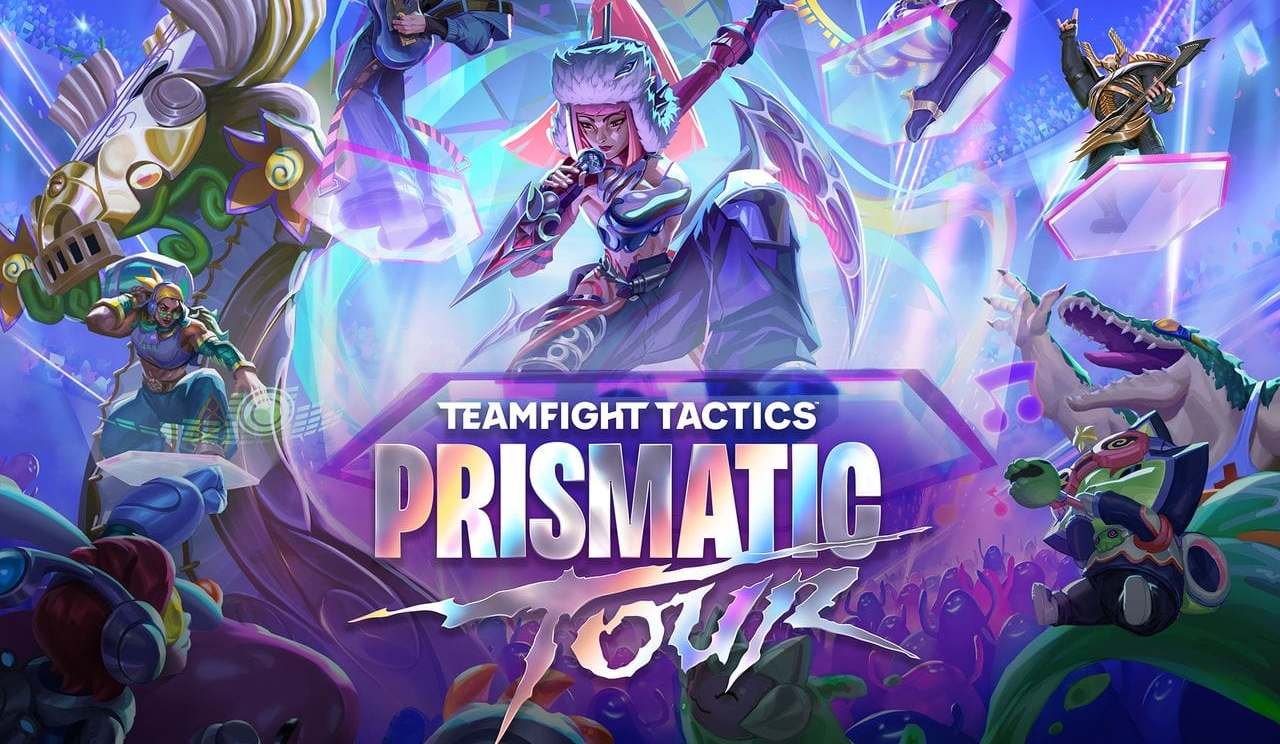
TFT Set 19: Unreal Engine’s Triumph in Prismatic Tour | Games
In the dynamic world of online strategy games, evolution is constant, but few transformations are as impactful as an engine overhaul. Teamfight Tactics (TFT), Riot Games’ immensely popular auto chess title, embarked on such a journey some months ago, bidding farewell to its proprietary Hextech Engine in favor of the industry-standard Unreal Engine. This ambitious transition was initially met with a mix of anticipation and apprehension from the dedicated player base, as such foundational changes often bring both promise and peril. Developers, however, assured fans that this was a strategic move, paving the way for innovations that the old engine simply could not support.
Now, with the imminent arrival of Set 19, dubbed ‘Prismatic Tour,’ launching on December 2nd, the fruits of this technological leap are becoming unmistakably clear. Flow Games was granted early access, revealing a set teeming with unprecedented interactions, a vastly expanded roster of champions, and intricate new mechanics that elevate the gameplay experience to new heights. The initial promise has not just been met; it has been spectacularly exceeded. ‘Prismatic Tour’ is poised to demonstrate that the bold shift to the Unreal Engine was not merely a technical upgrade, but a visionary investment that has unequivocally paid off, delivering the quantum leap the game needed to redefine strategic possibilities and immersive engagement within the realm of competitive games.
This deep dive explores how Set 19 leverages its new foundation to weave a vibrant tapestry of musical themes, champion diversity, and strategic depth, proving that the future of TFT—and perhaps the broader landscape of auto chess games—is brighter than ever before, thanks to the power of Unreal Engine.
The Prismatic Tour: A New Era for Strategic Games and TFT
TFT Set 19, ‘Prismatic Tour,’ leverages the Unreal Engine to introduce an unparalleled musical theme, vast champion roster, and complex interactive mechanics, demonstrating the engine’s transformative impact on the game’s depth and creative potential within competitive games.
The journey from the Hextech Engine to Unreal was a significant undertaking for Teamfight Tactics, a decision driven by the ambition to push creative boundaries. While the initial integration presented its share of challenges and fan concerns, the vision for what the Unreal Engine could unlock was clear. ‘Prismatic Tour,’ launching on December 2nd, now stands as the definitive testament to that vision, showcasing a scale and complexity previously unattainable. This set reimagines the musical theme first explored in Set 10, ‘Remix Rumble,’ but on a far grander and more interactive stage.
At its core, ‘Prismatic Tour’ is about musical fusion and strategic diversity. The set introduces an astounding 94 champions, a significant increase from Set 18’s 65, with 32 of these champions being unlockable through various in-game conditions—a mechanic that harks back to Set 16 but is now expanded. This sheer volume of characters fundamentally alters the strategic landscape, offering an unprecedented array of team compositions and synergies. Beyond just champions, the set introduces a groundbreaking musical remixing system that directly interacts with player choices, enhancing the auditory and strategic experience simultaneously.
The dynamic musical score is one of ‘Prismatic Tour’s’ most captivating features. Every match begins with a standard melody, but as players deploy different musical sets—bands and themed groups from the League of Legends universe—the background music dynamically remixes. Imagine the base melody transforming into an electrifying K-pop beat with Heartsteel in play, or morphing into a heavy metal fusion mixed with electronic riffs when Pentakill joins the stage. With 24 distinct musical styles, including Jazz, Tango, Mariachi, Rock, and even the Brazilian funk-inspired ‘Illbeats,’ players can craft over 10,000 unique musical remix possibilities, making each game a personalized auditory journey. Iconic bands like K/DA, Pentakill, Heartsteel, and True Damage are central, alongside 10 solo artists, each bringing their unique flair to the strategic battlefield.
Unreal Engine: Accelerating Innovation in Game Development
The transition to the Unreal Engine has profoundly impacted TFT’s development cycle, allowing for rapid prototyping and implementation of complex mechanics that were once deemed impossible, significantly accelerating the pace of innovation for strategic games.
According to the development team, the Unreal Engine truly begins to demonstrate its inherent value with ‘Prismatic Tour.’ Many of the ambitious ideas and intricate mechanics now present in Set 19 simply could not have been implemented using the older Hextech Engine. Developers highlighted a stark contrast in development timelines: features that would have required approximately 10 months to integrate and test on the Hextech Engine were accomplished in just two weeks with Unreal. This drastic reduction in development time underscores ‘speed’ as a paramount advantage of the new engine, empowering designers to experiment more freely and bring complex concepts to life with unprecedented efficiency. This accelerated pipeline not only benefits the current set but also promises a future of more frequent and bolder updates for TFT and other games developed on similar engines.
Diving Deep into Prismatic Mechanics: Redefining Games & Gameplay
TFT Set 19 introduces ground-breaking mechanics like the Illbeats Decibel meter, prismatic quest systems, dynamic exalted skins, and unique risk/reward elements through Gu Feng’s scrolls, fundamentally altering strategic depth and player engagement in the realm of auto chess games.
The shift to Unreal Engine has paved the way for a host of novel systems and mechanics that add layers of complexity and engagement to ‘Prismatic Tour.’ One such innovation is the ‘Decibel meter’ associated with the ‘Illbeats’ musical set, which introduces a dedicated menu for players to make diverse in-game alterations, allowing for tactical adjustments on the fly. Furthermore, certain prismatic sets will feature unique missions that players must complete to activate and maintain their powerful prismatic status, adding a quest-like dimension to strategic planning. This interactivity pushes the boundaries of what players expect from an auto chess experience, integrating lore and gameplay in meaningful ways.
Visually, the set introduces ‘exalted skins,’ a new tier of cosmetic enhancements that feature additional effects and intricate interactions, even with other skins from the same set. Confirmed exalted skins include Gwen, Briar, and Aurora from the J-Rock-inspired ‘Ionic Spark’ band, promising a more visually dynamic and personalized battlefield. Beyond aesthetics, the gameplay mechanics themselves demand innovative approaches. The ‘True Damage’ band, for instance, introduces a fascinating ‘A/B side’ mechanic that interacts directly with win and loss streaks. Players can strategically switch between the band’s A-side (for win streaks) and B-side (for loss streaks) each game, allowing astute players to manipulate their streaks and accrue advantages without interruption, adding a psychological layer to competitive games.
Perhaps one of the most daring new mechanics comes from the ‘Gu Feng’ style, which embraces traditional Chinese aesthetics and introduces the ‘Beast Scroll’ mechanic. Players are presented with a choice: the ‘Scroll of Heavenly Prayer,’ which grants a lucky item to a champion, offering a safe, consistent boost. Alternatively, players can opt for the high-stakes ‘Scroll of The Beast.’ This scroll presents a thrilling gamble: for 999 coins, players can attempt to reach Level 11 within a set number of rounds. Succeed, and the rewards are instantaneous and substantial; fail, and the Beast devours their entire board, resulting in an immediate loss. This audacious mechanic introduces a new level of risk-reward decision-making, adding dramatic tension and unique strategic pathways to the game.
Embracing Experimentation: A New Philosophy for TFT Games
TFT Set 19 encourages players to move beyond rigid meta-chasing, fostering a culture of experimentation and personal expression through diverse musical and champion combinations, enhancing the fundamental enjoyment of strategic games.
A notable shift in ‘Prismatic Tour’ is its strong encouragement for players to experiment, diverging from the often restrictive ‘meta-chasing’ prevalent in competitive games. The sheer variety—94 characters, over 300 augmentations, and ‘Collab’ champions that adapt to different bands based on mission completion—means that sticking to one or two ‘optimal’ strategies might limit a player’s true potential and enjoyment. The musical remixing, in particular, empowers players to combine genres like heavy metal with tango, or K-pop with rap, discovering viable and highly entertaining compositions. This focus on player agency and creative expression is a core philosophy of Set 19, allowing individuals to craft strategies that are both effective and uniquely their own. Systems like ‘Band Manager’ and ‘Hype’ further facilitate this exploration, providing tools for players to fine-tune their compositions and build momentum through their chosen musical acts.
The Future of Strategic Games: Unreal Engine’s Lasting Impact on TFT
The successful implementation of TFT Set 19 demonstrates the Unreal Engine’s potential to drive sustained innovation in strategic games, fostering environments for rapid content creation, complex interactive systems, and player-centric design that prioritizes dynamic experiences and creative freedom.
The profound success of ‘Prismatic Tour’ in leveraging the Unreal Engine carries significant implications not just for Teamfight Tactics, but for the broader landscape of live-service and strategic games. It validates the strategic investment in upgrading core engine technology, proving that initial hurdles can lead to unprecedented creative and technical breakthroughs. This transition has unlocked a new era of content velocity, allowing Riot Games to implement complex mechanics and vast content libraries with remarkable speed. This means players can anticipate more frequent, ambitious, and polished updates in future sets, maintaining freshness and engagement over the long term, a critical factor for any enduring online game.
Furthermore, ‘Prismatic Tour’ redefines player empowerment within the strategic genre. By emphasizing experimentation and offering diverse pathways to victory, the set challenges players to think creatively rather than rigidly adhering to prescribed meta-strategies. This player-centric design philosophy fosters a deeper connection with the game, encouraging expression and personal discovery. The ability to dynamically alter the game’s soundtrack based on in-game choices, combined with intricate new systems, elevates the immersive quality of TFT. This innovative approach to integrating themes, mechanics, and player agency sets a new benchmark for what players can expect from modern strategic games, influencing how developers might approach future iterations of auto chess and similar titles, pushing the entire genre forward.
Common Pitfalls and Best Practices in Teamfight Tactics Games: Prismatic Tour Edition
Navigating the rich complexity of ‘Prismatic Tour’ requires adapting to its unique design philosophy, moving beyond traditional approaches to fully embrace its potential for strategic depth and enjoyment.
While ‘Prismatic Tour’ offers immense depth and replayability, players might encounter certain pitfalls if they approach it with outdated mindsets. One common error is rigidly adhering to established ‘meta’ compositions from previous sets, overlooking the expansive new champion pool and the transformative power of musical remixes. Ignoring the dynamic music system, which offers significant bonuses and strategic cues, can severely limit a player’s ability to optimize their board. Furthermore, neglecting to learn the nuances of new systems like the Illbeats Decibel meter or the True Damage A/B side mechanic means foregoing powerful tools that can decisively shift the momentum of a game. Finally, shying away from high-risk, high-reward mechanics such as the Gu Feng ‘Scroll of The Beast’ without fully understanding their potential can prevent players from experiencing some of the set’s most thrilling and impactful moments.
To truly excel and enjoy ‘Prismatic Tour,’ adopting new best practices is crucial. Firstly, embrace experimentation: the set is designed for players to mix and match musical genres and champion synergies, so exploring diverse combinations rather than blindly following guides will yield more satisfying and often surprisingly effective results. Pay close attention to the musical set bonuses and how they dynamically alter the game’s soundtrack and your board’s power. Mastering the True Damage A/B side mechanic for effective streak management is key to maintaining economic and board advantages. Engage with ‘Collab’ champions, understanding how they adapt to different bands. Finally, invest time in understanding the new core systems like ‘Band Manager,’ ‘Hype,’ and the Decibel Meter, as these provide critical levers for strategic control and outplaying opponents. This proactive, exploratory approach is essential for thriving in the vibrant and complex landscape of Set 19.
| Feature | Hextech Engine (Previous) | Unreal Engine (Set 19) | Impact on Games |
|---|---|---|---|
| Champion Count | Approx. 65 (Set 18) | 94 (32 unlockable) | Vastly increased strategic diversity and replayability. |
| Musical System | Limited, simpler themes | 24 styles, 10,000+ remixes | Dynamic, interactive audio; deeper thematic integration. |
| Mechanic Complexity | Constrained by engine limits | Illbeats Decibel Meter, Prismatic Missions, Exalted Skins, True Damage A/B, Gu Feng Scrolls | Allows for highly intricate and novel gameplay systems. |
| Development Speed | ~10 months for complex features | ~2 weeks for similar features | Accelerated content delivery and innovation pace. |
| Creative Scope | Limited by engine capabilities | “Ideas previously impossible” | Unlocks ambitious design concepts and immersive experiences. |
| Player Experience | Standard auto chess | Emphasis on experimentation, unique expression, high risk/reward | More engaging, personalized, and strategically profound gameplay. |
FAQ: Your Questions About TFT Set 19 and Modern Games Answered
What is Teamfight Tactics Set 19 called and when does it release?
Teamfight Tactics Set 19 is officially named ‘Prismatic Tour.’ This highly anticipated update is scheduled to launch on December 2nd. It marks a significant milestone for the game, bringing a wealth of new content and mechanics that aim to redefine the player experience. The set’s release is particularly notable as it’s the first major content drop developed with the full capabilities of the Unreal Engine, promising a richer and more dynamic gameplay environment for fans of strategic games worldwide.
How has the Unreal Engine benefited TFT Set 19?
The transition to the Unreal Engine has profoundly benefited TFT Set 19 by unlocking unprecedented creative possibilities and significantly accelerating development. Developers stated that many of the ambitious features in ‘Prismatic Tour,’ such as the intricate musical remixing system and complex new mechanics, would have been impossible on the old Hextech Engine. Furthermore, the Unreal Engine has drastically reduced implementation times, allowing features that once took months to be completed in mere weeks. This has resulted in a more expansive, innovative, and polished set, demonstrating a clear return on the investment in the new engine for a live-service game.
What is the main theme of ‘Prismatic Tour’?
The main theme of ‘Prismatic Tour’ is a vibrant and expansive musical celebration. Building upon the musical concepts introduced in previous sets, Set 19 elevates this theme to new heights with a focus on ‘musical interactions and combos.’ Players will encounter a diverse array of musical sets, inspired by various League of Legends bands and genres, from K-pop and heavy metal to jazz, tango, and even Brazilian funk. This theme is intricately woven into the gameplay, as the in-game music dynamically remixes based on the musical traits players activate, making each match a unique auditory and strategic experience.
How many champions are in Set 19, and are there new ways to acquire them?
TFT Set 19, ‘Prismatic Tour,’ features a significantly expanded roster of 94 champions, a notable increase from the 65 champions in Set 18. Among these, 32 champions are unlockable, bringing back a popular mechanic from Set 16 but with a larger scope. This vast champion pool, combined with over 300 augmentations and the introduction of ‘Collab’ characters that can transform based on mission completion, offers players an unparalleled level of strategic depth and team composition variety. The emphasis is on experimentation and discovering novel synergies within this extensive cast.
Can you explain the musical remixing mechanic?
The musical remixing mechanic is a core innovation in ‘Prismatic Tour.’ While every match starts with a standard background melody, this music dynamically changes and remixes as players deploy different musical sets (champion traits) onto their board. For example, activating the Heartsteel trait might infuse the track with electronic K-pop rhythms, while Pentakill could introduce heavy metal elements. With 24 unique musical styles and countless combinations, players can create over 10,000 distinct soundscapes. This mechanic not only enhances immersion but also provides a unique, thematic reward for strategic trait activation, making the game feel more alive and responsive to player choices.
What are some of the most innovative new mechanics introduced?
‘Prismatic Tour’ introduces several groundbreaking mechanics that redefine TFT gameplay. The ‘Illbeats’ musical set features a ‘Decibel meter’ with an interactive menu for in-game adjustments. Certain prismatic sets now require players to complete specific missions to activate their powerful effects. New ‘exalted skins’ offer enhanced visual effects and interactions. The ‘True Damage’ band introduces an ‘A/B side’ mechanic for strategic win/loss streak manipulation. Most notably, the ‘Gu Feng’ style offers the ‘Scroll of The Beast,’ a high-risk, high-reward option to reach Level 11 for 999 coins, with an immediate loss if the condition isn’t met. These mechanics foster deeper strategic thinking and provide fresh avenues for player engagement in strategic games.
How does the ‘Scroll of The Beast’ work in the Gu Feng style?
The ‘Scroll of The Beast’ is a unique and high-stakes mechanic available within the ‘Gu Feng’ musical style in TFT Set 19. When players opt for this scroll, they are presented with a challenging gamble: spend 999 coins to attempt to reach Level 11 within a specified number of rounds. If successful, the player gains an immediate and significant advantage, potentially catapulting their board to overwhelming power. However, if the player fails to reach Level 11 within the given timeframe, the ‘Beast’ consumes their entire board, resulting in an instant defeat. This mechanic adds an unparalleled element of risk-reward, demanding bold strategic decisions and precise execution, making it one of the set’s most talked-about features for daring players.
What is the significance of ‘exalted skins’?
‘Exalted skins’ represent a new tier of cosmetic items introduced in TFT Set 19, signaling a push towards greater visual fidelity and player customization made possible by the Unreal Engine. These skins are designed with enhanced effects and intricate animations, going beyond standard cosmetics. They also feature unique interactions, not just within the skin itself, but potentially with other exalted skins from the same set, creating cohesive and dynamic visual themes on the board. Confirmed exalted skins include Gwen, Briar, and Aurora from the ‘Ionic Spark’ band, drawing inspiration from J-Rock aesthetics. Their introduction signifies a commitment to enriching the visual and immersive aspects of the game, providing players with more expressive ways to personalize their strategic experience.











Post Comment